• KGS/USD = 0.01144 0%
  • KZT/USD = 0.00205 0%
  • TJS/USD = 0.10415 -0.19%
  • UZS/USD = 0.00008 0%
  • TMT/USD = 0.28571 0%
  • KGS/USD = 0.01144 0%
  • KZT/USD = 0.00205 0%
  • TJS/USD = 0.10415 -0.19%
  • UZS/USD = 0.00008 0%
  • TMT/USD = 0.28571 0%
  • KGS/USD = 0.01144 0%
  • KZT/USD = 0.00205 0%
  • TJS/USD = 0.10415 -0.19%
  • UZS/USD = 0.00008 0%
  • TMT/USD = 0.28571 0%
  • KGS/USD = 0.01144 0%
  • KZT/USD = 0.00205 0%
  • TJS/USD = 0.10415 -0.19%
  • UZS/USD = 0.00008 0%
  • TMT/USD = 0.28571 0%
  • KGS/USD = 0.01144 0%
  • KZT/USD = 0.00205 0%
  • TJS/USD = 0.10415 -0.19%
  • UZS/USD = 0.00008 0%
  • TMT/USD = 0.28571 0%
  • KGS/USD = 0.01144 0%
  • KZT/USD = 0.00205 0%
  • TJS/USD = 0.10415 -0.19%
  • UZS/USD = 0.00008 0%
  • TMT/USD = 0.28571 0%
  • KGS/USD = 0.01144 0%
  • KZT/USD = 0.00205 0%
  • TJS/USD = 0.10415 -0.19%
  • UZS/USD = 0.00008 0%
  • TMT/USD = 0.28571 0%
  • KGS/USD = 0.01144 0%
  • KZT/USD = 0.00205 0%
  • TJS/USD = 0.10415 -0.19%
  • UZS/USD = 0.00008 0%
  • TMT/USD = 0.28571 0%

Viewing results 19 - 24 of 166

ADB Approves $56.4 Million Disaster-Response Package for Tajikistan and Kyrgyzstan

The Asian Development Bank (ADB) has approved a $56.4 million program aimed at strengthening disaster-response capacity in Tajikistan and Kyrgyzstan, the bank announced in an official statement. According to the ADB, both countries face high exposure to earthquakes, floods, and other climate-related hazards. Their ability to respond effectively remains limited by constrained fiscal resources and a lack of risk-transfer mechanisms. The newly approved program is designed to enhance financial preparedness through two pre-arranged ADB financing instruments, each tailored to different levels of disaster risk. Innovative Tools for Disaster-Risk Financing The program incorporates two key components: Contingent Disaster Financing (CDF) and Disaster Resilience Bonds (DRB). CDF provides budgetary support during medium-scale natural disasters or public health emergencies. DRBs, issued on international capital markets, offer rapid liquidity for major, high-severity disasters. “This program will help reduce the fiscal burden on both countries following natural disasters, including geophysical events, extreme weather, and health emergencies,” said Leah Gutierrez, ADB Director General for Central and West Asia. She emphasized that the combination of policy reforms, institutional strengthening, and innovative financing marks a shift from reactive response to proactive disaster-risk management. Focus on Institutional Reforms and Regional Cooperation The initiative also emphasizes strategic policy reforms, capacity building, and governance improvements to ensure a coordinated and transparent disaster-risk management system. It was developed under ADB’s technical assistance program to establish disaster-risk transfer mechanisms in the Central Asia Regional Economic Cooperation (CAREC) region, a partnership supporting sustainable development and regional integration. The program will be financed through a $53.1 million grant from the Asian Development Fund (ADF), with an additional $3.3 million from the Asia-Pacific Climate Fund. ADF grants are targeted at the poorest and most vulnerable countries in the Asia-Pacific. From 2021 to 2024, the fund supported the lifting of 384,000 people out of poverty and the creation of approximately 500,000 jobs.
New FAO Report Ranks Tajikistan Among World’s Most At-Risk Countries for Land Degradation

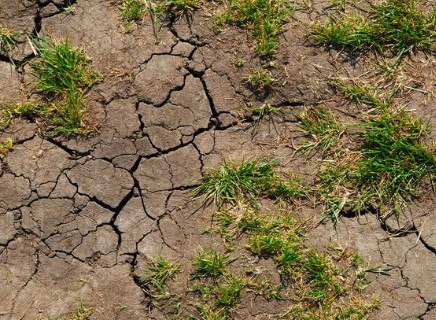
Tajikistan is among the countries most vulnerable to land degradation, according to a new report from the Food and Agriculture Organization of the United Nations (FAO). The findings point to alarming environmental and socio-economic risks for a country where agriculture remains the primary source of employment. The FAO attributes Tajikistan's vulnerability to a combination of small landholdings and intense pressure on soil resources. The country has more than 1 million rural households, including approximately 181,000 dekhkan farms. The average landholding is just 0.2 hectares, with a median size of 0.1 hectares, meaning half of all farmers operate on micro-plots. Challenges to Sustainable Agricultural Growth Under these conditions, expanding agricultural production is not feasible through increased acreage. Instead, growth depends on improving soil quality, upgrading irrigation systems, ensuring stable water access, and adopting modern technologies. These factors now define the boundaries of Tajikistan's agricultural development. According to the FAO, land degradation has affected 3.2 billion people globally, nearly 40% of the world's population. In some regions, agricultural yields have already declined by at least 10%. In Tajikistan, the stakes are especially high. The country has limited arable land, and its farming sector relies heavily on glacial meltwater and consistent irrigation. Climate risks are intensifying faster here than in many neighboring states. Extent and Impact of Land Degradation International experts estimate that nearly 70% of Tajikistan’s arable land is already degraded, with 10% of the population living in affected areas. The main drivers are erosion, salinization, and nutrient depletion, which collectively undermine soil productivity. These environmental pressures reduce rural incomes, increase reliance on external resources such as fertilizers, and contribute to forced migration, exacerbating social and economic vulnerabilities across the country.

Glacier Shift in Tajikistan Triggers Fears of Flood and Landslide

A significant portion of the Didal Glacier in Tajikistan’s Tajikabad district has detached and slid more than five kilometers downslope, according to a report by Russian state news agency TASS, citing the Agency for Hydrometeorology of Tajikistan. Experts from the agency’s Center for Glaciology confirmed that the glacier has continued to shift over the past three days, advancing an additional 72 meters and remaining in an “unstable” state. A field expedition to the Surkhob River basin revealed that the detached ice mass measures between 1.3 and 1.5 kilometers in length, 170-200 meters in width, and 25-50 meters in height. Satellite imagery reviewed by glaciologists confirmed the glacier’s ongoing movement and indicated significant displacement since its initial shift began in September. Experts attribute the detachment to unusually high temperatures during the summer and autumn months. The Geophysical Service of the National Academy of Sciences noted that seismic activity may also be a contributing factor. On November 3, an earthquake struck the region at 01:29 local time, with tremors measuring four points in Dushanbe and six to seven in northern Afghanistan, the location of the epicenter. Scientists believe the combination of warming temperatures and recent seismic shocks has rendered the glacier’s behavior increasingly unpredictable. Officials from the Hydrometeorology Agency warned that continued movement of the Didal Glacier could lead to the formation of glacial lakes and possible outburst floods, endangering downstream settlements and infrastructure. The unstable ice mass also raises the risk of secondary natural hazards such as landslides and mudflows. Monitoring teams are conducting regular field assessments to track developments. Authorities have described the glacier's shift as a broader warning about the urgency of climate adaptation and glacier conservation. Tajikistan, 93 percent of which is mountainous, hosts roughly 14,000 glaciers that supply nearly 60 percent of Central Asia’s water resources. Of these, approximately 1,300 have already melted completely, and the rate of glacial retreat is accelerating. Earlier this year, President Emomali Rahmon warned of the growing threat posed by glacial lake outbursts, noting their potential to destroy villages and infrastructure and potential to cause casualties. He cited climate change, air pollution, and heavy dust deposits as key factors driving glacier loss. A similar incident occurred on October 25, when a large section of the Ismoil Somoni Glacier broke away in the same district. Emergency services quickly contained the situation, though authorities warned that continued rainfall and further collapse remained possible.

Central Asia Faces Billions in Climate Adaptation Costs, UNEP Warns

Central Asia ranks among the most climate-vulnerable regions in the world and will require tens of billions of dollars to adapt to the accelerating effects of global warming, according to a new report by the United Nations Environment Programme (UNEP). The report identifies Central Asia as one of the fastest-warming areas globally. However, current adaptation funding remains drastically insufficient to meet the growing threat. A Region Under Threat Developing countries worldwide, including those in Central Asia, will need up to $310 billion annually by 2035 to adapt to climate change. UNEP highlights the region’s specific challenges: rapidly melting glaciers, widespread soil degradation, worsening water scarcity, and increasing aridity, all of which endanger food security and energy sustainability. “If we don't start investing in adaptation now, we will face increasing costs every year,” said UNEP Executive Director Inger Andersen. Tajikistan and Kyrgyzstan are particularly exposed, with more than 70% of their populations employed in agriculture, which depends heavily on mountain rivers fed by glacial runoff. According to UNEP, glacier volumes in the region have shrunk by over 30% in the past decade. The changing flow of the Amu Darya and Syr Darya rivers threatens not only agriculture but also the hydropower sectors in both countries. Diminished access to water could lead to socio-economic instability in vulnerable communities. Funding Gap Widens UNEP estimates that developing countries in Europe and Central Asia need roughly $51 billion annually for adaptation. Yet, only a fraction of that figure is currently being met. Tajikistan, for example, has outlined total climate financing needs of $8 billion by 2030 and $17 billion by 2050. In Uzbekistan, the cost of modernizing irrigation and water management systems alone is expected to approach $10 billion by 2030. UNEP has urged governments in the region to accelerate the updating of national adaptation plans, many of which have not been revised in over a decade, and to enhance cooperation in the Amu Darya and Syr Darya basins. Priority areas include investment in irrigation infrastructure, early warning systems, and flood control. From Glaciers to Farms In response to UNEP’s findings, international organizations have begun to fund targeted adaptation initiatives. The Green Climate Fund, for instance, has approved $250 million for the From Glaciers to Farms program, spearheaded by the Asian Development Bank. The project aims to strengthen agricultural and water resilience in glacier-dependent countries in Central Asia, the South Caucasus, and parts of South Asia. It covers four major river basins: the Naryn and Panj in Central Asia, the Kura in the South Caucasus, and the Swat in Pakistan, benefiting approximately 13 million people. Funding will support the development of irrigation networks, reservoir construction, glacier monitoring, and early warning systems. The program also places a strong emphasis on empowering women entrepreneurs in agriculture and improving the financial sustainability of rural communities.

Massive Glacier Collapse Reported on Mount Ismoil Somoni in Tajikistan

A large section of glacier broke away from Mount Ismoil Somoni in Tajikistan’s Tajikabad district on October 25, according to Asia-Plus, citing the Committee for Emergency Situations (CoES). The incident occurred around 11:00 a.m. near the village of Safedobi. The CoES reported that the detached ice mass measured approximately two kilometers in length, 25 meters in height, and 150-200 meters in width. It slid down a nearby gorge, prompting swift intervention. By 2:00 p.m., the situation was under control, with no casualties or significant damage reported. However, officials warned that ongoing rainfall and the risk of further glacier collapse could endanger agriculture in the nearby Gulrez area. Emergency services remain on high alert and are monitoring the site closely. The Ismoil Somoni glacier, one of the largest high-altitude ice masses in Tajikistan, is critical to regional water systems. Experts say the latest collapse is yet another indicator of the accelerating impact of climate change in the Pamir Mountains. Continued glacier retreat could have serious long-term environmental and economic consequences, particularly for water availability used in irrigation and hydropower generation. A recent study by the Institute of Science and Technology Austria (ISTA) found that the once-stable Pamir-Karakoram glaciers have been losing mass rapidly since 2018. Researchers, led by Francesca Pelliccotti, observed a 40-centimeter reduction in snow depth and a one-third decline in annual precipitation, conditions they described as marking a “point of no return.” The Pamir and Karakoram glaciers feed the Amu Darya and Syr Darya rivers, which support agriculture and energy production for millions across Central Asia. As glacial melt accelerates, inflow into these rivers has dropped sharply, threatening food and water security across the region. The Times of Central Asia previously reported that farmers in Tajikistan’s Vahdat district are already grappling with melting glaciers and growing irrigation demands. The recent incident on Mount Ismoil Somoni reinforces the urgency of addressing climate-related risks, which are now directly impacting both ecosystems and livelihoods across the region.

Tajikistan’s Tigrovaya Balka Nature Reserve Under Threat

The International Union for Conservation of Nature (IUCN) has raised serious concerns about the condition of Tajikistan’s Tigrovaya Balka Nature Reserve, a UNESCO World Heritage site. The IUCN has classified the state of this rare ecosystem as “alarming,” citing deteriorating hydrological conditions and mounting risks to regional biodiversity. Located at the confluence of the Vakhsh and Panj rivers in southern Tajikistan, Tigrovaya Balka is home to Central Asia’s only remaining natural Tugai forest, a unique riparian ecosystem that depends on periodic flooding for its survival. The IUCN’s World Heritage Outlook uses four categories to assess sites: “good,” “good with some concerns,” “alarming,” and “critical.” In its latest report, the organization identifies water regulation on the Vakhsh River as the primary threat to the reserve. The construction of reservoirs and increased water extraction for agriculture have disrupted the seasonal floods that historically sustained the forest. Prior to the 1960s, before large-scale hydropower development began, spring floods replenished groundwater, restored ecosystems, and prevented soil erosion. Today, experts say, the Tugai forest relies almost entirely on surface runoff and drainage water, insufficient to maintain its ecological balance. The IUCN report notes that approximately one-third of the Vakhsh River’s flow is diverted for irrigation, while about 20% of the remaining water consists of chemically polluted wastewater. This contamination is degrading water quality across the reserve and contributing to the decline of rare aquatic species. “Pollution damages the aquatic ecosystem, and many species cannot withstand environmental changes,” the report states. The IUCN emphasizes that much of the available data is observational and requires further scientific validation. It recommends a comprehensive hydrological study that considers the effects of climate change to more accurately assess the threats facing the reserve and to develop effective conservation measures. Established on November 4, 1938, the Tigrovaya Balka Nature Reserve spans 49,700 hectares across the Dusti, Jaihun, and Kubodyon districts in the Khatlon region. Renowned for its natural beauty, it remains one of the Vakhsh Valley’s key ecological and tourist sites. The name “Tigrovaya Balka” (Russian for “Tiger Valley” or Beshaï Palangon in Tajik) commemorates the now-extinct Turanian tiger, which once roamed these lands. The last confirmed sighting of the species in the area dates back to the 1950s.