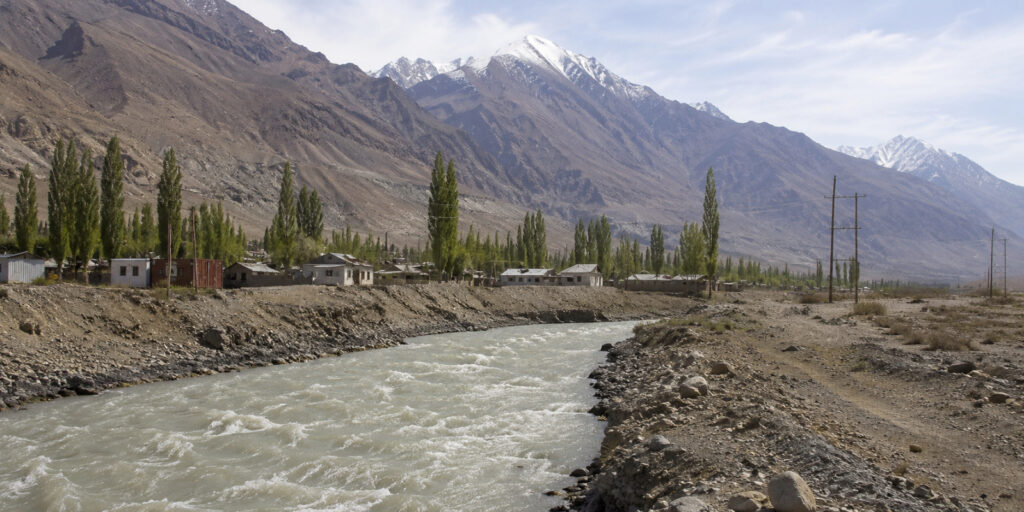
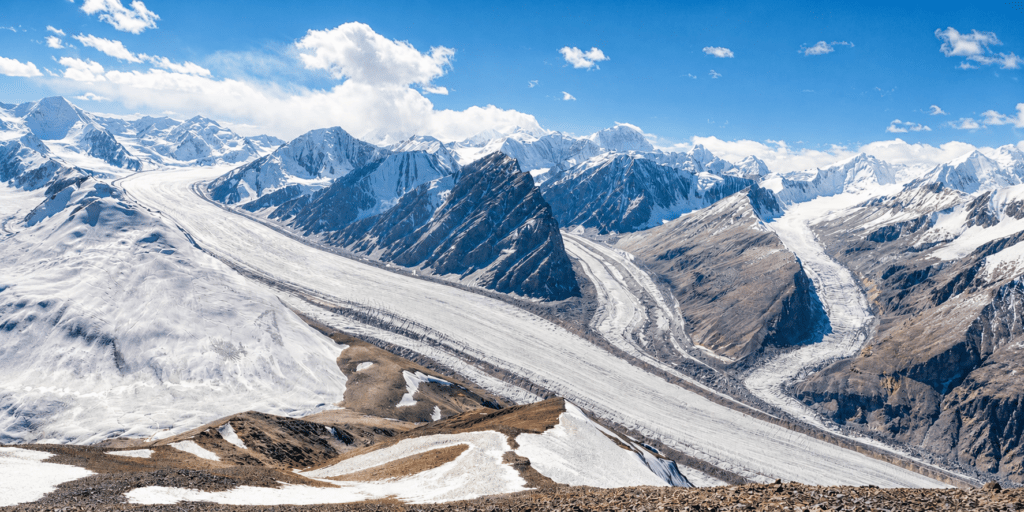
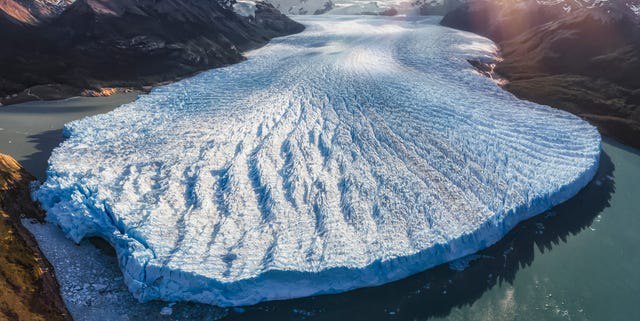
A large section of glacier broke away from Mount Ismoil Somoni in Tajikistan’s Tajikabad district on October 25, according to Asia-Plus, citing the Committee for Emergency Situations (CoES). The incident occurred around 11:00 a.m. near the village of Safedobi.
The CoES reported that the detached ice mass measured approximately two kilometers in length, 25 meters in height, and 150-200 meters in width. It slid down a nearby gorge, prompting swift intervention. By 2:00 p.m., the situation was under control, with no casualties or significant damage reported. However, officials warned that ongoing rainfall and the risk of further glacier collapse could endanger agriculture in the nearby Gulrez area. Emergency services remain on high alert and are monitoring the site closely.
The Ismoil Somoni glacier, one of the largest high-altitude ice masses in Tajikistan, is critical to regional water systems. Experts say the latest collapse is yet another indicator of the accelerating impact of climate change in the Pamir Mountains. Continued glacier retreat could have serious long-term environmental and economic consequences, particularly for water availability used in irrigation and hydropower generation.
A recent study by the Institute of Science and Technology Austria (ISTA) found that the once-stable Pamir-Karakoram glaciers have been losing mass rapidly since 2018. Researchers, led by Francesca Pelliccotti, observed a 40-centimeter reduction in snow depth and a one-third decline in annual precipitation, conditions they described as marking a “point of no return.”
The Pamir and Karakoram glaciers feed the Amu Darya and Syr Darya rivers, which support agriculture and energy production for millions across Central Asia. As glacial melt accelerates, inflow into these rivers has dropped sharply, threatening food and water security across the region.
The Times of Central Asia previously reported that farmers in Tajikistan’s Vahdat district are already grappling with melting glaciers and growing irrigation demands. The recent incident on Mount Ismoil Somoni reinforces the urgency of addressing climate-related risks, which are now directly impacting both ecosystems and livelihoods across the region.