• KGS/USD = 0.01144 0%
  • KZT/USD = 0.00208 0%
  • TJS/USD = 0.10440 -0.19%
  • UZS/USD = 0.00008 0%
  • TMT/USD = 0.28571 0.28%
  • KGS/USD = 0.01144 0%
  • KZT/USD = 0.00208 0%
  • TJS/USD = 0.10440 -0.19%
  • UZS/USD = 0.00008 0%
  • TMT/USD = 0.28571 0.28%
  • KGS/USD = 0.01144 0%
  • KZT/USD = 0.00208 0%
  • TJS/USD = 0.10440 -0.19%
  • UZS/USD = 0.00008 0%
  • TMT/USD = 0.28571 0.28%
  • KGS/USD = 0.01144 0%
  • KZT/USD = 0.00208 0%
  • TJS/USD = 0.10440 -0.19%
  • UZS/USD = 0.00008 0%
  • TMT/USD = 0.28571 0.28%
  • KGS/USD = 0.01144 0%
  • KZT/USD = 0.00208 0%
  • TJS/USD = 0.10440 -0.19%
  • UZS/USD = 0.00008 0%
  • TMT/USD = 0.28571 0.28%
  • KGS/USD = 0.01144 0%
  • KZT/USD = 0.00208 0%
  • TJS/USD = 0.10440 -0.19%
  • UZS/USD = 0.00008 0%
  • TMT/USD = 0.28571 0.28%
  • KGS/USD = 0.01144 0%
  • KZT/USD = 0.00208 0%
  • TJS/USD = 0.10440 -0.19%
  • UZS/USD = 0.00008 0%
  • TMT/USD = 0.28571 0.28%
  • KGS/USD = 0.01144 0%
  • KZT/USD = 0.00208 0%
  • TJS/USD = 0.10440 -0.19%
  • UZS/USD = 0.00008 0%
  • TMT/USD = 0.28571 0.28%

Viewing results 43 - 48 of 166

Tajikistan Pursues Cotton Reform with EU Backing

The European Union’s support for green transitions presents a real opportunity for Tajikistan to achieve sustainable agricultural development, particularly in the cotton industry, according to Mizrob Amirbekov, an agricultural development expert. Amirbekov highlighted this potential, underscoring the importance of international assistance in modernizing the sector, addressing environmental and social challenges, and establishing a fair and transparent production system. Rising Demand, Persistent Problems As global demand for environmentally friendly textiles grows, Tajikistan has a unique chance to establish a sustainable model for cotton production, Amirbekov explained. Increased interest in natural fabrics, driven by both demographic growth and technological advancements, is pushing the industry toward transformation. However, this economic potential is clouded by persistent challenges, including environmental stress, social risks such as forced labor, and a lack of transparency across the supply chain. The global cotton sector has long faced scrutiny over high water consumption, widespread pesticide use, and unethical labor practices. In response, consumers and international regulators are increasingly pressing for a shift to more sustainable production methods. EU Investment and National Reform Tajikistan has begun responding to these challenges. In 2024, it approved the National Strategy for the Development of the Cotton and Textile Industry through 2040, prioritizing modernization, cost reduction, and the expansion of high-value-added production chains. The European Union is playing a central role in this transformation, having allocated a €19.88 million grant to support the sector’s green transition. The funds aim to advance digital technologies, assist small and medium-sized enterprises, and help the industry adapt to climate change impacts, from droughts to rising temperatures. “This is not merely financial aid, it’s an opportunity to build a truly sustainable cotton production system,” said Amirbekov. “Farmers and buyers need to understand the principles of sustainability and how agriculture can become a driver of the green economy.” Ongoing Social and Environmental Challenges Despite signs of progress, Amirbekov noted that significant problems persist. Farmers report that forced labor continues in some areas, with schoolchildren and unrelated government employees involved in cotton harvesting, practices that violate Tajikistan’s international commitments and damage the credibility of its organic cotton sector. Environmental impacts are equally severe. Producing a single T-shirt can consume up to 2,700 liters of water, and nearly a kilogram of pesticides may be used per hectare. Amirbekov stressed the need to adopt certified standards such as the Global Organic Textile Standard (GOTS), to promote sustainable cotton varieties, and to implement precision farming. “Climate change is already reducing yields, droughts, floods, and temperature fluctuations are becoming more common,” he warned. To address this, he advocates for sustainable seed varieties, efficient irrigation, and participation in carbon reduction programs. Amirbekov also criticized the cotton supply chain as fragmented and poorly regulated, undermining trust from international buyers and complicating the enforcement of sustainability standards. He called for the introduction of digital platforms to track supply chains in real time. Social inequality is another concern: women and small-scale farmers often face limited access to markets and lack property rights. Incorporating fair trade practices, supporting cooperatives, and enforcing...

Experts Warn of Escalating Climate Risks for Central Asia

As global temperatures rise, Central Asia is emerging as one of the world’s most vulnerable regions to the impacts of climate change. This warning comes from three recent reports by the World Meteorological Organization (WMO), which predict intensified warming, more frequent droughts, and rapid glacier retreat in the region. Without urgent adaptation and coordinated policy responses, the region faces growing risks to its water resources, agriculture, and energy systems. Beyond the Climate Norm According to the WMO’s Climate Outlook for 2025-2029, Central Asia is projected to experience sustained warming and greater variability in precipitation. Every year in the 2025-2029 period is expected to be hotter than the 1991-2020 average. Particularly troubling is the growing likelihood that global temperatures may temporarily exceed +1.5°C above pre-industrial levels in the near term. One contributing factor is the heightened intensity of the South Asian monsoon, which is 82% more likely to be stronger than normal. While this could increase rainfall, the unpredictability raises concerns, periods of heavy rain could be followed by prolonged droughts, severely impacting regional agriculture. Another alarming development is the rapid retreat of glaciers in the Pamirs, which feed the region’s primary waterways, including the Amu Darya and its major tributary, the Vakhsh.  The loss of these glaciers threatens long-term water availability and necessitates a rethinking of regional water management strategies. The WMO forecasts that the 2025-2029 period could be the warmest on record, with global temperatures projected to rise by 1.2-1.9°C. Although the chance of exceeding +2°C during this period is currently low, about 1%, the probability is rising. Spring Floods, Summer Droughts A second WMO report, though focused on the Pacific region, reinforces global climate trends relevant to Central Asia. It confirms that 2024 was the hottest year on record, with global average temperatures 1.55°C above pre-industrial levels. For high-altitude countries like Tajikistan, the implications are already evident. Snow is melting earlier, shortening the runoff season. Water that once lasted through summer now disappears within weeks in the spring, heightening the risks of spring flooding followed by summer droughts. The region lacks sufficient reservoir infrastructure to capture and store water during periods of excess. The report also highlights the looming disappearance of Indonesia’s glaciers by 2026, a fate that may soon await Central Asia’s glaciers. The consequences are serious, particularly for countries like Tajikistan, where over 90% of electricity is generated by hydropower. Climate anomalies across the region are increasing, including dust storms, intense rainfall, extreme heat, and landslides. The WMO stresses the urgent need for adaptation measures such as modernized infrastructure and improved climate monitoring and water management systems. The Need for a Regional Strategy The third WMO report emphasizes Central Asia’s unique vulnerability to droughts, which often cross national borders. This underscores the need for a coordinated regional approach, especially in the Amu Darya and Syr Darya river basins. The report advocates for transboundary mechanisms for monitoring, data sharing, and joint response strategies. While Central Asia is part of the Global Network of Climate-Resilient River Basins, progress...

Central Asian Glaciers Shrinking Irreversibly, Expert Warns

Glaciers in Central Asia are melting at an alarming rate with no signs of recovery, according to Tohir Majitov, head of the Uzbek public organization "Suvchi," in an interview with Kazinform. Majitov highlighted the escalating pressure on water supplies due to population growth and agricultural expansion across the region. "In 1991, Central Asia had nearly 6 million hectares of irrigated land. By 2024, this figure has grown to over 10 million hectares. The population has also increased from around 45 million to more than 80 million. Water supply for this growing population is now a serious issue," he explained. He noted that Uzbekistan and Kazakhstan heavily depend on the Syr Darya and Amu Darya rivers, which originate in the mountainous regions of Kyrgyzstan and Tajikistan. A critical challenge arises from the differing water needs: upstream countries store water during summer for hydropower generation in autumn and winter, while downstream nations like Kazakhstan and Uzbekistan require substantial water primarily during the summer growing season. Majitov issued a stark warning about the region's largest glacier, Tajikistan's Fedchenko Glacier, which has reportedly lost over 40% of its mass. "Between 1990 and 2005, the glacier shrank by 50 meters," he stated. "Its length is 77 kilometers, width 2.4 kilometers, and depth reaches one kilometer. Glaciers in Kyrgyzstan have also lost over 30% of their mass." To tackle these pressing water challenges, Majitov proposed the formation of a regional body. "We suggest creating an Aral Sea Committee to improve water management and ensure food security. It may take several years, but all Central Asian countries should take part," he urged. He believes that efficient water use could enable the region to expand irrigated land by 2-3 million hectares, potentially feeding up to 100 million people. Previously, The Times of Central Asia reported concerns from other experts on the region's water crisis. A fundamental conflict exists between upstream countries, like Kyrgyzstan and Tajikistan, which have water but need to release it in winter for electricity generation, and downstream countries, such as Uzbekistan and Turkmenistan, that require that water in summer for agricultural purposes. What was once primarily a technical concern has now evolved into a complex regional problem, exacerbated by climate change. Nations are increasingly constructing dams, engaging in disputes over water allocation, and experiencing a decline in mutual trust. The future stability of Central Asia may hinge on its capacity to effectively manage this escalating water crisis.

Dushanbe Proposed as Regional Glaciology Hub Amid Accelerating Glacier Melt

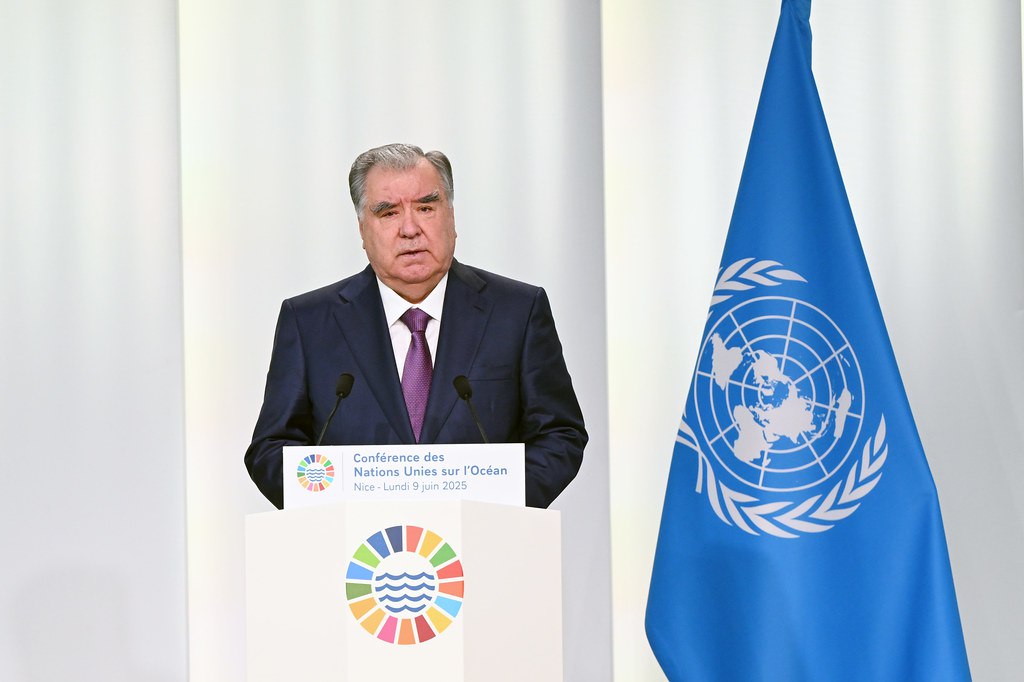
Tajikistan's President Emomali Rahmon, speaking in France on June 8 at the launch of the International Decade of Cryosphere Sciences (2025-2034), has proposed establishing a Regional Coordination Center for Glaciology in Dushanbe. The event was held as part of the Third UN Ocean Conference in Nice, which convened heads of state and government from 65 countries, UN Secretary-General António Guterres, and leaders of international organizations. Glaciology Center in the Heart of the Pamir Mountains Addressing the international community, Rahmon underscored Tajikistan's commitment to creating a glaciology center. "Given the importance of glaciers and in order to study the impact of climate change on them more accurately, we have decided, with the assistance of international partners, to establish a Regional Coordination Center for Glaciology in Dushanbe," he stated. He highlighted that Tajikistan is home to up to 60% of all glaciers in Central Asia, playing a pivotal role in the region's sustainable development. However, their rapid shrinkage poses a threat not only locally but globally. Rahmon warned that if current melting trends persist, up to a billion people could face negative consequences by 2050, particularly in coastal areas and on islands. Tajikistan: Initiator of the Climate Agenda Rahmon emphasised that Tajikistan had been a proactive advocate for water and climate issues on the global stage for two decades. He emphasized the broad international support for the joint initiative by Tajikistan and France to designate 2025-2034 as the "Decade of Action for Cryosphere Sciences." "Our initiatives in the field of water and climate issues have received the support of the international community and are being implemented through 14 resolutions of the UN General Assembly," Rahmon noted. He concluded by urging the international community to expand cooperation for cryosphere preservation and the development of scientific potential in this critical area. From Declarations to Coalitions Rahmon's speech followed the first International High-Level Conference on Glacier Protection held in late May. This forum attracted over 2,500 delegates from 80 countries, including scientists, heads of delegations, international organizations, and donor agencies. The conference's primary outcome was the signing of the Dushanbe Declaration, a document advocating for urgent action to protect glaciers and synchronize international efforts. Participants called for significant reductions in greenhouse gas emissions, a transition to sustainable production models, and the implementation of robust climate monitoring systems. An international coalition was also announced, poised to unite states, scientific institutions, environmental movements, and international organizations. Its mandate will include monitoring the declaration's implementation, facilitating the exchange of best practices, attracting investment, and developing climate change adaptation technologies.

Strained Currents: Managing the Syr Darya’s Waters

On both banks of the Syr Darya, apartments are springing up. The embankment itself is undergoing extensive renovation. Trucks crawl along, their weight pounding the freshly lain asphalt into shape. Its acrid whiff rankles in the nose for some distance. Kyzylorda’s new Akim, Nurzhan Akhatov, appointed in August 2024, is determined to make the most of his short term in office, explains Kanat Utegenov, founder of LLP ECO GUARD, an ecological laboratory. This makes the new landscaping important. “There is a lot of construction… it is visually noticeable to the population,” he told The Times of Central Asia. “Unfortunately, the economics of it have not necessarily been calculated.” Utegenov cites a new stadium on the left bank of the river as an example of one of these potential white elephant projects. Worse still, all this landscaping is dependent on one critical factor which is only partly under the control of the Akim, and only partly under the control of Kazakhstan. That issue is water. [caption id="attachment_32630" align="aligncenter" width="1600"] The low-running Syr Darya passing through Kyzylorda, Kazakhstan; image: TCA, Joe Luc Barnes[/caption] In late April, the view that a ritzy new apartment buys you is one of sad, sandy banks. Wading birds plod methodically through the mud, looking for worms. The dirty grey river does not so much flow but keeps up a ponderous momentum, inching its way northwest. Some of this water will reach the North Aral Sea, which is being propped up on life support by the Kokaral Dam. Utegenov attributes the low water level as being partly due to climatic change. “Winter has become milder and almost snowless,” he said, adding that it’s not unusual to see a low river in spring. “This is when the rice is planted; all the water goes to the irrigation canals.” Governments across the region are doubling down on rice production, says Bulat Yessekin, an expert on environmental and water policy in Central Asia. However, he points out that growing rice is incredibly inefficient in this part of the world. “If we take into account the full irrigation cycle, five tons (5,000 liters) of water are used to cultivate just one kilo of rice,” he told TCA. However, Kazakhstan’s government is keen to trumpet successes. The use of laser leveling technology in rice fields has helped save over 200 billion liters of water by distributing it more evenly. According to Kazakh state media, this has meant that the yield from each hectare of rice crop has increased by around 60-70%. This has done little to convince Yessekin, who believes this is little more than a sticking plaster. “There was no such need for technology before as there was enough water. Now, such technology has become necessary because otherwise, they will simply not be able to grow the crop. In countries with much greater precipitation, such as Thailand or India, you can grow it, but here there are no prospects for rice. Sooner or later people need to move to other crops.” Yessekin...

Global Declaration on Saving Disappearing Glaciers Signed in Dushanbe

The first high-level international conference focused on the global crisis of glacier melt concluded this week in Dushanbe, marking a major milestone in global environmental cooperation. The event brought together over 2,500 participants from 80 countries, including scientists, NGO representatives, heads of delegations, and international donors. The Dushanbe Declaration A key outcome of the conference was the adoption of the Dushanbe Declaration, a collective commitment to coordinated international action to safeguard glaciers. The document outlines urgent concerns: glaciers are retreating at an alarming rate, threatening the freshwater supply of millions who rely on mountain rivers. “Every piece of glacier lost is a step toward greater threats to the future of humanity,” said Tajikistan's President Emomali Rahmon. The declaration calls for immediate measures including reductions in greenhouse gas emissions, shifts to environmentally sustainable production, and the implementation of advanced monitoring systems. An international coalition was also announced, comprising states, scientific institutions, civil society organizations, and environmental movements. This coalition will oversee the declaration's implementation, facilitate knowledge exchange, attract investment, and foster climate technology innovation. Glacier Protection and Knowledge Access Fund To support practical initiatives, participants agreed to establish an international Glacier Protection and Knowledge Access Fund. The fund will finance scientific expeditions, the installation of glacier monitoring systems, freshwater source restoration projects, and the dissemination of eco-friendly technologies. Countries with limited resources will be prioritized. Education emerged as another central theme. The conference advocated for integrating glacier studies into school and university curricula, and for community-based environmental literacy programs, particularly for youth. Greater public awareness, participants emphasized, is essential for fostering long-term climate resilience. Andrea Celeste Saulo, Secretary-General of the World Meteorological Organization, highlighted the chronic underfunding of climate science. “Funding for science remains extremely limited, even though it is science that enables us to predict risks and develop response measures,” she said, urging both governments and businesses to invest in sustainable monitoring systems. Tajikistan Joins IUCN A significant development during the conference was Tajikistan’s accession to the International Union for Conservation of Nature (IUCN), joining over 1,400 global members. This move grants Tajikistan access to a broad network of expertise, funding opportunities, and international partnerships, thereby enhancing its role in global environmental policy. In his speech, Rahmon shared sobering statistics: in 2023 alone, glaciers lost an estimated 600 gigatons of fresh water, contributing to rising sea levels and ecosystem instability. Since 2000, the world has lost nearly one-third of its mountain glaciers, and a projected two-degree rise in temperature could eliminate another third. He proposed a seven-point plan, including strengthening international cooperation, early warning systems, and resource mobilization. Central Asia Under Threat The urgency is particularly acute for Central Asia. Over the last 50-60 years, Tajikistan has lost up to 30% of its glacier area and about 20% of its volume. More than 1,000 glaciers have vanished in the past 23 years. According to the UN Environment Programme, over 50% of Central Asia’s glaciers could disappear by 2050, endangering water access for over 64 million people, especially in rural and...