• KZT/USD = 0.00215
  • TJS/USD = 0.10810
  • UZS/USD = 0.00009
  • TMT/USD = 0.29760
  • KZT/USD = 0.00215
  • TJS/USD = 0.10810
  • UZS/USD = 0.00009
  • TMT/USD = 0.29760
  • KZT/USD = 0.00215
  • TJS/USD = 0.10810
  • UZS/USD = 0.00009
  • TMT/USD = 0.29760
  • KZT/USD = 0.00215
  • TJS/USD = 0.10810
  • UZS/USD = 0.00009
  • TMT/USD = 0.29760
  • KZT/USD = 0.00215
  • TJS/USD = 0.10810
  • UZS/USD = 0.00009
  • TMT/USD = 0.29760
  • KZT/USD = 0.00215
  • TJS/USD = 0.10810
  • UZS/USD = 0.00009
  • TMT/USD = 0.29760
  • KZT/USD = 0.00215
  • TJS/USD = 0.10810
  • UZS/USD = 0.00009
  • TMT/USD = 0.29760
  • KZT/USD = 0.00215
  • TJS/USD = 0.10810
  • UZS/USD = 0.00009
  • TMT/USD = 0.29760
27 August 2026

Viewing results 37 - 42 of 145

Afghanistan Advances Qosh Tepa Canal While Urging Regional Water Cooperation

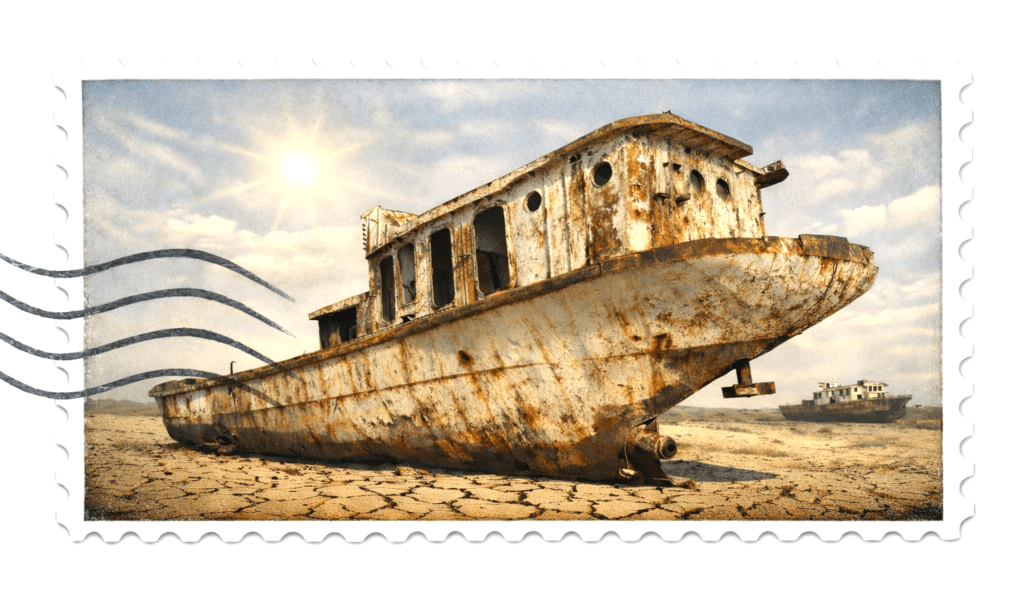
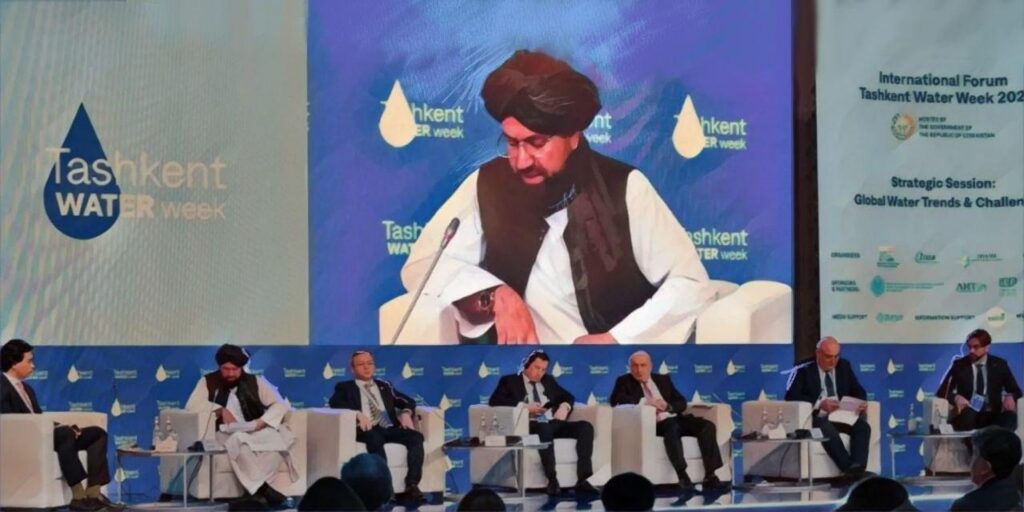
Uzbekistan just hosted the Tashkent Water Week forum, and the speaker many wanted to hear from was the representative from Afghanistan. Central Asia and Afghanistan are being hit hard by climate change. This region has endured several droughts already this decade, and indications are that this year will bring drought again. Hanging over the forum was Afghanistan’s plan to complete the Qosh-Tepa Canal in 2028, which will draw water from a river that Central Asian countries also use and further complicate the regional water situation. [caption id="attachment_18865" align="aligncenter" width="1280"] Qosh Tepa Canal, artist's rendition; image: TCA, Aleksandr Potolitsyn[/caption] Our Fair Share The forum, which actually spanned only two days, March 25-26, brought together some 80 speakers and more than 1,200 delegates from 19 countries. In the past five years, Central Asia has seen noticeably diminished precipitation, melting glaciers, and record high temperatures, making water conservation a priority. The last days of March saw temperatures soar into the 30s Celsius in southern Kazakhstan. In both Kazakhstan and Kyrgyzstan, there were record-high temperatures in February. Rainfall for the last three months of 2025 was also far below normal across Central Asia. When the Taliban government announced in early 2022 that it would build the 285-kilometer-long, 100-meter-wide, 8.5-meter-deep Qosh Tepa to irrigate lands in northern Afghanistan, it added another water concern to Central Asia, particularly the governments in Turkmenistan and Uzbekistan. Afghanistan’s Deputy Minister of Water and Energy, Mujeeb-ur-Rahman Omar, led the Afghan delegation at the Tashkent Water Week. At the forum, he repeated his government’s position that historically, Afghanistan has taken only very small volumes of water from the Amu-Darya River basin, while its northern neighbors have been using large amounts for irrigation for decades. “We believe in the fair and sustainable development of the region,” Omar said, adding, “We intend to develop (water resources) on a legal basis, in accordance with the legal rights of the countries in the region.“ Omar is correct that under international law, Afghanistan has an equal right to water from the Amu-Darya, one of Central Asia’s two great rivers. The river currently marks the border between Afghanistan to the south, and Tajikistan, Uzbekistan, and a small section of Turkmenistan to the north. There is no separate regional water use agreement between the Central Asian states and Afghanistan. Since none of the Central Asian governments officially recognize the Taliban as the legitimate Afghan government, Russia is the only country that does at the moment, there is no possibility of a legal treaty on water use being signed. So, shortly after the construction of the canal is finished in 2028, some 20% of the water in the Amu-Darya, starting from the point just west of the Tajik-Uzbek border, will be diverted into the Qosh Tepa canal. It is already clear that this will mean the end of some downstream communities in Uzbekistan and Turkmenistan that are on the edge of the Kara-Kum Desert and which are already under strain from insufficient water supplies. Turkmenistan did not send a...

Melting Glaciers Becoming an Increasing Threat to Central Asia’s Resources

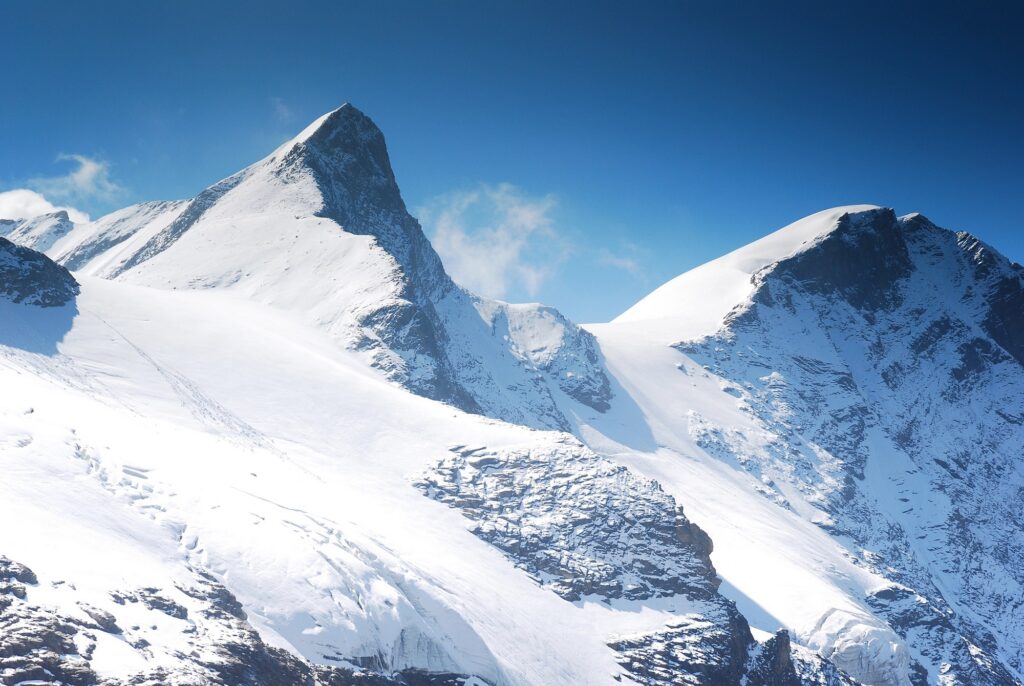
Glacier melt in Central Asia is becoming increasingly critical, posing risks to water resources, economic stability, and regional security. In response, countries in the region are strengthening coordination and launching new scientific and policy initiatives. According to the UN, glaciers in the world’s mountainous regions are shrinking at an unprecedented rate. Rising temperatures are leading to a longer warm season and a shorter winter, accelerating the process of degradation. Glaciers remain a key element of the global water system: they account for about 70% of freshwater reserves, and nearly two billion people depend directly on these resources. In addition, they perform an important climatic function by reflecting solar radiation and limiting the warming of the Earth’s surface. Central Asia is already facing the consequences of climate change. The region is under increasing pressure from rising temperatures, droughts, and dust storms. Tajikistan remains particularly vulnerable. According to President Emomali Rahmon, of the approximately 14,000 glaciers that the country once had, more than 1,000 have already disappeared, and their total volume has shrunk by nearly a third. Yet it is these glaciers that account for over 60% of the region’s water resources. In Kyrgyzstan, the area of glaciers has decreased by approximately 16% over the past 50-70 years. President Sadyr Japarov previously warned that, if current trends continue, a significant portion of them could disappear by the end of the 21st century, posing a threat to millions of residents in the region. In response to the growing crisis, at Tajikistan’s initiative, the UN General Assembly declared 2025 the International Year of Glacier Conservation. The official launch took place on March 21 in New York and coincided with the first World Glacier Day. At an international conference in Dushanbe, the Dushanbe Declaration was adopted, expressing concern over the accelerated loss of glaciers, snow cover, and permafrost. The document highlights the potentially “irreversible consequences” for ecosystems and the economy. The five countries of Central Asia are also developing joint adaptation mechanisms. Key measures include monitoring the condition of glaciers, creating a unified regional registry, and coordinating water policy.

“Great News” for the Striped Hyena at Brazil Meeting, Conservation Group Says

Countries attending a U.N.-backed migratory species conference in Brazil have agreed to increased protections for the striped hyena, whose vast range includes parts of Central Asia, according to an international conservation group. Tajikistan and Uzbekistan had submitted the proposal to upgrade protections for the species during a meeting of the Convention on the Conservation of Migratory Species of Wild Animals in Campo Grande this week. “The Committee agreed by consensus to the proposal to include the striped hyena in Appendices I and II,” and the approval will become official at a plenary meeting on Sunday, said Susan Lieberman, vice president for international policy with the New York-based Wildlife Conservation Society. Appendix I is a designation that would require countries to restore habitats, bar killing or capture except in limited cases and take other robust steps to protect the striped hyena. Appendix II requires governments to coordinate their efforts across the species’ range, which also includes parts of Africa, the Middle East and South Asia. “It’s great news for the species, and will hopefully stimulate action for its conservation and protection across its vast range—it will give this endangered, misunderstood species a chance,” Lieberman told TCA on Friday. The striped hyena is listed as “near threatened” on the global IUCN Red List of Threatened Species, though conservationists warn that its population is steadily dropping. Habitat loss, human-wildlife conflict and illegal hunting and trade are factors in its decline. Delegates at a United Nations wildlife trade conference in Samarkand in 2025 ultimately approved the inclusion of the striped hyena in Appendix II of CITES, introducing controls on international trade after an initial proposal for stricter Appendix I protections failed to pass.

What Is Happening to Tajikistan’s Main Nature Reserve?

International experts have warned of a potential water crisis in the Tigrovaya Balka nature reserve, while Tajik authorities maintain that the situation remains stable and that systematic measures are underway to preserve the ecosystem. At the center of the debate are the water regime of the Vakhsh River, the condition of the tugai forests, and growing anthropogenic pressure. In November 2025, the International Union for Conservation of Nature (IUCN) published an assessment describing the state of the reserve, a UNESCO World Heritage Site, as “alarming.” Experts link the primary risks to changes in the river’s hydrological regime. Regulation of the Vakhsh River through reservoirs and the redistribution of water for agricultural use have significantly reduced natural seasonal flooding, which historically sustained the tugai forests. According to the IUCN, the ecosystem has become increasingly dependent on surface and drainage groundwater, volumes of which may be insufficient to maintain ecological balance.  The report also notes that approximately one-third of the Vakhsh River’s flow is diverted for irrigation, while part of the remaining water contains wastewater with elevated concentrations of chemical substances. Authorities Assert the Situation Is Stable Tajikistan’s Environmental Protection Committee disputes the severity of the assessment. According to data from the country’s Hydrometeorological Agency, the average annual flow of the Vakhsh River in 2025 reached 468 cubic meters per second, equivalent to 89% of the long-term average. Officials state that such fluctuations fall within acceptable limits. Water quality monitoring, conducted across 47 chemical indicators, reportedly showed only slight exceedances in sulphates and nitrites. Authorities report no recorded cases of water shortages, mass fish die-offs, or the complete drying of lakes within the reserve. Committee representatives argue that the international evaluation relies heavily on data from 2017-2019 and does not sufficiently account for more recent developments. Infrastructure and Anthropogenic Pressure Scientists also point to historical infrastructure problems as a contributing factor. Particular concern surrounds a 13-kilometer bypass canal along the northern border of the reserve, which was reportedly not cleaned for nearly three decades following the dissolution of the Soviet Union. As a result, silt accumulation led to rising water levels in certain lakes, flooding tugai forests and rendering parts of the territory unsuitable for species such as the Bukhara deer and pheasants. Some areas reportedly became marshy and overgrown with reeds. Additional pressure stems from the expansion of settlements along the reserve’s northern boundary. Monitoring data indicate household waste contamination along 13.2 kilometers of shoreline. Ecological Significance The Tigrovaya Balka Reserve was established on November 4, 1938, becoming Tajikistan’s first state nature reserve. It covers 49,700 hectares, including 21,400 hectares of wetlands and more than 24,000 hectares of tugai forest. The reserve is home to more than 30 rare animal species, including the Bukhara deer, gazelle, striped hyena, Central Asian monitor lizard, and Amu Darya shovelnose sturgeon. Over 50 bird species winter in the reserve annually. In 2023, the site was inscribed on the UNESCO World Heritage List as part of the “Tugai Forests of Tigrovaya Balka” property.

Central Asia and the Global Water Crisis: A Test of Governance and Cooperation

Water scarcity is rapidly transforming from a regional environmental concern into one of the defining global security challenges of the 21st century. UN-linked assessments estimate that around four billion people experience severe water scarcity for at least one month each year, and nearly three-quarters of the global population lives in countries facing water insecurity. Against this backdrop, Central Asia is not an exception but rather a concentrated example of global dynamics: climate pressure, population growth, and inefficient resource management. Regional initiatives, including proposals put forward by Kazakhstan, therefore have the potential to contribute not only to stability in Central Asia but to the development of a more coherent global water governance architecture. The Water Crisis as a Global Reality Water is increasingly regarded as a strategic resource on par with energy and food. Climate change is intensifying droughts, floods, and the degradation of aquatic ecosystems across all regions, from Africa and the Middle East to South Asia, Europe, and North America. Recent mapping and analysis by investigative groups and international media indicate that half of the world’s 100 largest cities experience high levels of water stress, with dozens classified as facing extremely high levels. Major urban centers, including Beijing, New York, Los Angeles, Rio de Janeiro, and Delhi, are among those under acute pressure, while cities such as London, Bangkok, and Jakarta are also categorized as highly stressed. In this context, Central Asia is not an outlier. It is confronting today what may soon become the global norm. Central Asia: Where Global Trends Converge A defining feature of the current environmental situation is that factors beyond natural ones drive the water crisis. Experts increasingly stress that shortages are often less about absolute physical scarcity and more about outdated management systems, infrastructure losses, and inefficient consumption patterns. In this respect, Central Asia can be seen as a testing ground for global water challenges, where multiple stress factors converge. The region, with mountain peaks exceeding 7,000 meters, contains some of the largest ice reserves outside the polar regions. The Pamir and Hindu Kush ranges, together with the Tibetan Plateau, the Himalayas, and the Tien Shan, form part of what is sometimes referred to as the “Third Pole,” the largest concentration of ice after the Arctic and Antarctic. [caption id="attachment_13410" align="aligncenter" width="2560"] The White Horse Pass, Tajikistan; image: TCA, Stephen M. Bland[/caption] However, the pace of change is alarming. By 2030-2040, water scarcity in Central Asia risks becoming chronic. Glaciers in the Western Tien Shan, for example, have reportedly shrunk by roughly 27% over the past two decades and continue to retreat, posing a direct threat to the flow of the Amu Darya and Syr Darya rivers. These rivers increasingly fail to reach the Aral Sea in sufficient volume, while the exposed seabed has become a major source of salt and dust storms. [caption id="attachment_21928" align="aligncenter" width="2560"] Moynaq, Karakalpakstan; image: TCA, Stephen M. Bland[/caption] Infrastructure inefficiencies compound the problem. Estimates suggest that in some systems, 40-50% of water can be lost in deteriorating...

Rogun Dam’s Cross-Border Environmental Impact Draws Scrutiny

An international environmental coalition has raised new concerns about the environmental assessment of Tajikistan’s Rogun Hydropower Plant, warning that its potential cross-border and cumulative impacts on downstream countries are being underestimated. The group, Rivers without Boundaries, presented its latest report, Eyes Wide Shut: Ignoring the Transboundary and Cumulative Impacts of the Rogun Hydropower Plant, highlighting what it describes as serious shortcomings in the project’s environmental and social review. According to the report, the current assessment of Rogun’s transboundary effects does not fully comply with the environmental and social standards of the World Bank. Experts argue the analysis relies on outdated data from 2014 and uses static modeling scenarios that fail to reflect climate change trends and the current hydrological realities of the Amu Darya basin. Rivers without Boundaries contends that this approach prevents a realistic understanding of how the project could affect downstream water availability and ecosystems. The coalition also criticizes what it describes as a failure to account for key external factors, particularly the construction of Afghanistan’s Qosh Tepa canal, which is expected to significantly alter regional water balances. Rather than applying a basin-wide and cumulative assessment, the developers have labeled Rogun’s impact as “neutral”, a claim environmental experts deem misleading. “The authors of the impact assessment preferred to act with their eyes wide shut, excluding the most sensitive and uncomfortable scenarios,” said Evgeny Simonov, international coordinator of Rivers without Boundaries. He added that portraying the world’s tallest dam as environmentally neutral contradicts the very premise of cumulative impact assessment. Without binding commitments on environmental water releases and artificial floods, Simonov warned, the project risks prolonging ecological degradation in downstream areas for decades. The report flags particular threats to biodiversity and wetlands in the Amu Darya delta, many of which are protected under the Ramsar Convention. It notes that the Rogun assessment lacks clear mechanisms to guarantee water flows to these critical habitats during dry periods. The coalition also points to significant gaps in public consultation processes, especially in downstream countries, raising questions about the legitimacy of conclusions drawn regarding the project’s social acceptability. Alexander Kolotov, the coalition’s Central Asia regional coordinator, said consultations were not conducted in affected areas of Uzbekistan and Turkmenistan. “The risks linked to seasonal water redistribution and the launch of the Qosh Tepa canal were effectively left out of the analysis,” he said, calling this a dangerous precedent for a project of regional significance. Rivers without Boundaries is calling for a full Strategic Environmental Assessment of the entire Amu Darya basin, along with the development of legally binding water management plans that include climate adaptation strategies and biodiversity protection measures. Without a fundamental revision of the current approach, the coalition warns, Rogun could become a long-term source of environmental and social tension in Central Asia. At the heart of the concern is the filling of the Rogun reservoir, which experts say could reduce water flows to the Amu Darya delta by 25% or more, accelerating desertification and threatening the livelihoods of up to 10...