• KZT/USD = 0.00215
  • TJS/USD = 0.10810
  • UZS/USD = 0.00009
  • TMT/USD = 0.29760
  • KZT/USD = 0.00215
  • TJS/USD = 0.10810
  • UZS/USD = 0.00009
  • TMT/USD = 0.29760
  • KZT/USD = 0.00215
  • TJS/USD = 0.10810
  • UZS/USD = 0.00009
  • TMT/USD = 0.29760
  • KZT/USD = 0.00215
  • TJS/USD = 0.10810
  • UZS/USD = 0.00009
  • TMT/USD = 0.29760
  • KZT/USD = 0.00215
  • TJS/USD = 0.10810
  • UZS/USD = 0.00009
  • TMT/USD = 0.29760
  • KZT/USD = 0.00215
  • TJS/USD = 0.10810
  • UZS/USD = 0.00009
  • TMT/USD = 0.29760
  • KZT/USD = 0.00215
  • TJS/USD = 0.10810
  • UZS/USD = 0.00009
  • TMT/USD = 0.29760
  • KZT/USD = 0.00215
  • TJS/USD = 0.10810
  • UZS/USD = 0.00009
  • TMT/USD = 0.29760
27 August 2026

Viewing results 43 - 48 of 145

Tajikistan Is Drowning in Plastic: Inside a Waste System Under Strain

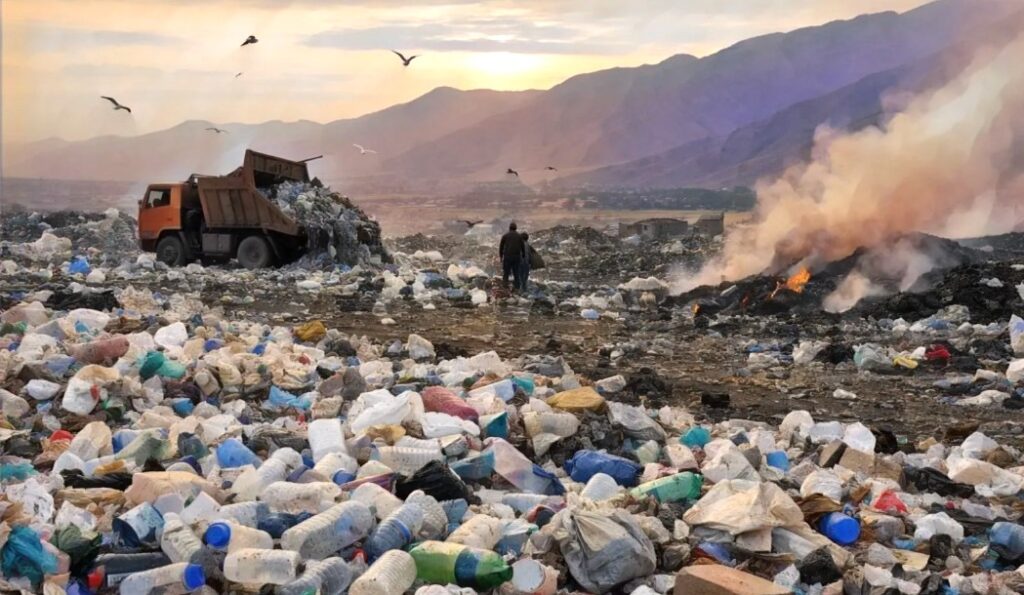
According to domestic sector-specific sources, more than nine million tonnes of municipal solid waste (MSW) are generated annually in Tajikistan, of which around 322,000 tonnes is plastic. The key feature of plastic waste is its extreme resistance to decomposition; it can persist in natural environments for decades or even centuries, accumulating in soil and water bodies. However, estimates of total waste generation vary widely depending on the source, with international organizations offering more conservative figures. The United Nations Environment Programme (UNEP), for instance, reports approximately two million tonnes of formally collected municipal waste generated annually in Tajikistan. This discrepancy is likely due to differing accounting methodologies. National statistics typically include waste from unauthorized dumps and the informal sector, while international estimates often rely on formally collected and officially documented waste. Still, even the most conservative figures highlight the significant environmental burden posed by Tajikistan’s waste-management system. Tajikistan’s Position in International Waste Rankings Waste accumulation and limited recycling capacity are reflected in global assessments. According to domestic reporting citing the 2024 Mismanaged Waste Index (MWI), 87.1% of Tajikistan’s waste is either not collected through organized systems or is disposed of in violation of environmental standards. This would place the country among those with the most vulnerable waste-management systems. In practice, this means waste is often dumped at unauthorized sites, openly burned, or dispersed into the environment. These practices place pressure on soil, water resources, and air quality, while also posing long-term risks to public health. This crisis is unfolding amid a global plastic-waste emergency. Even in countries with advanced recycling systems, the proportion of recycled plastic remains low. UNEP estimates that only around 9% of all plastic ever produced has been recycled; the rest remains in the environment. Regional Disparities: Cities vs. Rural Areas Tajikistan’s domestic statistics divide the country into three groups based on waste generation. The “Mega” group includes the largest cities and adjacent areas (e.g., Dushanbe, Khujand), home to roughly 4.2 million people. Average daily waste generation here is 1.013 kg per person, resulting in up to an estimated 148,000 tonnes of plastic waste annually. The “Medium” group comprises 10 mid-sized cities (e.g., Bokhtar, Kulob, Kanibadam), with a combined population of 1.99 million. Daily per capita waste generation in this group averages 0.902 kg, leading to an estimated 62,000 tonnes of plastic annually. In rural areas and smaller districts, with over 4 million residents, waste generation averages 0.79 kg per person per day. While the plastic share here is less precise, these regions still generate an estimated 100,000 tonnes of plastic waste per year. It is in these smaller settlements that waste-management infrastructure is most deficient. While cities have basic municipal services and landfills, many rural areas lack even waste-collection containers. As a result, waste is often dumped in ravines, rivers, or burned in backyards, meaning much of it goes unrecorded in official statistics and may significantly exceed documented levels. Where the Plastic Goes: Disposal, Loss, and Recycling Most plastic waste in Tajikistan is either buried or left in...

IAEA Extends Central Asia Uranium Cleanup Plan Through 2030

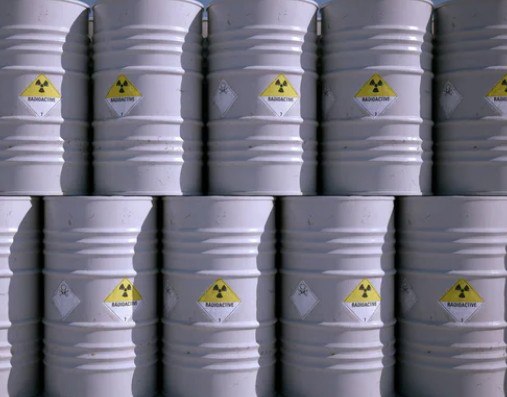
The International Atomic Energy Agency (IAEA) has released a new Strategic Master Plan extending its cooperation with Kyrgyzstan, Tajikistan, and Uzbekistan, alongside international partners, for the remediation of uranium legacy sites in Central Asia through 2030, according to World Nuclear News. Central Asia served as a key uranium source for the former Soviet Union, with mining and processing conducted over more than 50 years. In addition to local production, uranium ore was imported for processing, leaving vast amounts of radioactive waste stored in tailings and mining dumps. Most sites were shut down by 1995, but limited remediation both pre- and post-closure, has left behind long-term environmental and public health risks, including the threat of groundwater and surface water contamination in agriculturally vital areas. Since 2012, the IAEA’s Coordination Group for Uranium Legacy Sites has supported Central Asian countries with expert missions, legal and regulatory framework development, and remediation strategies. In 2017, the IAEA, the European Commission, the European Bank for Reconstruction and Development, the CIS Economic Council, and the governments of Kyrgyzstan, Tajikistan, and Uzbekistan adopted a Strategic Master Plan. Published in May 2018, it identified seven former uranium sites as the highest priority, with initial remediation costs estimated at €85 million. A revised plan was signed in September 2021, and the most recent version was presented in Tashkent in October 2025. It emphasizes long-term monitoring, maintenance, recordkeeping, and ongoing engagement with local communities to ensure the safe reuse of remediated land. “The new plan, an extension of our collaboration since 2017, focuses on enhancing the regulatory, technical, financial, and human resources for the long-term management of the remediated sites, according to IAEA safety standards,” said Hildegarde Vandenhove, Director of the IAEA Division of Radiation, Transport and Waste Safety. The updated plan puts the total cost of the Environmental Remediation Account programme at €113 million. This includes remediation work, project management, and contingencies. Since 2017, four of the seven high-priority sites have been fully remediated, two in Kyrgyzstan and two in Uzbekistan, while work continues at a fifth site in Kyrgyzstan. In Tajikistan, one site has been partially remediated, and another remains untouched. Lower-priority sites are also covered under the new plan, with some funding secured through bilateral agreements with Russia. Sardorbek Yakubekov, Deputy Chairman of Uzbekistan’s Industrial, Radiation and Nuclear Safety Committee, said the programme “stands as a vivid example of how the collective efforts of the international community… can yield tangible and lasting results.” As previously reported by The Times of Central Asia last December, Tajikistan still faces tens of millions of tons of radioactive waste from Soviet-era uranium mining, highlighting both the scale of the challenge and the critical need for sustained international support.

Glacier Growing Despite Global Warming Discovered in Tajikistan

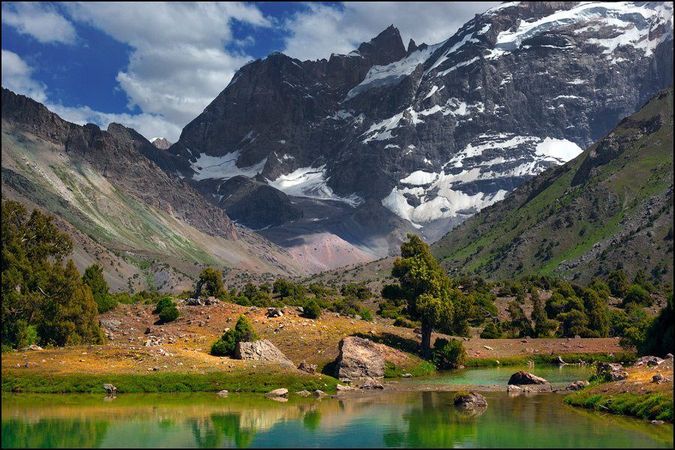
While most of the world’s glaciers are retreating due to climate change, a rare anomaly has been discovered in the Pamir Mountains. Researchers have identified a glacier in eastern Tajikistan that is not melting but is, in fact, growing. The discovery, reported by Popular Mechanics, concerns the Kon-Chukurbashi ice cap, a rare formation demonstrating resilience in the face of global warming. Located in the Sarykol Range of the Pamirs, near the Chinese border, the glacier lies on the slopes of the peak bearing the same name. The expedition reached an altitude of approximately 5,810 meters (nearly 19,000 feet) above sea level to conduct research. Scientists extracted two ice cores, each over 100 meters long, from the glacier. These cores preserve up to 30,000 years of climate history. One was sent to the Ice Memory Foundation’s underground archive in Antarctica for long-term preservation. The other was delivered to the Institute of Low Temperature Science at Hokkaido University in Japan, where Professor Yoshinori Iizuka is leading an investigation into the glacier’s mass gain. Researchers hope the analysis of the ice’s structure, trapped air bubbles, and chemical composition will help explain why this glacier defies global trends. Understanding these mechanisms could offer insight into glacial stability not only in Central Asia but globally. The region, often referred to as the “Roof of the World”, is characterized by extreme altitudes, a harsh continental climate, and a near-total absence of permanent human settlement. Due to its remoteness, access to Kon-Chukurbashi is limited primarily to scientific missions, underscoring the rarity and importance of the data collected. Scientists believe that studying this glacier could provide critical insights into the future of freshwater resources and climate risk assessment in mountainous regions worldwide.

Families in Tajikistan Relocated from Zones at High Risk from Disasters

Authorities in Tajikistan have relocated hundreds of families from areas vulnerable to natural disasters, continuing a multi-year effort to reduce risk to life and property. Jamshed Kamolzoda, Head of the Main Directorate for Civil Protection and Territories under the Committee for Emergency Situations and Civil Defense, outlined the scope of the relocation initiative, the primary threats identified, and the state resources allocated for disaster prevention. According to Kamolzoda, 328 households were moved from high-risk zones in 2024-2025. Of these, 154 were relocated in 2024, and 174 followed in 2025. The relocations were carried out under the government-approved “Medium-Term Plan for the Organized Resettlement of Environmental Migrants for 2024-2026,” which mandates the annual resettlement of 175 households based on risk assessments. Kamolzoda emphasized that the Committee annually conducts geological and engineering evaluations of vulnerable areas and develops corresponding risk-reduction measures in cooperation with other agencies. A central component of this effort remains the relocation of at-risk populations. “Special working groups have been established under the Committee, comprising experts in engineering, geology, construction, and emergency response,” he said. These groups inspect residential buildings and infrastructure on-site and issue recommendations grounded in technical and scientific analysis. Their findings form the basis for resettlement decisions. The relocation program is part of the broader National Strategy for Disaster Risk Reduction for 2019-2034, which aims to minimize human and material losses, bolster preventative measures, and improve public preparedness for emergencies. Mudslides, earthquakes, and avalanches are the most frequent natural disasters in Tajikistan, with earthquakes considered the most  dangerous due to their potential scale. With 93% of the country’s territory classified as mountainous, the most at-risk regions include the Gorno-Badakhshan Autonomous Oblast (GBAO), the Rasht Valley, the Zeravshan Valley, and the mountainous areas of the Sughd Region. In 2025 alone, the Committee recorded 287 emergency incidents across Tajikistan, 12 of which were natural disasters. The total estimated damage exceeded $2.2 million.

Kazakhstan and Uzbekistan Launch Study to Revise Irrigation Regimes in Syr Darya River Basin

With grant funding from the French Development Agency (AFD), Kazakhstan and Uzbekistan have launched a joint initiative to revise irrigation regimes in the Syr Darya River basin. The project, coordinated by the Executive Committee of the International Fund for Saving the Aral Sea, aims to optimize agricultural water use and improve environmental outcomes, according to Kazakhstan’s Ministry of Water Resources and Irrigation. In Kazakhstan, the study covers 550,000 hectares of irrigated farmland in the Turkestan Region and 254,000 hectares in the Kyzylorda Region. Ground-level measurements are underway alongside satellite-based remote sensing to collect precise and comprehensive data. The findings will inform updated irrigation schedules and help increase crop yields, reduce soil salinization and land degradation, and enhance water-use efficiency across the Syr Darya River basin. The project involves both the Kazakh Research Institute of Water Management and Uzbekistan’s Scientific Information Center of the Interstate Commission for Water Coordination (ICWC) of Central Asian countries. Completion is scheduled for 2026. Talgat Momyshev, Kazakhstan’s Deputy Minister of Water Resources and Irrigation, noted that the Aral-Syr Darya basin supplies water to over 35% of Kazakhstan’s irrigated land, with 98% of withdrawals going to agriculture. He emphasized the urgency of revising hydro modular zoning, which hasn’t been updated in four decades. “The existing zoning does not account for major changes in climate, soil conditions, and land reclamation status over the past 40 years. A revision is essential,” he said. The Syr Darya and Amu Darya rivers are vital for irrigating agricultural land throughout Central Asia. At a November meeting in Ashgabat, ICWC members from Kazakhstan, Kyrgyzstan, Tajikistan, Turkmenistan, and Uzbekistan approved new water distribution quotas for the non-growing season from October 1, 2025, to April 1, 2026. During the non-growing season, water is stored in reservoirs to meet irrigation needs for the following spring and summer. For the Syr Darya River, the total withdrawal quota for this period has been set at 4.219 billion cubic meters, allocated as follows: Uzbekistan: 3.347 billion m³ Kazakhstan: 460 million m³ (via the Dustlik Canal) Tajikistan: 365 million m³ Kyrgyzstan: 47 million m³ In the 2025 growing season, actual usage by country was as follows: Kazakhstan: 644 million m³ (out of a 909 million m³ quota) Uzbekistan: 7.012 billion m³ (of 8.8 billion m³) Tajikistan: 1.454 billion m³ (of 1.9 billion m³) Kyrgyzstan: 191 million m³ (of 270 million m³) The revision effort underscores growing regional cooperation around sustainable water management in one of Central Asia’s most critical river basins.

ADB Approves $3M for Glacier Monitoring in Tajikistan

The Asian Development Bank (ADB) has approved a $3 million grant to enhance Tajikistan’s glacier monitoring and natural disaster warning capabilities. The initiative aims to reduce risks linked to accelerated snow and ice melt, particularly in the country’s mountainous regions, and improve public safety. The grant is financed by the Japan Fund for Prosperous and Sustainable Asia and the Pacific (JFSB), which is supported by the Government of Japan through the ADB. Ko Sakamoto, ADB’s Permanent Representative in Tajikistan, emphasized the project's importance for the country. “Glaciers and snow are important for water supply, agriculture, and hydropower, but their rapid melting caused by extreme weather events can trigger devastating floods, avalanches, and other disasters,” he said. Sakamoto noted that the initiative will provide Tajikistan with modern tools for forecasting and responding to climate-related threats. The project is scheduled to be completed by 2029, with most activities to be implemented in high-risk areas of the Gorno-Badakhshan Autonomous Region. The Hydrometeorological Agency has been designated as the project’s executive body. Among the key components is the creation of a unified digital data system to improve the accuracy and timeliness of glacier and snow cover monitoring. The system will enhance the collection, storage, and analysis of data critical for disaster risk assessment. To manage the new infrastructure, technical specialists from the Hydrometeorological Agency will receive training in modern monitoring and data management methods. The project also emphasizes the active inclusion of women in the training process, aligning with ADB’s commitment to inclusive development. Improving early warning systems is another central element of the initiative. Plans include updating disaster risk management strategies, strengthening coordination between local authorities and communities, and enhancing the clarity and timeliness of public alerts related to glacial and snowmelt hazards. Tajikistan joined the ADB in 1998. Since then, the partnership has supported a wide range of infrastructure and development projects, including the modernization of major highways, such as the Obigarm-Nurobod, Dushanbe-Bokhtar, Aini-Penjikent, Dushanbe-Tursunzade, and Vose-Khovaling corridors, as well as the restoration of irrigation systems, expansion of water supply networks, and construction of schools and hospitals.