• KGS/USD = 0.01143 0%
  • KZT/USD = 0.00216 0%
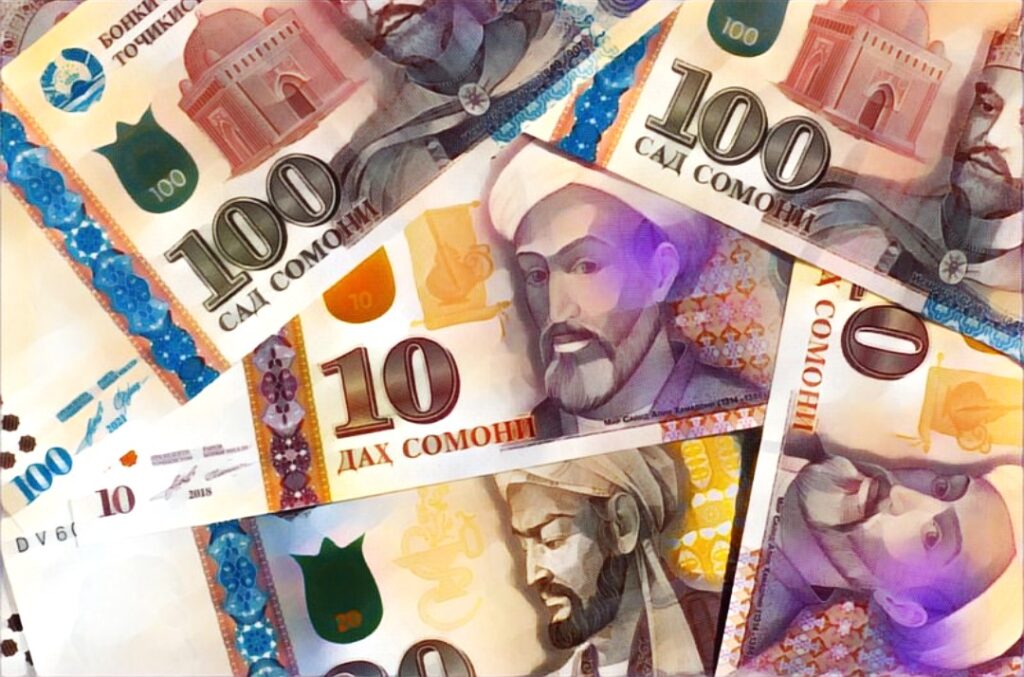
  • TJS/USD = 0.10684 -0.28%
  • UZS/USD = 0.00008 0%
  • TMT/USD = 0.28571 0%
  • KGS/USD = 0.01143 0%
  • KZT/USD = 0.00216 0%
  • TJS/USD = 0.10684 -0.28%
  • UZS/USD = 0.00008 0%
  • TMT/USD = 0.28571 0%
  • KGS/USD = 0.01143 0%
  • KZT/USD = 0.00216 0%
  • TJS/USD = 0.10684 -0.28%
  • UZS/USD = 0.00008 0%
  • TMT/USD = 0.28571 0%
  • KGS/USD = 0.01143 0%
  • KZT/USD = 0.00216 0%
  • TJS/USD = 0.10684 -0.28%
  • UZS/USD = 0.00008 0%
  • TMT/USD = 0.28571 0%
  • KGS/USD = 0.01143 0%
  • KZT/USD = 0.00216 0%
  • TJS/USD = 0.10684 -0.28%
  • UZS/USD = 0.00008 0%
  • TMT/USD = 0.28571 0%
  • KGS/USD = 0.01143 0%
  • KZT/USD = 0.00216 0%
  • TJS/USD = 0.10684 -0.28%
  • UZS/USD = 0.00008 0%
  • TMT/USD = 0.28571 0%
  • KGS/USD = 0.01143 0%
  • KZT/USD = 0.00216 0%
  • TJS/USD = 0.10684 -0.28%
  • UZS/USD = 0.00008 0%
  • TMT/USD = 0.28571 0%
  • KGS/USD = 0.01143 0%
  • KZT/USD = 0.00216 0%
  • TJS/USD = 0.10684 -0.28%
  • UZS/USD = 0.00008 0%
  • TMT/USD = 0.28571 0%

Viewing results 169 - 174 of 803

Twelve Years On, Tajikistan’s Police Reform Struggles to Deliver Real Change

Launched in 2013, Tajikistan’s police reform aimed to modernize law enforcement, increase transparency, and build public trust. Twelve years later, while some progress is acknowledged, experts say the main objectives remain largely unfulfilled. Signs of Progress Sadriddin Saidov, chairman of the Sughd regional branch of the Bar Association, notes improved accessibility to law enforcement. “Now citizens can file complaints through hotlines or electronically, which means people can reach out at any time,” he said. In remote areas, mobile police units, minibuses outfitted as service offices, now provide legal consultations and assistance. Gulchehra Kholmatova, Head of the Legal Assistance Group of the Civil Society Coalition against Torture and Impunity in Tajikistan, said there is increasing dialogue between civil society and the state. NGOs are more frequently invited to discuss human rights issues and, in some cases, are granted access to detention centers. Recent legislative changes have guaranteed detainees access to legal counsel and introduced safeguards against abuse. With international support, Tajik police officers now undergo human rights training aimed at preventing torture. Human rights advocate Larisa Aleksandrova cites specific gains in addressing domestic violence. The number of inspectors focused on preventing family violence has risen from 14 to 22, improving the registration and response to complaints. “The number of appeals to police regarding domestic violence has risen, and case registration has improved,” she said. Where the Reform Falls Short Yet many argue these reforms are more cosmetic than structural. Lawyer Bakhtiyor Nasrulloev contends the process resembles “degradation” rather than progress. “Access to local police stations has become more complicated due to multi-level controls and guards. This creates the impression that the police are distancing themselves from society, not moving closer,” he said. Nasrulloev criticized the reform as superficial, focusing on new uniforms and rebranding without addressing systemic issues. Kholmatova notes that public oversight of detention facilities remains weak, and torture cases often go unpunished. Aleksandrova adds that the reform slogan, “My police protect me,” has yet to become reality. “Nothing changes fundamentally. Even those who want to work honestly are constrained by a rigid system of control and subordination,” she said. Experts point to lingering Soviet-era practices, where success is measured by the number of cases opened rather than investigative quality. For Saidov, a key obstacle is low public engagement. “Reforms will succeed only if citizens actively express their opinions and proposals,” he said. Aleksandrova also highlights insufficient gender sensitivity in police responses to discrimination and domestic violence. What Experts Propose To move forward, Nasrulloev has called for a major restructuring that would separate investigative bodies from the Ministry of Internal Affairs and remove them from prosecutorial control. He also suggested making district inspectors and patrol officers accountable to local governments to better address community needs. He recommended merging overlapping departments, including criminal investigations, drug control, and organized crime units, to reduce bureaucracy and increase efficiency. Kholmatova highlighted the need for independent monitoring, greater transparency, and training that follows international human rights standards. Aleksandrova proposed mandatory video recordings of interrogations and the...

Central Asia’s Cotton Harvest: Between Reform, Coercion, and Economic Strain

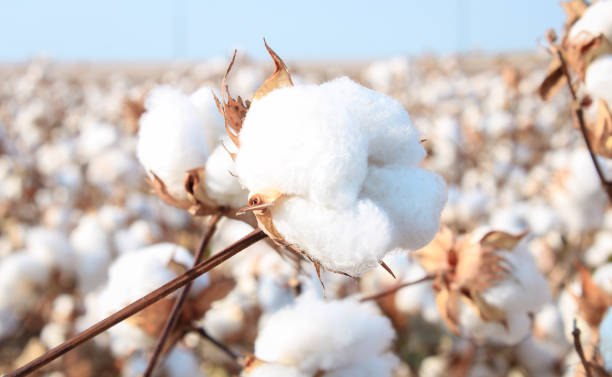
The 2025 cotton harvest is underway across Central Asia, revealing the region’s ongoing struggle to reconcile long-promised reforms with persistent coercion and deepening economic pressure. Once the crown jewel of Soviet central planning, cotton, long dubbed “white gold”, remains a politically sensitive and economically vital crop from Turkmenistan to Tajikistan. Turkmenistan: Forced Mobilization Persists In Turkmenistan, mass mobilization for the cotton harvest continues largely unchanged. Chronicles of Turkmenistan reported that during a September cabinet meeting, President Serdar Berdimuhamedov ordered all regions to begin picking on September 10. Just two days earlier, the Ministry of Health had instructed medical institutions to send doctors, nurses, orderlies, and even technical staff to the fields, each assigned a daily quota of 45 kilograms. In the town of Turkmenabat, hospital workers said doctors were expected to go to the fields immediately after overnight shifts. Those who refuse must hire substitutes at their own expense, paying about 50 manats ($14) per day. As a result, up to two-thirds of monthly salaries are spent covering these unofficial harvest duties. While younger staff are dispatched to the fields, older employees are left to maintain hospital operations with minimal support. Uzbekistan: Reform, but Lingering Coercion Uzbekistan, by contrast, has officially ended Soviet-style forced labor. The government abolished child and public-sector mobilization, scrapped state cotton quotas in 2020, and partnered with the International Labour Organization (ILO) to monitor the transition. In March 2022, the Cotton Campaign, a global coalition of rights groups, unions, and apparel brands, lifted its boycott of Uzbek cotton, citing the end of systemic forced labor. The campaign, which began in 2011, had gained the support of more than 330 global brands, including H&M and Zara. Yet coercion has not entirely disappeared. In a recent video published by Kun.uz, Dilfuza Tashmatova, deputy hokim (governor) for family and women’s affairs in the Surkhandarya region's Sariosiyo district, was seen berating mahalla (local governance body) employees for failing to recruit enough pickers. She demanded that each “women’s activist” find five to ten additional laborers, totaling 150 people, and threatened dismissal for non-compliance. “Are you even a woman? Shameless! Unscrupulous! If you don’t want to work, then leave!” she shouted from a cotton field. According to the U.S. Department of Agriculture, approximately 70% of Uzbekistan’s cotton is still harvested by hand, despite recent gains in mechanization. Labor shortages have plagued the past two harvests as fewer people are willing to take on the physically demanding work for low wages. Mahalla councils are often pressured to mobilize unemployed or low-income residents. Following public backlash, Uzbekistan’s Ministry of Poverty Reduction and Employment fined Tashmatova 20.6 million UZS (about $1,660) under Article 51 of the Administrative Code, which prohibits forced labor. From Soviet Monoculture to Market Reforms Uzbekistan’s long history of forced cotton labor dates back to its designation as the Soviet Union’s cotton monoculture. For decades, students, teachers, and medical staff were sent into the fields to meet state quotas. After independence, the system endured until international scrutiny spurred reforms. The ILO hailed...

Opinion: The Contact Group on Afghanistan – Central Asia Formulates a Regional Position

On August 26, special representatives on Afghanistan from Kazakhstan, Kyrgyzstan, Tajikistan, and Uzbekistan met for the first time in Tashkent. The meeting resulted in the creation of a permanent regional platform: the Contact Group on Afghanistan. This gathering was not only a continuation of commitments outlined in the joint statement from the most recent Consultative Summit of Central Asian heads of state, but also a step toward preparing for the next high-level format, scheduled for November in Tashkent. Formally, Turkmenistan was absent. Available information suggests the reasons were purely technical. Ashgabat was ready to join and expressed support for the results through its foreign ministry channels. The key outcome is that Central Asian states have, for the first time, shown their readiness to speak with one voice on an issue long shaped by competing external interests. This is not the start of forming a common position; that had already developed de facto in recent years. All Central Asian countries have supported trade and transit with Afghanistan, continued supplying electricity and food, and maintained working contacts with the Taliban, while avoiding extremes. The Tashkent meeting institutionalized this approach: parallel tracks have now shifted, cautiously, toward coordination. Informal unity has been formalized into a tool. Unlike external players, who often cloak interests in grand rhetoric, Central Asia acts openly and pragmatically. The logic is simple: whatever is done for Afghanistan is, in fact, done for oneself. That is the distinctive feature of the regional approach - no ideological cover, no attempts to reshape Afghanistan. Examples are straightforward. Electricity continues to flow even when payments are delayed - not as charity, but as an investment in security. A blackout in Afghanistan could trigger refugee flows and threats heading north. Exports of flour and fuel sustain Afghan markets but also expand outlets for Central Asian producers. Participation in trans-Afghan corridors is not a gift to Kabul but an opportunity for Central Asia to anchor itself in southern logistics routes. Ultimately, every step “for Afghanistan” is primarily for the region itself. If Kabul ignores basic rules, cooperation will simply stop. In politics, there are no eternal friends, only eternal interests. The new format does not yet imply collective pressure on the Taliban. Rather, it creates conditions for each country to conduct more substantive bilateral dialogue, but grounded in a shared position. Until now, Central Asia has mainly spoken to the Taliban about trade, transit, and infrastructure. The Contact Group now makes it possible to add another dimension: clarifying boundaries of what is acceptable on issues like extremism, border escalation, or water pressure. For now, “red lines” are unlikely, since the Taliban have not crossed them. The situation remains manageable, leaving room for constructive dialogue. Equally important, the Contact Group is not a threat or ultimatum. Coordination is meant to expand opportunities for dialogue, not limit them. In the long run, this could evolve into a sustainable C5+A format. Afghanistan would then be integrated into regional frameworks not as a problem to be managed, but as...

Tajikistan Sends Large Convoy with Quake Aid to Afghanistan

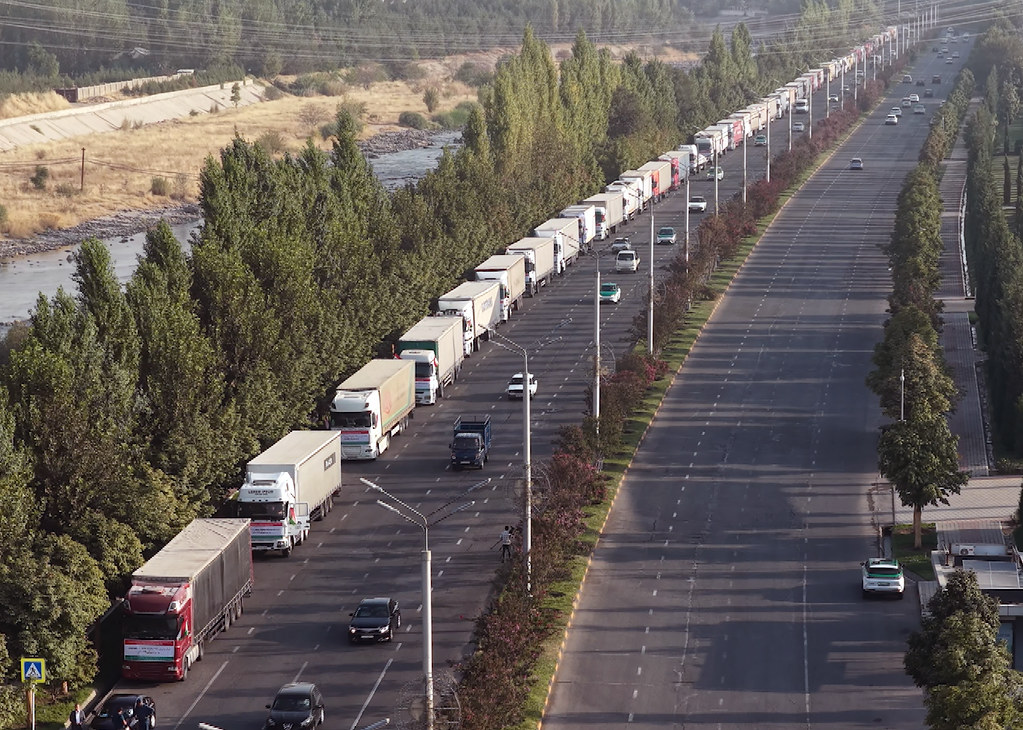
Tajikistan has said it has sent more than 3,000 tons of humanitarian aid to Afghanistan, one of the biggest dispatches of supplies from another country since a devastating earthquake in eastern Afghan provinces on August 31. Photographs released by the office of President Emomali Rahmon show a long line of trucks on a highway, apparently headed to the border with Afghanistan on Monday. The delivery came as the United States and other countries congratulated Tajikistan ahead of the 34th anniversary of its Sept. 9, 1991 independence from the collapsing Soviet Union. “The aid loaded on a caravan of trucks consists of 24 types of necessary products and materials, including flour, oil, sugar, rice, bedding, clothing and footwear for children, adolescents and adults, tents, building materials, reinforcement, boards, slate, cement, and other goods and products,” Tajikistan’s presidential office said. It said the aid exemplified Tajikistan’s “humane and good-neighborly policy.” Tajikistan retains security concerns about its border with Afghanistan. Tajik border guards and fighters with Afghanistan’s Taliban government exchanged fire in an area along the border on August 24, though the two sides later met to reduce tensions. Tajikistan’s aid convoy traveled to Afghanistan two days after Uzbekistan handed over 256 tons of aid in the Afghan border city of Hairatan. Afghanistan’s Ministry of Foreign Affairs has also thanked Turkmenistan, Kazakhstan, and Kyrgyzstan for assistance following the quake, which killed at least 2,200 people. It expressed gratitude in a post on X that listed dozens of countries that have sent help. Central Asian countries in particular have been building ties with Afghanistan as they seek to expand trade routes. The quake destroyed thousands of homes, and humanitarian workers are still struggling to reach affected communities in remote, mountainous areas. Shannon O’Hara, a senior United Nations aid coordination official in Afghanistan, said on Monday that emergency responders are prioritizing aid to women, children, and people with disabilities. “In Afghanistan, in recent years, women and girls have been pushed to the very margins of society and survival,” O’Hara said, according to a U.N. statement. “We know from previous earthquakes and other crises that women and girls always bear the heaviest burden.”

Cotton Deadlock: Why Tajikistan’s Farmers Are Working at a Loss

Tajikistan’s cotton farmers are facing a growing crisis: while global cotton prices remain high, local producers are forced to sell at rates below production cost, threatening the viability of an entire sector that once served as a strategic pillar of the national economy. Farmers say they are currently paid just 6-6.5 TJS ($0.66-0.72) per kilogram for raw cotton, while the cost of production stands at 7-8 TJS ($0.77-0.88). Many now warn that without government intervention, the cotton industry is unsustainable. Selling Below Cost “If we don’t sell for at least 10 TJS ($1.10) per kilogram, we will go bankrupt. The production cost is simply too high,” said a farmer from Khamadoni district. He estimates that it takes between 10,000 and 12,000 TJS ($1,100-1,320) to cultivate one hectare of cotton. Yet this season, even the most optimistic buyers offer well below that value. In Khamadoni, the crisis is compounded by non-operational cotton ginning factories. Farmers were instructed in the spring to plant cotton, but come harvest time, they discovered there was no local processing infrastructure in place. Many are now searching for buyers in other districts, where prices remain equally unprofitable. Despite official claims of "freedom of crop choice," farmers say that in practice they face unspoken pressure from local authorities. Refusing to grow cotton can complicate land lease renewals or access to loans. Intermediaries Reap the Profits On the international market, cotton prices hover around $1.50-1.60 per kilogram. But Tajik producers remain disconnected from global buyers. Instead, they rely on a procurement system that disproportionately benefits intermediaries. “Without subsidies and higher purchase prices, cotton farming will collapse. The current procurement system works in favor of intermediaries, not the farmers,” said economist Farrukh Saidov. Labor costs add to the burden. Pickers are paid just 1.5 TJS ($0.16) per kilogram while many can earn up to 200 TJS ($22) a day in construction. This pay disparity is driving workers away from agriculture. Uzbekistan Supports, Tajikistan Promises In neighboring Uzbekistan, cotton production has become more viable thanks to government subsidies of 2.1 TJS ($0.23) per kilogram. Tajikistan offers no such support, leaving local farmers to operate at a loss. On paper, however, the government has ambitious plans. The national strategy for the development of the cotton and textile industry through 2040 includes proposals for preferential loans, grants, tax breaks, and greater participation of farmers in setting factory prices. Plans also call for establishing a national cotton and textile association, retraining agricultural specialists, and bringing in foreign experts. But on the ground, farmers say these promises remain unfulfilled. Video appeals shared widely on social media reflect growing desperation among rural communities. “We are forced to sell cotton below cost. Without state support, this is a path to ruin,” one farmer said. Experts agree that systemic reforms are urgently needed. These would include introducing subsidies, creating direct access to export markets, and eliminating unofficial crop mandates. For now, cotton, once a key strategic industry, is fast becoming a symbol of Tajikistan’s broader agricultural dysfunction.

Why Tajikistan Cannot Give Up Remittances from Migrant Workers

Labor migration is no longer a temporary phenomenon in Tajikistan. Remittances from migrants now account for nearly half of the country’s GDP, supporting families, sustaining the national budget, and helping preserve social stability. But at the same time, the country has found itself dangerously dependent on external factors, factors that directly impact the welfare of millions of citizens. Thirty Years On Since gaining independence, Tajikistan has undergone a transformation in which labor migration has become a systemic feature of society. While the country remained predominantly agrarian during the Soviet era, over the past three decades, the word “Tajik” has become closely associated, particularly across the post-Soviet space, with low-skilled labor abroad. This shift traces back to the 1990s, when Tajikistan, unlike its Central Asian neighbors, failed to restructure its economy and descended into civil war. With factories shuttered, jobs scarce, and political instability rampant, tens of thousands of people left the country. The early waves of migrants were mainly working-age men. Some educated professionals moved to Europe or the US, others to Kazakhstan, but most went to Russia, where cultural and linguistic ties remained strong and the labor market was more accessible. Even after the peace agreement, migration continued and even intensified. Today, more than 30 years later, the annual outflow of the working-age population remains consistently high. The Economy on the Migrant “Needle” Official data record up to 600,000 migrant departures per year. However, the real number is likely higher: many migrants do not return home between seasons, and some have settled permanently in Russia. Since the war in Ukraine began in 2022, migration routes have shifted again, some now leave for Europe and the United States, sometimes under refugee status. According to the World Bank, in 2024, remittances from migrant workers reached $5.8 billion, representing 45.3% of Tajikistan’s GDP, a global record. Over the past 17 years, this figure has dropped below 30% only three times. For the last three years, remittances have consistently made up nearly half of the national economy. A Hushed-Up Contribution Despite the critical role of labor migration, the topic is largely avoided by the Tajik authorities. As far back as 2013, then-head of the National Bank Abdujabbor Shirinov refused to disclose statistics, stating that “this issue could take on a political connotation.” In 2019, his successor, Jamshed Nurmahmadzoda, advised journalists “not to focus on migrants’ money.” Today, the National Bank attributes the lack of up-to-date data to “technical difficulties” linked to electronic and online transfers. Meanwhile, the Ministry of Labor has not published migration figures for Russia in two years, citing discrepancies with Russian data. As a result, one of the main sources of economic stability remains unacknowledged at the official level. What Keeps the Budget Afloat Tajikistan’s economy remains structurally fragile. Its export potential is 3-4 times smaller than its import demand. Foreign currency earned through trade covers only about a quarter of the country’s imports, the rest is financed by remittances. These funds support domestic consumption: families use them to buy...