• KGS/USD = 0.01144 0%
  • KZT/USD = 0.00216 0%
  • TJS/USD = 0.10659 0%
  • UZS/USD = 0.00008 0%
  • TMT/USD = 0.28530 0%
  • KGS/USD = 0.01144 0%
  • KZT/USD = 0.00216 0%
  • TJS/USD = 0.10659 0%
  • UZS/USD = 0.00008 0%
  • TMT/USD = 0.28530 0%
  • KGS/USD = 0.01144 0%
  • KZT/USD = 0.00216 0%
  • TJS/USD = 0.10659 0%
  • UZS/USD = 0.00008 0%
  • TMT/USD = 0.28530 0%
  • KGS/USD = 0.01144 0%
  • KZT/USD = 0.00216 0%
  • TJS/USD = 0.10659 0%
  • UZS/USD = 0.00008 0%
  • TMT/USD = 0.28530 0%
  • KGS/USD = 0.01144 0%
  • KZT/USD = 0.00216 0%
  • TJS/USD = 0.10659 0%
  • UZS/USD = 0.00008 0%
  • TMT/USD = 0.28530 0%
  • KGS/USD = 0.01144 0%
  • KZT/USD = 0.00216 0%
  • TJS/USD = 0.10659 0%
  • UZS/USD = 0.00008 0%
  • TMT/USD = 0.28530 0%
  • KGS/USD = 0.01144 0%
  • KZT/USD = 0.00216 0%
  • TJS/USD = 0.10659 0%
  • UZS/USD = 0.00008 0%
  • TMT/USD = 0.28530 0%
  • KGS/USD = 0.01144 0%
  • KZT/USD = 0.00216 0%
  • TJS/USD = 0.10659 0%
  • UZS/USD = 0.00008 0%
  • TMT/USD = 0.28530 0%

Viewing results 175 - 180 of 786

Central Asia Advances Agenda at Record-Breaking SCO Summit in Tianjin

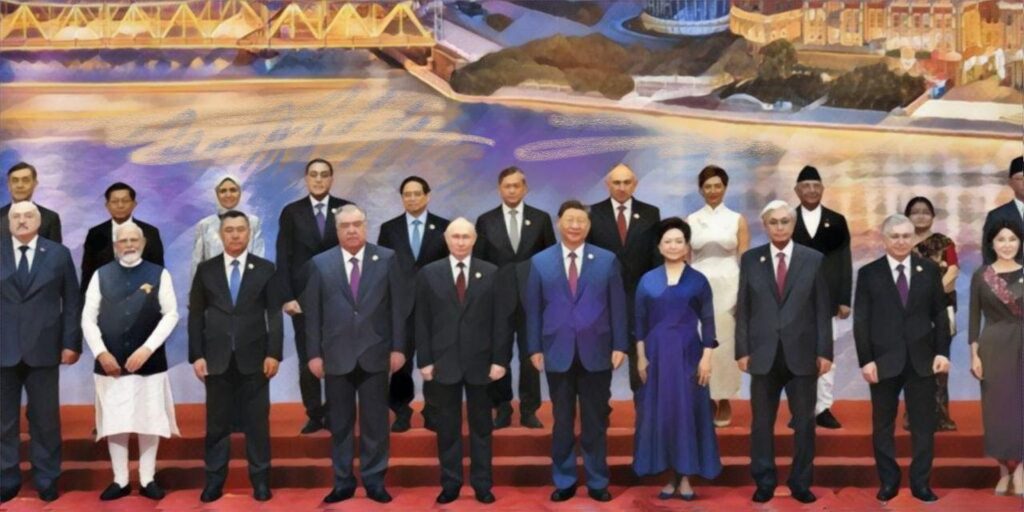
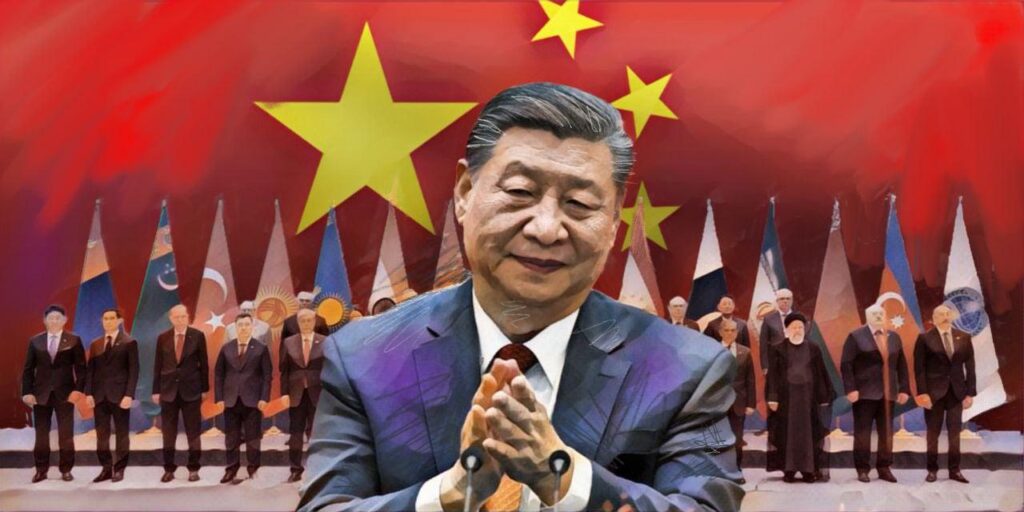
At the opening ceremony of the SCO Summit in Tianjin on August 31, Chinese President Xi Jinping, Russian President Vladimir Putin, and India’s Prime Minister Narendra Modi joined Central Asian leaders in a group photo. The Tianjin summit - China’s second time hosting the SCO and its “largest-ever” summit - was attended by all five Central Asian presidents alongside a host of key countries. In his welcome speech, Xi highlighted that the SCO now bears “greater responsibility” for safeguarding regional peace and stability, and said the summit was expected to produce a new 10-year development strategy. Xi proposed fast-tracking an SCO development bank, pledging 2 billion yuan ($280 million) in aid plus 10 billion yuan in loans to seed the fund. Xi also urged members to oppose a “Cold War mentality” and support an inclusive, multilateral trading system in a pointed rebuke to recent U.S. tariffs. Central Asian Leaders and Their Messages Kazakh President Kassym-Jomart Tokayev opened the summit for his delegation, thanking Xi and praising China’s “consistent policy aimed at strengthening security, stability, economic cooperation, and cultural ties within the SCO framework.” In his address, Tokayev marked the symbolic 80th anniversaries of the end of World War II, noting the value of unity and solidarity which he said the SCO embodies. Tokayev reaffirmed Kazakhstan’s support for a multipolar world order, respect for sovereignty, and mutually beneficial trade and investment, and pledged to keep combating the “three evils” of terrorism, separatism, and extremism. Beyond the opening remarks, Central Asian leaders used the summit to lay out their strategic priorities. Speaking at the heads-of-state meeting, President Shavkat Mirziyoyev of Uzbekistan called for further reform of SCO institutions and expansion of its dialogue partners. Mirziyoyev advocated for new cooperation mechanisms - a regional center for critical materials, a “Unified SCO Transport Space” linked to China’s Belt and Road Initiative, digital platforms, and green energy corridors - and proposed measures to boost intra-regional trade. Notably, Mirziyoyev urged the signing of an Agreement on Trade Facilitation, saying it “will give a boost to the growth of intra-regional trade within the SCO area.” In his closing remarks, he congratulated Kyrgyzstan’s Sadyr Japarov on assuming the SCO chairmanship for 2026, setting up the next summit. Tajik President Emomali Rahmon did not address the leaders’ meeting, but in a pre-summit interview, he highlighted China’s role in the SCO, crediting China with significant investment in Tajik infrastructure and energy, and welcoming Beijing’s proposal to locate an SCO Anti-Drug Center in Dushanbe. "We are confident that the center will make tangible contributions to strengthening regional cooperation and combating illicit drug trafficking," he stated. As a founding member, Rahmon stressed that the SCO’s top priority has long been Central Asian security and said that Tajikistan fully backs China’s Tianjin agenda, citing Beijing’s support for roads, tunnels, and power lines in Tajikistan. The incoming 2026 chair, Sadyr Japarov of Kyrgyzstan, met with Xi on August 31, reviewing plans to deepen all-around cooperation. Xi stated that China will fully support Kyrgyzstan in...
Knowledge Day in Central Asia: What’s Changing in Schools This Academic Year?

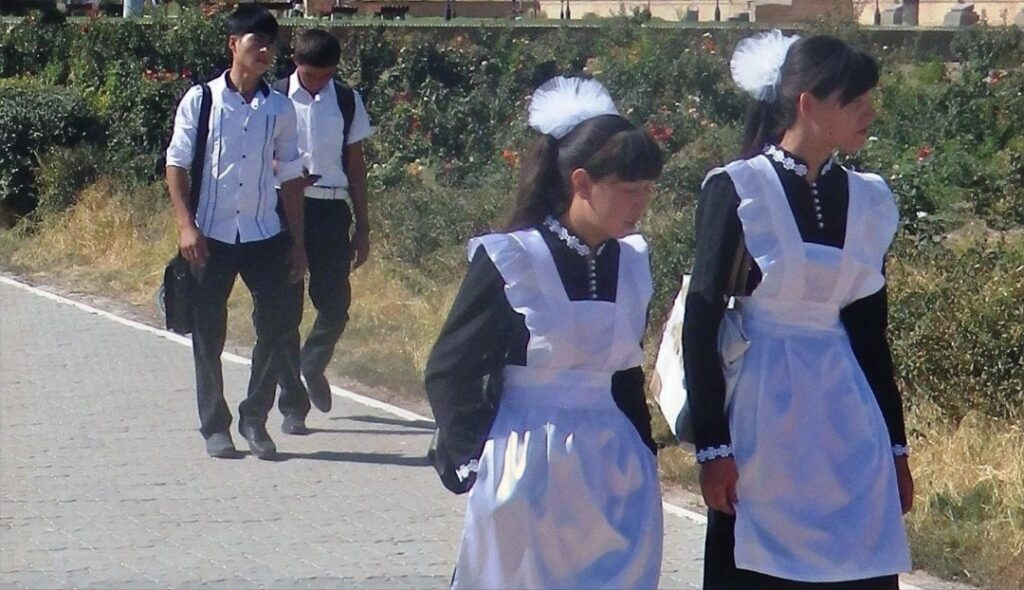
Secondary schools across Central Asia are embracing modern teaching methods and aiming to elevate the status of teachers, as the new academic year begins with a wave of reforms. Kazakhstan: AI in Classrooms and Teacher Protections In Kazakhstan, the academic year begins on September 2, as Constitution Day on the 1st is a national holiday. Over 370,000 first-graders are expected to enter school this year. As previously reported by The Times of Central Asia, significant reforms are underway in the country’s education system. Amendments to the Law “On the Status of Teachers” will shield educators from non-teaching duties and protect them from undue legal responsibility. President Kassym-Jomart Tokayev has emphasized that educators should not be held accountable for incidents involving children that occur outside school or due to parental negligence. New “personal safety” lessons will also be introduced across all educational levels, from kindergartens to colleges. These age-appropriate classes will cover topics ranging from water safety and interaction with strangers to cyberbullying, financial literacy, and legal awareness. Schools and colleges are also rolling out DosbolLIKE, an anti-bullying initiative piloted in 50 schools last year, designed to curb bullying in student communities. Artificial intelligence will be introduced into the curriculum via “Digital Literacy” and “Computer Science” classes. AI-focused online courses called Day of AI are now available for grades 1-11, with training programs also developed for teachers. Despite the construction of 1,200 new schools accommodating over a million students in recent years, the high birth rate continues to strain infrastructure. In Almaty alone, the shortage exceeds 34,000 school places. Uzbekistan: Ivy League Aspirations and Civic Values In Uzbekistan, school also starts on September 2, a customary date. The first lesson will be conducted under the motto: “In the name of the Motherland, in the name of the nation, in the name of the people!” According to the Ministry of Preschool and School Education, 738,000 first-graders will receive gifts from President Shavkat Mirziyoyev. An international school is set to open this September, initially enrolling 60 top-performing graduates of the 8th grade. The curriculum will include leadership and social activism training, with a focus on preparing students for admission to Ivy League universities. A nationwide talent identification and development program is also in development. The weekly Kelazhak Soati (“Hour of the Future”) class will debut this year, aiming to strengthen students’ moral values and encourage reflection on their future roles in society. Kyrgyzstan: Transition to 12-Year Education This academic year marks Kyrgyzstan’s official transition to a 12-year education system. The reform affects lesson structures, curricula, and textbooks. The transition, to be completed by 2028, includes the redistribution of students across grade levels. For example, third graders born in 2015 will skip to fifth grade, and sixth graders born in 2012 will advance to eighth grade. Further shifts are scheduled for the next two academic years. While the extended education model is expected to allow deeper learning and skills development, the transition period may cause confusion among students, parents, and educators. Adapting to new...

Opinion: China’s Diplomatic Power Play Unfolds in Tianjin

On August 31, the next SCO Plus summit will begin in the Chinese city of Tianjin and run through to September 1. Judging by the list of participants, China, under Chairman Xi Jinping, is positioning itself to challenge the United States for influence over the global geopolitical agenda. As part of the Shanghai Cooperation Organization (SCO) summit, Xi will host a formal banquet for the attending heads of state, according to the Chinese Foreign Ministry. Xi is also scheduled to chair the 25th meeting of the SCO Council of Heads of State and lead the expanded SCO Plus session - the largest since the establishment of the organization - where he will deliver a keynote address. Clues to the themes of Xi’s speech can be found in the diverse array of leaders expected to attend. Chinese Deputy Foreign Minister Liu Bin confirmed at a Beijing press conference that among the SCO member states, participants will include Russian President Vladimir Putin, Indian Prime Minister Narendra Modi, Pakistani Prime Minister Shahbaz Sharif, Iranian President Masoud Pezeshkian, Belarusian President Alexander Lukashenko, Kazakh President Kassym-Jomart Tokayev, Kyrgyz President Sadyr Japarov, Tajik President Emomali Rahmon, and Uzbek President Shavkat Mirziyoyev. Several leaders from non-member states will also join, including Turkish President Recep Tayyip Erdoğan; Mongolian President Ukhnaagiin Khurelsukh; Azerbaijani President Ilham Aliyev; Indonesian President Prabowo Subianto; and Turkmen President Serdar Berdimuhamedov, whose participation suggests Ashgabat’s cautious but growing interest in regional dialogue. Also in attendance will be the prime ministers of Armenia (Nikol Pashinyan), Cambodia (Hun Manet), Nepal (Khadga Prasad Sharma Oli), Egypt (Mostafa Madbouly), Malaysia (Anwar Ibrahim), and Vietnam (Pham Minh Chinh). The summit will also host key international institutional leaders, including UN Secretary-General António Guterres; SCO Secretary-General Nurlan Yermekbayev; CIS Secretary-General Sergey Lebedev; ASEAN Secretary-General Kao Kim Hourn; CSTO Secretary-General Imangali Tasmagambetov; EAEU Chairman Bakytzhan Sagintayev; and AIIB President Zhou Ji. Kazakhstan will be prominently represented. In addition to President Tokayev, three high-profile Kazakhs mentioned above - Yermekbayev, Tasmagambetov, and Sagintayev - will attend in their capacities as heads of international organizations. Their presence signals Astana’s growing diplomatic weight and reflects the strategic outreach led by Tokayev, himself a former UN Deputy Secretary-General. This background likely contributes to the rapport between Kazakhstan and Guterres. The summit will also inevitably draw attention due to the presence of the Armenian and Azerbaijani leaders, figures central to the ongoing realignment in the South Caucasus. Both Baku and Yerevan have increasingly distanced themselves from Moscow, favoring closer ties with Turkey and the United States. The recent peace agreement between Aliyev and Pashinyan, signed in the presence of President Trump, underscored the growing American role in the region and the diminishing influence of Russia. While Moscow appears willing to tolerate this shift, Tehran views it with deep concern, especially after its recent 12-day conflict with Israel. Russia, for its part, seems to be signaling disengagement from the region. Its silence in response to Baku and Yerevan’s Western overtures suggests strategic apathy, if not withdrawal. Beijing, of course, is...

Tajikistan’s Rogun Dam Delayed as World Bank Freezes Funding

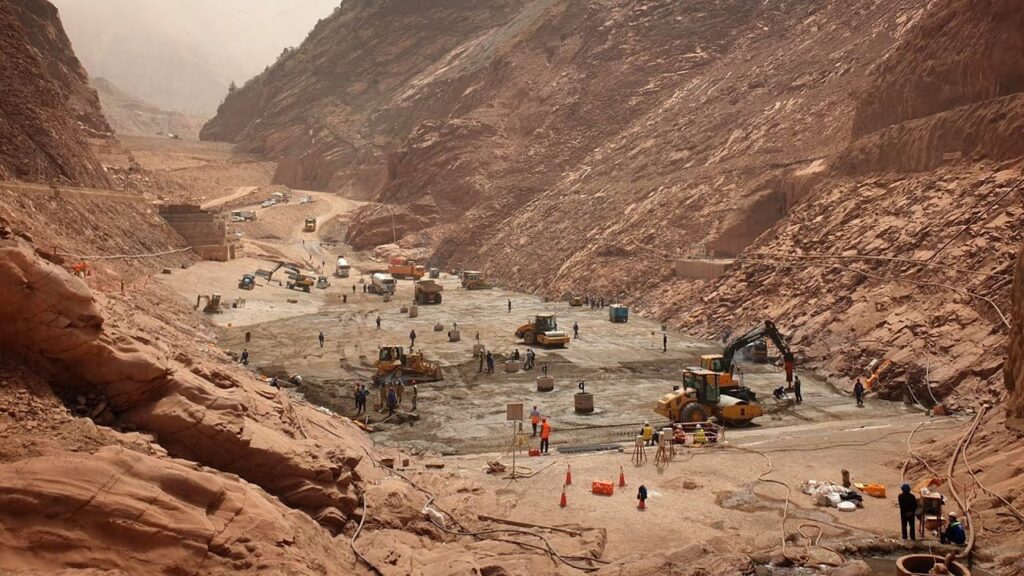
The future of Tajikistan’s flagship infrastructure project, the Rogun Hydropower Plant, has been thrown into doubt as the World Bank and other development partners delay financing until the government fulfils key conditions, Nezavisimaya Gazeta reported. The move reflects growing concerns among environmental groups and downstream communities in Uzbekistan and Turkmenistan over the dam’s ecological risks to the Amu Darya River. A Strategic Asset With Mounting Costs The Rogun project, often hailed as Tajikistan’s greatest national undertaking, is central to the government’s ambitions for energy independence and regional electricity exports. But it also represents one of the country's most significant financial liabilities. Standard & Poor’s Global Ratings recently affirmed Tajikistan’s sovereign credit rating at “B/B” with a stable outlook, but cautioned that Rogun is so costly it may never generate sufficient returns. The agency warned that the project could push the national budget into deficit by the end of 2025. Construction of the dam began in 1976 under the Soviet Union but was suspended during Tajikistan’s civil war. Attempts to restart the project in the early 2000s stalled over disagreements with Russian partners. In 2016, the government relaunched the project with support from the World Bank, awarding the main construction contract to Italy’s Salini Impregilo (now Webuild). That same year, the Vakhsh River was diverted and dam construction resumed. Two turbines were commissioned in 2018 and 2019, but significant progress has since slowed. To complete the plant, Tajikistan must install six additional turbines, raise the dam from its current 135 meters to the planned 335 meters, and secure an estimated $6.4 billion in new funding, roughly 40% of the country’s projected GDP for 2025. Conditions for Continued Support The World Bank has suspended further financing until Tajikistan presents a credible financing strategy that avoids unsustainable public debt, finalizes long-term electricity export agreements, and implements robust dam safety protocols. Without these conditions in place, the Bank has stated it cannot continue its support. Environmental opposition to the project has also intensified. The international coalition Rivers without Boundaries has warned that filling the Rogun reservoir could reduce Amu Darya river flows by more than 25%, accelerating desertification and endangering the livelihoods of up to 10 million people in Uzbekistan and Turkmenistan. Alexander Kolotov, a representative of the coalition, told Nezavisimaya Gazeta that the World Bank’s board is expected to review a report based on complaints filed by downstream communities, though no specific date has been set. Kolotov emphasized that Rogun poses one of the largest economic risks to Tajikistan and questioned whether international lenders should deepen their involvement. Broader Economic Fragility Tajikistan faces additional vulnerabilities. The country remains heavily reliant on remittances from labor migrants in Russia, lacks economic diversification, and is projected to lose its “least developed country” status in 2026, potentially curtailing its access to concessional aid and financing. For now, the Rogun Hydropower Plant stands as both a symbol of national aspiration and a looming financial gamble. Whether it becomes a cornerstone of regional energy security or a cautionary tale...

Melon Pyramids and Empty Pantries: Tajik and Turkmen Feasts Amid Everyday Shortages

Pyramids of various kinds of melons, fruits laid across the ground to form intricate, traditional patterns, as well as an abundance of fruit, dried fruit, nuts, and bread overflowing from tables, and even fountains, surrounding the edible ground arrangement, and grapes hanging from poles. As an advertisement for national products, a background for international events, or a gift for an ally, Tajikistan is gaining fame for elaborate displays of fruit. It is an amazing sight, with fruits and nuts arranged in patterns that cover large areas of the pavilions and gardens where foreign guests are being entertained. However, as good as these lavish presentations look and taste, these cornucopias are being exhibited in some of Central Asia’s poorest countries, and, unsurprisingly, there has been some discontent and some scandals. For Sale On August 16-17, there was an exhibition of Tajikistan’s products and crafts in the Kazakh capital, Astana, with melon pyramids taking center stage in an exhibition that also featured “over a thousand tons of products: fresh fruits and vegetables, nuts, [and] dried fruits.“It was a return performance for the Tajik “masters” who arrange the exhibitions. Astana hosted a fair of Tajik products in August 2023 that drew a big crowd, some of whom were overly anxious to get their hands on the goods. Dozens of people started taking melons and grapes from the pyramids, breaking shelves and decorations in the process. [caption id="attachment_35359" align="aligncenter" width="1597"] Tajik fair in Astana, 2023; image: public domain[/caption] Impress the Guests One of the most memorable grand displays of fruit occurred when Tajikistan hosted the summit of leaders from the Commonwealth of Independent States (CIS) on September 27, 2018. On the eve of the summit, Tajik President Emomali Rahmon walked his guests through a garden flanked by enough food to feed a small town for a month. It was the first time such a spread had been laid out for guests at an international gathering, with Rahmon seeming to appreciate having an agricultural background when hosting a diplomatic event. In July 2019, Rahmon met with then-Kyrgyz President Sooronbai Jeenbekov in the northern Tajik town of Isfara. Conflicts along the Kyrgyz-Tajik border were becoming increasingly deadly, and the two presidents met to discuss ways to ease tensions and resolve the festering problems along the frontier. While the two presidents talked, Rahmon guided Jeenbekov through “6 pyramids… of watermelons and melons, as well as almost 20 types of national breads.“ [caption id="attachment_35360" align="aligncenter" width="960"] Sooronbay Jeenbekov and Emomali Rahmon in Isfara; image: press service of the President of the Republic of Tajikistan[/caption] When Dushanbe hosted the Shanghai Cooperation Organization (SCO) summit in September 2021, the feast on the eve of the summit was every bit the equal of the CIS summit in 2018 and featured “huge pyramids of fragrant melons and watermelons, carpets of fresh fruit, grapes cascading like a waterfall, and even fountains of melons.” Rahmon brought his fruit feast to St. Petersburg in October 2022 when CIS leaders gathered for an informal CIS summit...

Nigora Fazliddin: The Social Media Storyteller Bringing Life in Tajikistan to the World

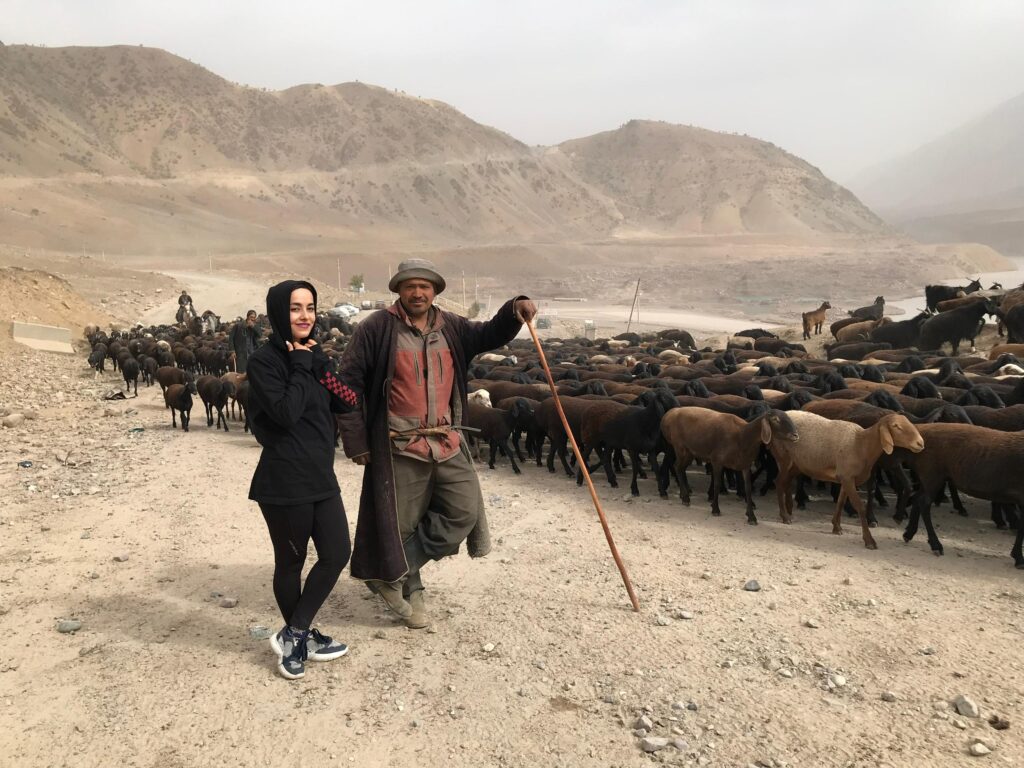
For all its beauty and Silk Road history, Tajikistan remains one of the least visited countries on earth. Life in its epic mountain ranges is rarely captured by photographers, and documentary films are few and far between – mainly half-hearted vlogs by the foreigners who pass through on the Pamir Highway. But in recent years, one Tajik filmmaker and travel influencer has made it her mission to show both her own people and the wider world what makes her homeland so extraordinary. Nigora Fazliddin, a former journalist from Dushanbe, is part of a new generation of creators using social media to bridge cultural distances. Posting simple videos and photographs from her journeys in Tajikistan, she captures the landscapes and communities that outsiders, and even many Tajiks, rarely get to see. "This love I have for our land – its wild beauty, its silence, its soul – I try to share with others," she tells The Times of Central Asia. "On X I mostly reach an international audience, since it's not very popular in Tajikistan. But on Instagram, it's a different story. That’s where Tajiks find me, and where I find them." [caption id="attachment_35211" align="aligncenter" width="400"] Image: Nigora Fazliddin[/caption] One of her favorite discoveries, she says, is Shirkent National Park in the south-west of the country, where fossilized dinosaur footprints mark the earth. "It gives you goosebumps to stand there and imagine creatures walking those same paths millions of years ago," she adds. Then there are the Pamirs, often called “the roof of the world.” At 7,495 meters, Peak Somoni attracts mountaineers from Central Asia and further afield. The region is also home to the rare Marco Polo sheep and shaggy yaks, which are found only here. But what lingers most for Fazliddin is not the challenge of climbing or the sight of wildlife, but the solitude of valleys so remote that no car can reach them. She also cherishes journeys into the Yaghnob Gorge, where people still live as their ancestors did. There she met a shepherd in his seventies, Mirzoali, who has spent four decades with his flock among the peaks. "He told me, “I’ve been a shepherd for 40 years – and I never get tired of it.’” His secret? Clean air, peace, a healthy routine – and living in the mountains year-round. That’s the kind of wisdom you can only find in the mountains," she says. [caption id="attachment_35209" align="aligncenter" width="400"] Image: Nigora Fazliddin[/caption] What Fazliddin shares online is more than travel content. For many Tajiks, especially those in cities, her images bring new perspectives to familiar places. "My Instagram has become like a mirror where people can see themselves, their roots, and the beauty they grew up with – but may have never really looked at," she explains. The responses have been moving. Her social media followers now invite her to visit their villages. For Fazliddin, these moments confirm that her work is worth doing: "It makes me feel like what I do matters – even in...