• KGS/USD = 0.01143 0%
  • KZT/USD = 0.00216 0%
  • TJS/USD = 0.10633 -0.28%
  • UZS/USD = 0.00008 0%
  • TMT/USD = 0.28571 0%
  • KGS/USD = 0.01143 0%
  • KZT/USD = 0.00216 0%
  • TJS/USD = 0.10633 -0.28%
  • UZS/USD = 0.00008 0%
  • TMT/USD = 0.28571 0%
  • KGS/USD = 0.01143 0%
  • KZT/USD = 0.00216 0%
  • TJS/USD = 0.10633 -0.28%
  • UZS/USD = 0.00008 0%
  • TMT/USD = 0.28571 0%
  • KGS/USD = 0.01143 0%
  • KZT/USD = 0.00216 0%
  • TJS/USD = 0.10633 -0.28%
  • UZS/USD = 0.00008 0%
  • TMT/USD = 0.28571 0%
  • KGS/USD = 0.01143 0%
  • KZT/USD = 0.00216 0%
  • TJS/USD = 0.10633 -0.28%
  • UZS/USD = 0.00008 0%
  • TMT/USD = 0.28571 0%
  • KGS/USD = 0.01143 0%
  • KZT/USD = 0.00216 0%
  • TJS/USD = 0.10633 -0.28%
  • UZS/USD = 0.00008 0%
  • TMT/USD = 0.28571 0%
  • KGS/USD = 0.01143 0%
  • KZT/USD = 0.00216 0%
  • TJS/USD = 0.10633 -0.28%
  • UZS/USD = 0.00008 0%
  • TMT/USD = 0.28571 0%
  • KGS/USD = 0.01143 0%
  • KZT/USD = 0.00216 0%
  • TJS/USD = 0.10633 -0.28%
  • UZS/USD = 0.00008 0%
  • TMT/USD = 0.28571 0%

Viewing results 193 - 198 of 786

Four Sentenced to Life Over Killings That Terrorized Tajikistan’s Konibodom

Four men have been sentenced to life imprisonment in connection with a series of murders that terrorized the northern Tajik city of Konibodom and surrounding areas throughout 2024. The announcement was made by Konibodom Chairman Davron Zokhidzoda at a press conference, as reported by Asia-Plus. However, he did not disclose the date of sentencing or provide further details, citing a lack of familiarity with the full investigation. On December 21, 2024, Tajikistan’s General Prosecutor’s Office announced the arrest of four suspects: 26-year-old Solehjon Khudoyberdiev, 27-year-old Akhadjon Tukhtaev, 36-year-old Bakhtiyor Ravshanov, and 28-year-old Manuchehr Odilov, all residents of Konibodom and nearby villages. As previously reported by The Times of Central Asia, between March and December 2024, a total of 23 people from seven families were killed in a wave of violent incidents that shook the region. The killings began on the night of March 28–29, when five members of the Sharifov family were found dead in their home. Authorities initially suspected the family patriarch, 65-year-old Mukhiddin Sharifov, but this theory was later dismissed. His son, Kabir Sharifov, told Asia-Plus that his father was ultimately recognized as one of the victims. The violence escalated in April with the murder of elderly couple Muzaffar and Inoyat Urmonov. Their relative, Sharifjon Ashurov, was arrested and sentenced to 20 years in prison in December, despite his family insisting he was at home on the night of the murders. In May, six people from two families, one Tajik and one Kyrgyz, were found murdered in the village of Sanchidzor. Authorities held Marat Sattarov, a 42-year-old school security guard, responsible. He was sentenced to life in prison by the Supreme Court in November. Tragedy struck again in December when six members of the Nematov family, including four children, were discovered dead in their home in Shurobqala. The father, Naimdjon Nematov, was found hanged in a nearby tree, while his wife and children showed signs of strangulation. Just days later, four more people from two families were killed in the village of Khisorak. The string of murders plunged Konibodom into panic. Reports of masked individuals seen at night stoked public fear, prompting residents to form watch groups and light fires for protection.

China Steps Into the Central Asian Power Vacuum

China’s footprint in Central Asia is growing rapidly, with the number of joint projects and strategic initiatives expanding across the region. Analysts attribute this shift to the waning influence of both Russia and the United States. Kazakhstan: From Agriculture to Atomic Energy In recent months, China has significantly deepened its cooperation with Kazakhstan. As The Times of Central Asia recently reported, on July 24, the Kazakh Ministry of Finance announced a pilot project with China involving unmanned freight trucks crossing the Bakhty (Kazakhstan) and Pokitu (China) border points. The initiative, known as "Smart Customs," will employ autonomous guided vehicles (AGVs) and implement a unified electronic customs declaration system recognized by both countries. Further institutional cooperation had earlier emerged on July 23, with the launch of the China-Central Asia Poverty Reduction Cooperation Center and the China-Central Asia Education Exchange and Cooperation Center in Urumqi, Xinjiang. These centers aim to deepen collaboration on poverty alleviation and education, priorities reaffirmed during the second China-Central Asia Summit in Astana, where 24 bilateral agreements were signed during President Xi Jinping’s visit. Meanwhile, China is asserting itself in Kazakhstan’s energy sector. On June 14, the China National Nuclear Corporation (CNNC) was announced as the leader of a consortium to build a new nuclear power plant in Kazakhstan. Although Russia's Rosatom is slated to construct the country's first nuclear plant, logistical and financial setbacks at its Akkuyu project in Turkey have led some experts to suggest that CNNC may ultimately be responsible for Kazakhstan’s inaugural facility. Meanwhile, as previously reported by The Times of Central Asia, transit routes through Russia are seeing multiple problems, with Kazakhstan temporarily suspending oil exports via the Black Sea ports of Novorossiysk and Yuzhnaya Ozerovka due to newly enforced Russian regulations. At land borders, new entry procedures for foreign citizens, including Kazakhs, have led to massive traffic jams. China’s Strategic Pivot According to sociologist Gulmira Ileuova, China's assertive role is a response to the diminishing presence of both Russia, distracted by the war in Ukraine, and the United States, which has scaled back developmental efforts. In March, President Donald Trump signed an executive order curtailing the global operations of the United States Agency for International Development (USAID), leading to the suspension of several NGO and media initiatives in Central Asia. “China is rapidly filling the vacuum,” Ileuova noted in an interview with The Times of Central Asia. “Beijing is transitioning from economic engagement to ideological influence, promoting narratives of social harmony and a shared future.” Ileuova anticipates that a broad ideological campaign, comparable to the "One Belt, One Road" infrastructure initiative, may follow, amplifying China’s soft power in the region. Rather than emphasizing democratic values, Chinese cooperation projects often focus on poverty alleviation, which finds greater resonance among Central Asian populations. Xi Jinping’s Repeated Visits Signal Priority As previously stated, Chinese President Xi Jinping visited Kazakhstan on June 16 for the Second China-Central Asia Summit in Astana, during which leaders signed the Astana Declaration and a treaty on “eternal good-neighborliness.” According to political...

Tajikistan Escalates Deportations of Afghan Refugees Amid Growing Concerns

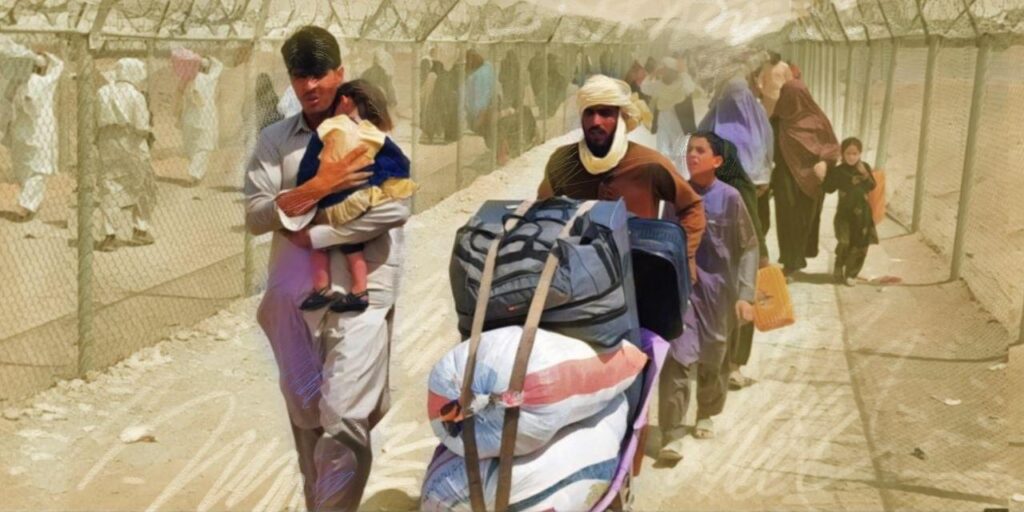
Afghans who fled to Tajikistan are keeping a low profile lately. Tajik authorities have started the latest wave of deportations, and this one looks to be bigger than the previous sweeps. “You Have 15 Days” At the beginning of July, Afghan refugees and asylum-seekers in Tajikistan received an SMS warning them to leave the country within 15 days or else they would be forcibly deported. Tajikistan’s government has not commented on these messages, but the detention of Afghans started not long after the messages were sent. So far, the only two places mentioned where Afghans were being apprehended were the Rudaki district outside of Dushanbe and the town of Vahdat, 26 kilometers from Dushanbe. Hundreds of Afghan refugees are known to be living in these two areas. Radio Free Europe/Radio Liberty’s Tajik Service, known locally as Ozodi, reported that journalists who went to the houses of Afghan refugees in Vahdat were stopped and turned away by men in military uniforms outside the homes. Some Afghan refugees in Vahdat spoke with Ozodi under the condition of anonymity and said that on July 15, several vans arrived and took away “dozens” of Afghan men, women, and children. One said Afghan refugees are staying inside their homes, fearing that if they go out, they will be detained and deported. Police “take the documents from Afghans and set a date for them to leave the country,” the refugee said, “For more than 20 days we have practically not stepped outside at all.” Local Tajiks confirmed that Afghans were being taken away and that many of those who remained were searching for new places to live to avoid being apprehended. The Tajik authorities did not say anything about the deportations until July 19, when the state news agency Khovar posted a text from the Press Center of the Border Troops of the State Committee for National Security. The statement said some “foreign citizens” had entered Tajikistan illegally, and a “certain number” of them engaged in illegal activities such as “narcotics trafficking, [spreading] the ideas of extremist movements,” or providing false information or documents to acquire refugee status. The office of the UN High Commissioner for Refugees (UNHCR) said that as of the end of 2024, there were 9,902 Afghan refugees registered in Tajikistan. However, Afghans have been fleeing their homeland and coming to Tajikistan for many years, and some estimates for the number of Afghans in Tajikistan run as high as 13,000. Something else which remains unclear about the Afghan refugees in Tajikistan is how many are ethnic Tajiks. Ostensibly, most of them could be since the ethnic Tajik population of Afghanistan is mainly found in areas adjacent to Tajikistan. Many who came to Tajikistan 10 or 15 years ago have assimilated and are likely not refugees or asylum seekers, but may not have obtained Tajik citizenship. It is unclear how many Afghan citizens have been detained and deported since the start of July, but they are just the latest to be sent back to...

Opinion: A Sea of Discord? Intensifying Military Drills Threaten Stability in the Caspian Region

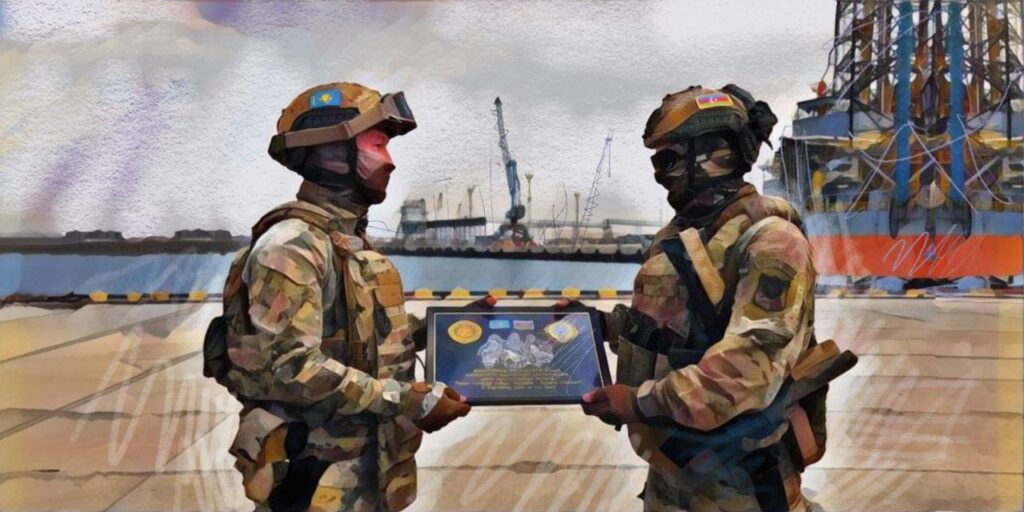
On Monday, Russia and Iran launched joint military exercises in the Caspian Sea under the banner “Together for a Safe and Secure Caspian Sea.” Officially, the drills aim to enhance maritime security and naval cooperation between the two countries and are being coordinated by Iran’s Northern Fleet. While such exercises might once have passed without much notice, their timing and frequency reflect a shifting dynamic: the Caspian region is rapidly emerging as a potential hotspot in global geopolitics. Just one month prior, the same waters hosted joint military exercises between Azerbaijan and Kazakhstan, held in Aktau, western Kazakhstan. These were followed by the “Tarlan-2025” air and tactical drills in Azerbaijan from July 8-10, which focused on enhancing UAV operations and military coordination. Baku’s strategic alliance with Ankara is a key factor here. Azerbaijan, a close Turkish partner, is now engaged in a more strained relationship with Russia. Moscow’s muted reaction to this cooling suggests an awareness that Ankara is increasingly shaping a Turkic military-political bloc, an emerging force in a region of strategic importance to both Russia and China. Earlier this month, Turkey launched its annual Anadolu-2025 special forces exercises. Participants included troops from 33 nations, Kazakhstan, Azerbaijan, Pakistan, Uzbekistan, and others but notably excluded Russia. For the first time, in 2024, military exercises were held in the Caspian without Russian involvement. The Birleistik (Unity) 2024 drills were conducted at Kazakhstan’s Oymasha training ground and Cape Tokmak along the Caspian coast. Troops from Azerbaijan, Kazakhstan, Kyrgyzstan, Tajikistan, and Uzbekistan rehearsed scenarios including conflict zone identification, night maritime operations, and amphibious landings. Previously, regional military cooperation had been limited to bilateral engagements, such as the 2023 UZAZ exercises (Azerbaijan-Uzbekistan), Kanzhar-2023 (Kazakhstan-Uzbekistan), and Hazri-2023 (Azerbaijan-Kazakhstan). The spike in joint drills during 2024-2025 underscores growing rivalries between regional and global powers. These operations are not mere formalities but reveal emerging security alignments and geopolitical signals. Three distinct blocs appear to be coalescing in the Caspian, with implications for Central Asia as well. The first bloc includes Russia, Iran, and China. These nations have held annual “Maritime Security Belt” exercises since 2019, with the most recent in March 2025 off the Iranian coast. The second bloc comprises Turkey, Azerbaijan, and members of the Organization of Turkic States (OTS). Defense ties among these countries are becoming a core element of OTS cooperation. At the 10th OTS Summit in Astana in 2023, Azerbaijani President Ilham Aliyev emphasized defense as the main guarantor of member state security, citing ongoing regional conflicts and violations of international law. The third bloc, more pragmatic and focused, is the Kazakhstan-Azerbaijan partnership. These countries are cooperating on the basis of the 2018 Caspian Convention to secure maritime communications. Azerbaijan contributes military expertise, particularly in UAV and drone warfare developed during the Karabakh conflicts. Kazakhstan brings diplomatic credibility and promotes regional governance and connectivity, offering a stabilizing complement to Azerbaijan’s military strengths. In sum, the Caspian Sea, once colloquially referred to as “Russia’s lake”, is steadily losing that identity. It is transforming into...

Fatherless Tajik Children: The Social Consequences of Labor Migration

Labor migration has become a daily reality in Tajikistan, and a vital means of survival for many families. It is estimated that between 800,000 and 1 million citizens (up to 20% of the labor force) work abroad. Remittances make up a significant share of GDP, estimated between 27 % and nearly 50 %, with one measure at 45 % in 2024, helping families cover essential expenses such as food, education, and healthcare. However, this economic stability comes at a high social cost, which is often paid by the children left behind, many of whom grow up without adequate parental care. Shifting Roles: Mothers and Children Left Behind The prolonged absence of a father figure significantly alters family dynamics. Women, mothers, grandmothers, and often older children assume all household and caregiving responsibilities. Tasks traditionally viewed as “men’s work,” such as repairing windows, chopping wood, and cultivating land, are now undertaken by those remaining at home. Children are frequently forced to grow up early. Older siblings help raise younger ones, cook meals, and manage household chores while their mothers work. In some cases, these duties interfere with education. In rural areas, it is not uncommon for girls to leave school after the ninth grade to help sustain the household. Experts note that parental absence accelerates emotional and social maturity by placing an undue burden on children. Studies confirm this trend: around 15% of children aged 10 to 14 in migrant households are engaged in informal labor, working in markets or fields instead of attending school. As a result, many children are deprived of a full childhood and are compelled to act as “little adults,” shouldering family responsibilities. The issue is widespread. In Tajikistan, where labor migration is especially intense, up to 30% of school-age children are raised by grandparents or extended family members. Thousands grow up under the care of older siblings while both parents or, more commonly, fathers, are abroad. The Emotional Toll: Loneliness and Psychological Strain The long-term absence of fathers also takes a psychological toll. While phone and video calls offer some form of connection, they are no substitute for physical presence. Communication is often irregular: surveys show that 70% of children speak with their migrant parent less than once a week, and 15% only once a month. Feelings of abandonment and emotional detachment are widespread. One in three children of labor migrants reportedly exhibits signs of depression, including apathy, sadness, and a declining interest in school. Approximately 40% feel lonely and emotionally neglected. Teachers note lower academic performance and reduced motivation among these children. Moreover, the absence of paternal supervision can contribute to behavioral issues: up to 10% of adolescents from migrant families in Tajikistan display signs of deviant behavior, such as aggression and minor offenses, significantly higher than among their peers in two-parent households. Family relationships often suffer as well. Women left behind effectively become single parents, managing both emotional and material responsibilities. Years of separation, financial strain, and infrequent visits can lead to emotional distance between spouses. Observers note...

The Pressure of Tradition: Why Child Marriage Persists in Tajikistan

Although the legal age for marriage in Tajikistan is 18, courts may grant permission for girls to marry at 17 under “exceptional circumstances.” In reality, however, girls are often married off at even younger ages. Parents routinely petition courts with emotional appeals, citing poverty, orphanhood, or the wishes of elderly relatives, to secure early marriages for their daughters. Legal Loopholes and Judicial Discretion As explained by lawyers from PRO BONO DE JURE, applicants must justify their request to lower the marriage age and provide supporting evidence. Yet the law offers no clear definition of what qualifies as “exceptional,” leaving judges broad discretionary power. In practice, economic hardship is the most common justification. Sociologist Gulnora Beknazarova, who reviewed approximately 550 court cases on underage marriage, found that only one involved a couple in love. “The rest were applications from poor families or guardians claiming they couldn’t afford to care for the girl,” she said. In some instances, judges have approved marriages simply because wedding plans were already in motion and the bride’s age came to light only during registration. “These cases account for just 3%,” noted gender researcher Diana Ismailova, “but their very existence highlights a troubling precedent.” Social Pressures and Family Expectations In rural communities, many mothers fear their adolescent daughters may come under “bad influences” and lose their virginity before marriage. “After ninth grade, girls are impossible to control... they ruin their future,” said one woman who arranged her daughter’s marriage at 16, as quoted by Your.tj. Elder family members also play a significant role. In traditional Tajik households, their wishes often carry the weight of law. For some, marrying off a granddaughter is a final wish, one that younger family members feel obligated to fulfill. According to Beknazarova, societal expectations enforce a rigid timeline for girls. “There’s a ‘social clock’ that ticks faster for them. If a woman isn’t married by 22, she risks being labeled an ‘old maid,’” she explained. In contrast, men face far less societal pressure regarding marriage age. “Marriage at 16 isn’t rare,” she added. “Even if not officially registered until 18, society still views it as normal.” Cultural Norms vs. Practical Realities Early marriages are often poorly considered. Parents seldom ask: “What if she divorces?” or “How will she support herself?” Divorce rates are rising, but it is typically the woman who ends up raising the children alone. Beknazarova attributes these decisions to a traditional mindset in which a girl’s path is predetermined: marriage and motherhood. “You marry off your daughter because it’s time, because that’s what everyone does,” she said. Still, change is slowly taking root. In 2024, amendments to Tajikistan’s Education Act made schooling through grades 10-11 compulsory. More girls are completing their education, and awareness efforts by government and civil society groups are helping shift attitudes around women’s rights. “Young people are already thinking differently,” Beknazarova said. “And life will sort everything out in time.”