• KGS/USD = 0.01143 0%
  • KZT/USD = 0.00216 0%
  • TJS/USD = 0.10633 -0.28%
  • UZS/USD = 0.00008 0%
  • TMT/USD = 0.28571 0%
  • KGS/USD = 0.01143 0%
  • KZT/USD = 0.00216 0%
  • TJS/USD = 0.10633 -0.28%
  • UZS/USD = 0.00008 0%
  • TMT/USD = 0.28571 0%
  • KGS/USD = 0.01143 0%
  • KZT/USD = 0.00216 0%
  • TJS/USD = 0.10633 -0.28%
  • UZS/USD = 0.00008 0%
  • TMT/USD = 0.28571 0%
  • KGS/USD = 0.01143 0%
  • KZT/USD = 0.00216 0%
  • TJS/USD = 0.10633 -0.28%
  • UZS/USD = 0.00008 0%
  • TMT/USD = 0.28571 0%
  • KGS/USD = 0.01143 0%
  • KZT/USD = 0.00216 0%
  • TJS/USD = 0.10633 -0.28%
  • UZS/USD = 0.00008 0%
  • TMT/USD = 0.28571 0%
  • KGS/USD = 0.01143 0%
  • KZT/USD = 0.00216 0%
  • TJS/USD = 0.10633 -0.28%
  • UZS/USD = 0.00008 0%
  • TMT/USD = 0.28571 0%
  • KGS/USD = 0.01143 0%
  • KZT/USD = 0.00216 0%
  • TJS/USD = 0.10633 -0.28%
  • UZS/USD = 0.00008 0%
  • TMT/USD = 0.28571 0%
  • KGS/USD = 0.01143 0%
  • KZT/USD = 0.00216 0%
  • TJS/USD = 0.10633 -0.28%
  • UZS/USD = 0.00008 0%
  • TMT/USD = 0.28571 0%

Viewing results 199 - 204 of 783

Tajikistan to Supply Rogun Hydropower to Uzbekistan at 3.4 Cents per kWh

Tajikistan and Uzbekistan have agreed to a new phase of energy cooperation that will see electricity from Tajikistan’s Rogun Hydropower Plant (HPP) exported to Uzbekistan at an initial price of 3.4 US cents per kilowatt-hour, according to Tajikistan’s Ministry of Justice legal information portal. The price, which includes a zero-rated VAT, will increase by 1% annually starting in the second year of supply. Deliveries are scheduled primarily during periods of planned shortages in Uzbekistan’s energy system and will follow an approved schedule coordinated by the countries’ respective system operators. The volume and technical details of the supply arrangement will be formalized in a separate electricity purchase agreement between Rogun HPP and Uzbekistan’s Uzenergosotish company. Electricity will be transmitted via interstate power lines, supplementing ongoing exports from Tajikistan’s national utility Barki Tojik. Regional Energy Integration The Rogun HPP, a key component of Tajikistan’s long-term energy strategy, is also drawing interest from Kazakhstan, which recently announced its intent to purchase electricity from the plant. The price for Kazakhstan is likewise set at $0.034 per kWh, excluding VAT, and subject to an additional transit fee based on seller-incurred costs. Payments are to be made within 35 days of each delivery period. During the plant's current construction phase, electricity exports will occur only during the vegetation season (April 1 to September 30). Once Rogun reaches full operational capacity, deliveries will expand to year-round. Agreement Terms and Project Outlook The bilateral agreement will enter into force once both governments complete their domestic legal procedures and confirm implementation via diplomatic channels. The initial agreement term is 20 years, with automatic 10-year extensions, unless one party opts out by notifying the other at least six months prior to expiration. Tajikistan has exported electricity to Uzbekistan every summer since 2018, strengthening energy ties in a region historically marked by infrastructure fragmentation. Upon completion, Rogun HPP will be the largest hydropower facility in Central Asia, with an installed capacity of 3,780 megawatts (MW) and estimated annual output of 14.4 billion kWh. Currently, two of the plant’s six turbines are operating at partial capacity, having come online in 2018 and 2019. Full commissioning of the sixth unit is expected by 2029. In 2024, Rogun generated 1.22 billion kWh, contributing 5.5% of Tajikistan’s total electricity production, according to the Ministry of Energy.


China Overtakes Russia as Tajikistan’s Top Trading Partner for the First Time

For the first time in over two decades, China has become Tajikistan’s largest trading partner, surpassing Russia in bilateral trade volume, according to newly released data from the Tajikistan Statistics Agency. A New Leader in Foreign Trade Between January and May 2025, trade between Tajikistan and China reached $964 million, an increase of nearly 30% compared to the same period in 2024. China's share in Tajikistan’s total foreign trade stood at 24.8%, edging ahead of Russia’s 23.2%. This surge was driven largely by Chinese exports to Tajikistan, which totaled $787 million. Tajik exports to China reached $177 million, leaving a significant trade imbalance in China’s favor, though the overall volume of bilateral engagement continues to rise rapidly. Russia had held the position of Tajikistan’s leading trade partner for more than 20 years. However, during the first five months of 2025, total trade between the two countries reached approximately $900 million. Of that, only $42 million represented Tajik exports to Russia, while Russian imports totaled $858 million. Despite a 9.3% increase year-on-year, the growth was insufficient to maintain its top position. Uzbekistan Reemerges as a Key Player Historically, Uzbekistan was Tajikistan’s main trade partner during the 1990s. In 1995, trade between the two countries reached $250 million, double the combined trade volume with other post-Soviet states at the time. However, political tensions toward the end of the decade led to a sharp decline, with trade falling to just $13 million by 2014. Following the election of Shavkat Mirziyoyev as President of Uzbekistan in 2016, bilateral relations have markedly improved. Trade between Tajikistan and Uzbekistan is once again on the rise, reaching $238 million in the first five months of 2025. China: Tajikistan’s Leading Investor and Creditor China’s growing economic influence in Tajikistan extends beyond trade. It is now the country’s largest foreign investor, having overtaken Russia in 2017. According to the State Committee for Investment and State Property Management, accumulated Chinese investment in Tajikistan totaled $5.1 billion as of Q2 2025. In comparison, Russian investments stand at approximately $2 billion, less than half. China is also Tajikistan’s largest external creditor. As of early 2025, Dushanbe’s debt to Beijing stood at around $1 billion, representing nearly one-third of the country’s total external debt. This strategic pivot in Tajikistan’s economic orientation reflects a broader regional trend. Across Central Asia, Beijing continues to expand its footprint through a combination of trade, infrastructure investment, financial lending, and diplomatic engagement.

Melting Mountains, Drying Futures: Central Asia Confronts Water Emergency

Central Asian countries are mobilizing against an emerging water crisis as a United Nations report highlights the vulnerability of mountain water systems to climate change. Identifying ranges like the Tien Shan and the Pamirs, the UN World Water Development Report 2025 – Mountains and Glaciers: Water Towers – warns that rapid glacier melt and erratic snowfall are threatening vital freshwater supplies worldwide. According to the report, mountains provide up to 60% of the world’s annual freshwater flows, with over two billion people depending directly on water from mountain sources. This risk is particularly acute in Central Asia: a UN drought outlook noted that rising temperatures and shrinking snowpack in the high mountains of Tajikistan and Kyrgyzstan are accelerating glacier retreat, posing a “long-term threat to the region’s water security.” Half of rural mountain communities in developing countries already face food insecurity, and receding glaciers could impact two-thirds of all irrigated agriculture globally – a dire scenario for Central Asia’s irrigation-dependent economies. Rivers like the Amu Darya and Syr Darya are fed by glacier runoff and support downstream agriculture, hydropower, and municipal needs in Uzbekistan, Kazakhstan, and Turkmenistan. But climate-driven glacial retreat, inefficient irrigation, and aging infrastructure have already pushed the region toward a breaking point. [caption id="attachment_33952" align="aligncenter" width="2560"] Lake Karakul in Tajikistan is expanding due to melting glaciers; image: TCA, Stephen M. Bland[/caption] Kazakhstan Steps Up Leading the regional response, Kazakhstan has launched sweeping reforms to modernize its water infrastructure and governance. The country has committed to building 42 new reservoirs, refurbishing 14,000 kilometers of irrigation canals, and investing heavily in digital water monitoring and conservation. Established in September 2023, the Ministry of Water Resources and Irrigation is coordinating the overhaul under an updated national Water Code. The government has also launched an integrated water portal, hydro.gov.kz, and pledged to digitize more than 3,500 kilometers of canals for precise flow tracking. In an address at the Astana International Forum, Deputy Prime Minister Kanat Bozumbayev framed water as a “powerful driver of cooperation, sustainable development and regional stability,” urging closer regional coordination. Kazakhstan is also leading environmental restoration efforts. As the current chair of the International Fund for Saving the Aral Sea (IFAS), it is overseeing projects to rehabilitate the North Aral Sea, including raising the Kokaral Dam to restore water levels and fisheries. In 2024 alone, local irrigation reforms in Kyzylorda saved 200 million cubic meters of water, which was redirected toward the shrinking sea. [caption id="attachment_12017" align="aligncenter" width="2560"] The Kokaral Dam in Kazakhstan; image: TCA, Stephen M. Bland[/caption] International Support and Financing Kazakhstan’s strategy has been backed by a plethora of international partners. The European Bank for Reconstruction and Development (EBRD) has financed over €255 million in water and wastewater projects in Kazakhstan, including a €96.4 million sovereign loan for a new treatment plant in Aktobe. Meanwhile, the Eurasian Development Bank (EDB) and UNDP have launched a regional partnership to expand access to modern irrigation, digitize water flows, and establish training centers. “We must act very quickly and...

Ancient Khuttal in Tajikistan Added to UNESCO World Heritage List

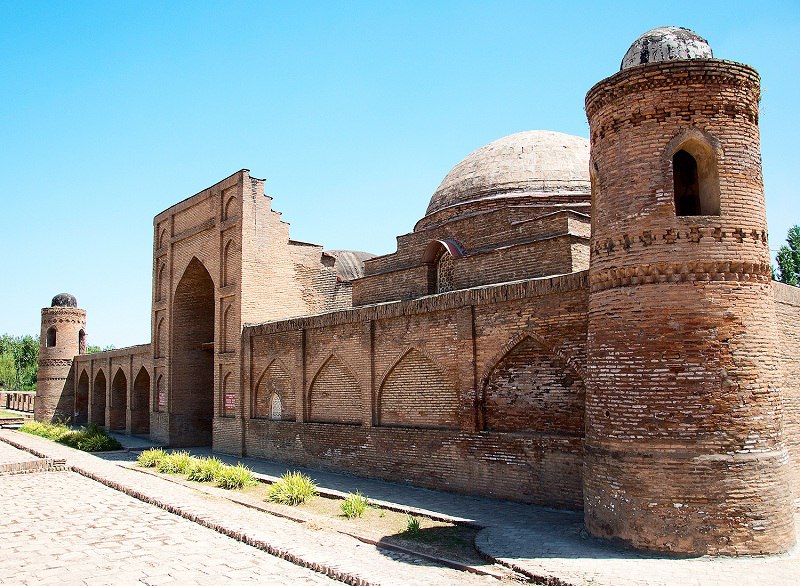
On July 12, Tajikistan celebrated a major cultural milestone: at the 47th session of the UNESCO World Heritage Committee in Paris, the ancient monuments of Khuttal were officially inscribed on the UNESCO World Heritage List. This marks the fifth site in Tajikistan to receive such international recognition. A Historical Crossroads of Culture and Architecture The newly recognized World Heritage site encompasses 11 archaeological and architectural monuments across the districts of Vose, Danghara, Jaloliddin Balkhi, Farkhor, and Khovaling in Tajikistan’s Khatlon region. Among these are Kalai Khulbuk, Adzhina-Teppa, Khishtepa, Shakhratepa, Manzarteppa, the Mausoleum of Mavlon Tojiddin, and the ancient fortresses of Zoli Zard and Kofirkala. The Kalai Khulbuk complex, once the residence of Khuttal’s rulers, is of particular historical importance. The medieval state of Khuttal flourished from the 7th to the 16th century in southern Tajikistan and played a key role in cross-border trade along the Great Silk Road. According to UNESCO, the monuments “illustrate the diversity of the region's culture and its significant role in the exchange of cultural values.” At its peak, Khuttal included up to 12 cities. Its capital, Khulbuk, featured advanced infrastructure in the 9th-12th centuries, including a palace, citadel, and urban systems well ahead of their time. As Tajik archaeologist Tatyana Filimonova has noted, “the urban culture of Hulbuk was several centuries ahead of Europe,” citing innovations such as centralized heating, sewage systems, and water supply. The listed monuments span various historical periods and artistic traditions from the 7th-century Buddhist monastery Ajina-Teppa, where a 13-meter-long reclining Buddha statue was discovered, to the intricately carved gancha and frescoes of the Hulbuk Palace. Other highlights include Zoli Zard, believed to be the legendary fortress of the Persian hero Rustam, and Manzarteppa, where archaeological excavations continue to yield pottery fragments and cultural artifacts. A Collaborative Effort in Preservation and Recognition The nomination of Khuttal began in 2023, spearheaded by the Ministry of Foreign Affairs and the Ministry of Culture of Tajikistan, in collaboration with the Institute of History of the National Academy of Sciences, the International Institute for Central Asian Studies, and the CAAL project at University College London. UNESCO commended the scientific rigor and collaborative approach of the submission. Restoration efforts have been ongoing since the early 2000s. Kalai Khulbuk was opened to visitors in 2006, and Ajina-Teppa underwent restoration with UNESCO support in 2008. These sites, along with Kofirkala, Zoli Zard, and Manzarteppa, remain active locations for archaeological and conservation work under the State Program for the Protection of Cultural Heritage. The inscription of Ancient Khuttal on the World Heritage List not only affirms its global significance but also paves the way for increased cultural tourism, international research cooperation, and long-term development of Tajikistan’s rich historical legacy.

Kyrgyz President Visits Tajikistan, Opening New Era of Friendship

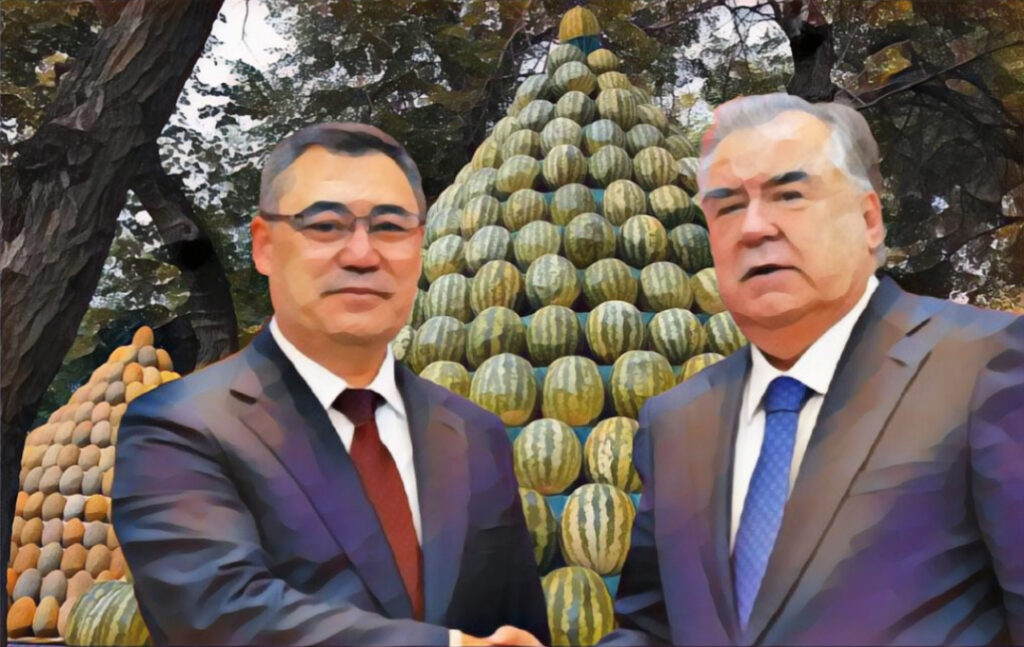
Kyrgyzstan’s President Sadyr Japarov just concluded a two-day visit to Tajikistan. Rarely has the visit of one Central Asian leader to another Central Asian country been as welcome as Japarov’s trip to Tajikistan was. The two countries engaged in brief, but intense and devastating conflicts in late April 2021 and mid-September 2022, the only clashes between the militaries of the two Central Asian countries since the five Central Asian states became independent in late 1991. Judging by Japarov’s warm reception in the Tajik capital Dushanbe, the worst of times have passed in Kyrgyz-Tajik relations. A Year of Firsts Japarov, who has been in power in Kyrgyzstan since late 2020, was making his first state visit to Tajikistan on July 8-9. Japarov traveled to Tajikistan in June 2021, nearly two months after the first outbreak of hostilities along the Kyrgyz-Tajik border, to speak with Tajik President Emomali Rahmon about easing tensions along their common frontier. That June, a meeting was hastily arranged as an exercise in damage control, not a state visit, and in any case, the talks between the two presidents failed to head off even worse fighting in September of the next year. This first state visit by Japarov followed President Rahmon’s visit to the Kyrgyz capital in March 2025, the first state visit by Rahmon to Kyrgyzstan in nearly 12 years. During Rahmon’s meeting in March, Kyrgyzstan and Tajikistan signed the agreement delimiting the final disputed sections of their border, which both sides hope will end more than a decade of violence and destruction in the border area. That agreement led to the first-ever summit of the presidents of the three Central Asian countries that share the Ferghana Valley. Uzbek President Shavkat Mirziyoyev joined Japarov and Rahmon on March 31 in the northern Tajik city of Khujand to celebrate the agreement on all three countries’ borders and talk about future cooperation. Pomp and Ceremony Rahmon was at the Dushanbe airport to meet Japarov when the latter arrived on July 8. Tajikistan’s Honor Guard played the national anthems of both countries, followed by a 21-gun salute for Japarov, before the two presidents made their way to the Tajik capital to hold talks. The two leaders also visited a Kyrgyz-Tajik trade exhibit and attended a concert featuring performers from both countries dedicated to “Eternal Friendship.” Moving Forward Ahead of the Japarov-Rahmon meeting, The Times of Central Asia reported that trade between the two nations is starting to increase again. The figure for January-May trade between the two countries this year was a modest $6.35 million, but that is 15 times more than the meager $405,100 of bilateral trade during the first five months of 2024. Less than a decade ago, there were years when Kyrgyz-Tajik bilateral trade topped $50 million. Following the border agreement in March, two border crossings were reopened along the western sections of the Kyrgyz-Tajik frontier. During the meeting between the two presidents, it was announced that a third crossing had opened, the Tajvaron-Karamyk post connecting Kyrgyzstan’s...

How Climate Change Is Damaging Agriculture and Food Security in Tajikistan

Over the past 30 years, cotton production in Tajikistan has dropped by a staggering 56%. Among the many contributing factors are a lack of investment, outdated agricultural technology, and, notably, climate change. While humanity is not yet capable of stopping climate change, there are ways to adapt, prevent or mitigate the consequences of natural disasters, glacier melt, droughts, and to preserve biodiversity. Agricultural GDP is growing — but slowly The agricultural sector is among the most vulnerable to climate change, yet it remains the cornerstone of food security in Tajikistan. Moreover, a significant portion of the population depends on agriculture for their livelihood. According to official statistics, Tajikistan’s population exceeds 10 million, with more than 7 million living in rural areas. Of the total population, 60% are engaged in agricultural activities, while the official unemployment rate stands at 7.9%. Data from the Agency on Statistics under the President of the Republic of Tajikistan shows that agriculture contributes approximately 25% of the country’s GDP and accounts for a similar share of exports. The sector also generates 35% of national tax revenues. Beyond food production, agriculture supplies raw materials to various industries, meaning that the livelihoods of countless small and medium-sized enterprises depend directly on its productivity. Despite modest growth in gross agricultural output, the pace remains slow. At the same time, food prices continue to rise on domestic markets, making it increasingly difficult for families to afford a balanced diet. Local farmers and entrepreneurs often attribute price hikes to fluctuations in the U.S. dollar exchange rate, especially given the sector’s reliance on imported fertilizers, machinery, and packaging Food Security at Risk When measured in U.S. dollars, agricultural income has remained relatively stagnant—indicating a lack of real progress and underscoring the need for urgent reforms. Compounding the issue is Tajikistan’s annual population growth rate of 2.7%, which places additional strain on the food system. Without strategic investments in irrigation, land expansion, and climate-resilient technologies, the country risks facing a systemic food shortage in the coming decades. According to the Food and Agriculture Organization (FAO), 60% of Tajikistan’s population suffers from food insecurity—meaning they lack sufficient access to the calories and nutrients needed for a healthy and active life. An Idea in Need of Investment Matlub Rakhmonov, an agricultural specialist, analyzed the impact of climate change on Tajikistan's agrarian sector, particularly in horticulture. “For more than ten years now, in several regions of Tajikistan, some small and medium-sized business owners involved in horticulture have not only failed to secure a full harvest, but have also incurred losses,” says Rakhmonov. “The reason for this is increasingly due to unusually warm days at the end of winter, which cause fruit-bearing trees to bloom prematurely. Then, in late April and early May, sharp cold snaps hit, the blossoms fall, and the resulting crops are destroyed.” Moreover, climate change has led to frequent natural anomalies, causing some traditional tree species to stop responding to seasonal changes. In the past, Tajikistan made widespread efforts to implement intensive orchard...