• KGS/USD = 0.01144 0%
  • KZT/USD = 0.00216 0%
  • TJS/USD = 0.10659 0%
  • UZS/USD = 0.00008 0%
  • TMT/USD = 0.28530 0%
  • KGS/USD = 0.01144 0%
  • KZT/USD = 0.00216 0%
  • TJS/USD = 0.10659 0%
  • UZS/USD = 0.00008 0%
  • TMT/USD = 0.28530 0%
  • KGS/USD = 0.01144 0%
  • KZT/USD = 0.00216 0%
  • TJS/USD = 0.10659 0%
  • UZS/USD = 0.00008 0%
  • TMT/USD = 0.28530 0%
  • KGS/USD = 0.01144 0%
  • KZT/USD = 0.00216 0%
  • TJS/USD = 0.10659 0%
  • UZS/USD = 0.00008 0%
  • TMT/USD = 0.28530 0%
  • KGS/USD = 0.01144 0%
  • KZT/USD = 0.00216 0%
  • TJS/USD = 0.10659 0%
  • UZS/USD = 0.00008 0%
  • TMT/USD = 0.28530 0%
  • KGS/USD = 0.01144 0%
  • KZT/USD = 0.00216 0%
  • TJS/USD = 0.10659 0%
  • UZS/USD = 0.00008 0%
  • TMT/USD = 0.28530 0%
  • KGS/USD = 0.01144 0%
  • KZT/USD = 0.00216 0%
  • TJS/USD = 0.10659 0%
  • UZS/USD = 0.00008 0%
  • TMT/USD = 0.28530 0%
  • KGS/USD = 0.01144 0%
  • KZT/USD = 0.00216 0%
  • TJS/USD = 0.10659 0%
  • UZS/USD = 0.00008 0%
  • TMT/USD = 0.28530 0%

Viewing results 247 - 252 of 779

Russia: Thousands of Central Asia-Born Russians Sent to Ukraine Front Line

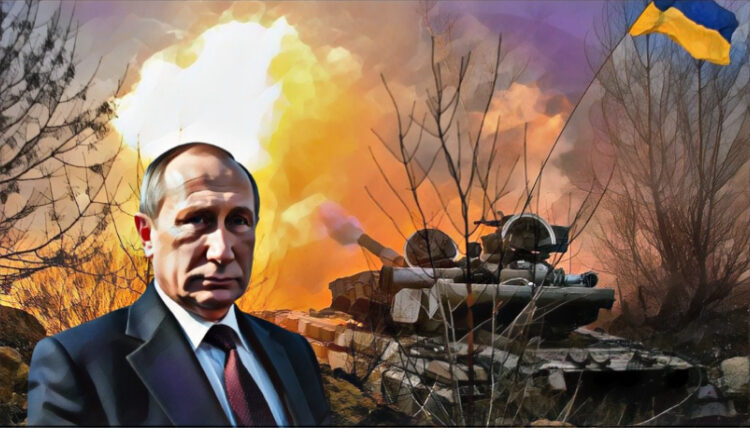
A senior Russian official has said that thousands of migrants from Central Asia who became Russian citizens were sent to fight in Ukraine after they tried to dodge conscription. "Our military investigations directorate conducts regular raids,” Alexander Bastrykin, head of Russia’s Investigative Committee, said on Tuesday in remarks that were reported by the Russian state-run TASS news agency. “So far, we've tracked down 80,000 such Russian citizens who didn't just avoid the front lines — they wouldn’t even show up at military enlistment offices. We’ve registered them for military service, and about 20,000 of these 'new' Russian citizens, who for some reason no longer want to live in Uzbekistan, Tajikistan, or Kyrgyzstan, are now on the front lines," Bastrykin said at the St. Petersburg International Legal Forum. Bastrykin’s comments contributed a piece to the often murky picture of the involvement of people from Central Asia in Russia’s war effort in Ukraine in the last three years. In addition to conscription measures, Russia has also sought to replenish its ranks by offering contracts and other incentives to foreigners willing to fight. Uzbekistan and Kazakhstan are among Central Asian countries that ban their nationals from fighting in foreign conflicts and there have been several high-profile prosecutions of citizens who fought for Russia and returned home. It is a sensitive political matter in Central Asia, a region that seeks to project neutrality in the conflict between Russia and Ukraine. Kazakhstan has said it is reviewing a report by a Ukrainian institution that said about 661 Kazakh citizens have fought for Russia since it launched a full-scale invasion of Ukraine in February 2022. The I Want To Live center, which is run by the Ukrainian security services and assists with surrender requests from soldiers fighting for Russia, published a list of what it said were the Kazakh nationals. Of the 661, at least 78 have been killed, according to the center. Without providing details, it said it received the list from its own sources within the Russian military. Uzbekistan is conducting a similar investigation based on data from the Ukrainian group.

Tajikistan Decriminalizes Likes and Other Reactions to Provocative Social Media Posts

Tajik citizens need no longer fear that they will be imprisoned for clicking “like” on social media posts that the Tajik authorities do not like. Among several laws that Tajik President Emomali Rahmon signed on May 14 was one that decriminalized liking posts on social networks that originate from individuals or organizations the Tajik government considers extremist. Crackdown on Social Media In 2018, President Rahmon signed amendments to Article 179 of the Criminal Code, making it a crime to repost, comment favorably on, or like posts that, in the opinion of Tajik authorities, are public calls to commit or justify acts of violence and terrorism. According to that law, those found guilty of liking such posts face up to 15 years in prison. Since the law came into effect, 1,507 Tajik citizens have been imprisoned. The Tajik authorities often have a broad interpretation of what constitutes public calls to commit or justify serious crimes or acts of terrorism, but it usually boils down to comments that are critical of the Tajik government. Weeks after the law was passed, Alijon Sharipov, a resident of the Vakhsh district in Tajikistan’s southern Khatlon Region, was sentenced to 9.5 years in prison for reposting a video of an interview with the leader of the banned Islamic Renaissance Party of Tajikistan, Muhiddin Kabiri. In July 2019, Ibrohim Kosimov from the western Tajik city of Panjakent received the same prison sentence for “pushing ‘likes’ and ‘shares’ on the posts belong[ing] to opposition figures.” An activist of the Democratic Party of Tajikistan, Rustam Mamajonov, was sentenced to seven years in prison in June 2021 for reposting a video of Sharofiddin Gadoyev, a leader of the banned organization, Group 24. Mamajonov, who was 59 years old at the time, said he did not know how the video appeared on his Facebook page and the repost was a mistake caused by his poor knowledge of how to use the platform. Tajik political activist Abdullo Shamsiddin was deported from Germany back to Tajikistan in January 2023 and was convicted weeks later in March of sedition and sentenced to seven years in prison. Shamsiddin’s trial was held behind closed doors and it was difficult to obtain details about the case, but apparently, he was convicted for clicking “like” on a social network post, though there is no information about what was in the post. Shamsiddinov’s case shows the social network use of Tajik citizens who are outside Tajikistan is also being monitored by Tajik authorities. A Strange Change of Heart The reasons for the decision to decriminalize “posting a like or other sign on social networks,” as it officially reads in the law Rahmon signed, is unclear. Certainly, rights groups have called on the Tajik authorities to overturn the decision to criminalize likes, comments, or reposts of what to the Tajik government are undesirable posts on social networks. However, for years Tajikistan’s government has ignored appeals from rights organizations, the United Nations, and individual governments over the Tajik authorities’ rights abuses....

UN Official Urges Tajikistan to Release, Retry Woman Convicted of Treason

A United Nations human rights expert has joined in calls for the release and retrial of a 31-year-old mother in Tajikistan who was convicted of treason and sentenced to eight years in prison after her research on Chinese aid to the Central Asian country allegedly aroused the suspicion of authorities. A U.N. statement described Rukhshona Khakimova as a “journalist and woman human rights defender” and said it appeared that she had not received a fair trial and may have been targeted for “legitimate human rights journalism” rather than any wrongdoing. “The case was part of a broader criminal investigation involving former senior officials and politicians allegedly accused of extremism, espionage, and an attempted coup,” said the U.N. announcement, which was released on Wednesday. “Her charges allegedly stemmed from interviews she conducted for a research project on international aid from China to Tajikistan, where she reportedly spoke with two defendants, asking general questions not related to classified information.” In recent years, China has developed an increasingly robust role as an investor and security partner for Tajikistan, which has a long border with Afghanistan and concerns about militant infiltration. Mary Lawlor, the U.N.’s special rapporteur on the situation of human rights defenders, said it was “heartbreaking” that Khakimova had been separated from her two young children because the court sent her to jail. Lawlor said Khakimova had a right to a fair and transparent trial and that she was in contact with the Tajik government about the matter. Tajikistan’s Supreme Court convicted and sentenced Khakimova on Feb. 5. The verdict was upheld on April 2. International human rights and media groups have also called for Khakimova’s release. So far, Tajik authorities have not responded publicly to the appeals, which reflect concern about a deteriorating human rights situation in Tajikistan. However, President Emomali Rahmon removed one restriction on Wednesday, signing a law that “abolishes criminal liability for posting likes or other marks on social networks,” according to the president’s office. The restriction had previously been used to prosecute people accused of endorsing extremist posts on social media, though critics alleged the ban was a way to muzzle opposition to the government.

Tajikistan Lifts Criminal Penalties for Social Media Likes on ‘Extremist’ Content

Tajik President Emomali Rahmon has signed a new law eliminating criminal penalties for liking or reacting to social media posts classified as extremist or threatening to public order. The president’s press office announced the amendment, which revokes part of a 2018 change to the Criminal Code. Previously, individuals could face prison sentences of 10 to 15 years for openly promoting or supporting purported terrorism or terrorist acts online. Under this legislation, more than 1,500 people have been convicted in Tajikistan, many for merely liking or commenting on posts the government deemed extremist. A significant number of those affected were believed to be affiliated with opposition groups. It remains unclear whether the new law will result in the release of individuals already imprisoned under the previous statute. However, lawyer Dilshod Jurayev told Radio Ozodi that those convicted may now have grounds to appeal their sentences. Regional Context In neighboring Uzbekistan, social media users still face the possibility of legal consequences for engaging with prohibited content if investigators or courts determine that liking such material constitutes distribution. Uzbekistan’s Agency for Information and Mass Communications (AIMC) has cautioned the public against spreading false information. The agency emphasized that engaging with posts containing fake news, disinformation, or extremist content could result in administrative or criminal penalties. “There is administrative and criminal liability for spreading false or harmful information,” the AIMC stated. “Before you share anything, make sure it comes from a trusted, official source.”

Despite Ceasefire India-Pakistan Conflict Sends Ripples Through Central Asia

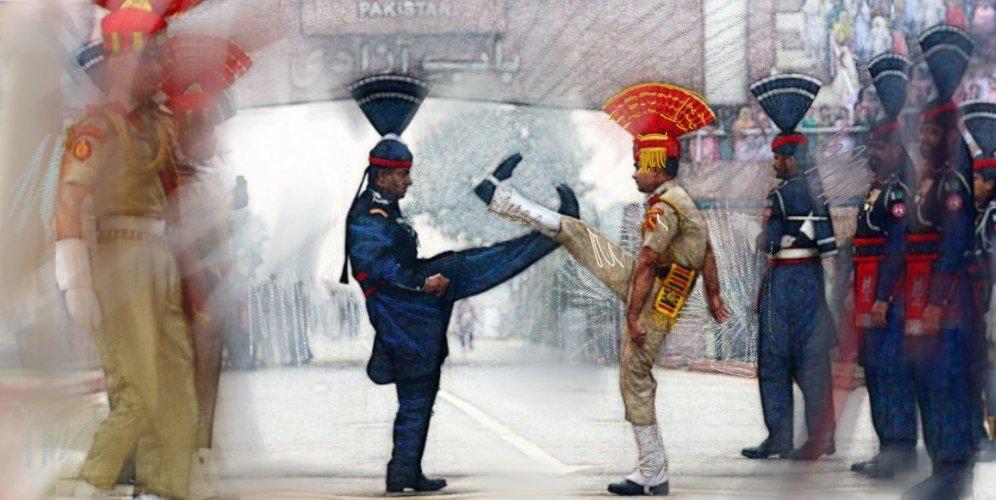
Despite a recent ceasefire agreement between India and Pakistan, renewed hostilities remain a looming threat. The latest clashes between the two nuclear-armed neighbors have direct and potentially lasting repercussions for Central Asia’s political stability and economic development. Ceasefire Amid Escalation Armed conflict erupted on May 7, when New Delhi launched “Operation Sindoor,” targeting what it described as terrorist infrastructure within Pakistan. The move followed a deadly terrorist attack on April 22 in Pahalgam, Jammu and Kashmir, which killed 26 people. India accused Pakistan of complicity, a charge Islamabad rejected, condemning the airstrikes as an “act of war.” Full-scale hostilities ensued for several days, raising alarms across the broader region. By May 11, a ceasefire was brokered, though both sides warned that fighting could resume if provoked. Given the eight-decade-long volatility along their shared border, the risk of future escalations remains significant. Whilst Pakistan credited the U.S. for facilitating the ceasefire, specifically highlighting Senator Rubio and what it described as direct intervention by President Trump, India maintained that the agreement was a result of direct communication between the Directors General of Military Operations (DGMOs). In a formal televised address, Foreign Secretary Vikram Misri emphasized that the ceasefire was a "bilateral" decision reached via military hotlines, omitting any mention of Trump or Rubio. “Both sides agreed to cease all firing and military actions on land,” Misri stated firmly, reiterating India’s stance that no third party played a role in its interactions with Pakistan. Disruption to Tourism Flows One immediate economic impact of the conflict has been felt in Central Asia’s tourism sector. In recent years, Kazakhstan, especially Almaty, has become an increasingly popular destination for Indian travelers, aided by a visa-free regime that permits 14-day stays. The country also hosts large numbers of Indian and Pakistani students, along with medical tourists and business travelers. Many Indian visitors rely on budget carriers such as IndiGo, which previously operated routes from Delhi to Almaty and Tashkent using airspace over Pakistan. The closure of this airspace led to increased costs and logistical complications. IndiGo suspended flights to both cities on April 27 and 28, respectively. Should hostilities resume, these suspensions could be extended, potentially setting back Central Asia’s still-fragile tourism recovery. Infrastructure and Trade at Risk The geopolitical instability also jeopardizes key infrastructure projects and trade routes. Kazakhstan and Uzbekistan have both enhanced connectivity with Pakistan through distinct strategies, with Kazakhstan integrating into multilateral frameworks like the Middle Corridor and QTTA, and Uzbekistan focusing on tactical bilateral projects such as the Termez–Karachi transport corridor and Trans-Afghan Railway. Both countries aim to reduce their reliance on Russian-controlled routes while leveraging Pakistan’s ports to boost regional trade. Political analyst Zhanat Momynkulov warns that the conflict could disrupt supply chains and raise the cost of goods across South and Central Asia. The rerouting of flights due to Pakistani airspace closures is already affecting logistics and regional connectivity. Kazakhstan, a central player in both the Shanghai Cooperation Organization and the Belt and Road Initiative (BRI), is particularly vulnerable. Projects...

India and Pakistan: A Central Asian Perspective on Two Military Giants

The new round of heavy clashes involving India and Pakistan over the disputed region of Kashmir – then settled by a bilateral adherence to a “full-scale ceasefire” – has also been a confrontation involving the players surrounding the two Asian giants. The involvement of some of them took place in plain sight: take the case of Turkey's President Recep Tayyip Erdoğan, a staunch ally of Pakistan, which sent the country a military ship and a group of fighter jets. Or China, which in recent years has invested tens of billions of dollars in Pakistan under the Belt & Road Initiative, and has become by far the largest supplier of military equipment to Islamabad. Beijing immediately called on both sides to engage in diplomacy. On the Indian front, as reported by recent research on the subject, New Delhi is purchasing weapons from an increasingly varied group of countries, including Russia, France, Israel and the United States. The ceasefire saw direct involvement from Washington, which acted as mediator between the two sides. Given also its geographical proximity to the Indian subcontinent, when it comes to Central Asia it is clear that the region may be called into question in any confrontation between India and Pakistan – or that, at least, would be heavily affected by it. During the strikes carried out by India against Pakistan following the deadly attack in Indian-controlled Kashmir, the Indian media emphasized the strategic role that the military base India allegedly operates in Tajikistan could play in a possible open confrontation with Pakistan. Indian experts pointed out that the base could have given New Delhi the ability to strike Pakistan from the west, seriously compromising Islamabad's air defense capabilities. Furthermore, China was also called into question in India's alleged use of the military outpost, as New Delhi is said to be monitoring China's movements on the northern front using its presence in Tajikistan. This base is Ayni Airbase, a Soviet-era military facility located near the Tajik capital Dushanbe. The facts we know for certain point to an Indian involvement in the Tajik base which appears to have ended around 2015. In 2002, India, in collaboration with Tajikistan and Russia, financed an operation to refurbish the base, investing around $70 million in the project. Among the changes made was the lengthening of the runway, which was intended to ensure that it could be used by aircraft operated by the Indian armed forces. As also stated in the report on Central Asian armed forces drafted by the DC-based The Oxus Society for Central Asian Affairs, after a phase in which it seemed that India would play a concrete role in the management of the base, Dushanbe subsequently backtracked, partly due to pressure from Russia. The same path was followed by New Delhi's involvement in the Farkhor airbase, initially used to reach Afghanistan by land by landing Indian cargo planes at the base, located near the border between Tajikistan and Afghanistan. Over the years, the logistical importance of the structure gradually...