• KGS/USD = 0.01144 0%
  • KZT/USD = 0.00211 0%
  • TJS/USD = 0.10515 0.48%
  • UZS/USD = 0.00008 0%
  • TMT/USD = 0.28530 0%
  • KGS/USD = 0.01144 0%
  • KZT/USD = 0.00211 0%
  • TJS/USD = 0.10515 0.48%
  • UZS/USD = 0.00008 0%
  • TMT/USD = 0.28530 0%
  • KGS/USD = 0.01144 0%
  • KZT/USD = 0.00211 0%
  • TJS/USD = 0.10515 0.48%
  • UZS/USD = 0.00008 0%
  • TMT/USD = 0.28530 0%
  • KGS/USD = 0.01144 0%
  • KZT/USD = 0.00211 0%
  • TJS/USD = 0.10515 0.48%
  • UZS/USD = 0.00008 0%
  • TMT/USD = 0.28530 0%
  • KGS/USD = 0.01144 0%
  • KZT/USD = 0.00211 0%
  • TJS/USD = 0.10515 0.48%
  • UZS/USD = 0.00008 0%
  • TMT/USD = 0.28530 0%
  • KGS/USD = 0.01144 0%
  • KZT/USD = 0.00211 0%
  • TJS/USD = 0.10515 0.48%
  • UZS/USD = 0.00008 0%
  • TMT/USD = 0.28530 0%
  • KGS/USD = 0.01144 0%
  • KZT/USD = 0.00211 0%
  • TJS/USD = 0.10515 0.48%
  • UZS/USD = 0.00008 0%
  • TMT/USD = 0.28530 0%
  • KGS/USD = 0.01144 0%
  • KZT/USD = 0.00211 0%
  • TJS/USD = 0.10515 0.48%
  • UZS/USD = 0.00008 0%
  • TMT/USD = 0.28530 0%

Viewing results 295 - 300 of 713

Fossil-Fuel Rich UAE Drives Central Asia’s Green Energy Transition

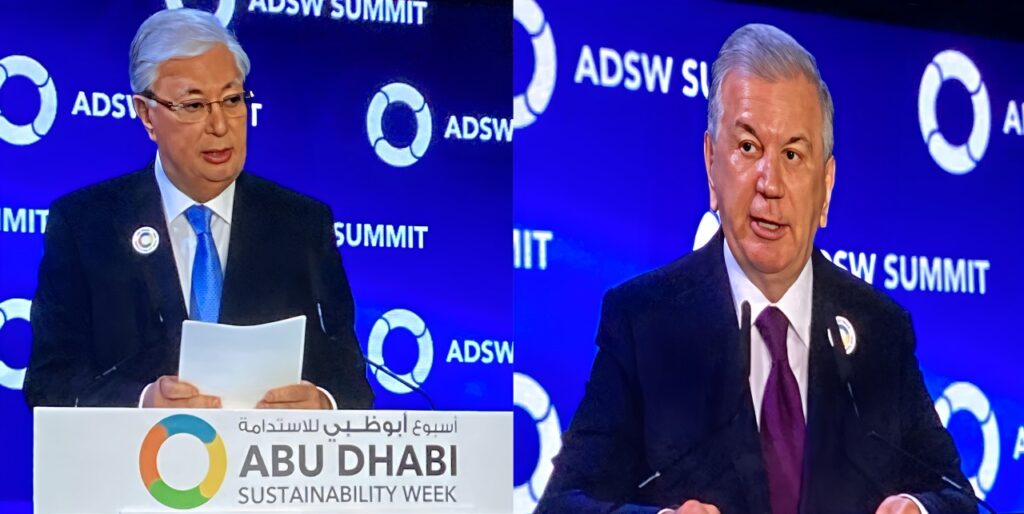
Central Asian nations, especially Kazakhstan and Uzbekistan, are seeking to develop closer ties with the oil-rich United Arab Emirates. What they need from the Gulf state is not fossil fuels, but renewable energy technology and investment in their green energy sectors. Despite being a significant oil-exporter, the UAE has managed in recent years to position itself as a regional leader in solar energy and photovoltaic solar projects. As a result, it now has global aspirations in the renewable energy industry. The Gulf country, through its semi-government-owned company, Masdar, has already invested billions of dollars in the construction of wind farms and solar plants all over the world – from the Bahamas and Barbados to Australia, as well as several African and European nations. Central Asia is no exception. In the region, the green energy giant is particularly active in Uzbekistan and Kazakhstan. It is, therefore, no surprise that, on January 14, two regional leaders, Shavkat Mirziyoyev and Kassym-Jomart Tokayev, were major guests at the Abu Dhabi Sustainability Week, a global platform focused on accelerating sustainability efforts. [caption id="attachment_27597" align="aligncenter" width="1280"] President Tokayev of Kazakhstan speaking at the Abu Dhabi Sustainability Week; image: TCA, Nikola Mikovic[/caption] Their visit to the UAE signals a strong push for a green energy transition at home. For Tashkent and Astana, cooperation with Abu Dhabi in the field of green energy can help them to achieve their ambitious goals and reduce reliance on fossil fuels, despite both being significant producers of natural gas and oil. “Together with our foreign partners, we are currently implementing more than 50 large energy projects worth a total of $26 billion,” Mirziyoyev stressed, pointing out that by 2030, the share of renewable energy sources in the country will reach 54%. [caption id="attachment_27593" align="aligncenter" width="2560"] President of Uzbekistan, Shavkat Mirziyoyev backstage at the Abu Dhabi Sustainability Week; image: TCA, Nikola Mikovic[/caption] In his view, Central Asia should turn into a “center of green economy.” The Director-General of the International Renewable Energy Agency (IRENA), Francesco La Camera, seems to share this stance. “Central Asia can play a stronger and leading role in the global energy transition. I’m confident this new partnership can accelerate the pipeline of renewable energy projects and drive green industrialization,” La Camera said at the 15th session of the IRENA Assembly, held in the UAE capital two days prior to the meetings Mirziyoyev and Tokayev had with the UAE’s leaders. According to the Uzbek President, Tashkent is interested in jointly realizing the potential of Central Asia in solar, wind, and hydro energy, as well as in developing the production of green hydrogen. Fully aware of the Central Asian state’s green energy potential, Masdar is committed to investing $2 billion in Tashkent’s clean energy projects with a total capacity of more than two gigawatts. In the most populated Central Asian nation, the UAE’s semi-state-owned company is already involved in the construction of both solar plants and wind farms. [caption id="attachment_27594" align="aligncenter" width="2560"] Abdulaziz Alobaidli, Masdar’s Chief Operating Officer, at the Abu...

New U.S. Anti-Russian Sanctions Could Spell Trouble for Central Asian Economies

On January 10, 2025, the U.S. Treasury Department announced a new package of sanctions targeting Russia’s energy sector. The measures, which affect a wide range of organizations and individuals, are set to take effect on February 27. While ostensibly aimed at undermining Russia’s economic interests amid the ongoing conflict in Ukraine, the sanctions are likely to have significant repercussions for Central Asian countries given their close economic ties with Russian energy giants. The sanctions package, viewed by some analysts as a final move by the outgoing Biden administration, could become a potent tool for the incoming administration to exert influence over Russian interests in Central Asia. Sanctions on Gazpromneft Subsidiaries The new sanctions include restrictions on Gazpromneft's subsidiaries operating in Central Asia. Affected entities include Gazpromneft Tajikistan, Gazpromneft Kazakhstan, Gazpromneft Asia (Kyrgyzstan), and Munai Myrza (Kyrgyzstan). According to the U.S. Treasury Department, Gazpromneft and its regional subsidiaries are considered critical sources of revenue that support Russia’s military efforts in Ukraine. In response, Gazpromneft characterized the sanctions as "unfounded, illegitimate and contrary to the principles of free competition." The impact of these sanctions, however, could prove severe for the economies of Central Asia, where Gazpromneft plays a key role in the energy sector. Gazpromneft Asia, for example, is a major supplier of petroleum products in Kyrgyzstan, making it a critical player in the domestic market. Sanctions on the company could disrupt fuel supplies and drive up energy prices in the country. Gazpromneft Kazakhstan LLP, based in Almaty, operates a network of Gazpromneft-branded gas stations in Kazakhstan. While disruptions to fuel supplies in this network might not critically affect Kazakhstan’s economy - the largest in Central Asia - the sanctions carry broader implications. Threats to Joint Projects Beyond direct sanctions on companies, several executives of Russian oil firms actively operating in Kazakhstan have been added to the U.S. sanctions list. Key figures include Vadim Vorobyev, President of Lukoil PJSC and a member of Kazakhstan’s Foreign Investors Council. Lukoil is a strategic partner of KazMunaiGas (KMG) in production and exploration projects; Nail Maganov, CEO of Tatneft, which collaborates with KMG on projects such as Karaton Podsolovaya, Butadiene, and the Saran Tire Plant; Alexander Dyukov, the Chairman of Gazpromneft, and Sergei Kudryashov, CEO of Zarubezhneft, which has signed letters of intent for joint projects with KMG. These sanctions could complicate existing partnerships and delay key projects, undermining Kazakhstan’s energy sector and its broader economic growth. Sanctions on Rosatom and Nuclear Energy Another significant element of the sanctions package is the inclusion of Rosatom executives on the U.S. sanctions list. This development poses challenges to Kazakhstan’s plans to establish an international consortium - including representatives from France, South Korea, China, and Russia - to build a nuclear power plant. With Rosatom facing restrictions, the consortium is now likely to exclude Russia, potentially straining relations between Astana and Moscow. A global leader in nuclear energy, Rosatom was expected to play a central role in the project. Kazakhstan may now explore alternative arrangements, balancing its energy ambitions with the...

Heads of Kyrgyz, Tajik, and Uzbek Governments Meet… Finally

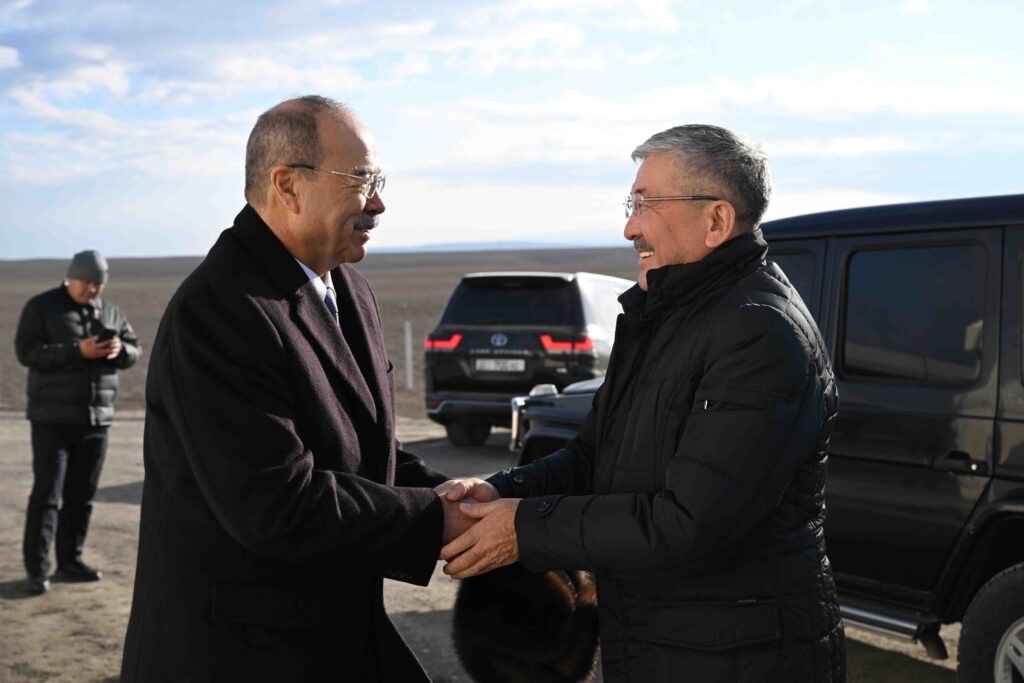
It took more than 30 years, but the prime ministers of the three Central Asian countries that share the Ferghana Valley finally met to discuss a range of important issues that concern all three states. Tajik Prime Minister Kohir Rasulzoda, Uzbek Prime Minister Abdulla Aripov, and Chairman of Kyrgyzstan’s Cabinet of Ministers (Kyrgyzstan does not have a post of prime minister) Adylbek Kasymaliyev met on January 8 at a desolate area where the borders of the three countries meet. [caption id="attachment_27412" align="aligncenter" width="8256"] Image: gov.kg[/caption] The group touted agreements on the completion of the delimitation process along the Uzbek-Kyrgyz border and the early December 2024 agreement on the Kyrgyz-Tajik border. Since 1991, unmarked areas of the borders in the Ferghana Valley were often the scenes of conflicts between communities on either side of the frontier. Border guards sometimes fired on trespassers and dozens of people were killed or wounded, sometimes simply because they inadvertently strayed over unmarked territory into the neighboring country. The Ferghana Valley is the most densely populated region in Central Asia. This is due to the rich agricultural land which makes the region to this day the breadbasket of Central Asia. Soviet mapmakers drew lines to create Soviet republics in the region, though these borders mattered little since they were internal administrative boundaries inside one country. [caption id="attachment_27413" align="aligncenter" width="8256"] Image: gov.kg[/caption] After the USSR collapsed, these often-arbitrary, zigzagging borders took on meaning, and disputes quickly broke out about what land historically belonged to which nation and who had rights to water use. These issues were greatly complicated by the existence of enclaves created during the Soviet period such as Uzbekistan’s Soh and Shahimardon and Tajikistan’s Vorukh, all three of which are surrounded by Kyrgyzstan.   Looking Ahead The three prime ministers discussed hydropower plants (HPP), an important topic for all three countries, especially as key HPPs are located in the mountains ringing the Ferghana Valley and more are currently under construction. Central Asia is one the regions most affected by climate change, so HPPs and water use in general are crucial issues, especially given that agriculture in the Ferghana Valley is vital to all three countries. All three countries face electricity shortages and hydropower is seen as a means of alleviating or even totally resolving this dilemma, but at the same time waters flowing from the mountains of Kyrgyzstan are important for agriculture in every Central Asian state. Uzbek media noted Uzbek Energy Minister Jurabek Mirzamahmudov was part of the delegation attending the January 8 talks. Reports did not mention if energy ministers from Kyrgyzstan and Tajikistan were also present. [caption id="attachment_27414" align="aligncenter" width="8256"] Image: gov.kg[/caption] Central Asia is also taking on a new importance as a trade corridor between Europe and China, and from Europe and China into Afghanistan and on further to Pakistan. Reports noted logistics were high on the agenda at the meeting of the three prime ministers. Trade between the three countries, specifically in the Ferghana Valley, was also discussed not only...

Tajikistan Files New Charges in Konibodom ‘Night Killings’ Case

Three suspects in Tajikistan's Konibodom ‘night killings’ case now face additional charges of hooliganism and rape. Solekhdjon Khudojberdiyev, Ahadjon Tukhtaev, and Manuchehr Odilov, initially charged with murder. Authorities have offered little public information on the case. A brief statement from the Prosecutor General’s Office acknowledged the new indictments but refrained from providing further details, leaving key questions unanswered.   Suspect Profiles Solekhdjon Khudojberdiyev (b. 1998): Hailing from the village of Gulbog, Khudojberdiyev had a prior conviction for rape. A sports enthusiast, he was known locally for his boxing, weightlifting, and power juggling performances. Ahadjon Tukhtaev (b. 1997): A butcher by trade from the same village as Khudojberdiyev, Tukhtaev also had a criminal record for sex crimes. Manuchehr Odilov (b. 1996): From Khamroboev Jamoat, Odilov shared a similar criminal background. Reports suggest he became acquainted with Khudojberdiyev and Tukhtaev while in prison. Bakhtiyor Ravshanov (b. 1988): A shoemaker and builder from the village of Sanjidzor, Ravshanov is Khudojberdiyev’s cousin. He faces murder charges for one of the killings in May. Case Background The Konibodom region in Sughd Oblast has endured a series of brutal killings. Between late March and May 2024, 13 individuals - ranging from children to the elderly - were murdered in their homes. The victims, ethnic Tajiks and Kyrgyz, lived near the border with Kyrgyzstan. These crimes, committed in different parts of the city, terrorized residents before the suspects were apprehended and the killings temporarily ceased. However, the violence resurfaced in December. On December 9, six people were killed, followed by four more murders on December 16. The crimes prompted swift action, and on December 22, the Prosecutor General’s Office announced the detention of four suspects. The investigation remains under the close scrutiny of Tajikistan’s top leadership. The Prosecutor General is expected to provide a comprehensive update during the final press conference, shedding light on the motives and details of these tragic events.   This story ws last updated on 8 January, 2025

Istanbul Prosecutors Seek Lengthy Sentences for Suspects in Crocus City Attack

The Istanbul Prosecutor’s Office has demanded prison sentences ranging from 7.5 to 15 years for five Central Asians accused of involvement in last spring's terrorist attack on the Crocus City concert hall in Moscow. This information was reported by the Anadolu news agency. The detainees - identified as Hafizjon Usmanov, Muteullo Asoyev, Rahmatullo Solikov, Muhammadrahim Faizov, and Hamza Muhammed - are accused of providing instructions and logistical support to the perpetrators of the attack. They allegedly promised 800,000 rubles (approximately $7,240) and new identity documents in exchange for carrying out the attack. According to Anadolu, the suspects were in contact with Shamsiddin Fariduni and Saidakrami Rachabalizoda, who are believed to have been directly involved in the attack. One of the detainees reportedly shared an apartment in Istanbul’s Avcılar district with Fariduni. Evidence presented by prosecutors includes correspondence between one of the suspects and a perpetrator. In the messages, the suspect proposed planting a bomb at the Vegas shopping center, promising an advance payment of 100,000 rubles and an additional 700,000 rubles upon completion of the act. The terrorist attack on Crocus City Hall in March last year claimed the lives of 144 people and injured 551 others. The main suspects in the case are citizens of Tajikistan, with reports indicating that 12 individuals have been arrested in connection with the attack. The Istanbul investigation sheds further light on the broader network behind the attack, pointing to an international web of operatives and support personnel.

Central Asia Poised to Outpace Global Growth in 2025, IMF Projects (With One Exception)

The year 2025 is anticipated to bring moderate growth for the global economy, according to forecasts by the International Monetary Fund (IMF). Global GDP is projected to grow by 3.2%, reaching $115.3 trillion at current prices. While global growth is expected to remain stable, it is weaker than initially forecast. The IMF notes that the economic outlook for the United States has improved, but growth expectations for other advanced economies, particularly in Europe, have been downgraded. Emerging markets and developing economies continue to grapple with a range of challenges, including production disruptions, shipping delays, geopolitical conflicts, civil unrest, and extreme weather events. These factors have tempered growth prospects in regions such as the Middle East, Central Asia, and sub-Saharan Africa. In contrast, emerging Asia is experiencing robust growth, fueled by strong demand for semiconductors and electronics, underpinned by substantial investments in artificial intelligence. Additionally, public investment in China and India is driving regional economic expansion. However, the IMF forecasts that global growth will average 3.1% annually over the next five years, a pace slower than pre-pandemic levels. Global Economic Highlights In 2025, the United States is expected to retain its position as the world’s largest economy, with a GDP of $30.3 trillion at current prices. China will follow with $19.5 trillion, while Germany is projected to rank third at $4.9 trillion. Japan and India will occupy fourth and fifth places, with GDPs of $4.4 trillion and $4.3 trillion, respectively. Central Asia Outlook In Central Asia, Uzbekistan’s economy is forecast to expand by 5.7%, reaching $127.4 billion at current prices, according to the IMF. This growth rate positions Uzbekistan as one of the region’s fastest-growing economies. Kazakhstan, the largest economy in Central Asia, is expected to achieve 4.6% growth, with GDP reaching $306.6 billion. Kyrgyzstan’s GDP is forecast to grow by 5%, reaching $17.3 billion at current prices. Tajikistan’s economy is expected to grow by 4.5%, with GDP projected at $14.1 billion. Turkmenistan is forecast to experience slower growth, with its GDP increasing by 2.3% to reach $91.1 billion.