• KGS/USD = 0.01144 0%
  • KZT/USD = 0.00210 0%
  • TJS/USD = 0.10454 -0.1%
  • UZS/USD = 0.00008 0%
  • TMT/USD = 0.28571 0.28%
  • KGS/USD = 0.01144 0%
  • KZT/USD = 0.00210 0%
  • TJS/USD = 0.10454 -0.1%
  • UZS/USD = 0.00008 0%
  • TMT/USD = 0.28571 0.28%
  • KGS/USD = 0.01144 0%
  • KZT/USD = 0.00210 0%
  • TJS/USD = 0.10454 -0.1%
  • UZS/USD = 0.00008 0%
  • TMT/USD = 0.28571 0.28%
  • KGS/USD = 0.01144 0%
  • KZT/USD = 0.00210 0%
  • TJS/USD = 0.10454 -0.1%
  • UZS/USD = 0.00008 0%
  • TMT/USD = 0.28571 0.28%
  • KGS/USD = 0.01144 0%
  • KZT/USD = 0.00210 0%
  • TJS/USD = 0.10454 -0.1%
  • UZS/USD = 0.00008 0%
  • TMT/USD = 0.28571 0.28%
  • KGS/USD = 0.01144 0%
  • KZT/USD = 0.00210 0%
  • TJS/USD = 0.10454 -0.1%
  • UZS/USD = 0.00008 0%
  • TMT/USD = 0.28571 0.28%
  • KGS/USD = 0.01144 0%
  • KZT/USD = 0.00210 0%
  • TJS/USD = 0.10454 -0.1%
  • UZS/USD = 0.00008 0%
  • TMT/USD = 0.28571 0.28%
  • KGS/USD = 0.01144 0%
  • KZT/USD = 0.00210 0%
  • TJS/USD = 0.10454 -0.1%
  • UZS/USD = 0.00008 0%
  • TMT/USD = 0.28571 0.28%

Viewing results 37 - 42 of 692

The “Central Asia 2030” Roundtable in Astana: From External Interest to Regional Choice

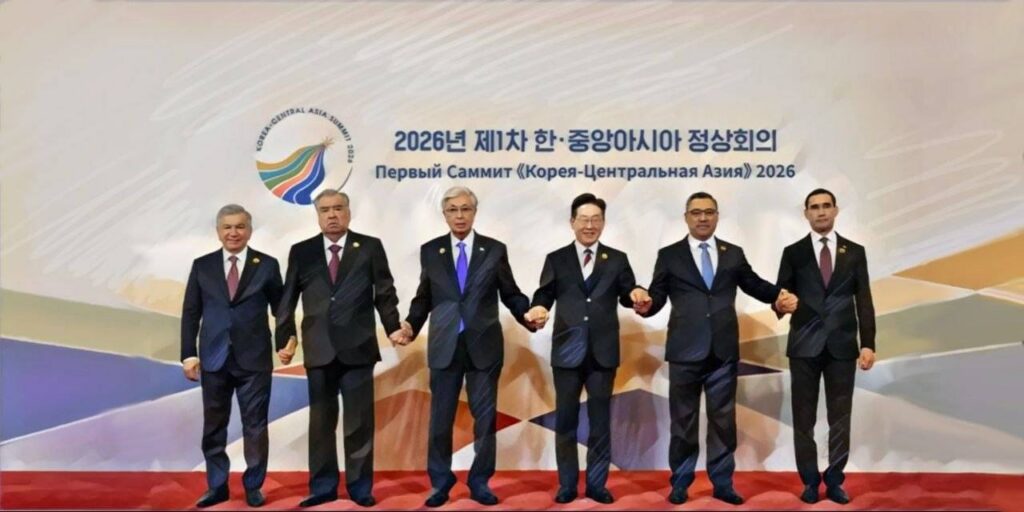
Discussions about Central Asia’s long-term strategic future are increasingly shifting from a focus on external attention to one of growing regional agency. On Monday, Astana International University hosted the first roundtable in the series Central Asia 2030: Strategic Horizons and Regional Choices. Speakers included Andrew D’Anieri, Deputy Director of the Atlantic Council’s Eurasia Center; Yerkin Tukumov, Special Representative of the President of Kazakhstan; Ambassador-at-Large Zulfiya Suleimenova; and Dauren Aben, Deputy Director of the Kazakhstan Institute for Strategic Studies under the President of Kazakhstan. Pragmatism, Regional Choice, and the Logic of the “Grand Bargain” In his remarks, Andrew D’Anieri emphasized that Central Asia is increasingly viewed in the U.S. not as a peripheral zone but as an independent strategic partner. He noted that “environmental, water, and climate issues considered within a regional framework are fully supported by the U.S.” However, he added that “long-term commercial and investment projects are impossible without long-term stability, which in turn requires coordination between neighbors, engagement on sensitive issues, and pragmatic regional cooperation.” D’Anieri also pointed to Afghanistan as “an integral part of regional logic,” and described formats such as C5+1 as evidence of Central Asia’s growing subjectivity. He highlighted the first-ever C5+1 summit at the presidential level in Washington as a landmark event, especially under the administration of Donald Trump, known for its preference for bilateral over multilateral formats. Trump and the Possibility of a Visit: Only with a “Big Deal” When asked whether a visit by President Trump to Central Asia is realistic, D’Anieri offered a candid assessment: “Such a visit is only possible if there is a large, symbolically and economically significant deal.” Whether in aviation, technology, or infrastructure, these high-visibility projects are typically what draw Trump’s engagement. He added that “the region has work to do in developing a package of initiatives that could interest the U.S. president and justify a high-level visit.” Potential areas include mining, transport, and logistics. Reframing Afghanistan’s Role in the Region Special Representative Yerkin Tukumov focused on the importance of reframing the region’s relationship with Afghanistan. For too long, he said, Afghanistan has been viewed primarily “through the prism of security threats,” resulting in a narrow and often misleading approach. Tukumov argued for a broader, more pragmatic view that considers economic, humanitarian, and cross-border dimensions. He described the C5+1 format not as a replacement for bilateral diplomacy, but as “an additional level of coordination where Central Asia can speak with a more consolidated voice without losing national autonomy in foreign policy.” He stressed the need to move beyond “ideological and declarative approaches,” toward practical, interest-based mechanisms of cooperation. Ecology, Water, and the Case for a Global Water Agency Ambassador-at-Large Zulfiya Suleimenova addressed the strategic urgency of regional coordination on water and climate. She emphasized that “water issues are transboundary in nature,” and that efforts to resolve them solely within national frameworks are bound to fall short. “Regional coordination in Central Asia is not a political slogan, but a functional necessity,” she said. Suleimenova argued that jointly promoting...

Tajik Border Troops Kill Three Afghans Suspected of Opium Smuggling

An armed clash occurred on the evening of January 29 along the Tajik-Afghan border, in Tajikistan's Shamsiddin Shokhin district, as local border forces intercepted an attempted drug smuggling operation. According to the Border Troops of the State Committee for National Security (GKNB), the incident occurred around 7:30 p.m. in the area overseen by the Bahorak border post of military unit 0341. The GKNB reported that five Afghan nationals illegally crossed into Tajikistan. Once the group was located, border guards attempted to apprehend them. The intruders resisted arrest and opened fire in an attempt to retreat across the border. In the ensuing exchange, three were killed on the spot. The GKNB identified the deceased as Jovid Valadi Davlatmand and Rashid Valadi Davlatmand, residents of Kariai Vorich, and Sobir Valadi Zohir from Kariai Andjir, Takhar province. Two others managed to flee under the cover of darkness, retreating toward Afghan territory. The Tajik-Afghan border has seen a steady rise in armed incidents over the past year, driven largely by drug trafficking and the movement of armed groups across remote mountain crossings. Tajik authorities have repeatedly warned that narcotics smuggling networks operating out of northern Afghanistan remain a persistent security threat despite stepped-up patrols and surveillance. At the scene, border guards recovered three Kalashnikov rifles with four magazines, approximately 150 rounds of mixed-caliber ammunition, a large number of spent cartridges, and four bags containing 73 packages of narcotics, identified as hashish and opium. A boat, likely used for crossing the border, was also discovered. Officials say drug trafficking remains the primary driver of cross-border violence in the region. Afghanistan remains the world’s largest producer of opiates, and Tajikistan is a key transit route for narcotics moving north toward Central Asia and Russia, making the border a frequent flashpoint for armed encounters. The January 29 clash adds to a series of escalating incidents along the Tajik-Afghan border. Two weeks ago, on the night of January 18, Tajik security forces killed four armed individuals, whom they identified as members of a terrorist organization, in the same border zone. Border violence has intensified since last November. In two separate incidents, five Chinese citizens were killed in attacks originating from Afghan territory. In December, two Tajik border guards were killed during a confrontation with armed intruders in the Sarchashma border detachment's area of responsibility. Tajik security forces maintain that full control over the national border is being upheld, and have vowed to respond to all threats with force and immediacy.

Jackson-Vanik Repeal Gains Momentum as U.S. Courts Central Asia

For many years, U.S. relations with Central Asia were primarily political in nature, while economic ties developed slowly. However, in the past year, engagement has intensified significantly, with recent agreements suggesting the U.S. is poised to strengthen its economic presence in the region. A recent statement by U.S. Secretary of State Marco Rubio reinforces this outlook. Calls to repeal the outdated Jackson-Vanik trade restrictions have been framed by U.S. officials as a way to facilitate trade with Central Asia and strengthen U.S. energy security. The Jackson-Vanik Amendment The Jackson-Vanik Amendment, enacted in 1974, restricts trade with countries that limit their citizens’ right to emigrate. At the time of its passage, Central Asia was still part of the Soviet Union.  The amendment prohibits granting most-favored-nation (MFN) status, government loans, and credit guarantees to countries that violate their citizens’ right to emigrate, and allows for discriminatory tariffs and fees on imports from non-market economies. The amendment was repealed for Ukraine in 2006, and for Russia and Moldova in 2012. However, it remains in effect for several countries, including Azerbaijan, Kazakhstan, Tajikistan, Turkmenistan, and Uzbekistan, which continue to receive only temporary normal trade relations. In May 2023, a bill proposing the establishment of permanent trade relations with Kazakhstan, which included repealing the Jackson-Vanik Amendment, was introduced in the U.S. Congress. A follow-up bill with similar provisions was submitted in February 2025. Then-nominee and now Secretary of State Marco Rubio previously noted that some policymakers viewed the amendment as a tool to extract concessions on human rights or to push Central Asian states toward the U.S. and away from Russia. However, he characterized such thinking as outdated, stating that, “In some cases, it is an absurd relic of the past.”  Rubio has consistently supported expanding U.S. ties with Central Asia. Expanding Cooperation In 2025, relations between the U.S. and Central Asia deepened significantly, particularly with Kazakhstan and Uzbekistan, which are seen by analysts as the primary beneficiaries of this cooperation. In late October 2025, U.S. Deputy Secretary of State Christopher Landau and U.S. Special Representative for South and Central Asia Sergio Gor visited Kazakhstan and Uzbekistan. One of the year’s major events was the Central Asia-U.S. (C5+1) summit held in Washington on November 6. Leaders of the five Central Asian states met with President Donald Trump and members of the U.S. business community. Uzbekistani President Shavkat Mirziyoyev also met with U.S. Senator Steve Daines, co-chair of the Senate Central Asia Caucus, with both sides focusing heavily on economic cooperation. At the summit, Uzbekistan finalized major commercial agreements with U.S. companies, including aircraft orders by Uzbekistan Airways and deals spanning aviation, energy, and industrial cooperation. Kazakhstan signed agreements worth $17 billion with U.S. companies in sectors including aviation, mineral resources, and digital technologies. This included a deal granting American company Cove Kaz Capital Group a 70% stake in a joint venture to develop one of Kazakhstan’s largest tungsten deposits, an agreement valued at $1.1 billion.  Further agreements were signed on critical minerals exploration. Kazakhstan and the...

More Doctors in Tajikistan, but Shortages Persist

Despite a modest increase in the number of healthcare professionals, Tajikistan continues to face a significant shortage of medical personnel, particularly in rural regions. Authorities are hoping to bridge the gap through the recruitment of medical school graduates and the redistribution of existing specialists. At a press conference on January 28, Minister of Health and Social Protection Jamoliddin Abdullozoda reported that as of early 2026, there were 22,419 doctors and 64,909 mid-level medical personnel working in the country’s healthcare system. These figures represent a year-on-year increase of 1.9% and 2.3%, respectively. However, the staffing deficit remains unresolved. Tajikistan currently lacks 1,432 medical specialists. According to ministry estimates, the staffing rate for doctors stands at 94.3%, while for mid-level personnel it is 99.7%. These figures reflect slight improvements over the previous year, up 0.8% and 0.1%, respectively. The shortage is unevenly distributed across the country. In July 2025, the minister had noted a shortfall of 1,600 specialists for the first half of the year, indicating a reduction of nearly 170 positions in the latter half. Nevertheless, the situation remains critical in remote and underserved areas. Abdullozoda highlighted acute shortages in family medicine, as well as in the specialties of narcology, phthisiology, and radiology. In some regions, there is also a lack of gynecologists and surgeons. To address immediate needs, the ministry has compiled lists of district-level doctors who will be deployed to remote areas on a rotating basis. Authorities are also promoting personnel retraining to fill urgent gaps. “We are proposing that regions with shortages – for instance, if they lack radiologists – receive specialists from related fields such as surgery or traumatology. These doctors will undergo advanced training and then serve where they are most needed,” the minister explained. In the long term, the government plans to solve the shortage by mobilizing young professionals. According to Abdullozoda, if at least 50% of medical school graduates begin working in their field of study, the staffing issue could be resolved. The total number of students in medical universities reached 26,911 in 2026, an increase of 2,738 over the previous year. Enrolments in medical colleges also saw significant growth, with 80,000 students in the 2025–2026 academic year, up from 72,760 the year before.

Kazakhstan-Uzbekistan Jibek Joly Train Tour Extended to Tajikistan

Kazakhstan’s national railway company, Kazakhstan Temir Zholy (KTZ), has announced the expansion of its popular Jibek Joly (Silk Road) tourist train route to include Tajikistan, adding a new stop to one of Central Asia’s flagship railway tourism initiatives. The updated route will now reach the Tajik capital, Dushanbe, extending the tour beyond Kazakhstan and Uzbekistan for the first time. The inaugural journey on the extended route is scheduled to depart from Almaty on March 20, 2026, and return on March 25, passing through a series of historic Silk Road cities: Turkestan (Kazakhstan), Samarkand (Uzbekistan), Dushanbe (Tajikistan) and Tashkent (Uzbekistan). The tour package includes rail travel, guided sightseeing, entrance to cultural and historical sites, and organized transfers. Its launch coincides with Nauryz, the region’s traditional spring holiday, allowing travelers to experience vibrant local celebrations along the way. First introduced in November 2024, the Jibek Joly train originally ran between Almaty, Turkestan, and Tashkent, and has since become a highly visible symbol of the region’s growing tourism sector. The project reflects broader efforts to promote Central Asia as a unified tourist destination. Regional leaders have advocated for a shared visa-free regime for foreign visitors, similar to Europe’s Schengen Zone, to encourage cross-border travel and boost international tourism. Officials say that initiatives like Jibek Joly can help strengthen cultural ties, foster regional integration, and raise Central Asia’s profile on the global tourism map.

Tajikistan Approves Use of Central Bank Reserves to Fund Rogun Hydropower Plant

Tajikistan’s lower house of parliament on January 22 approved a draft law allowing funds from the reserve fund of the National Bank of Tajikistan to be used to finance construction of the Rogun Hydropower Plant, a project viewed as central to the country’s long-term energy strategy. The decision was reported by Sadoi Mardum, the official newspaper of the lower chamber. According to the publication, the bill was introduced at the initiative of President Emomali Rahmon. Speaking before lawmakers, Finance Minister Faiziddin Qahhorzoda said the legislation creates a legal mechanism for channeling reserve fund resources through the state budget toward completion of Rogun, which authorities describe as a strategically important facility. Qahhorzoda explained that the law provides for the transfer of 916 million Tajik somoni (approximately $100 million), representing the remaining balance of the National Bank’s reserve fund generated from its financial performance in 2024. He told deputies that the measure is intended to help Tajikistan achieve energy independence by 2027 and reduce reliance on external loans and grants. The minister also pointed to broader budgetary support for the energy sector. Under the state budget for 2026, around 15 billion somoni (more than $1.6 billion) has been allocated for fuel and energy projects, with the majority of those funds earmarked for completion of the Rogun dam. The parliamentary decision follows earlier reports highlighting financial oversight challenges surrounding the hydropower project. As previously reported by The Times of Central Asia, an independent audit of Rogun’s 2024 financial statements identified serious concerns related to financial reporting and internal controls. The audit was conducted by Baker Tilly Tajikistan, a member of the international Baker Tilly network, and resulted in a qualified opinion. Auditors said they were unable to fully confirm the accuracy of the company’s accounts and cited several material issues, including a possible understatement of share capital. They also noted that they did not participate in scheduled inventories of cash, fixed assets, or other holdings as of December 31, 2024, limiting their ability to verify parts of the company’s assets.