• KGS/USD = 0.01143 0%
  • KZT/USD = 0.00216 0%
  • TJS/USD = 0.10633 -0.28%
  • UZS/USD = 0.00008 0%
  • TMT/USD = 0.28571 0%
  • KGS/USD = 0.01143 0%
  • KZT/USD = 0.00216 0%
  • TJS/USD = 0.10633 -0.28%
  • UZS/USD = 0.00008 0%
  • TMT/USD = 0.28571 0%
  • KGS/USD = 0.01143 0%
  • KZT/USD = 0.00216 0%
  • TJS/USD = 0.10633 -0.28%
  • UZS/USD = 0.00008 0%
  • TMT/USD = 0.28571 0%
  • KGS/USD = 0.01143 0%
  • KZT/USD = 0.00216 0%
  • TJS/USD = 0.10633 -0.28%
  • UZS/USD = 0.00008 0%
  • TMT/USD = 0.28571 0%
  • KGS/USD = 0.01143 0%
  • KZT/USD = 0.00216 0%
  • TJS/USD = 0.10633 -0.28%
  • UZS/USD = 0.00008 0%
  • TMT/USD = 0.28571 0%
  • KGS/USD = 0.01143 0%
  • KZT/USD = 0.00216 0%
  • TJS/USD = 0.10633 -0.28%
  • UZS/USD = 0.00008 0%
  • TMT/USD = 0.28571 0%
  • KGS/USD = 0.01143 0%
  • KZT/USD = 0.00216 0%
  • TJS/USD = 0.10633 -0.28%
  • UZS/USD = 0.00008 0%
  • TMT/USD = 0.28571 0%
  • KGS/USD = 0.01143 0%
  • KZT/USD = 0.00216 0%
  • TJS/USD = 0.10633 -0.28%
  • UZS/USD = 0.00008 0%
  • TMT/USD = 0.28571 0%

Viewing results 223 - 228 of 545

U.S. Urges Tajikistan to Enforce Sanctions on Russian Firms Amid Ongoing Compliance Review

The Tajik government has received an official letter from the United States requesting compliance with sanctions against several Russian companies operating in the country, Chairman of the State Committee on Investment and State Property Management Sulton Rakhimzoda announced at a press conference on February 11. According to Rakhimzoda, the U.S. has requested clarification on what measures Tajik authorities plan to take regarding the sanctions. “This is a sensitive topic, and it is currently under consideration,” he stated. He added that sanctions against Russian companies are not a new phenomenon and that businesses affected by the restrictions should already have mechanisms in place to adapt. “It is clear that sanctions impact companies to varying degrees. However, as far as I know, they have already developed strategies to operate under these conditions. These issues are also being discussed in negotiations with the government,” Rakhimzoda said. He noted that the Investment Committee does not oversee this sector directly, but that the relevant government agencies are handling the matter. Following the start of the conflict in Ukraine, the U.S. and the European Union imposed strict sanctions on several Russian enterprises. In January 2025, the U.S. Department of the Treasury sanctioned Gazpromneft Tajikistan along with its parent company, Gazprom Neft. Tajik authorities have stated that the sanctions will not affect oil product imports into the country. However, experts warn that the restrictions could eventually impact other companies cooperating with Gazpromneft Tajikistan.

Riot in Tajik Prison Leaves Several Inmates Dead

On February 3, a riot broke out in Tajikistan's Vahdat Penitentiary No. 3/2, 15 miles from Dushanbe, resulting in the deaths of several prisoners. According to Tajikistan’s Ministry of Justice, the incident occurred when nine inmates - convicted over links to Islamic State and the Jihadi Salafi movement - launched an armed attack on prison staff using improvised weapons. “As a result of the attack, three guards were seriously injured,” the ministry’s statement said. The prisoners, armed with makeshift knives, refused to comply with prison authorities and attempted to kill security personnel in an escape attempt. According to the authorities, the prison guards responded with firearms, killing three of the attackers and detaining the others. The injured staff members received medical treatment and were reported to be in stable condition. Authorities also confirmed that security at the facility has been fully restored. While official reports initially listed three inmate fatalities, some sources suggest that the actual number of prisoner deaths may be higher. Condemning the treatment of detainees by officials at the prison, the Civil Committee for the Rescue of Hostages and Political Prisoners of Tajikistan (CCHP) stated that “at least 10 prisoners were killed and a number were injured as a result of guards shooting at prisoners.” Despite reports that the detainees had briefly raised the Islamic State flag over the prison, CCHP claimed that those killed were political prisoners who had no connection to ISIS or any other banned group.   History of Prison Riots in Tajikistan This is not the first violent uprising within Tajikistan’s penitentiary system. In May 2019, inmates in the same facility armed with knives took three staff members hostage and killed them. They also executed five fellow prisoners before security forces suppressed the riot. Among those killed was Behruz Halimov, son of Gulmurod Halimov, a former Tajik special forces officer who later joined ISIS. The riot left 29 prisoners dead, and Tajikistan’s Supreme Court subsequently increased the sentences of 28 convicts involved in the incident. ISIS claimed responsibility for the riot. In November 2018, a similar riot occurred in a high-security prison in Khujand, where 21 inmates and two prison staff members were killed. Five guards were also injured. Following an investigation, 33 prisoners stood trial, and nine prison officials, including the warden, received prison sentences for negligence. Broader Security Concerns In recent years, Tajikistan has witnessed numerous escape attempts from detention facilities, though nearly all have ended in failure. Most escape organizers have either been killed during apprehension or recaptured. These recurring incidents highlight ongoing security challenges within the country’s prison system and underscore the need for further reforms to prevent future outbreaks of violence.

CNN Report on Ibn Sina Sparks Central Asian Nationality Debate

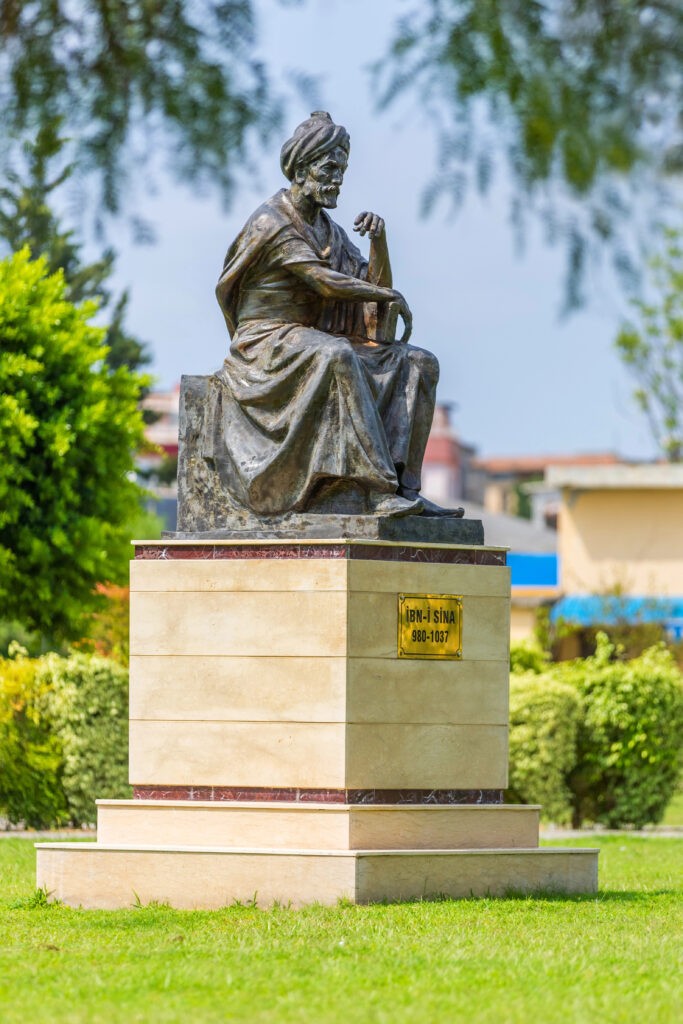
A recent CNN report referring to the scholar Ibn Sina as an Uzbek scientist has ignited controversy in Central Asia, particularly in Tajikistan. Tajikistan’s Minister of Culture, Matlubakhon Sattoriyon, strongly criticized the report, calling it a “distortion of reality.” Ibn Sina, known as Avicenna in the West, was a polymath who made groundbreaking contributions to medicine, logic, physics, mathematics, and other sciences. Born in 980 in the village of Afshona near Bukhara, an area now part of Uzbekistan, he died in 1037. Over his lifetime, he authored more than 450 works, with about 240 surviving to this day. His most renowned book, The Canon of Medicine (Tib qonunlari), served as a standard medical text in Europe and the Islamic world for centuries. While the Ibn Sina segment was actually created not by CNN itself but by the Center of Islamic Civilization in Uzbekistan, Sattoriyon accused CNN of disregarding historical facts and described the report as another example of what she called the “appropriation” of Tajik's scientific and literary heritage. “This is an insult not only to the Tajik people but also to the history and culture of Persian literature worldwide,” she said. The minister urged Tajik scientists and intellectuals to counter such claims with evidence, though she also dismissed CNN’s report as “just a TV channel’s material with no historical basis,” pointing out that it does not reflect Uzbekistan’s official stance. In Uzbekistan, reactions to the controversy varied. Sherzodkhon Kudratkhuja, Rector of the University of Journalism and Mass Communications, acknowledged the shared history of Uzbekistan and Tajikistan and called for moderation. “At a time when Central Asia is strengthening its unity, we must all approach such issues carefully,” Kudratkhuja said. He emphasized that Ibn Sina is commonly described as a scholar born in Bukhara, a region now within Uzbekistan’s borders, but suggested that he should be seen as a figure representing the entire Central Asian region. Bobur Bekmurodov, Chairman of Uzbekistan’s “Yuksalish” movement, expressed disappointment with Tajikistan’s criticism. “The legacy of figures like Ibn Sina belongs to the entire region and the world,” Bekmurodov said. He urged Central Asian nations to focus on shared challenges such as climate change, economic growth, and security rather than divisive historical disputes. Azamat Ziyo, Director of the Institute of History at Uzbekistan’s Academy of Sciences, echoed calls for regional unity. “There is no written evidence about the nationality of many historical figures in Central Asia, including Ibn Sina. What matters is their contribution to science and humanity, not their nationality,” he stated. Ziyo also appealed to politicians to avoid interfering in historical scholarship. “The science of history is the business of historians. We should rely on objective, source-based research rather than political interpretations,” he said. He emphasized the importance of collaboration among historians from Uzbekistan, Tajikistan, Kazakhstan, Kyrgyzstan, and Turkmenistan to address shared historical legacies. Drawing on his 40 years of research into the history of Central Asian statehood, Ziyo explained the complexity of national identities in the region. “During the reign of the...

Kazakhstan Leads Central Asia in Average Salaries

Kazakhstan continues to hold the top position in terms of average wages among Central Asian countries, according to a study conducted by analysts at Ranking.kz. Wage Comparisons Across Central Asia Data from the Interstate Statistical Committee of the CIS reveals that as of September 2024, Kazakhstan's average nominal monthly salary stood at $817.20. This figure is nearly twice as high as in Uzbekistan ($437.80) and Kyrgyzstan ($411.20). Tajikistan trails significantly behind, with an average salary of just $242.80 - 3.4 times lower than Kazakhstan’s. Notably, the wage gap between Kazakhstan and Tajikistan would have been even greater if not for a significant increase in Tajik wages. Over the past year, nominal salaries in Tajikistan rose by 24.9%, while real wages increased by 21.1% - the highest growth rate in the region. In comparison, wage growth in Kazakhstan, Kyrgyzstan, and Uzbekistan was more moderate. Data on salaries in Turkmenistan remains unavailable as the country has not updated its wage statistics since 2023. Minimum Wage Comparison Kazakhstan also leads the region in terms of minimum wages. In 2024, the minimum wage in Kazakhstan is 85,000 KZT ($181.10). By contrast: In Uzbekistan, the minimum wage is $89.40. In Tajikistan, it is $54.90. In Kyrgyzstan, it is just $28.30. In Turkmenistan, the official minimum wage is reported as $402.90, based on the fixed exchange rate of 3.5 TMT per dollar. However, due to the country’s reliance on a "black market" exchange rate (approximately 19 TMT per dollar), the actual minimum wage is estimated to be much lower, around $74.20. Sectoral Analysis When analyzing nominal salaries by economic sector, the highest wages in the region are found in finance and insurance. In Kazakhstan, the average salary in this sector exceeds $1,700 - three times higher than in Tajikistan ($561.90). Workers in Kazakhstan's mining industry also enjoy high incomes. In Uzbekistan and Kyrgyzstan, the financial sector and IT industry offer the highest salaries. Meanwhile, in Tajikistan, relatively high wages are reported in the manufacturing and service sectors. Inflation and Its Impact Inflation remains a key factor affecting the real purchasing power of wages across Central Asia. According to the CIS Interstate Statistical Committee, the most significant price increases in 2024 occurred in the economically developed countries of the region - Kazakhstan and Uzbekistan. Uzbekistan: Inflation reached 7.7% in October 2024. Kazakhstan: Inflation stood at 6.6%. Kyrgyzstan: Inflation was lower at 4.2%. Tajikistan: The region’s lowest inflation rate was recorded at 3.2%. These inflation rates directly influence the population's purchasing power, even in countries with higher nominal salaries like Kazakhstan and Uzbekistan. Kazakhstan’s leadership in wages and minimum income underscores its position as the most economically advanced country in Central Asia. However, inflation and significant disparities in income distribution between sectors and regions remain challenges. While countries like Tajikistan are showing progress in wage growth, the overall gap in earnings between Central Asian nations continues to highlight economic inequalities within the region.

How Orthodox Christmas Is Celebrated in Central Asia

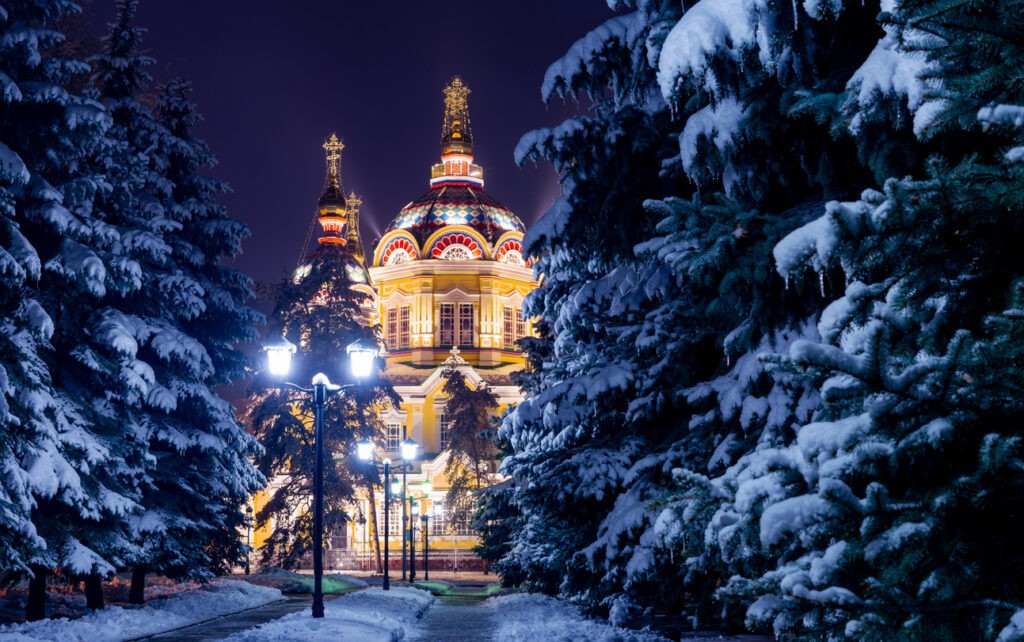
Orthodox Christmas, observed on January 7, holds a significant place in Central Asia, even in predominantly Muslim countries such as Tajikistan and Turkmenistan. This article explores how the holiday is celebrated in Kazakhstan, Uzbekistan, Kyrgyzstan, Tajikistan, and Turkmenistan. Kazakhstan Orthodox Christmas in Kazakhstan is a public holiday, alongside the Muslim celebration of Kurban-Ayt (Eid al-Adha). This recognition stems from the efforts of Kazakhstan's first president, Nursultan Nazarbayev, who proposed in 2005 during the XI session of the Assembly of People of Kazakhstan to declare both holidays as non-working days. Despite opposition from the Constitutional Court, which cited the country's secular constitution, members of the parliamentary faction Asar, led by Nazarbayev's daughter Dariga Nazarbayeva, and the presidential party Otan amended the Labor Code to accommodate these holidays. Since then, Orthodox Christmas and Kurban-Ayt have been official holidays. Celebrations in major cities include festive liturgies. In Almaty, the Ascension Cathedral holds a service beginning at 11pm on January 6, followed by a midnight procession. In Astana, the Assumption Cathedral similarly hosts a midnight service. For those unable to attend, events from the Assumption Cathedral are live-streamed on the YouTube channel “Live Broadcasts of the Orthodox Church of Kazakhstan.” Uzbekistan Orthodox Christians comprise 4-5% of Uzbekistan’s population of over 37.5 million. Uzbekistan is part of the Tashkent and Uzbekistan Diocese under the Russian Orthodox Church. The Cathedral of the Dormition of the Blessed Virgin Mary in Tashkent is the focal point of Christmas celebrations. Services begin at 11.30pm on January 6 and end at 3.30am. To ensure maximum participation, the cathedral holds five separate liturgies. Metropolitan Vikenty of the Tashkent and Uzbekistan Diocese explains, “Traditionally, the liturgy was held at night because the Nativity of Christ took place at night. But not everyone can attend a night service, so we perform several liturgies.” Kyrgyzstan Approximately 350,000 Orthodox Christians live in Kyrgyzstan, according to Bishop Daniel of Bishkek and Kyrgyzstan. The country is part of the Bishkek and Kyrgyzstan Diocese of the Russian Orthodox Church. January 7 is a public holiday in Kyrgyzstan, aligning with the extended New Year vacations, which last from January 1 to 7. Festive services are held at the Resurrection Cathedral and the Church of the Holy Prince Vladimir in Bishkek. Tajikistan In Tajikistan, the Orthodox Christian community numbers around 80,000, or 1.2% of the population, though regular church attendance is much smaller. The country is under the jurisdiction of the Dushanbe Diocese of the Russian Orthodox Church. Christmas services are held at St. Nicholas Cathedral in Dushanbe, beginning at 11pm on January 6 and lasting about three hours. The diocese oversees six churches in Tajikistan, served by five priests. Turkmenistan As of 2019, Turkmenistan’s Orthodox Christian population is about 485,000, or 9% of the total population. All Orthodox parishes are under the Patriarchal Parishes of the Russian Orthodox Church, established in 2007. Services on Christmas Eve and January 6 are conducted in all 12 Orthodox churches in Turkmenistan, adhering strictly to church traditions. According to Archpriest John, dean of...

Central Asia Attracted $24.8 billion in Investments in 2024

Despite global economic challenges, Central Asia has experienced growth in attracting foreign direct investment (FDI). According to the United Nations Economic and Social Commission for Asia and the Pacific (ESCAP), investment in the region increased by 27%, reaching $24.8 billion in 2024. Kazakhstan and Uzbekistan have become the main centers of attraction for capital, offering investors significant opportunities in the energy sector and green technologies. Uzbekistan attracted $4 billion in foreign investment, reflecting a 49% year-on-year decline. However, the country is actively developing sustainable environmental projects. South Korea’s Western Power plans to build a $152 million biofuel plant in Fergana region. The plant will process cotton stalks to heat greenhouses, which will replace coal and reduce emissions by 120,000 tons of CO2 over 10 years. This project reflects Uzbekistan's policy of reducing dependence on fossil fuels and introducing “green” technologies. Kazakhstan maintained its position as the regional leader in attracting investment, accounting for 63% of Central Asia's total FDI. The country increased its investment inflow by 88%, reaching $15.7 billion. An important role was played by Qatari company UCC Holding, which invested $11 billion in the construction of two gas processing plants, a compressor station, and new main gas pipelines. These projects strengthen Kazakhstan's role as a key energy hub in the region. Kyrgyzstan recorded the highest relative growth in investment, increasing by 310% to $2.1 billion. Turkmenistan and Tajikistan received $339 million and $281 million, respectively. As for outgoing investments, their volume from the region decreased by 58% to $2.3 billion. Russia remains the primary source of outgoing investments, accounting for 90% ($2.1 billion). Georgia invested $105 million, Azerbaijan $76 million, and Kazakhstan $47 million.