• KGS/USD = 0.01144 0%
  • KZT/USD = 0.00214 0%
  • TJS/USD = 0.10508 0.48%
  • UZS/USD = 0.00008 0%
  • TMT/USD = 0.28490 -0.28%
  • KGS/USD = 0.01144 0%
  • KZT/USD = 0.00214 0%
  • TJS/USD = 0.10508 0.48%
  • UZS/USD = 0.00008 0%
  • TMT/USD = 0.28490 -0.28%
  • KGS/USD = 0.01144 0%
  • KZT/USD = 0.00214 0%
  • TJS/USD = 0.10508 0.48%
  • UZS/USD = 0.00008 0%
  • TMT/USD = 0.28490 -0.28%
  • KGS/USD = 0.01144 0%
  • KZT/USD = 0.00214 0%
  • TJS/USD = 0.10508 0.48%
  • UZS/USD = 0.00008 0%
  • TMT/USD = 0.28490 -0.28%
  • KGS/USD = 0.01144 0%
  • KZT/USD = 0.00214 0%
  • TJS/USD = 0.10508 0.48%
  • UZS/USD = 0.00008 0%
  • TMT/USD = 0.28490 -0.28%
  • KGS/USD = 0.01144 0%
  • KZT/USD = 0.00214 0%
  • TJS/USD = 0.10508 0.48%
  • UZS/USD = 0.00008 0%
  • TMT/USD = 0.28490 -0.28%
  • KGS/USD = 0.01144 0%
  • KZT/USD = 0.00214 0%
  • TJS/USD = 0.10508 0.48%
  • UZS/USD = 0.00008 0%
  • TMT/USD = 0.28490 -0.28%
  • KGS/USD = 0.01144 0%
  • KZT/USD = 0.00214 0%
  • TJS/USD = 0.10508 0.48%
  • UZS/USD = 0.00008 0%
  • TMT/USD = 0.28490 -0.28%

Viewing results 235 - 240 of 624

Tajik-Born Russian Citizen Sentenced for High Treason in Moscow

The Moscow City Court has sentenced Firuz Dadoboev, a Tajikistan-born Russian citizen, to 13.5 years in a strict regime penal colony on charges of high treason (under Article 275 of Russia’s Criminal Code) for actions benefitting the United States. According to reports, Dadoboev, an IT specialist at a Moscow-based company, allegedly obtained classified information unlawfully. Investigators claim he intended to pass this information to a U.S. intelligence representative, having reportedly contacted the CIA. The Federal Security Service (FSB) stated that Dadoboev confessed and expressed remorse. Along with the prison term, he was fined 300,000 rubles (about $3,000). On October 29, TASS released a video showing his arrest and sentencing. His detention was initially reported in December 2022, when he was held in the Lefortovo detention center. Previously, The Times of Central Asia has reported that Russia is recruiting immigrants to the war with Ukraine. Central Asian migrants say that Russia threatens those who refuse to participate in the war with imprisonment.

IFC Increases Investments in Central Asia

The International Finance Corporation (IFC), a member of the World Bank Group, says it committed $1.04 billion in Central Asia in the fiscal year 2024, which started on July 1, 2023, and ended on June 30, 2024. The funds comprised over $400 million in long-term financing from IFC’s account, $600 million in mobilization, and $35 million in short-term trade and supply-chain finance to facilitate trade flows. The funds, coupled with advisory support, aimed to increase private sector participation, create jobs, boost financial inclusion, bolster infrastructure, and support the region’s green transition. Priority sectors included finance, capital markets, renewable energy, agriculture, and infrastructure. Over the last fiscal year, IFC-supported projects in the Central Asian region created about 35,000 jobs, including more than 13,000 for women. Strengthening local financial markets is among its key objectives. To that end, the IFC invested $228 million in 10 financial institutions in Kazakhstan, Kyrgyzstan, Tajikistan, and Uzbekistan, with up to half earmarked for women entrepreneurs and rural enterprises. The IFC also supported local financial institutions in growing their micro, small, and medium enterprises (MSME) businesses, advancing climate finance and digital transformation, and issuing the first-ever sustainability, social, and green bonds. The IFC and the World Bank financed a new solar plant with the country’s first battery energy storage system to support Uzbekistan's green transition and climate action. The plant is expected to provide electricity access to approximately 75,000 households in the Bukhara region. In Tajikistan, the IFC invested in the country’s first green bond, issued by Eskhata Bank. The bond will support climate-smart projects and MSMEs undertaking environmental projects. In Kazakhstan and Kyrgyzstan, in addition to investments to increase financial inclusion, the IFC has been evaluating new advisory and investment opportunities, including PPPs in areas such as drinking water supply, renewable energy (including geothermal solutions for heating and cooling), railway projects as part of the Middle Corridor, and the first municipal green bonds in Central Asia. The IFC also supports Kazakhstan's accelerated methane mitigation efforts, which align with the Global Methane Pledge. Wiebke Schloemer, the IFC’s Director for Türkiye and Central Asia, reiterated its commitment to the region: “Over the past 20 years, the region has seen substantial development, with an average annual growth rate of 6.2 percent. Central Asia must leverage the green transition to boost private investment, strengthen connectivity, and reduce resource dependency to continue this growth. The IFC aims to address these goals and continue to deliver solutions where we are needed most — from increasing access to finance for farmers and women entrepreneurs to creating jobs to continue to help countries transition to net zero.”

Tajik-Born Artist Sabina Rosas Found Dead in U.S. Hotel

Sabina Rosas, a 33-year-old artist also known as Sabina Khorramdel, was found murdered in a hotel room in the Hamptons in the state of New York, according to the British tabloid the Daily Mail. Born in Tajikistan, Rosas moved to the U.S. in 2009. Her body was discovered on October 28 by staff at the Shou Sugi Ban House spa hotel. Police suspect her partner, 56-year-old Thomas Gannon, in the murder. Gannon was later found dead at his Pennsylvania home, with authorities confirming he had died by suicide. The couple had been seen together at a spa in Water Mill, where CCTV captured Gannon leaving alone. Suffolk County police have described Rosas’s murder as a domestic incident. In 2023 Rosas co-founded Ruyò Journal, a platform to support Central Asian cultural dialogue and community. Just before her birthday, she started a fundraiser to travel to Portugal, where she planned to host her first artist residency in November. She hoped it would provide a beautiful and inspiring space for creating new work. Announcing her plans, she had said: “I will also launch my artist website to create the perfect digital space to showcase my art." “As I am about to turn 33, I can’t help but laugh at the fact that 33 is often associated with the age of Jesus when he made his final sacrifice. Although I don’t plan on doing anything dramatic, I consider this year a turning point in my life,” Sabina wrote shortly before her death.

Uzbekistan Leads in Central Asia’s Military Strength Rankings

U.S. News recently published its list of the world’s strongest militaries, with Russia, the U.S., and Israel in the top three. The Times of Central Asia reviewed this rating in the Central Asian countries section. Uzbekistan ranks 19th globally in military strength, the highest in the region. However, U.S. News ranks the country 74th out of 78 in its “Best Countries” category, citing an economy still largely driven by cotton. Uzbekistan remains a major global player in cotton, as the fifth-largest exporter and seventh-largest producer worldwide. Kazakhstan, Central Asia’s largest economy, ranks 22nd for military strength and is noted for its vast reserves of fossil fuels, uranium, and other minerals. Much of Kazakhstan’s economic growth has been oil-driven, and the country ranks 83rd on the “Best Countries” list. U.S. News ranked countries based on cultural influence, entrepreneurship, heritage, openness to business, quality of life, and social purpose. In a separate ranking, the Global Firepower Military Index for 2024 lists Kazakhstan as Central Asia’s top military power, placing it at 58th worldwide. Uzbekistan has fallen by three places since last year’s rankings — the only country in the region not to show an improvement — and is now in the 65th position. In the bottom half of the table, Turkmenistan lies in 83rd place, while Kyrgyzstan is 100th. Global Firepower puts Tajikistan in 107th place, making it the region’s weakest army.

ADB Finances Road Reconstruction in Tajikistan

The Asian Development Bank (ADB) has approved a $86.67 million grant to help Tajikistan expand its degraded two-lane 49-km Dangara–Guliston highway to four lanes. Commenting on the move, ADB Director General for Central and West Asia Yevgeniy Zhukov said: “ADB, in partnership with other organizations, promotes safe, accessible, and green transport infrastructure and services in our developing member countries. The Dangara–Guliston road, constructed in the 1930s and reconstructed in the 1970s, will become the first road in Tajikistan to incorporate climate adaptation and elements specific to women's needs." The project will fund two pilot charging stations and develop investment frameworks to catalyze private sector investment in Tajikistan's national charging infrastructure rollout. Safety is a high priority and to this end,  the newly reconstructed road will include dedicated cycleways, wide sidewalks for people with children and disabilities,  improved lighting and well-marked pedestrian crossings. Special toilets and changing facilities will be provided for mothers and babies, while public transport facilities will include preferential seating for people with disabilities. In addition to the above, the fund will incorporate training programs for women living in and around the project area to open and run small businesses, and award entrepreneurship grants to selected participants. The Tajikistan government has pledged $23 million towards the realization of the project whilst subject to its Board’s approval in early 2025, the European Bank for Reconstruction and Development (EBRD, will provide a $40 million co-financing loan. Tajikistan’s Ministry of Transport plans to complete the project in 2030.

Afghanistan to Boost Oil Production in the Amu Darya Basin

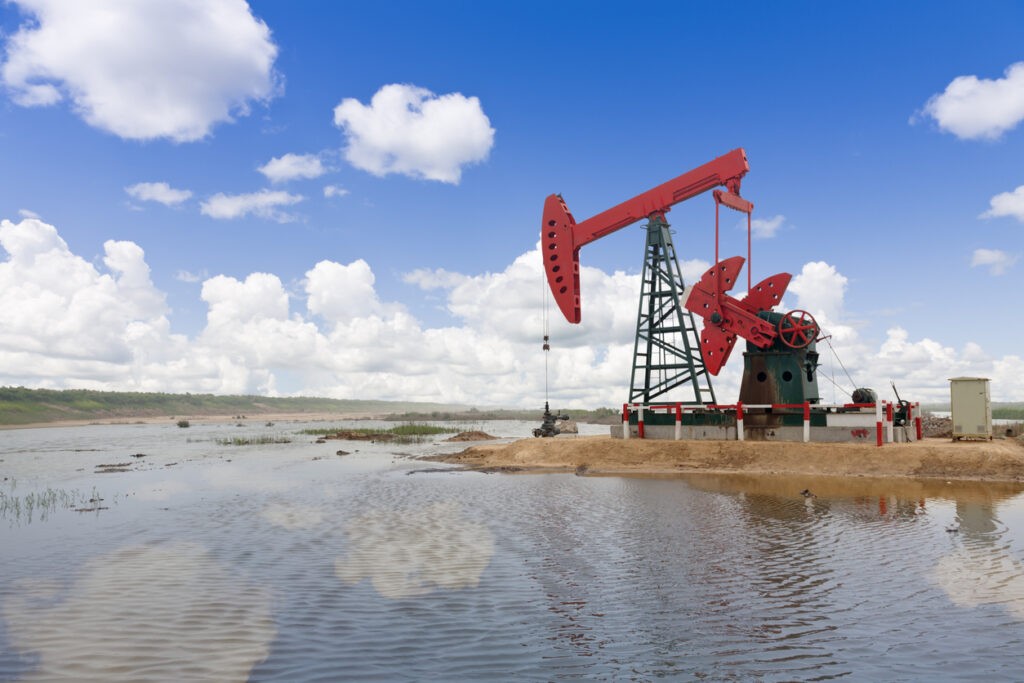
Afghanistan plans to launch 25 new oil wells in the Amu Darya basin, increasing daily oil production to 3,000 tons. Hamdullah Fitrat, the deputy spokesman of the Islamic Emirate of Afghanistan, shared that there are currently 24 active wells in this field, from which 1,300 tons of oil are extracted daily. According to Fitrat: "The Ministry of Mines and Petroleum plans to activate 25 more wells by the end of this year, of which 18 will be newly drilled, two will be exploratory wells, and five will be rehabilitated.” Economic experts stress that officials should carefully plan new well drilling and attract investors to process the extracted oil. Economic expert Abdul Zahoor Madaber stated that Afghanistan has abundant natural resources but lacks modern machinery to process them, and cooperation with other countries is needed to import this equipment. Mohammad Asif Stanekzai, another economic expert, added: “The production and processing of natural resources can create job opportunities and have a positive impact on reducing inflation in Afghanistan.” According to the Ministry of Mines and Petroleum, only 10% of Afghanistan’s oil needs are currently met from domestic production. The Amu Darya is a vital river for Central Asian countries. While 72-73% of its water originates in Tajikistan, the majority is used by neighboring countries. In April of this year, the countries of Central Asia distributed Amu Darya and Syrdarya water for the summer of 2024. Under the agreed quota, the draw on water from the Amu Darya watershed will be 56 billion cubic meters for the year, with about 40 billion cubic meters used in the April-to-October growing season. As stated in the Interstate Commission for Water Coordination (ICWC) agreement, Uzbekistan will receive 16 billion cubic meters, Turkmenistan will receive 15.5 billion cubic meters, and Tajikistan will receive 6.9 billion cubic meters. The ICWC claims that the total number of irrigated lands in Central Asian countries is 4.3 million hectares in Uzbekistan, 2.5 million hectares in Kazakhstan, 1.9 million hectares in Turkmenistan, 1 million hectares in Kyrgyzstan, and 680,000 hectares in Tajikistan.