• KGS/USD = 0.01144 0%
  • KZT/USD = 0.00212 0%
  • TJS/USD = 0.10456 0.19%
  • UZS/USD = 0.00008 0%
  • TMT/USD = 0.28490 0%
  • KGS/USD = 0.01144 0%
  • KZT/USD = 0.00212 0%
  • TJS/USD = 0.10456 0.19%
  • UZS/USD = 0.00008 0%
  • TMT/USD = 0.28490 0%
  • KGS/USD = 0.01144 0%
  • KZT/USD = 0.00212 0%
  • TJS/USD = 0.10456 0.19%
  • UZS/USD = 0.00008 0%
  • TMT/USD = 0.28490 0%
  • KGS/USD = 0.01144 0%
  • KZT/USD = 0.00212 0%
  • TJS/USD = 0.10456 0.19%
  • UZS/USD = 0.00008 0%
  • TMT/USD = 0.28490 0%
  • KGS/USD = 0.01144 0%
  • KZT/USD = 0.00212 0%
  • TJS/USD = 0.10456 0.19%
  • UZS/USD = 0.00008 0%
  • TMT/USD = 0.28490 0%
  • KGS/USD = 0.01144 0%
  • KZT/USD = 0.00212 0%
  • TJS/USD = 0.10456 0.19%
  • UZS/USD = 0.00008 0%
  • TMT/USD = 0.28490 0%
  • KGS/USD = 0.01144 0%
  • KZT/USD = 0.00212 0%
  • TJS/USD = 0.10456 0.19%
  • UZS/USD = 0.00008 0%
  • TMT/USD = 0.28490 0%
  • KGS/USD = 0.01144 0%
  • KZT/USD = 0.00212 0%
  • TJS/USD = 0.10456 0.19%
  • UZS/USD = 0.00008 0%
  • TMT/USD = 0.28490 0%

Viewing results 241 - 246 of 618

Migrants in the Crossfire: Russia’s Recruitment for Ukraine War Sparks Tensions

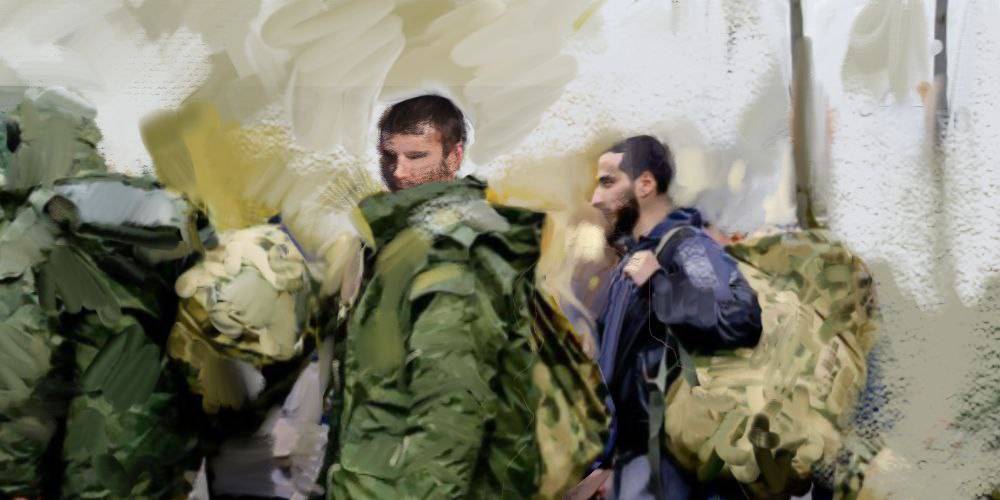
Russia’s ongoing “special military operation” in Ukraine has increased the demand for additional forces, and, in response, Russia is increasingly viewing the use of migrants as a good solution to the situation. As of September 1, 2024, official figures state that 3,985,000 citizens of Central Asian countries lived in Russia. Uzbekistan leads the way with over 1,792,000 migrants, followed by Tajikistan with more than 1,231,000, Kazakhstan with 606,900, Kyrgyzstan with 262,800, and Turkmenistan with 92,000. Some Central Asian migrants have signed contracts with the Russian Ministry of Defense to participate in the war, motivated mainly by financial incentives. However, economic reasons are not the only factor driving them to war. People from Central Asian countries who have received citizenship are also being threatened with imprisonment for failing to join the war effort. TCA has previously reported on efforts by officials to recruit young men detained at the Sakharovo immigration processing center to join the Russian army and fight in Ukraine. In addition, a decree issued by Vladimir Putin has simplified the process for foreigners who join the military to gain Russian citizenship. In contrast, Central Asian governments have looked to discourage their citizens from engaging in the conflict. For example, Uzbekistan has warned that any citizen involved in the Russia-Ukraine war will face legal consequences. In October 2023, an Uzbek citizen who fought in Ukraine for financial reasons was sentenced to three years in prison by a Uzbek court. The defendant had returned to Uzbekistan after being wounded in the conflict, and authorities discovered military documents and proof of his Russian citizenship during their investigation. By September 2024, a growing number of Central Asians had perished in the war, including 47 Uzbeks, 51 Tajiks, and 26 Kyrgyz nationals. In Kazakhstan, since 2014, following the start of the war in the Donetsk and Luhansk regions, criminal liability was been introduced for citizens who participate in armed conflicts abroad. A person who commits such an offense can be punished with imprisonment for up to 12 years, face the confiscation of property, and be deprived of their citizenship. For example, in November of last year, a 34-year-old man from Kazakhstan was imprisoned for six years and eight months for participating in the war in Ukraine. Kyrgyzstan and Tajikistan have also applied measures involving the deprivation of liberty their citizens who participate in the war. Tajikistan’s economy significantly depends on remittances from labor migrants in Russia, which account for approximately one-third of its GDP. Despite the war in Ukraine, over 1.7 million Tajik citizens sought work in Russia in the first half of 2022. However, reports indicate that many Tajik migrants are being sent to Ukraine against their will, raising concerns. The situation further deteriorated after a terrorist attack at Crocus City Hall in February 2024. Tajik nationals were among the primary suspects, leading to a shift in Russia’s attitude towards Central Asian migrants. Tajikistan’s Foreign Minister, Sirojiddin Muhriddin, expressed concerns over the violations of Tajik citizens’ rights in some CIS countries, calling for a...
Tajik Opposition Calls for Global Action Against Rahmon Regime’s Human Rights Violations

According to Azda TV, the Tajik opposition movement “Reform and Development of Tajikistan” has appealed to the governments of the USA, Canada, the United Kingdom, Norway, and countries of the EU, to support efforts for peaceful and constructive dialogue between the Tajik opposition and President Emomali Rahmon’s government. The movement called the global community to help resolve the crisis in Tajikistan, where Rahmon’s regime targets political opposition, civil society, and independent media. They highlighted human rights violations, including extrajudicial killings, arbitrary arrests, and the persecution of journalists, activists, and lawyers. Sharofiddin Gadoev, the movement’s leader, called for key goals, such as freeing political prisoners, ending the repression of journalists and activists, ensuring free speech, and having an independent press. He also called for laws in Tajikistan to meet international human rights standards and for free, fair elections involving all political groups. In this regard, the movement “Reform and Development of Tajikistan” called on the international community for “coordinated actions to protect human rights and support democratic processes in Tajikistan, as well as to strengthen political pressure on Emomali Rahmon.” The movement has said: “Tajikistan is a country with a young population. For this generation, the absence of democratic alternatives and opportunities leads to the risk of radicalization. This vacuum of democratic choice can be used by extremist groups, which threatens not only Tajikistan but all of Central Asia. The country may be on the verge of destabilization in the ongoing crisis and the lack of effective reforms. This will create a stream of refugees and strengthen extremist movements, which will become a serious challenge in the field of security.” The movement is calling on the International Criminal Court to investigate Rahmon’s regime of serious crimes like torture and disappearances. They have asked for help before, urging the release of political prisoners and an end to repression, but so far, the Tajik government has ignored these calls, and human rights abuses continue.

Navigating Afghan-Pakistani Conflict: Central Asia’s Mediating Role in Regional Stability

Recently, there has been a significant increase in tensions between Afghanistan and Pakistan, with both sides regularly exchanging accusations. In addition to this, border conflicts have become more frequent, with border crossings periodically closed. According to Modern Diplomacy, both countries are in a state of quite severe political conflict, and distrust and hostility from the Afghan population towards Pakistan is growing even though the "victory of the Taliban and the reincarnation of the Islamic Emirate... should have been a victory for Pakistan and strengthened its position in the region.” The confrontation between the two neighbors in South Asia is a source of concern for other countries in the region, especially for the Central Asian republics, which are increasingly acquiring the status of independent players in their dealings with Afghanistan. Due to their proximity, these republics to varying degrees link their development with a stable Afghanistan designed to become a bridge to South Asia. Negative dynamics in Afghan-Pakistani relations are a cause of much wringing of hands. Pakistan was among the first states to recognize the independence of the former Soviet Central Asian republics and has dynamic ties with them. Pakistan's trade turnover with the region is roughly $500 million annually, most of which comes from imports to Pakistan. The nations are linked by the Quadrilateral Traffic in Transit Agreement (QTTA), the Turkmenistan-Afghanistan-Pakistan-India (TAPI) gas pipeline project, the CASA-1000 energy project, and the Uzbekistan–Afghanistan–Pakistan Railway Project. The majority of these projects use Afghanistan as a bridge between Central Asia and Pakistan. In this regard, the countries of Central Asia are interested in a political situation which excludes confrontational approaches; none of them are interested in further destabilization in Afghanistan. In the Central Asian republics, there is a well-established understanding of Pakistan's exceptional and particularly important role in Afghanistan’s stability. Pakistan has a defining influence on security in Afghanistan and has historically been the most integrated in Afghan issues at the level of political and multi-ethnic conflicts. Pakistan is linked to its neighbor by historical and socio-cultural ties. In reality, however, a different story is emerging. At both a global and regional level, active measures out of Islamabad set to discredit the de facto Taliban-led government of Afghanistan have been observed. Islamabad has undertaken a robust information campaign, which has put forward an entrenched narrative about Afghanistan being one of the world’s major sources of terrorism. In this information war, Islamabad, being a fully-fledged member of the international community, has clear advantages and has used all available tools, including access to global platforms. Islamabad also has access to specialized committees and departments of the UN, which regularly prepare reports on the situation in Afghanistan. Unsurprisingly, it has used these to include ideas favorable its' position on the world stage. Acting as a source of information, Islamabad has presented its point of view, which the international community has largely accepted as objective information. However, it does not provide specific data, such as the size of terrorist groups or the location of their training camps....

Soar in Lithuania’s Central Asian Migrant Population

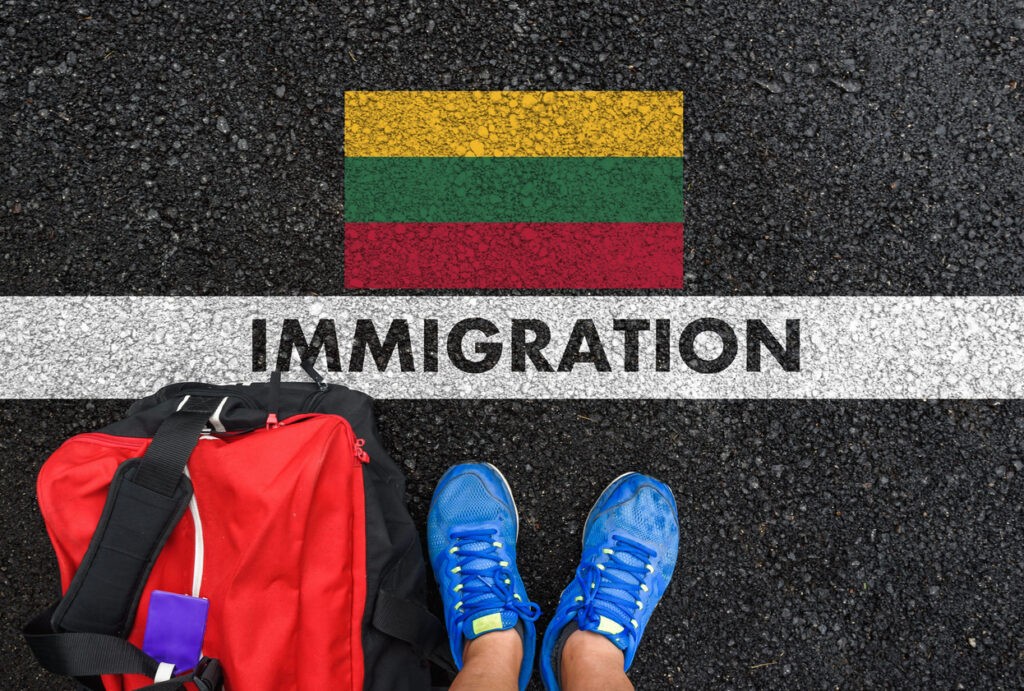
Lithuanian intelligence reports that the number of Central Asian migrants in the country has increased 14-fold since 2021. According to Prime Minister Ingrida Šimonytė, the number overall is still relatively small and is not a cause for concern. She explained that the labor market, once filled by workers from Ukraine and Belarus, has shifted following the call for Ukrainian men to fight in the war. As a result, more Central Asian workers are being hired. Darius Jauniškis, head of Lithuania’s State Security Department, told LNK News that his agency cannot screen all migrants, raising counter-intelligence and terrorism concerns, and because the government is working on next year’s budget, his remark is perceived as a request for more funding for the VSD (State Security Department). In response, the Prime Minister said the growth in migrants, though large, isn't particularly high. She stated that only a few hundred foreign nationals had been issued with temporary residence permits in Lithuania this year, but added: “There were indeed problems. These problems were already partially regulated by existing  laws- and - from 2025 onwards, when the quota [for workers from third countries] who can come to Lithuania will be in force, it will be possible to impose additional regulations on these issues." Data from the Migration Department shows that as of October 1, around 10,600 Uzbeks were living in Lithuania, compared to 8,200 at the start of the year, and the 998 recorded in early 2022. Thus, Uzbeks now make up the fourth-largest foreign community in Lithuania. The number of migrants from Tajikistan also increased from 5,700 to 7,200 in the first nine months of 2024.

Middle Powers Rising: Shaping a Balanced Global Order at the Astana Think Tank Forum

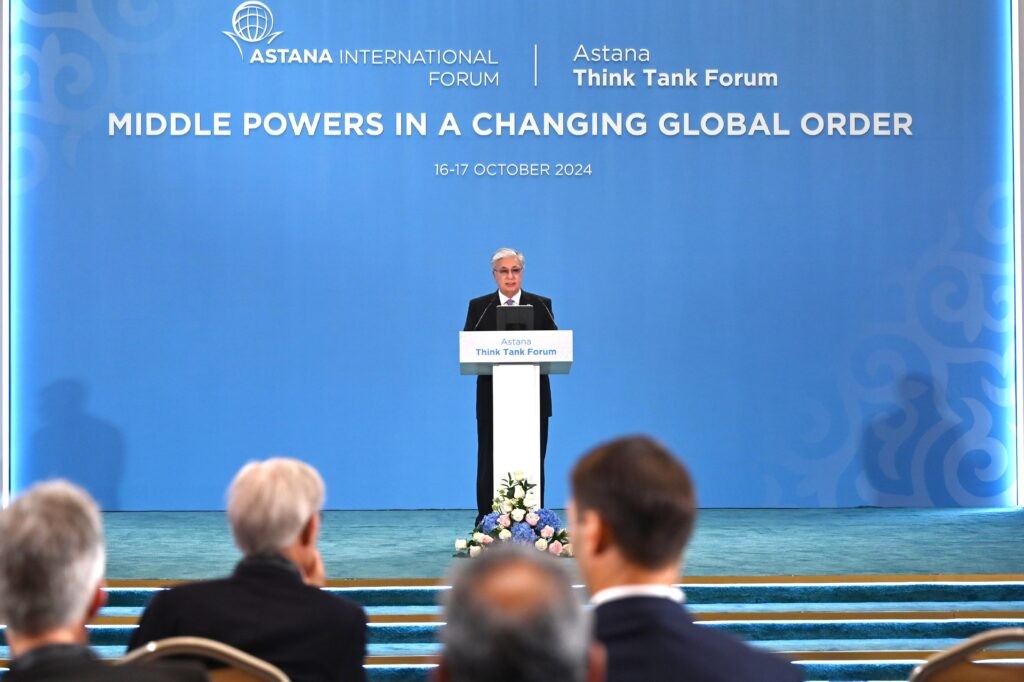
On October 16-17, the capital of Kazakhstan hosted the Astana Think Tank International Forum. The theme of the two-day meeting was “Middle Powers in the Changing Global Order: Strengthening Security, Stability and Sustainable Development.” Experts from 22 countries — heads of leading think tanks, politicians and diplomats — participated and spoke at the event. Kazakhstan's President Kassym-Jomart Tokayev addressed the forum. The two-day event focused on geopolitical, economic and strategic issues, including the role of mediating countries in resolving global conflicts. One of the main topics was determining the potential of intermediate states in forming a new world system under conditions of geopolitical tension. The experts tried to define the term "middle power" and what countries can be classified as middle powers. The moderator of the key session, Charles McLean, Managing Director of Borderless Consulting Group, invited the participants to answer several questions about the criteria, characteristics, and influence of middle powers in the modern geopolitical context. Dino Patti Djalal, Chair of the Foreign Policy Community of Indonesia (FPCI), suggested categorizing all the of the world's states using analogies to boxing weight classes: heavyweights, middleweights, and lightweights. According to Djalal, middle powers have great potential to create a new world order. “There are several dimensions of middle powers. The first is potential, encompassing territorial and demographic size factors, political and economic weight, and a state's foreign policy ambitions. The second dimension is a moderate stance on major global issues,” Djalal said. Citing Kazakhstan as an example of a middle power, Djalal stated that Kazakhstan has achieved this status due to its balanced position, which allows it to exert some influence on the formation of the world order. Djalal emphasized that, even today, middle states (the bulk of which are concentrated in the Global South) can solve regional issues without the participation of so-called 'world powers'. “Look at Southeast Asia. Indonesia and Singapore solve their issues directly, without external influence. Naturally, this situation is developing in the conditions of weakening U.S. influence. Middle powers are dictating new rules,” Djalal noted, and should voice their positions on the global agenda, so their “voice” will be heard and become more “powerful.” Michel Duclos, Special Advisor on Geopolitics, suggested that regional powers whose activities have a global impact should be considered middle powers. “The great challenge for middle powers is establishing peace and stabilizing the situation. However, a common platform for all middle powers must be formed. This applies to the Global South and the Global North. France and others are reforming the UN Security Council,” Duclos stated. Joshua Lincoln from the Center for International Law and Governance at the Fletcher School (Tufts University), meanwhile, believes that increasing competition between great powers opens a “window of opportunity” for medium-sized states. “Geopolitical rivalries, the fragmentation of the world order, and the disillusionment of many with existing international institutions offer middle powers an opportunity to bring order to today's chaos. Their stance can enormously contribute to the world's security, stability, and sustainability. However, no country, even...

Tajikistan’s Acute Hunger Issue

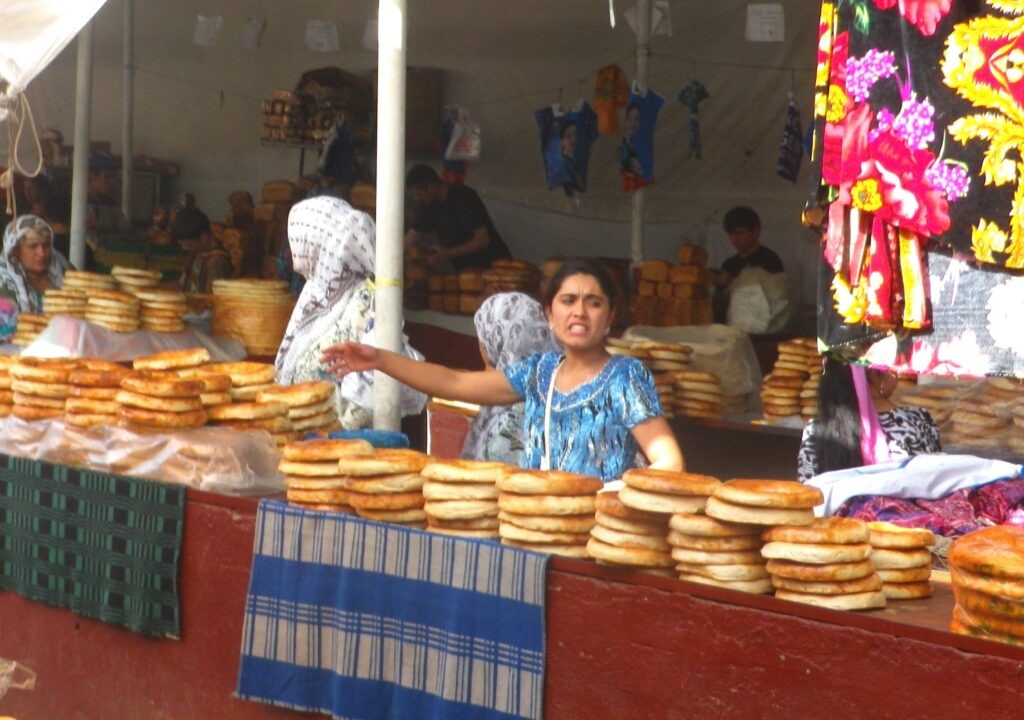
Tajikistan has been recognized as the hungriest country among the former Soviet republics. According to the Global Hunger Index prepared by the International Food Policy Institute, 8.7% of the country's population faces food shortages, and ranked 65th out of 127 countries in the world, is on par with countries such as Nicaragua and Ghana. Lower index scores equal less food problems. Assessments of hunger are based on child mortality, stunting, and wasting and in recent years, Tajikistan has consistently ranked lowest among post-Soviet countries in the Global Hunger Index. Despite attempts to improve the situation, the country remains one of the most vulnerable in the region. Today, 18.4% of children under five are stunted due to malnutrition, 5.1% are wasted, and 3% of children do not survive to the age of five; all indicative of  serious food security problems in the country. According to the Global Hunger Index, malnutrition varies widely across the former Soviet Union. The best results are demonstrated by Uzbekistan, which ranks first among countries with minimal hunger issues. In the republic, less than 2.5% of the population faces food shortages. Stunting affects 6.5% of children; wasting ,2.4% of children, and infant mortality does not exceed 3.1%. Uzbekistan was the only Central Asian country to rank highly among the 22 former Soviet republics with the lowest hunger rates, including Belarus, Estonia, Latvia, Lithuania, Russia, and Georgia. Belarus and Lithuania consistently demonstrate a high level of food security, making them among the leaders of the former Soviet republics. Armenia and Kazakhstan, in contrast, rank 23rd and 25th, respectively, demonstrating moderate nutritional problems among the population. Moldova, ranked 26th, has a similar situation: malnutrition remains relatively low but requires attention. Kyrgyzstan ranks 36th and Ukraine 46th, indicating average hunger levels. Turkmenistan was ranked 50th. The situation is particularly dire in Africa, which tops the list of countries with the most significant hunger problems. South Sudan, Burundi, Somalia, Yemen, and Chad, recognized as the hungriest countries in the world, experience extremely high rates of child mortality and malnutrition among their populations.