• KGS/USD = 0.01144 0%
  • KZT/USD = 0.00212 0%
  • TJS/USD = 0.10803 0%
  • UZS/USD = 0.00008 0%
  • TMT/USD = 0.28571 0%
  • KGS/USD = 0.01144 0%
  • KZT/USD = 0.00212 0%
  • TJS/USD = 0.10803 0%
  • UZS/USD = 0.00008 0%
  • TMT/USD = 0.28571 0%
  • KGS/USD = 0.01144 0%
  • KZT/USD = 0.00212 0%
  • TJS/USD = 0.10803 0%
  • UZS/USD = 0.00008 0%
  • TMT/USD = 0.28571 0%
  • KGS/USD = 0.01144 0%
  • KZT/USD = 0.00212 0%
  • TJS/USD = 0.10803 0%
  • UZS/USD = 0.00008 0%
  • TMT/USD = 0.28571 0%
  • KGS/USD = 0.01144 0%
  • KZT/USD = 0.00212 0%
  • TJS/USD = 0.10803 0%
  • UZS/USD = 0.00008 0%
  • TMT/USD = 0.28571 0%
  • KGS/USD = 0.01144 0%
  • KZT/USD = 0.00212 0%
  • TJS/USD = 0.10803 0%
  • UZS/USD = 0.00008 0%
  • TMT/USD = 0.28571 0%
  • KGS/USD = 0.01144 0%
  • KZT/USD = 0.00212 0%
  • TJS/USD = 0.10803 0%
  • UZS/USD = 0.00008 0%
  • TMT/USD = 0.28571 0%
  • KGS/USD = 0.01144 0%
  • KZT/USD = 0.00212 0%
  • TJS/USD = 0.10803 0%
  • UZS/USD = 0.00008 0%
  • TMT/USD = 0.28571 0%

Viewing results 25 - 30 of 705

Opinion: Supply Chains of Power: How Critical Minerals Are Shaping China–U.S. Competition in Central Asia

Central Asia is no longer a distant frontier for global geopolitics. It is developing into a central arena of competition for critical minerals, supply chains, and industrial power, where minerals are no longer simple commodities but have instead become key components of contemporary statecraft. In essence, this transformation highlights a recognition in Washington and other capitals that critical mineral supply chains are fundamental to next-generation energy systems, the development of artificial intelligence (AI), and strategic defense capabilities. Even as the global economy is multipolar, critical mineral supply chains remain highly concentrated and dominated by China. Control of rare earths is increasingly geopolitical, with clear economic, political, and security consequences. The significance of that imbalance is now shaping U.S. foreign policy, Central Asia’s development strategies, and the future of global economics. China’s Strategy: Control the Chain, Not Just the Mine Though many years in the making, China’s critical minerals strategy is still often misunderstood as focused primarily on resource access. However, Beijing’s efforts are far broader and more effective. Not only securing raw materials, the Chinese leadership has also worked to control the entire supply chain—from extraction to processing, refining, and manufacturing. China’s long-term focus and investments began in the 1980s with efforts that culminated in the Made in China 2025 plan for national and overseas manufacturing. In 2023 alone, Chinese firms invested more than $120 billion in overseas mining and processing, targeting key elements used in energy supply chains. Beijing also fed its industrial base by providing over $220 billion for the production of electric vehicles, batteries, and renewable infrastructure. As a result, China now controls approximately 60% of lithium processing, more than 70% of cobalt refining, and over 90% of battery material manufacturing. Strategically, China controls roughly 90% of global rare earth refining and associated technologies. Early investments in supplies enabled Beijing to subsequently concentrate funds into refining capacity to feed its industrial sector. This integrated approach has shifted the power dynamic for global supply chains tied to the critical minerals economy. As evidenced by Beijing’s near monopoly on processing, market control is not just associated with geological supplies but with processing capacity. China’s willingness to weaponize access not only to rare earths but also to processing technology demonstrates Beijing’s market muscle. This distinction is critical. Rare earth elements are not inherently scarce, but they are rarely found in concentrated deposits, making them difficult to extract and refine. Over decades, Beijing developed unique refining capabilities and subsidized an industrial base that disincentivized competition and encouraged processing to shift to China. The Vicious Circle Prohibitive investment costs, long development timelines, and market volatility have discouraged Western investment in alternative supply chains. Each stage (mining, processing, refining, manufacturing) is interdependent: miners won’t invest without buyers and offtake agreements, processors and refiners need secure financing and stable mineral supply, and manufacturers need steady inputs. Such interdependence creates an investment standoff and heightens perceptions of risk. By integrating all stages, Beijing exerts influence across global markets, from pricing to production. This has conditioned global markets...

Opinion: Trump Has Golden Opportunity to Launch C6+1 on Sidelines of UN

Representatives of the five Central Asian states — Kazakhstan, Uzbekistan, Kyrgyzstan, Tajikistan, and Turkmenistan — along with Azerbaijan, are expected in New York for the United Nations General Assembly in September. Historically, meetings between the Central Asian states and the United States – the C5+1 – have taken place on the sidelines of the United Nations. It is the most natural and logistically efficient venue for President Donald Trump to re-engage with the C5 partners he hosted at the White House last November. As of now, only foreign ministers are expected to attend the UNGA. But this could change if Trump extends an invitation to the leaders, according to a Central Asian diplomatic source. This time, however, he has the opportunity to add Azerbaijan, transforming the format into a C6+1. Baku has already been invited to participate as a full member in Central Asian gatherings, and Washington should build on that momentum. Azerbaijan is uniquely positioned: close to both Israel and Turkey – two of America’s most important regional partners – it sits astride one of the most important connectivity corridors linking Europe and Asia. Its inclusion would turn the C5+1 into a genuinely trans‑Caspian framework that reflects the emerging realities of Eurasian integration. The move would also link two major diplomatic achievements of Trump’s second term: the launch of the Trump Route for International Peace and Prosperity (TRIPP), a 43-km strategic transit corridor connecting mainland Azerbaijan to its Nakhchivan exclave through Armenia, and Trump’s elevation of the C5+1 to a White House-level summit. While TRIPP was discussed at the C5+1 meeting in November, bringing Azerbaijan into the next gathering would allow the administration to present itself as the architect of a new Eurasian trade and energy map. Strategically, a C6+1 format carries significant implications for great-power competition with China. This is because Central Asia is so crucial to Beijing’s grand strategy. In its recently adopted 15th five-year plan, neighborhood diplomacy is listed as the top priority — ahead of relations with major powers or developing countries. Beijing seeks to build a “community with a shared future” with 17 neighboring states, including all five in Central Asia, to “create a favorable external environment” for national rejuvenation, as Foreign Minister Wang Yi has stated. For China, Central Asia is a vital “hinterland” for energy and resource security, and a buffer against maritime disruptions. The United States does not need to dominate the Eurasian Heartland or force Central Asian states to choose between Washington and Beijing. It simply needs to ensure that any Chinese westward access runs through a vast landmass of countries that maintain constructive relations with the United States. A C6+1 format helps shape that environment without confrontation. A stable Middle Corridor – the energy and trade route running through Central Asia, across the Caspian Sea and through Azerbaijan to Turkey and the Mediterranean – also benefits America's energy-hungry allies in Asia, such as Japan and South Korea. Both increasingly look to Kazakhstan as an alternative oil supplier as they...

The Iran War Is Repricing Central Asia’s Connectivity

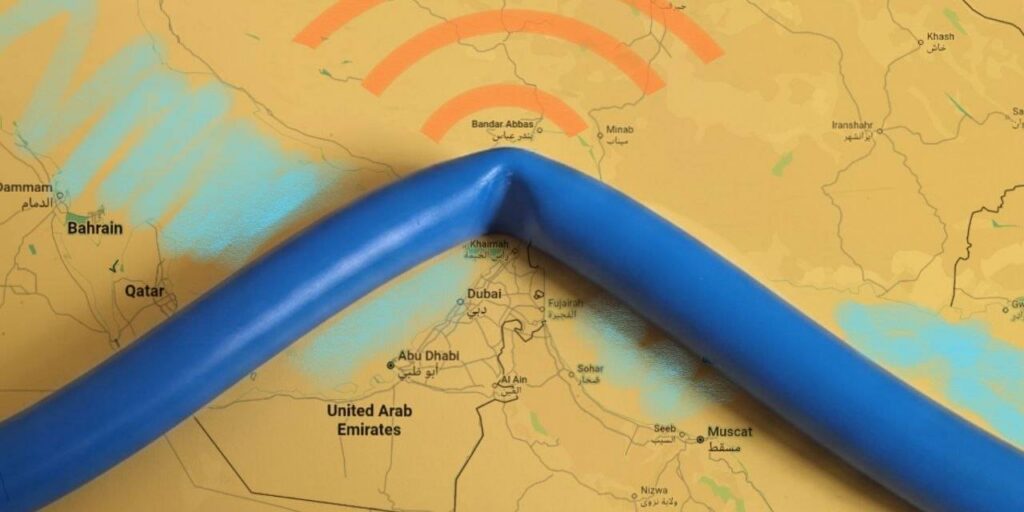
Europe’s aviation regulator has extended its current conflict-zone bulletin for the Middle East and Persian Gulf through April 10 and continues to advise operators to avoid Iranian and adjacent airspace at all altitudes. Reuters reported soon after that the squeeze on normal flight paths was pushing more traffic into narrower routes, notably over Azerbaijan and Central Asia. The Strait of Hormuz, meanwhile, has not returned to normal commercial use. A limited number of exempted vessels have crossed, but passage remains selective, politicized, and uncertain rather than routine. The question, consequently, is no longer only whether Central Asia has alternatives to single-route dependence but whether those alternatives remain commercially usable, taking into account the increased risk, delay, insurance, fuel burn, and congestion. What has changed is the cost of maintaining reliable connectivity. The Cost of Reliability The Iran conflict imposes higher operating costs on the wider Eurasian air corridor that is now taking displaced traffic. EUROCONTROL estimates that about 1,150 flights a day continue to be affected by re-routing linked to the Middle East crisis. These add roughly 206,000 kilometers of flying and 602 tons of extra fuel burn per day. Maritime trends are similar. In March, war-risk premiums in or near the Gulf had risen more than tenfold in some cases, with hull war premiums moving from about 0.25% of vessel value to as much as 3%. Air-freight rates on some routes rose by as much as 70% as shippers redirected urgent cargo away from disrupted sea lanes and restricted airspace. Higher surcharges and narrower margins for operational error can make routes lose commercial value even if they remain formally open. The wider macroeconomic setting has also made resilience more expensive. Higher oil prices make every detour costlier, raising freight charges, power costs, and production costs across the region’s trading partners. Even where Central Asian cargo does not move through Iranian waters, the same pattern is still present. Asian policymakers were already confronting a combined oil-price and currency shock at a moment when roughly 80% of the oil shipped through Hormuz normally goes to Asia. The World Bank’s March food and nutrition security update notes that around 20% of global oil supplies and about one-third of global fertilizer trade transit the Strait of Hormuz. Urea prices, for example, surged by nearly 46% month on month between February and March 2026. Importers in Central Asia, as well as in Europe and the South Caucasus, remain under pressure from higher household food costs and tighter producer margins. The price of resilience is now showing up in increased costs for farm inputs, food costs, and household budgets. How the Burden Falls Kazakhstan remains the best placed in the region to absorb the shift. The CPC pipeline still carries about 80% of Kazakhstan’s oil exports; oil income contributes 52% of the state budget. Earlier disruptions had constrained Kazakhstan to reroute 300,000 tons of crude, and the country continues to rely on supplementary outlets such as Ust-Luga, the Baku–Tbilisi–Ceyhan pipeline, and China when its main...

Central Asia Pushes Back on “Not Free” Label as Debate Over Rankings Grows

According to Freedom House’s Freedom in the World 2026 report, all five countries in Central Asia are classified as “Not Free.” Nevertheless, governments in the region are increasingly questioning the impartiality of such assessments. At the same time, some regional experts point to ongoing political and economic reforms as signs that the region is making progress. A “Not Free” Region In its report released on March 19, 2026, Freedom House classifies all five Central Asian states as "Not Free." The designation is based on Freedom House’s assessment of political rights and civil liberties. According to the report’s authors, the ranking reflects pressure on independent media, tightening control over civil society, and the absence of genuine political competition. Kazakhstan received 23 points out of 100. The report highlights restrictions on opposition groups and civil society activists, pressure on independent journalism, and tightly managed elections that do not ensure genuine political competition. Kyrgyzstan, long considered the most politically open country in the region, scored 25 out of 100 and was also classified as “Not Free.” The organization says the score fell by one point from the previous year, reflecting continued pressure on independent media, the designation of several outlets as ‘extremist,’ and criminal cases against journalists, alongside concerns about election integrity. Uzbekistan scored 12 out of 100. Freedom House points to the concentration of power in the executive branch, the absence of a genuine parliamentary opposition, and severe restrictions on independent human rights defenders and journalists. Since President Shavkat Mirziyoyev took office in 2016, Uzbekistan has pursued a series of controlled political and economic reforms aimed at opening the country after decades of isolation. These have included currency liberalization, efforts to end the use of forced labor in the cotton sector, and steps to ease restrictions on business and foreign investment. While critics say political liberalization remains limited, supporters argue the reforms mark a significant shift from the policies of the previous era. Tajikistan received just 5 points. The report highlights the long rule of President Emomali Rahmon, the elimination of legal opposition, systematic persecution of its members and their families, and a de facto lack of electoral competition. Turkmenistan recorded one of the lowest scores globally, with just 1 point. The report describes the country as one of the most repressive in the world, citing total state control over political life and the media, the absence of opposition participation in elections, and harsh punishment for dissent. Turkmenistan remains one of the most closed countries in the world, with extremely limited access for foreign media and independent observers. Political life is tightly controlled, and reliable information about internal developments is scarce. While the authorities have signaled gradual generational change following the 2022 transfer of power to President Serdar Berdimuhamedov, there has been little visible shift in the country’s political system. Impartiality in Doubt? Trust in international assessments has also been affected by developments in U.S. foreign aid policy and a wider shift in global perceptions about the appropriateness of Western-linked organizations categorising...

India–Central Asia: Connectivity, Security, and Sustainable Partnerships in a Multipolar World

A widening conflict in West Asia is forcing India and Central Asia to reassess trade routes, diplomacy, and regional security, with key projects such as Iran’s Chabahar port now facing growing uncertainty. These risks framed discussions in New Delhi on March 25–26, where experts gathered under the banner of “India–Central Asia: Connectivity, Security, and Sustainable Partnerships in a Multipolar World,” with The Times of Central Asia in attendance. The conference unfolded against the backdrop of two active Eurasian wars—the Russo-Ukrainian and the Israel/U.S.-Iran conflict. Central Asian and Indian participants agreed that the West Asian crisis is widening, putting not only ports and logistics routes but also economies across the globe under serious threat. India's Chabahar link to Afghanistan and Central Asia is now a high-risk, uncertain investment, weakening overall continental strategic thinking across Eurasia, including efforts to consolidate new trans-Caspian trade corridors. If the conflict cripples or destroys Chabahar, years of progress, hard-won partnerships, and millions in strategic investment would be erased. On the sidelines, some participants suggested that India could help cool what's becoming a dangerously global conflict. Unbeknownst to them, India had already held an all-party meeting on March 25 on the West Asia crisis. External Affairs Minister S. Jaishankar's message: India will not mediate. The revelation surprised some participants—others, not at all. In any event, Central Asian states, in principle, have backed any diplomatic push for peace. With West Asia in turmoil and platitudes in abundance, conference participants emphasized the need to rethink geopolitics, trade, security, and cultural ties beyond stale frameworks at a time of conflict. Four themes defined the Central and South Asian moment: the dangers of bloc politics, even as regional organizations continue to evolve and expand their influence, the ascendancy of national interests over external pressure, and the emergence of a firm refusal to pick sides in the midst of frictions between competing global pressures. Dr. Raj Kumar Sharma, a member of the India Central Asia Foundation, stated: “The conference provided an important platform to move beyond theoretical discussion and toward practical engagement. With Central Asia’s ambassadors to India present, we focused on exploring concrete mechanisms to promote peace through sustained diplomatic efforts. Despite the proximity of the conflict in West Asia to both Central Asia and India, participants expressed confidence that dialogue and restraint – buttressed by trade and investment – will ultimately guide outcomes, with particular concern for civilians and those enduring hardship. Notably, the crisis did not overshadow the conference’s primary agenda or its scholarly contributions. Overall, the gathering can be seen as a constructive step in reinforcing diplomatic initiatives dedicated to peace and stability in a conflict-affected region.” The conference witnessed the release of three significant publications on India–Central Asia relations: India – Kazakhstan Partnership in a Changing Geopolitical Order (eds. Ramakant Dwivedi, Lalit Aggarwal, Kuralay Baizakova), Manas: Kirgiz Vir Gatha Kavya by Ramakant Dwivedi & Hemchandra Pandey and India and Central, East and Southeast Asia: Enhancing the Partnership (eds. Ramakant Dwivedi & Lalit Aggarwal). [caption id="attachment_46364" align="aligncenter" width="1379"]...

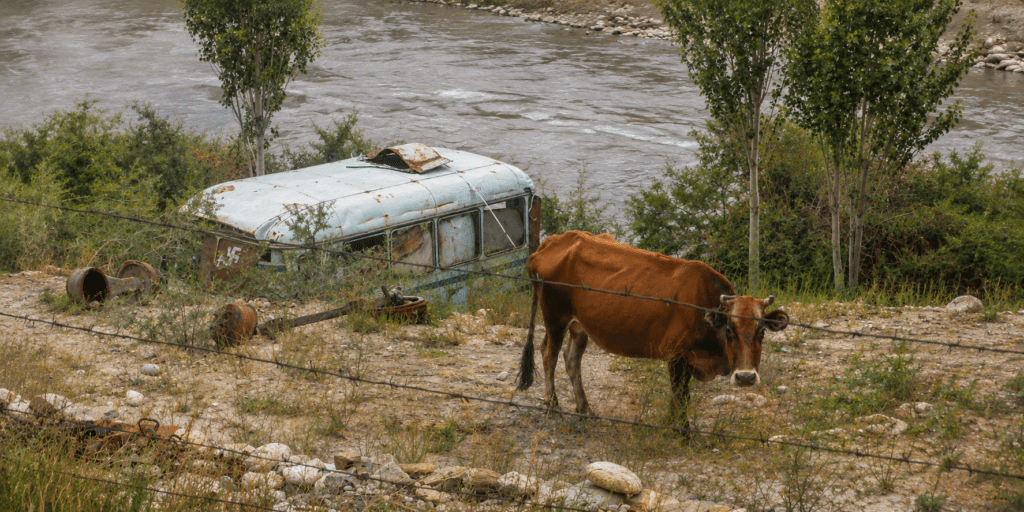
Kyrgyzstan Develops Territories Received from Tajikistan

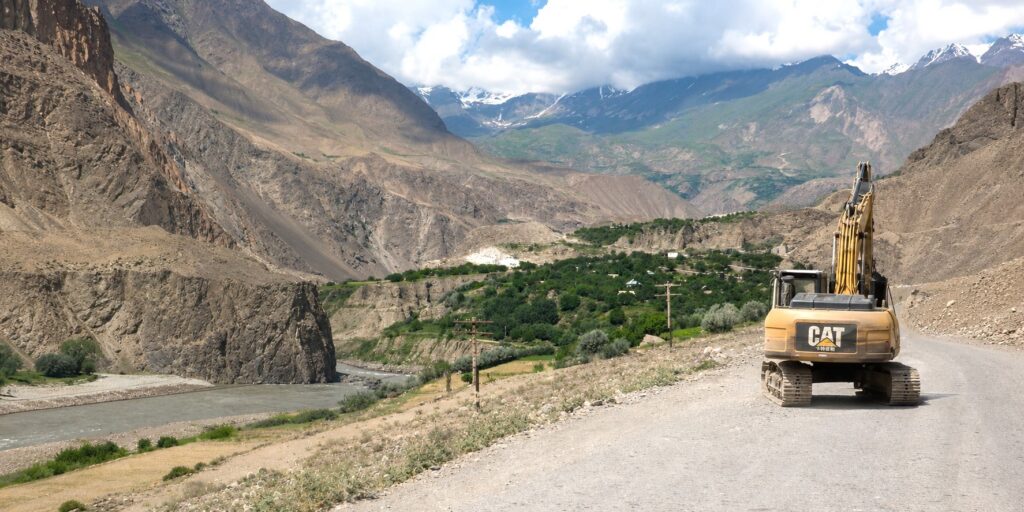
The Kyrgyz authorities have adopted a resolution that transfers into state ownership land and real estate received from Tajikistan under the agreement on the delimitation and demarcation of the state border. According to the decision of the Cabinet of Ministers, the State Agency for State Property Management must register the transferred assets on its balance sheet, after which they will be handed over to local administrations in the Batken and Leylek districts of Batken region. District authorities are expected to distribute the property among citizens who lost their homes and assets as a result of the border agreement, as well as those whose properties were demolished during the construction of border infrastructure. The government has also instructed the State Agency for Land Resources, Cadastre, Geodesy, and Cartography to conduct an inventory of land plots in the region, while the Ministry of Construction will develop master plans for settlements in the transferred territories. The resolution notes that the list of real estate assets may be revised as the border line is refined during the demarcation process. The border agreement was reached following negotiations between the two countries' presidents, Sadyr Japarov and Emomali Rahmon, and was subsequently ratified by the parliaments of both countries. Under its terms, the sides exchanged territories, including previously disputed areas. Following the agreement, Kyrgyzstan began constructing barriers along the new border line. Authorities in both countries expect that completing the demarcation process will help stabilize the situation and prevent further conflict.