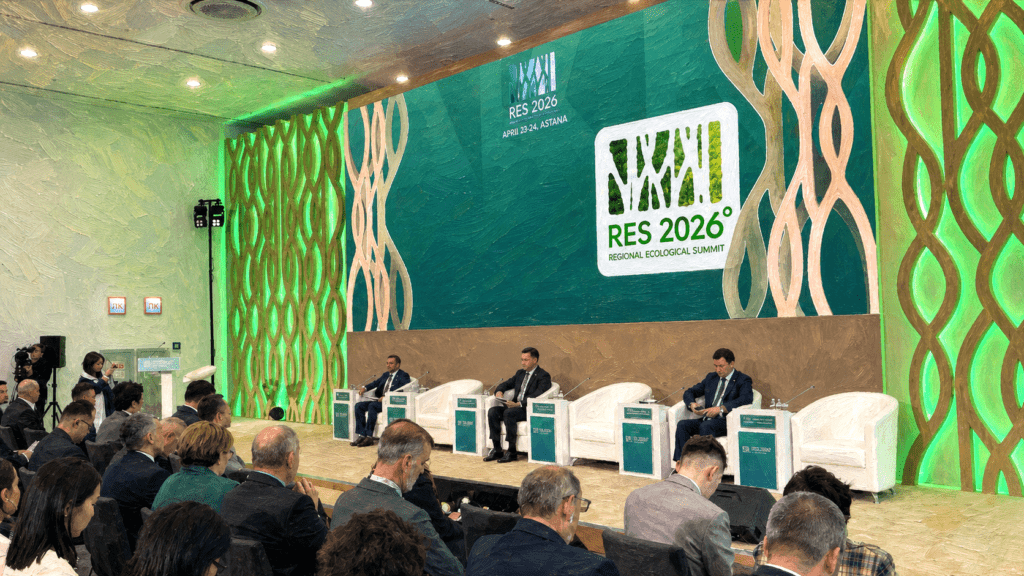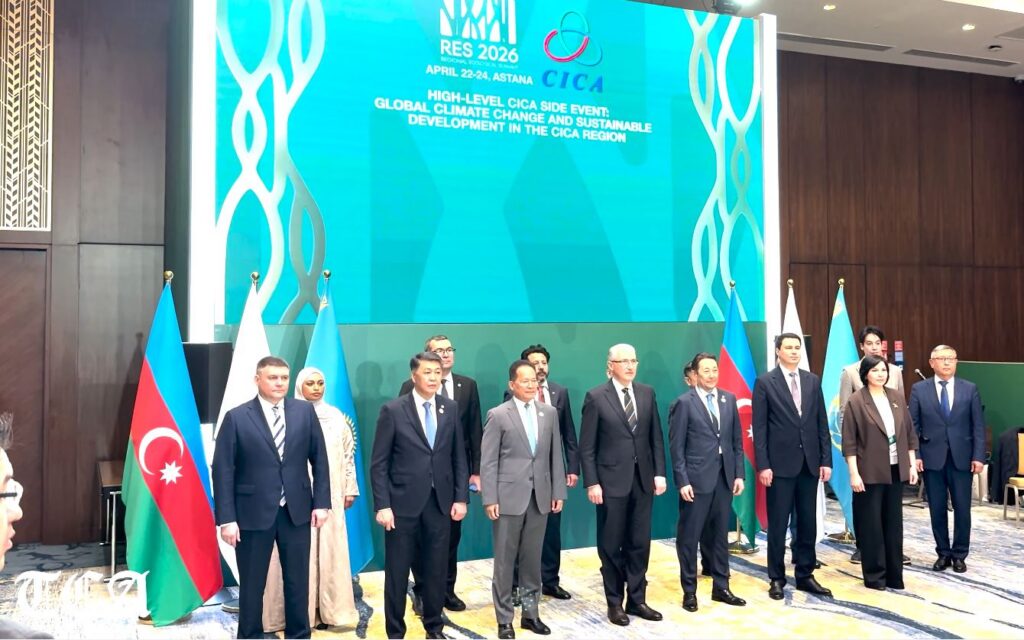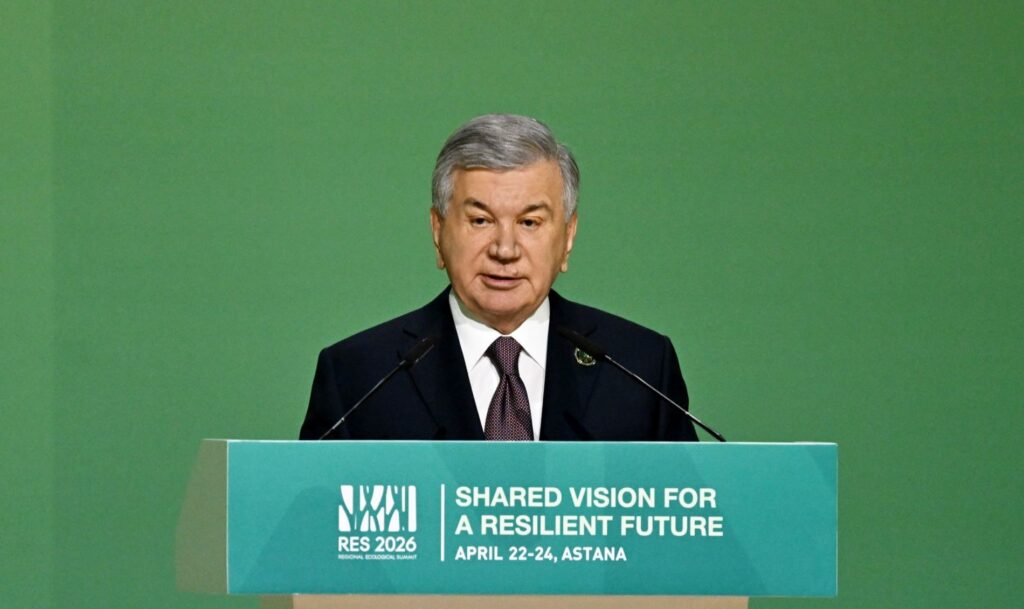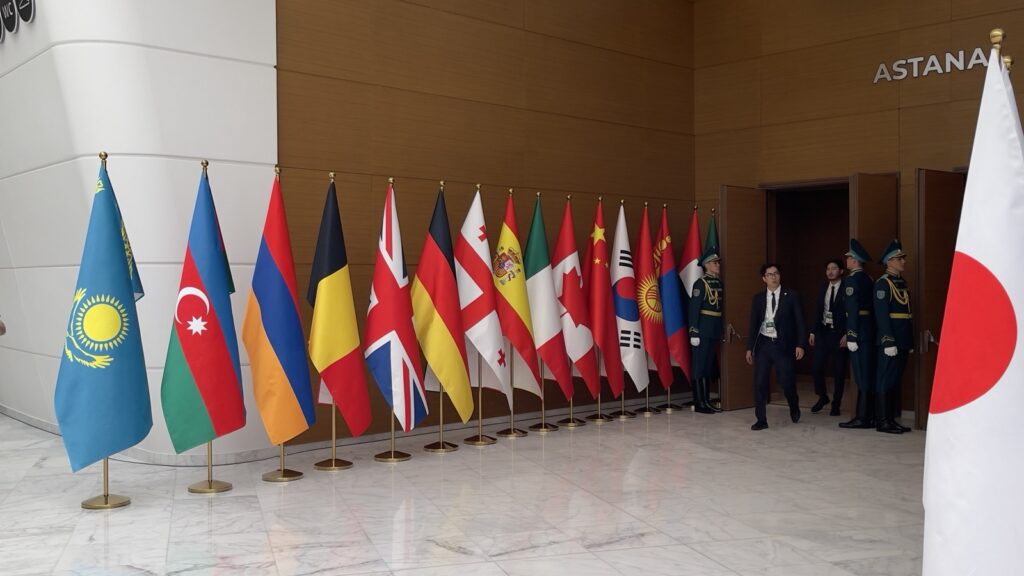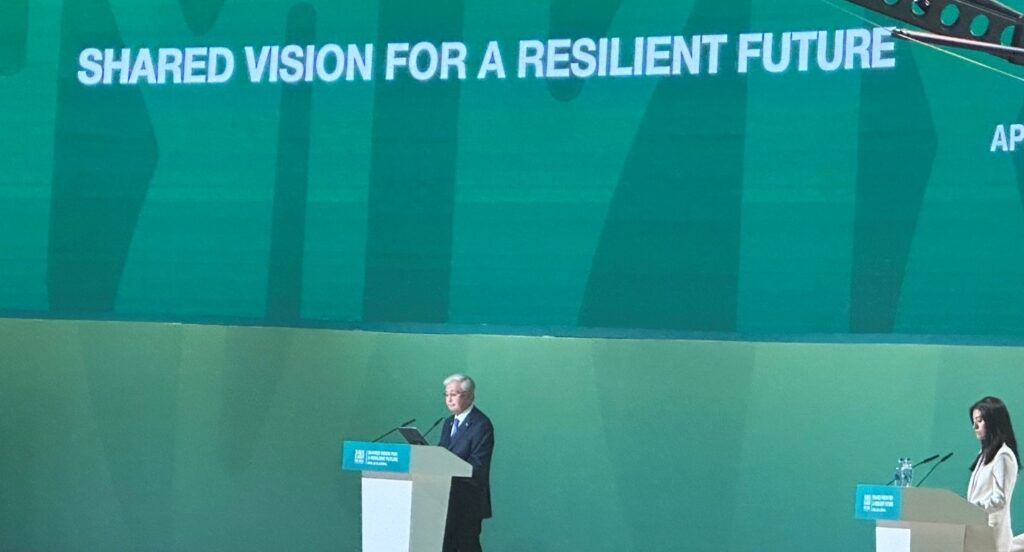
On April 22–24, Astana will host the Regional Ecological Summit with the participation of numerous United Nations agencies and international partners. It is expected to produce a joint declaration and a Regional Program of Action for 2026–2030, giving it a formal ambition beyond that of a standard diplomatic conference. Kazakhstan is presenting the event as a region-wide platform through which shared ecological pressures may become a more regular channel for Central Asian coordination.
Officially, the summit is framed as a platform for regional solutions to climate and environmental challenges. It is also a more ambitious test of whether Kazakhstan can use ecology to sustain a more regular pattern of regional cooperation under multilateral auspices. Here, Astana is using ecology to include water, health, food systems, natural-resource management, pollution, resilience, and financing. The broader the issue area becomes, the more usable it is as a basis for cooperation among states whose interests diverge elsewhere.
The summit grew out of the Regional Climate Summit that President Kassym-Jomart Tokayev proposed at the Astana International Forum in June 2023. Since then, the agenda has widened from climate policy in the narrow sense to ecology more generally. This broadening fits the constraints the five Central Asian states share, which extend beyond emissions or adaptation metrics. They include water stress, land degradation, cross-border environmental risks, public-health effects, and the need for outside financing and technical coordination. A climate-only frame would have been too narrow for those overlapping pressures. The broader ecological frame is therefore more politically useful.
The meeting also has a prehistory in earlier regional backing and multilateral development. A key point came on July 21, 2022, at the Fourth Consultative Meeting of Central Asian heads of state in Cholpon Ata, where the Green Agenda Regional Program for Central Asia was adopted. At the same meeting, a joint statement, a roadmap for regional cooperation for 2022–2024, and a concept for Central Asian interaction in multilateral formats were also adopted. The Green Agenda itself was linked to decarbonization, alternative energy, mutual electricity supply, water-saving and environmentally friendly technologies, and the rational use of water resources. Later UNDP material tied that program more explicitly to regional cooperation on climate action, water and energy management, and the use of United Nations platforms for advancing shared initiatives. The Astana summit builds on that earlier momentum.
The scale of the UN presence indicates that the summit is meant as more than a ceremonial gathering. UN Kazakhstan says that 18 UN agencies are co-organizing 27 sessions and five workshops. For a regional meeting of this kind, that is a dense working structure. The same UN summary says that one expected outcome is a Joint Declaration by the Heads of State of Central Asia on regional environmental cooperation, followed by a Program of Action for 2026–2030 developed in partnership with the United Nations. Kazakhstan’s own framing presents the summit as a permanent platform for dialogue among governments, international organizations, scientific institutions, business, and civil society. The event is thus situated at the intersection where regional diplomacy meets multilateral policy design.
The agenda shows why ecology is being used in this way. It brings together climate transition, adaptation, food security, ecosystems, resource use, pollution, finance, and technology under a single policy frame. The operative goals are concrete: reduce emissions, improve energy efficiency, expand renewable energy, protect communities and ecosystems from climate and natural risks, support sustainable agriculture, and safeguard water resources such as the Aral and Caspian Seas. This is a policy bundle rather than a loose thematic list. It connects environmental constraints to economic management, state capacity, and social effects.
The summit’s health-and-environment component shows this broadening especially clearly. It connects ecological deterioration to direct consequences for populations and to problems of governance that no single state can manage effectively on its own. The World Health Organization is hosting a ministerial session focused on the health consequences of environmental degradation in the Aral Sea region. It is expected to bring together government representatives from Central Asia and the Caspian region, along with international organizations and experts. The discussion will focus on coordinated, evidence-based responses and on ways to strengthen cross-border and intersectoral cooperation.
Attention to implementation questions distinguishes the summit from a purely declaratory meeting. Alongside its large UN presence, the preparatory process has produced named initiatives and concrete mechanisms. UNDP Kazakhstan says that the Green Shield initiative and the Harmony with Nature for Sustainable Development of the Region initiative are being prepared for presentation and endorsement at the summit, followed by the adoption of a declaration and a resolution. The same preparatory meeting in Almaty focused on cross-border biodiversity protection, forest restoration, action against land degradation and desertification, and a coordinated system for mobilizing financial resources.
The immediate question, and the practical test, is whether the summit can secure endorsement of the joint declaration and the Regional Program of Action it has been designed to produce. Preparations have been wide-ranging: regional and international consultations, discussions at UN platforms, an updated summit concept, a draft joint declaration, and the launch of more than 20 regional initiatives. However, final bargaining over scope, wording, and priorities often occurs at the meeting itself, and one cannot assume that the political outcome is settled before official action makes that clear.
That outcome will indicate whether shared ecological constraints can be turned into a more routine form of regional cooperation. Through its extensive multilateral preparation, Kazakhstan is trying to make that happen. Success would not mean deep ecological integration across Central Asia. It would mean, however, that ecology had become a standing channel through which the region’s governments could coordinate on problems that already bind them together in practice. Astana is using this summit to see whether that channel can be widened and made sustainable.