
• KGS/USD = 0.01144 0%
  • KZT/USD = 0.00199 0%
  • TJS/USD = 0.10857 -0.18%
  • UZS/USD = 0.00008 0%
  • TMT/USD = 0.28571 0%
  • KGS/USD = 0.01144 0%
  • KZT/USD = 0.00199 0%
  • TJS/USD = 0.10857 -0.18%
  • UZS/USD = 0.00008 0%
  • TMT/USD = 0.28571 0%
  • KGS/USD = 0.01144 0%
  • KZT/USD = 0.00199 0%
  • TJS/USD = 0.10857 -0.18%
  • UZS/USD = 0.00008 0%
  • TMT/USD = 0.28571 0%
  • KGS/USD = 0.01144 0%
  • KZT/USD = 0.00199 0%
  • TJS/USD = 0.10857 -0.18%
  • UZS/USD = 0.00008 0%
  • TMT/USD = 0.28571 0%
  • KGS/USD = 0.01144 0%
  • KZT/USD = 0.00199 0%
  • TJS/USD = 0.10857 -0.18%
  • UZS/USD = 0.00008 0%
  • TMT/USD = 0.28571 0%
  • KGS/USD = 0.01144 0%
  • KZT/USD = 0.00199 0%
  • TJS/USD = 0.10857 -0.18%
  • UZS/USD = 0.00008 0%
  • TMT/USD = 0.28571 0%
  • KGS/USD = 0.01144 0%
  • KZT/USD = 0.00199 0%
  • TJS/USD = 0.10857 -0.18%
  • UZS/USD = 0.00008 0%
  • TMT/USD = 0.28571 0%
  • KGS/USD = 0.01144 0%
  • KZT/USD = 0.00199 0%
  • TJS/USD = 0.10857 -0.18%
  • UZS/USD = 0.00008 0%
  • TMT/USD = 0.28571 0%
05 December 2025

Viewing results 13 - 18 of 125

Four Sentenced to Life Over Killings That Terrorized Tajikistan’s Konibodom

Four men have been sentenced to life imprisonment in connection with a series of murders that terrorized the northern Tajik city of Konibodom and surrounding areas throughout 2024. The announcement was made by Konibodom Chairman Davron Zokhidzoda at a press conference, as reported by Asia-Plus. However, he did not disclose the date of sentencing or provide further details, citing a lack of familiarity with the full investigation. On December 21, 2024, Tajikistan’s General Prosecutor’s Office announced the arrest of four suspects: 26-year-old Solehjon Khudoyberdiev, 27-year-old Akhadjon Tukhtaev, 36-year-old Bakhtiyor Ravshanov, and 28-year-old Manuchehr Odilov, all residents of Konibodom and nearby villages. As previously reported by The Times of Central Asia, between March and December 2024, a total of 23 people from seven families were killed in a wave of violent incidents that shook the region. The killings began on the night of March 28–29, when five members of the Sharifov family were found dead in their home. Authorities initially suspected the family patriarch, 65-year-old Mukhiddin Sharifov, but this theory was later dismissed. His son, Kabir Sharifov, told Asia-Plus that his father was ultimately recognized as one of the victims. The violence escalated in April with the murder of elderly couple Muzaffar and Inoyat Urmonov. Their relative, Sharifjon Ashurov, was arrested and sentenced to 20 years in prison in December, despite his family insisting he was at home on the night of the murders. In May, six people from two families, one Tajik and one Kyrgyz, were found murdered in the village of Sanchidzor. Authorities held Marat Sattarov, a 42-year-old school security guard, responsible. He was sentenced to life in prison by the Supreme Court in November. Tragedy struck again in December when six members of the Nematov family, including four children, were discovered dead in their home in Shurobqala. The father, Naimdjon Nematov, was found hanged in a nearby tree, while his wife and children showed signs of strangulation. Just days later, four more people from two families were killed in the village of Khisorak. The string of murders plunged Konibodom into panic. Reports of masked individuals seen at night stoked public fear, prompting residents to form watch groups and light fires for protection.
Tajikistan Escalates Deportations of Afghan Refugees Amid Growing Concerns

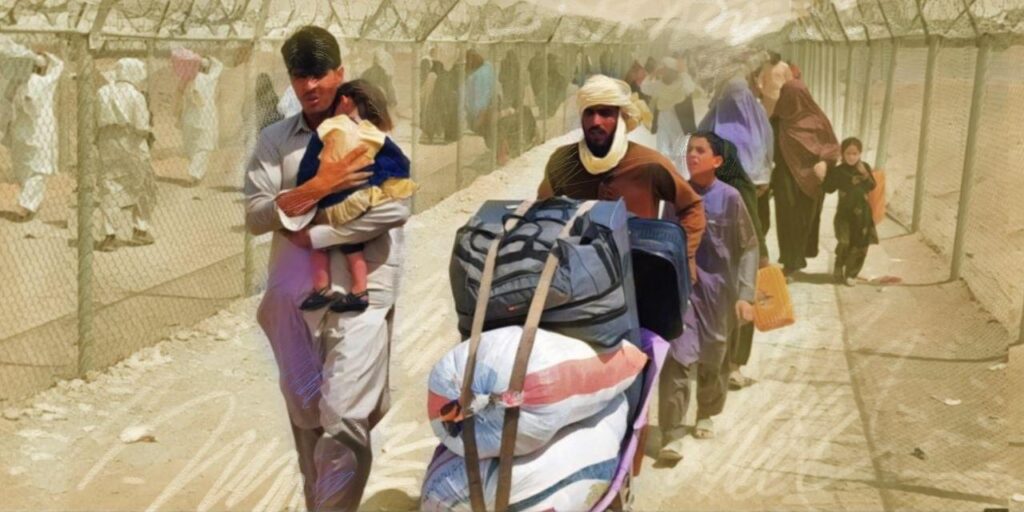
Afghans who fled to Tajikistan are keeping a low profile lately. Tajik authorities have started the latest wave of deportations, and this one looks to be bigger than the previous sweeps. “You Have 15 Days” At the beginning of July, Afghan refugees and asylum-seekers in Tajikistan received an SMS warning them to leave the country within 15 days or else they would be forcibly deported. Tajikistan’s government has not commented on these messages, but the detention of Afghans started not long after the messages were sent. So far, the only two places mentioned where Afghans were being apprehended were the Rudaki district outside of Dushanbe and the town of Vahdat, 26 kilometers from Dushanbe. Hundreds of Afghan refugees are known to be living in these two areas. Radio Free Europe/Radio Liberty’s Tajik Service, known locally as Ozodi, reported that journalists who went to the houses of Afghan refugees in Vahdat were stopped and turned away by men in military uniforms outside the homes. Some Afghan refugees in Vahdat spoke with Ozodi under the condition of anonymity and said that on July 15, several vans arrived and took away “dozens” of Afghan men, women, and children. One said Afghan refugees are staying inside their homes, fearing that if they go out, they will be detained and deported. Police “take the documents from Afghans and set a date for them to leave the country,” the refugee said, “For more than 20 days we have practically not stepped outside at all.” Local Tajiks confirmed that Afghans were being taken away and that many of those who remained were searching for new places to live to avoid being apprehended. The Tajik authorities did not say anything about the deportations until July 19, when the state news agency Khovar posted a text from the Press Center of the Border Troops of the State Committee for National Security. The statement said some “foreign citizens” had entered Tajikistan illegally, and a “certain number” of them engaged in illegal activities such as “narcotics trafficking, [spreading] the ideas of extremist movements,” or providing false information or documents to acquire refugee status. The office of the UN High Commissioner for Refugees (UNHCR) said that as of the end of 2024, there were 9,902 Afghan refugees registered in Tajikistan. However, Afghans have been fleeing their homeland and coming to Tajikistan for many years, and some estimates for the number of Afghans in Tajikistan run as high as 13,000. Something else which remains unclear about the Afghan refugees in Tajikistan is how many are ethnic Tajiks. Ostensibly, most of them could be since the ethnic Tajik population of Afghanistan is mainly found in areas adjacent to Tajikistan. Many who came to Tajikistan 10 or 15 years ago have assimilated and are likely not refugees or asylum seekers, but may not have obtained Tajik citizenship. It is unclear how many Afghan citizens have been detained and deported since the start of July, but they are just the latest to be sent back to...

Tajikistan Confirms Deportation of Afghan Refugees

Tajikistan has officially confirmed the deportation of Afghan refugees residing in the country, according to a statement issued by the Press Center of the Border Troops of the State Committee for National Security. As previously reported by The Times of Central Asia, Tajik authorities launched a large-scale campaign to expel Afghan nationals, giving them just 15 days to leave the country. The move, which has been verified by the United Nations refugee agency (UNHCR), has sparked fear and confusion among thousands of Afghan refugees, including those holding valid residence permits and asylum documents. Tajik officials justified the decision by citing what they described as a “difficult political and economic situation in the region and worldwide.” The statement emphasized that while many foreign citizens reside legally in Tajikistan for various reasons, some have entered the country illegally or committed serious violations of local laws. According to the authorities, inspections revealed multiple infractions, including illegal drug trafficking, the promotion of extremist ideologies, submission of false documentation for refugee status, violations of migration rules, possession of citizenship from third countries, and the use of Tajikistan as a transit route. “As a result, actions are being taken in accordance with national legislation to deport these individuals,” the statement read. “In particular, the deportation of a number of Afghan citizens is linked to these violations.” In January 2025, UNHCR publicly called on Tajikistan to halt the deportations, following reports that dozens of Afghan refugees were expelled in December 2024. The agency said that at least 80 Afghans were deported, many of whom had valid refugee documentation. UNHCR warned that such actions contravene international law and place individuals at risk. By the end of 2024, approximately 9,000 Afghan refugees were residing in Tajikistan.

Closed Court Begins for 19 Suspects in Crocus City Hall Attack

The Second Western District Military Court in Moscow has begun preliminary closed-door proceedings for 19 suspects charged in the March 22, 2024, terrorist attack at Crocus City Hall in Krasnogorsk, according to Russian state agency TASS. The attack left 149 people dead and caused an estimated 6 billion rubles in damages. Court spokesperson Irina Zhirnova stated that the session would follow Article 234 of the Russian Criminal Procedure Code, meaning a single judge will preside over the preliminary hearing, which is not open to the public. “We will take unprecedented security measures,” she added. Federal security personnel are tasked with guarding the courtroom. The case will be heard by a three-judge panel. The evidence dossier spans more than 470 volumes and includes forensic materials and the results of over 200 expert examinations. A key issue still to be resolved is the trial venue: facilities at Moscow City Court are under renovation and cannot accommodate all parties involved in the high-profile case. The court has not yet determined whether the main trial will be open to the public and the media. Under Russian law, that decision will be made when the main hearing opens and the indictment is formally read. The court retains the right to close any session in the interest of security. The Prosecutor’s Case According to TASS’s summary of the prosecution’s case, two wanted Tajik nationals and several unidentified individuals allegedly acted “in the interests of Ukraine’s political leadership.” They are accused of organizing three cells of the extremist group “Vilayat Khorasan,” affiliated with the Islamic State (ISIS), and of recruiting 19 Tajik citizens, appealing to their religious beliefs. The defendants include Shamsiddin Fariduni, Dalerjon Mirzoev, Muhammadsobir Faizov, and Saidakram Muradali Rachabalizoda, all of whom are on Russia’s official list of banned terrorists. Prosecutors allege that Rachabalizoda, Faizov, Mirzoev, and Fariduni were instructed to carry out the armed assault and arson at Crocus City Hall. Other defendants, such as the Islomov brothers and Alisher Kasimov, allegedly provided financial and logistical support, including accommodations and vehicles. Hussein Medov, Jabrayil Aushev, and others are accused of manufacturing and delivering weapons and ammunition. The Soliev brothers, along with suspects Ismoilov, Gadoev, and Hamidov, reportedly helped transport arms to the attackers. Prosecutors say Rachabalizoda’s cellmates also contributed funds. Following the attack, the four main perpetrators attempted to flee to Ukraine but were apprehended in Russia’s Bryansk Region and later transferred to Moscow for trial.  Security and Legal Implications The Crocus City Hall attack shocked the whole of Russia. In response, the military court is conducting the preliminary phase behind closed doors amid heightened security. The upcoming full trial will establish a timeline for the presentation of evidence by both the defense and prosecution. It will culminate in verdicts and, if found guilty, sentences under Russia’s anti-terrorism laws.

Torture in Tajikistan: A Systemic Problem Demanding Deep Reform

Despite recent legislative improvements and mounting international scrutiny, torture remains a persistent issue in Tajikistan. Experts warn that without comprehensive reform of law enforcement institutions and the establishment of independent oversight mechanisms, the problem is unlikely to be resolved anytime soon. Legislative Progress Fails to Translate into Practice Tajikistan has taken some legal steps in recent years to address the issue. Laws have been strengthened, more cases are being investigated, and several police officers have faced prosecution. “In the past two to three years, there has been gradual progress both in legislation and in the review of torture cases,” said Khushbakht Isoev, a torture documentation specialist at the human rights NGO Mir Prava and a member of the Coalition Against Torture in Tajikistan. However, Isoev notes that violent abuse by law enforcement officers, especially during detention, continues to be documented. Most cases never make it to court due to insufficient evidence or pressure on victims to remain silent. 25 Torture Complaints in 18 Months According to data from the Coalition Against Torture, 25 complaints were filed against law enforcement agencies in 2024 and the first half of 2025. The majority, 17 cases, were directed at the Ministry of Internal Affairs, while others involved the State Committee for National Security, anti-corruption bodies, and drug control agencies. One complaint named employees of the General Prosecutor’s Office. The geographic distribution of these complaints spans the country: 11 came from Sughd Province, six from Dushanbe, and the remainder from Gorno-Badakhshan Autonomous Oblast (GBAO) and other districts under direct central administration. Human rights defenders assisted 11 victims in securing legal representation and provided legal consultations to 14 others. They also prepared over 70 procedural documents and issued more than 100 oral legal recommendations. Yet, as Isoev points out, criminal charges are rarely pursued. “Torture is denied and rarely substantiated with evidence,” he said. Since January 2024, only six cases involving law enforcement officers have led to criminal proceedings. One of these cases dates back seven years and was only reopened after the accused was located. Some trials have resulted in sentencing, while others remain under investigation. Still, the number of prosecutions remains disproportionately low compared to the volume of complaints. Structural Barriers to Justice In 2012, Tajikistan introduced Article 143(1) into its Criminal Code, criminalizing torture as a distinct offense. This allowed lawyers and activists to move beyond vague “abuse of power” charges and pursue more precise legal accountability. “Introducing a specific article on torture was a critical step, but it has not addressed the systemic nature of the problem,” Isoev emphasized. One of the key obstacles is the inherent conflict of interest in the investigation process: cases of alleged torture are typically handled by the very agencies whose officers are accused. This creates opportunities for evidence tampering, witness intimidation, and coercion of victims into rejecting legal representation. Many detainees and their families are pressured not to file complaints or to forego legal counsel. Torture cases are often delayed without justification, and victims remain fearful...

Tajik Security Forces Thwart Major Cross-Border Drug Smuggling Attempt from Afghanistan

Tajik authorities have disrupted an attempt by an Afghan drug trafficking group to smuggle a significant quantity of narcotics into the country, according to the State Committee for National Security (SCNS) of Tajikistan. The operation unfolded in the Shamsiddin Shohin district of Khatlon region, where four Afghan nationals illegally crossed the border near the village of Kishty. The group, led by 50-year-old Azarkhon waladi Saidumar from Badakhshan province, aimed to transport narcotics into Tajik territory. The SCNS reported that regional security officers, working with border guards from outpost No. 5 of the Hirmandjo unit, tracked the smugglers’ movements and launched a targeted operation. When authorities attempted to apprehend the group, the traffickers opened fire. In the ensuing clash, Azarkhon and another group member, 30-year-old Rozmuhammad Azizi, were killed. The remaining two suspects escaped back across the border into Afghanistan. Security forces recovered two Kalashnikov rifles with 17 rounds of ammunition, a night vision device, a rubber boat, and three sacks containing 59 packages of narcotics. Forensic analysis confirmed the substances included over 57.5 kilograms of opium and 960 grams of methamphetamine, totaling 58.475 kilograms. Criminal proceedings have been initiated under several articles of Tajikistan’s Criminal Code, and authorities are pursuing efforts to identify and apprehend the remaining suspects. In a statement, the SCNS highlighted the critical importance of safeguarding the country's borders and urged residents in border regions to assist law enforcement. “Every citizen has a sacred duty to protect the homeland,” the SCNS said, warning that drug trafficking poses a direct threat to national health and security. The government reaffirmed its commitment to combating drug trafficking, cross-border crime, terrorism, extremism, and the illegal arms trade. As previously reported by The Times of Central Asia, beginning in 2026, the Collective Security Treaty Organization (CSTO) will begin delivering weapons and military equipment to its member states to strengthen the alliance’s southern frontier, with a particular focus on the Tajik-Afghan border.
