• KZT/USD = 0.00217
  • TJS/USD = 0.10800
  • UZS/USD = 0.00009
  • TMT/USD = 0.29760
  • KZT/USD = 0.00217
  • TJS/USD = 0.10800
  • UZS/USD = 0.00009
  • TMT/USD = 0.29760
  • KZT/USD = 0.00217
  • TJS/USD = 0.10800
  • UZS/USD = 0.00009
  • TMT/USD = 0.29760
  • KZT/USD = 0.00217
  • TJS/USD = 0.10800
  • UZS/USD = 0.00009
  • TMT/USD = 0.29760
  • KZT/USD = 0.00217
  • TJS/USD = 0.10800
  • UZS/USD = 0.00009
  • TMT/USD = 0.29760
  • KZT/USD = 0.00217
  • TJS/USD = 0.10800
  • UZS/USD = 0.00009
  • TMT/USD = 0.29760
  • KZT/USD = 0.00217
  • TJS/USD = 0.10800
  • UZS/USD = 0.00009
  • TMT/USD = 0.29760
  • KZT/USD = 0.00217
  • TJS/USD = 0.10800
  • UZS/USD = 0.00009
  • TMT/USD = 0.29760
31 August 2026

Viewing results 49 - 54 of 157

A Final Deal Along Central Asia’s Deadliest Border

It took some 33 years, but on December 4, Kyrgyz and Tajik officials reached a final agreement on delimitation of the last sections of their 972-kilometer border. It is a relief for the entire Central Asian region. In those 33 years the five Central Asian countries (including Kazakhstan, Turkmenistan, and Uzbekistan) have been independent, the only open conflicts between the armed forces of two Central Asian countries happened between Kyrgyzstan and Tajikistan. In the southern Kyrgyz city of Batken on December 4, Kyrgyz security chief Kamchybek Tashiyev and Tajik counterpart Saimumin Yatimov announced an agreement that Tajik state news agency Khovar said “fully completed the delimitation of the remaining sections of the Tajik-Kyrgyz state border.” Most of the Kyrgyz-Tajik border runs through the Pamir Mountains. The eastern part, approximately two-thirds of the common frontier, passes through remote and sparsely inhabited areas. Agreement on where the dividing line between the two countries was easy to reach in this section. The remaining one-third of the border in the west proved far more difficult to find compromises. [caption id="attachment_26293" align="aligncenter" width="2256"] Road near the Kyrgyz village of Ak-Sai. On one side of the road is Tajikistan, the other side, Kyrgyzstan; image: Bruce Pannier[/caption] Kyrgyz and Tajiks are two of the oldest peoples in Central Asia. Their ancestors lived in what is now the border area many hundreds of years before there were any borders. The Soviet Union changed that when it created the Kyrgyz and Tajik Soviet Socialist Republics, not only drawing lines on a map, which were redrawn more than once, but also including enclaves on either side of the border. Roads in the area zigzagged back and forth, one minute through Kyrgyzstan, and few minutes later through Tajikistan, over and over again. As border tensions began to appear toward the end of the 2000-2010 period, both countries started building roads to avoid crossing into the neighboring state, but the terrain is rugged, limiting possibilities for alternate routes. Also, new road construction is expensive and Kyrgyzstan and Tajikistan are both poor countries. [caption id="attachment_26294" align="aligncenter" width="2256"] The entrance to Tajikistan's Vorukh enclave; image: Bruce Pannier[/caption] The lone road leading from Batken to the Kyrgyz village of Ak-Sai and the Tajik enclave of Vorukh weaves through both countries several times and in some places, the road is the border. Visible from any village in this area are the snow-capped mountains, but down in the valleys, water has always been a problem. Like the roads, small rivers and canals meander across both sides of the border, and unsurprisingly, water use is a major source of tensions and has been a significant obstacle in deciding where the border should be. The first hints of trouble came after 2000 and involved petty vandalism, usually children throwing rocks at passing vehicles with license plates from the neighboring country. This escalated and after 2010, when incidents of physical altercations between members of border communities started, followed by vandalism targeting homes and businesses in border villages. Since much of...
Tajik Lawyer Jailed After Exposing Alleged Corruption in Prosecutor’s Office

In Tajikistan, 74-year-old lawyer Faizi Oli, also known as Faizali Yuldoshev, has been sentenced to 2.5 years in prison after raising allegations of corruption within the prosecutor’s office. The Sino District Court in Dushanbe delivered its verdict on November 29. Oli was found guilty of “knowingly making a false denunciation” against employees of the prosecutor's office. However, he asserts that he merely exercised his right to file complaints with anti-corruption bodies, the Security Council, and the presidential administration, detailing what he described as evidence of corruption. A Controversial Case According to Oli’s lawyer, his complaints should have prompted an investigation, not legal proceedings against him. The court considered his advanced age when issuing the sentence, which fell below the minimum term of five years prescribed under Article 346 of the Tajik Criminal Code. The prosecution had sought a six-year prison term. Oli was arrested immediately after the verdict. Over the course of the five-month trial, he consistently maintained that the charges were baseless, and that filing complaints with the authorities is a legal right. This is not the first time Oli has been involved in a high-profile case; he previously defended his colleague, Saidnuriddin Shamsiddinov, who was sentenced to 8.5 years in prison on similar charges of false denunciation. At that time, Oli stressed the right of citizens to address grievances directly to the president and the Prosecutor General’s Office, a principle he believes is now being criminalized. Broader Context International human rights organizations have frequently criticized Tajikistan for targeting lawyers and human rights defenders. Many prominent figures, including Buzurgmehr Yorov, are serving lengthy prison sentences under controversial circumstances. Oli, known for his outspoken social media presence and comments on government operations, believes his activism may have influenced the court’s decision. He has announced plans to appeal the verdict after receiving the court’s written decision. The Prosecutor General's Office declined to comment on the case.

Tajik Journalist Rukhshona Khakimova Faces Treason Charges Amid Controversy

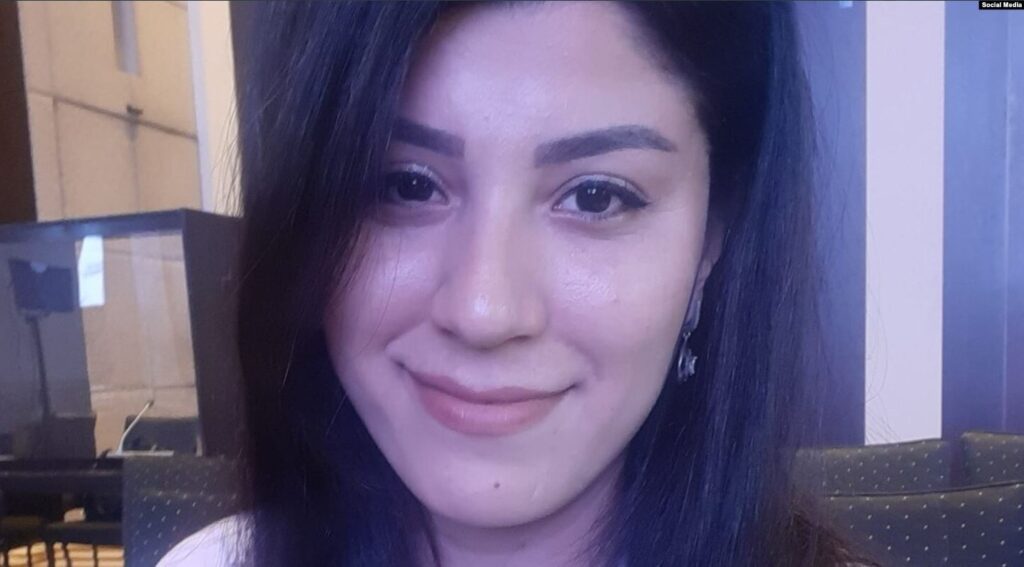
Tajik authorities have charged journalist Rukhshona Khakimova, the niece of Shokirjon Khakimov, first deputy chairman of the Social Democratic Party of Tajikistan, with high treason under Article 305 of the Criminal Code. The charges are part of a larger investigation into an alleged coup attempt, according to sources cited by Radio Ozodi. The case, initiated in July, took a significant turn on November 22 when the indictment against Rukhshona and Shokirjon Khakimov was formally presented in court. The trial, held behind closed doors, has limited access to details, leaving the public and media in the dark. The Allegations Sources suggest that Rukhshona Khakimova’s charges stem from her involvement in conducting a politically sensitive poll about China’s influence in Tajikistan. The survey reportedly included interviews with Saidjafar Usmonzoda, a political figure stripped of parliamentary immunity and later arrested, and her uncle, Shokirjon Khakimov, who is also implicated in the case. It remains unclear how this survey forms the basis of a high treason charge. The secrecy surrounding the trial further obscures the connection. Background on Khakimova Rukhshona Khakimova, 31, is a graduate of the National University of Tajikistan with a career that spans investigative journalism for prominent outlets, including Youth of Tajikistan and several international publications. She is also a mother of two young children, the youngest being just five months old. Due to her family situation, Khakimova is under house arrest. Both her domestic and foreign passports have been confiscated, restricting her movements. She and her lawyer have declined to comment on the case, adhering to its classified nature. A Broader Context The trial, which began on November 14, involves multiple defendants, including well-known politicians and public figures accused of conspiring against the government. Held in a detention facility in Dushanbe, the closed proceedings exclude the participation of family members and the press, fueling speculation and concern among observers. As the case unfolds, it raises critical questions about press freedom, political dissent, and judicial transparency in Tajikistan.

Tajikistan’s External Debt Reaches $3.25 Billion

As of October 1, Tajikistan’s external debt stood at $3.25 billion, according to a report by Asia-Plus citing the Ministry of Finance. This represents a modest 0.2% increase, or $7.1 million, compared to January 1. Approximately 96% of the debt comprises direct government debt, incurred to meet state obligations, while $138.8 million is under state guarantees. Tajikistan’s external debt-to-GDP ratio is 27%, which is considered a favorable level. The largest creditors include the World Bank ($370 million), the Asian Development Bank ($260 million), the Islamic Development Bank ($212 million), and the European Bank for Reconstruction and Development ($167 million). A significant portion of the debt, $500 million, consists of Eurobonds issued in 2017 to finance the completion of the Rogun Hydroelectric Power Plant. While the government adheres to the repayment schedule for these bonds, only interest payments have been made so far. Next year, Tajikistan is expected to seek additional loans from development partners to continue work on the Rogun Hydroelectric Power Plant. This move is anticipated to substantially increase the country’s external debt. By way of comparison, The Times of Central Asia recently reported that neighboring Uzbekistan’s public debt is projected to reach $45.1 billion by the end of 2025.

Russian Interior Minister Reports Drop in Crimes Linked to Tajik Citizens

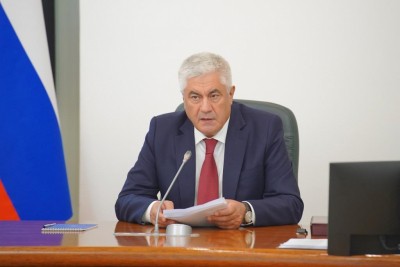
Russian Interior Minister Vladimir Kolokoltsev announced a decline in crimes involving Tajik citizens in the Russian Federation during a joint meeting of the Russian and Tajik Interior Ministries in Moscow. This reduction includes both offenses committed by and against Tajik nationals, a trend Kolokoltsev emphasized should continue. One notable achievement highlighted was the resolution of a 30-year-old murder case in Sughd, which was solved through coordinated information-sharing between Russian and Tajik law enforcement agencies. Strengthening Bilateral Cooperation During the meeting, Kolokoltsev and Tajik Interior Minister Rahimzoda Ramazon Hamro approved a 2025 cooperation plan. The agreement includes measures to combat transnational crime, enhance collaboration between investigative units, share intelligence, and address drug trafficking. Rahimzoda stressed that ongoing cooperation strengthens security and improves the performance of law enforcement agencies in both countries. Tajik officials highlighted that joint events and initiatives have been held annually since the partnership began. Addressing Migration and Citizens’ Rights Kolokoltsev also referred to his May 2024 visit to Dushanbe, where discussions revolved around migration issues and the establishment of the Russian Interior Ministry’s passport and visa service. These efforts aim to enhance conditions for Tajik citizens living in Russia while safeguarding their rights and interests.

Tajik MMA Fighter Chorshanbiev, Imprisoned For Criticizing Authorities, Faces New Charges

In Tajikistan, the well known MMA fighter and prominent blogger Chorshanbe Chorshanbiev, already serving an 8.5-year prison sentence, has been handed an additional four years on new charges. Journalist Anora Sarkorova reported the development on November 18, which was later confirmed by sources at Radio Ozodi. Chorshanbiev, known for criticizing Tajik authorities in the Gorno-Badakhshan Autonomous Region while residing in Russia, was deported to Tajikistan in December 2021. By May 2022, he was convicted of “public calls for violent change of the constitutional order” and sentenced to 8.5 years in prison. Details of the additional sentence remain unclear, but it is speculated to be related to either violations of prison regulations or involvement in a fight. Recently, Chorshanbiev was transferred from a penal colony in Khujand to a pre-trial detention center in Dushanbe. Chorshanbiev’s legal troubles began in December 2021 when he was deported from Russia for traffic violations. Upon his arrival in Dushanbe, he was arrested, and the Tajik prosecutor's office initiated charges against him, alleging incitement of social and national discord and calls to overthrow the state system. However, during the investigation, the first charge was dropped. His trial garnered significant public attention. Prominent athletes in Russia voiced their support for him, and his defense team argued that the case rested on a single piece of evidence: a video recorded in November 2021. In the video, Chorshanbiev commented on violent clashes in Khorog, during which three people were killed and dozens injured. The prosecution claimed his statements amounted to incitement of protests against the government. A political scientist’s analysis, presented during the trial, characterized Chorshanbiev’s remarks as a call for rebellion. However, his lawyers contested this interpretation and requested a re-evaluation of the video. In court, Chorshanbiev maintained that he had no intention of destabilizing the country. Despite the divided expert opinion, Chorshanbiev was convicted, and his case continues to provoke debate.