• KGS/USD = 0.01144 0%
  • KZT/USD = 0.00199 0%
  • TJS/USD = 0.10708 0%
  • UZS/USD = 0.00008 0%
  • TMT/USD = 0.28571 0%
  • KGS/USD = 0.01144 0%
  • KZT/USD = 0.00199 0%
  • TJS/USD = 0.10708 0%
  • UZS/USD = 0.00008 0%
  • TMT/USD = 0.28571 0%
  • KGS/USD = 0.01144 0%
  • KZT/USD = 0.00199 0%
  • TJS/USD = 0.10708 0%
  • UZS/USD = 0.00008 0%
  • TMT/USD = 0.28571 0%
  • KGS/USD = 0.01144 0%
  • KZT/USD = 0.00199 0%
  • TJS/USD = 0.10708 0%
  • UZS/USD = 0.00008 0%
  • TMT/USD = 0.28571 0%
  • KGS/USD = 0.01144 0%
  • KZT/USD = 0.00199 0%
  • TJS/USD = 0.10708 0%
  • UZS/USD = 0.00008 0%
  • TMT/USD = 0.28571 0%
  • KGS/USD = 0.01144 0%
  • KZT/USD = 0.00199 0%
  • TJS/USD = 0.10708 0%
  • UZS/USD = 0.00008 0%
  • TMT/USD = 0.28571 0%
  • KGS/USD = 0.01144 0%
  • KZT/USD = 0.00199 0%
  • TJS/USD = 0.10708 0%
  • UZS/USD = 0.00008 0%
  • TMT/USD = 0.28571 0%
  • KGS/USD = 0.01144 0%
  • KZT/USD = 0.00199 0%
  • TJS/USD = 0.10708 0%
  • UZS/USD = 0.00008 0%
  • TMT/USD = 0.28571 0%
29 January 2026

Viewing results 13 - 18 of 915

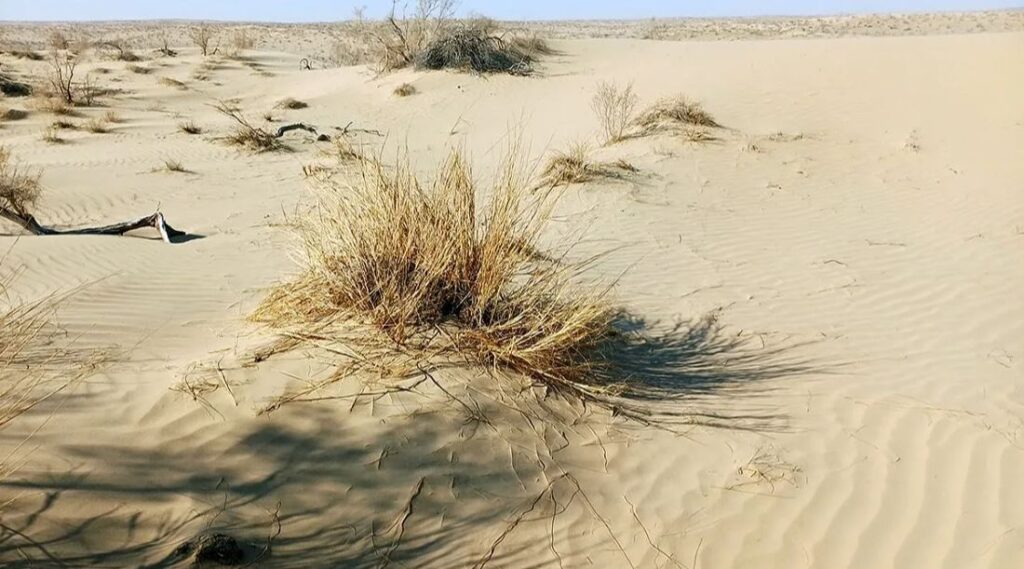
Ashgabat to Host Regional Center for Combating Desertification in Central Asia

A regional center dedicated to combating desertification will be established in Turkmenistan's capital Ashgabat. The center aims to coordinate efforts among Central Asian nations to address environmental and water management challenges. According to Pirli Kepbanov, Director of the National Institute of Deserts, Flora and Fauna under Turkmenistan’s Ministry of Environmental Protection, the new institution will consolidate regional scientific and practical capacities to tackle transboundary issues affecting agriculture and water resources. “Based at the center, the region’s states will be able to cooperate on shared concerns related to agricultural production and water infrastructure,” Kepbanov said. Ashgabat’s selection as the host city is no coincidence. Turkmenistan has long been a regional hub for desert science, with established research institutions specializing in land degradation, desert ecosystems, and the adaptation of economic activity to arid conditions. “There are only four such scientific institutes worldwide, and one of them is the National Institute of Deserts, Flora and Fauna of Turkmenistan,” Kepbanov added. He also emphasized Turkmenistan’s historical role in developing desert science across Central Asia and beyond. “The first Chinese desert scientists trained here,” he said, adding that contemporary Chinese experts acknowledge Turkmenistan’s important contributions to their national school of desert research. Currently, the National Institute collaborates with the Xinjiang Institute of Ecology and Geography in China, the A.N. Kostyakov Federal Scientific Center for Hydrotechnics and Land Reclamation in Russia, and is receiving partnership proposals from universities across Central Asia.
“We Can’t Help You”: How Turkmenistan’s Ministry of Justice Handles Citizens’ Complaints

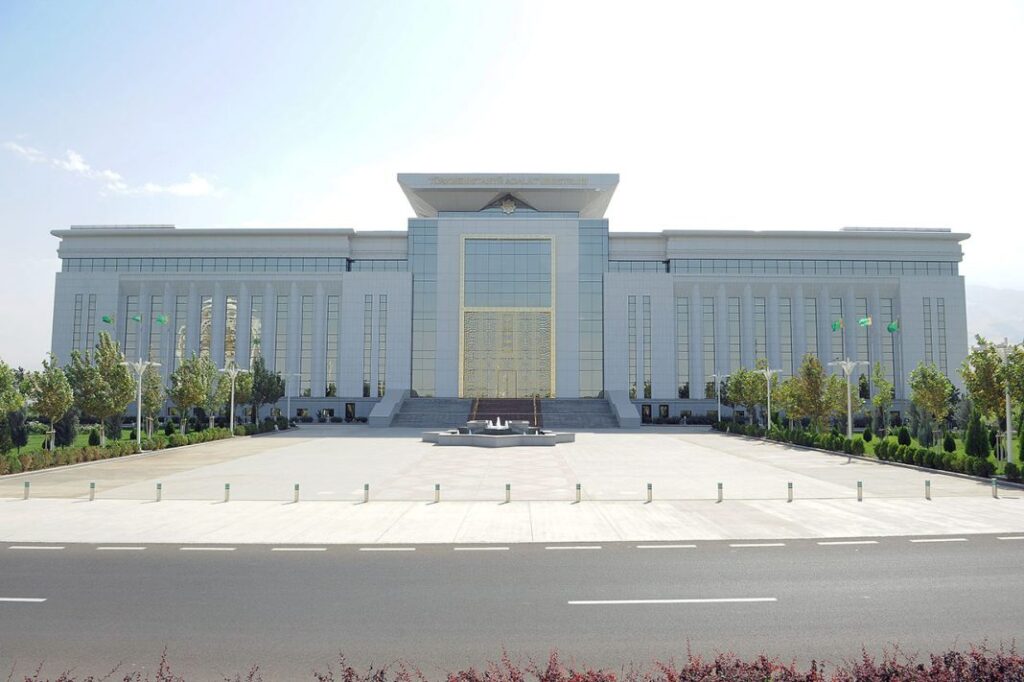
A recent public reception at Turkmenistan’s Ministry of Justice has highlighted the formal and often unproductive nature of interactions between citizens and state institutions in the country. On January 10 the ministry held a legal consultation session, officially scheduled to run from 9:00 a.m. to 12:00 p.m. In practice, however, visitors were not admitted until 10:00 a.m. According to Chronicles of Turkmenistan, more than 50 citizens attended the reception, many of whom had previously appealed to state agencies multiple times. They arrived with letters, formal statements, and supporting documentation in hand. Entry was granted in groups of three. The commission included representatives from the Ministry of Justice, the Prosecutor General’s Office, the Supreme Court, and the Bar Association. Each individual was given no more than five minutes. Despite the format suggesting legal support, the outcome for most attendees was discouragingly uniform. After speaking with 38 participants, journalists reported that all had received the same response: “We can’t help you.” Several attendees stated that officials did not even review the documents submitted with their complaints. As a result, nearly all who came seeking redress left empty-handed. Many expressed hopelessness, stating that they had no viable path to resolve their issues, and that government institutions had effectively denied them access to justice. The Times of Central Asia previously reported on the broader challenges faced by Turkmen citizens in navigating bureaucratic procedures and, in particular, how elderly residents endured long waits at social security offices. Although the process appears straightforward on paper, in practice it becomes a burdensome ordeal, especially given the government’s continued refusal to index pensions and social benefits. Missing a single appointment can result in suspended payments, with delays of up to six months before back payments are processed.

ADB Supports Turkmenistan’s Power Grid Modernization with $500 Million Project

The Asian Development Bank (ADB) has been working with Turkmenistan since 2018 to modernize the country’s electricity infrastructure, marking a milestone in cooperation, Business Turkmenistan reported on January 12. At the core of this partnership is the $500 million National Power Grid Development Strategy, the first initiative by an international financial institution in Turkmenistan’s energy sector. According to the ADB, the project aims to enhance the reliability of the national power network and bolster the country’s electricity export capacity. The project has financed the construction of approximately 1,400 kilometers of power transmission lines at 110, 220, and 500 kilovolts. In addition, 11 substations have been built across the regions of Akhal, Balkan, Dashoguz, and Lebap, as well as in Ashgabat. Technical assistance valued at $1.5 million was also provided through a grant from the Japan Fund for Prosperous and Resilient Asia and the Pacific. The ADB reported that the project is already yielding measurable results. Electricity exports rose from 3.4 terawatt-hours in 2017 to 9.3 terawatt-hours in 2023, driven by increased transmission capacity and system stability. The State Electric Power Corporation Turkmenenergo, the ADB’s local partner, contributed $175 million to the project’s implementation. The ADB described its role as supporting sustainable economic growth and development across Asia and the Pacific through the provision of loans, grants, and technical assistance. Cooperation between the ADB and Turkmenistan has also expanded into other sectors. In September 2025, the ADB approved a $75 million loan and a $2 million grant from the Japan Fund to strengthen Turkmenistan’s nursing and midwifery workforce. The initiative marked the ADB’s first health sector project in the country.

From Tehran to Tashkent: How Iran’s Crisis and U.S. Tariffs Reverberate Across Central Asia

At the end of 2025, Iran once again emerged as a flashpoint on the global political map. Mass protests erupted across the country, fueled by spiraling inflation and economic hardship. At present, the Iranian rial has plummeted to the point where it is effectively worth less than the paper it's printed on. The current wave of unrest, already the largest and deadliest nationwide unrest Iran has seen since 2022, is not occurring in isolation. U.S. President Donald Trump has renewed what his administration describes as a policy of “maximum pressure” on Tehran, and his administration is now pursuing what observers have characterized as a strategy of “pushing the falling,” a move aimed at reshaping the political order of the Middle East. What might this mean for neighboring Central Asia? Tajik political analyst Muhammad Shamsuddinov argues the crisis must be viewed within a broader geopolitical context. “The situation in Iran is directly tied to Trump’s second-term pressure campaign,” Shamsuddinov said, referencing a string of destabilizing events. “These include the 12-day U.S.-Israel war against Iran and the reimposition of U.N. sanctions in September 2025," he added, referring to the 12-day June 2025 conflict between Israel and Iran, during which U.S. forces also struck Iranian nuclear facilities. "All of these have deepened the domestic crisis in Iran.” In a further escalation, on January 12, Trump announced 25% tariffs on countries conducting trade with Iran. The move appears targeted primarily at Russia, China, and India - Iran’s largest international partners, but also has implications for Central Asian economies. In the first nine months of 2025, trade between Kazakhstan and Iran grew by nearly 45%, reaching $310.8 million. Tajikistan, which maintains the closest economic ties to Tehran among Central Asian states, reported trade worth $430.7 million in the first eleven months of 2025, an increase of 28% over the same period in 2024. Uzbekistan, while less directly exposed to Iran than Kazakhstan or Tajikistan, has also moved cautiously in recent years to expand trade links with Tehran, making it sensitive to further sanctions pressure. Turkmenistan, meanwhile, faces its own exposure through gas swap arrangements involving Iran, which could become collateral damage of escalating regional tensions. Iranian investments in Tajikistan are also substantial. Among the most prominent projects is the Sangtuda-2 hydroelectric power plant, estimated at $256 million. The Iranian government contributed approximately $180 million, with an additional $36 million from an Iranian contractor. The remainder was financed by Tajikistan. According to official data, roughly 160 companies with Iranian capital are currently operating in Tajikistan across multiple sectors. In Kazakhstan, around 650 Iranian companies are registered, with over 350 operational, primarily in manufacturing, infrastructure, and agriculture. By contrast, trade between Iran and Russia, a strategic partner since the signing of a bilateral cooperation agreement in January 2025, increased by only 8% in the first nine months of 2025, according to official figures. Despite modest growth, Russian analysts view the figures optimistically. “Growth is happening under challenging geopolitical conditions, with sanctions, logistical restructuring, and financial hurdles,” said...

U.S. Expands Visa Bond Policy for Kyrgyzstan, Tajikistan and Turkmenistan

The United States has expanded a visa bond policy that increases the upfront cost of short-term travel for citizens of Kyrgyzstan, Tajikistan, Turkmenistan, and dozens of other countries. Under the policy, applicants for B-1 and B-2 business and tourism visas may be required to post bonds of $5,000, $10,000, or $15,000. The State Department set out the latest rules and the country list on its visa bond policy page. The program now covers nationals from 38 countries. In Central Asia, it was applied to Turkmenistan on January 1, and is scheduled to extend to Kyrgyzstan and Tajikistan starting from January 21. The bond is refundable when travelers follow visa terms and leave on time, but it can tie up large sums for the duration of a trip and may put U.S. travel beyond reach for many applicants. Turkmenistan, where emigration is tightly controlled, sees low numbers of its citizens entering the United States. Department of Homeland Security data for Fiscal Year 2024 indicates that the total number of Turkmen nationals issued B-1/B-2 visas to the U.S. was 1,759. Tajikistan, meanwhile, saw 1,772 visas granted, and Kyrgyzstan 9,625. By way of comparison, Saudi Arabia saw over 54,000 visas granted. The expansion has already triggered public pushback in Kyrgyzstan. In a post on X on Thursday, Edil Baisalov, the deputy chairman of Kyrgyzstan’s Cabinet of Ministers and a prominent ally of President Sadyr Japarov, urged the Kyrgyz authorities to review visa-free access for U.S. citizens. Kyrgyzstan currently allows U.S. travelers to enter without a visa for stays of up to 30 days. “I believe that we should initiate a review of our visa-free regime for U.S. citizens following the new visa requirements announced yesterday by the State Department, under which Kyrgyz citizens are required to pay a visa deposit of up to $15,000 when submitting visa applications,” Baisalov wrote. “Visa policy is a matter of parity and mutual respect. If such high barriers are introduced for our citizens, we cannot pretend that nothing has happened.” Baisalov did not specify precisely what changes Kyrgyzstan might pursue, and any escalation risks provoking a dispute with a far stronger partner. The remarks also come as Kyrgyzstan and other Central Asian governments seek closer engagement with President Donald Trump’s administration while managing competing pressures from Russia and China. The measure is a setback for Kyrgyz efforts to ease travel barriers with the United States. Kyrgyz Foreign Minister Zheenbek Kulubaev raised visa issues with U.S. Deputy Secretary of State Christopher Landau during a meeting on the sidelines of the U.N. General Assembly in New York in September. So far, Tajikistan has not matched Kyrgyzstan’s public stance, with no prominent statement appearing on Tajik government channels addressing the bond requirement or signaling reciprocity. Discussion has instead focused on what the new U.S. rules mean for applicants, the implementation timeline, and the bond amounts that may be set at the interview stage. For Turkmenistan, the requirement adds another hurdle to an already narrow path to U.S. travel. The country’s...

Kazakhstan Boosts Trade with Turkic States on Back of Rising Exports

Kazakhstan has significantly increased mutual trade volumes with member states of the Organization of Turkic States (OTS), primarily driven by a surge in exports. According to data from the first ten months of 2025, trade turnover with OTS countries rose by nearly 11%, Deputy Minister of National Economy Asan Darbaev announced at the Third General Assembly of the Union of Turkic Chambers of Commerce and Industry (TCCI) in Astana. The OTS includes Azerbaijan, Kazakhstan, Kyrgyzstan, Turkmenistan, Turkey, and Uzbekistan as full members. Hungary and Northern Cyprus hold observer status and contribute to deepening economic, cultural, and political cooperation across the Turkic world. “At the end of ten months of 2025, the volume of mutual trade between Kazakhstan and OTS countries reached approximately $10.4 billion, which is almost 11% higher than the same period last year,” Darbaev stated. He noted that this growth was largely due to a 16.6% increase in Kazakhstani exports to OTS member states, which totaled $7.6 billion. Imports from these countries to Kazakhstan amounted to $2.8 billion. The export surge was driven by increased shipments of copper and copper cathodes, crude oil, wheat, petroleum products, sunflower oil, and a range of metallurgical and agro-industrial goods. According to Darbaev, this indicates not only the continued strength of Kazakhstan’s raw materials sector but also the gradual diversification of exports with higher value-added products. Turkey, Uzbekistan, Kyrgyzstan, and Azerbaijan remain Kazakhstan’s principal trading partners within the OTS. Turkey leads with a trade turnover of $4.36 billion, followed by Uzbekistan at $3.88 billion. Trade with Kyrgyzstan reached $1.78 billion, while trade with Azerbaijan stood at approximately $390 million. During the assembly, Kazakhstan assumed the rotating chairmanship of the TCCI for the first time since the Union's establishment in 2019. The organization includes chambers of commerce and industry from Azerbaijan, Kazakhstan, Kyrgyzstan, Turkey, Uzbekistan, Turkmenistan, and Hungary. It serves as a key platform for advancing trade, industrial cooperation, investment, and technology exchange among member and observer states. Raimbek Batalov, chairman of the presidium of Kazakhstan’s National Chamber of Entrepreneurs “Atameken,” was appointed head of the TCCI for a one-year term. “The Turkic economic space today possesses all the prerequisites for a qualitative leap forward, scale, resources, an institutional foundation, and political will. Our shared goal is to convert this potential into sustainable production, investment, job creation, and improved living standards,” Batalov said. Delegates at the assembly identified priority areas for future cooperation, including the development of joint industrial projects, operationalization of the Turkic Investment Fund, reduction of trade and technical barriers, and enhanced transport and logistics connectivity. Previously, The Times of Central Asia reported that energy ministers from OTS countries had discussed key joint initiatives in December 2025 as part of ongoing regional collaboration.