• KGS/USD = 0.01144 0%
  • KZT/USD = 0.00209 0%
  • TJS/USD = 0.10429 0.1%
  • UZS/USD = 0.00008 0%
  • TMT/USD = 0.28530 0%
  • KGS/USD = 0.01144 0%
  • KZT/USD = 0.00209 0%
  • TJS/USD = 0.10429 0.1%
  • UZS/USD = 0.00008 0%
  • TMT/USD = 0.28530 0%
  • KGS/USD = 0.01144 0%
  • KZT/USD = 0.00209 0%
  • TJS/USD = 0.10429 0.1%
  • UZS/USD = 0.00008 0%
  • TMT/USD = 0.28530 0%
  • KGS/USD = 0.01144 0%
  • KZT/USD = 0.00209 0%
  • TJS/USD = 0.10429 0.1%
  • UZS/USD = 0.00008 0%
  • TMT/USD = 0.28530 0%
  • KGS/USD = 0.01144 0%
  • KZT/USD = 0.00209 0%
  • TJS/USD = 0.10429 0.1%
  • UZS/USD = 0.00008 0%
  • TMT/USD = 0.28530 0%
  • KGS/USD = 0.01144 0%
  • KZT/USD = 0.00209 0%
  • TJS/USD = 0.10429 0.1%
  • UZS/USD = 0.00008 0%
  • TMT/USD = 0.28530 0%
  • KGS/USD = 0.01144 0%
  • KZT/USD = 0.00209 0%
  • TJS/USD = 0.10429 0.1%
  • UZS/USD = 0.00008 0%
  • TMT/USD = 0.28530 0%
  • KGS/USD = 0.01144 0%
  • KZT/USD = 0.00209 0%
  • TJS/USD = 0.10429 0.1%
  • UZS/USD = 0.00008 0%
  • TMT/USD = 0.28530 0%

Viewing results 43 - 48 of 100

Anniversary of the Ashgabat Earthquake Tragedy

In every city's history, there are events that forever change its image and the fate of its inhabitants. The night of October 5-6, 1948, marked a turning point for Ashgabat, with a tragic event which still resonates in the hearts of those who lived through it. On that warm October evening, no one in Ashgabat could ever have predicted that the next few hours would forever change the fates of tens of thousands of people. Life in the city continued as usual, music played in the parks, lovers strolled along the streets, and students prepared for classes. The starry sky promised a peaceful night... Founded in 1881, when seismology was still young, Ashgabat grew and developed, oblivious to any impending danger. Traditional adobe construction —a mixture of clay and straw—seemed ideal for the dry climate. Year on year, residents renewed their clay roofs, adding new layers without considering that the increasing weight could be a death trap. “Only the stone building of the Central Committee of the Communist Party of Turkmenistan and a few other important buildings were made of quality bricks,” recalled one eyewitness. “It was these buildings, though damaged, that survived, while virtually the rest of the city was reduced to rubble.” [caption id="attachment_24231" align="aligncenter" width="300"] @mchs.gov.ru[/caption] “In the middle of the night - we heard- a menacing rumble, then rumbling and cracking as the ground shook and shimmered...” said one of the survivors, recalling the beginning of the tragedy. At 1.14 am on October 6, 1948, something happened that many Ashgabat residents believed was the start of a new war. Within but a few seconds, the city was a ruin. Academician Dmitry Nalivkin, who was at the epicenter of events, describes the harrowing event: “There was something incredible, impossible outside the window. Instead of a dark transparent starry night, there was an impenetrable milky-white wall in front of me, and behind it - horrible moans, screams, cries for help.” [caption id="attachment_24232" align="aligncenter" width="300"] @mchs.gov.ru[/caption] According to Nalivakin, the city was completely paralyzed. Telephone communications were interrupted, the train station turned into a pile of rubble, and the airfield was destroyed. Overnight, the capital of the republic was cut off from the outside world. In a matter of seconds, 98% of the city was rubble. Lieutenant Colonel of Medical Service Tikhon Boldyrev describes the first minutes after the catastrophe: “A deafening noise like a deep sigh swept through the city, and immediately there was dead silence. The air was filled with thick, suffocating dust. There was no sound, no cries for help, no animal sounds; it was as if every living thing had perished beneath the ruins.” In the darkness, in a dense veil of dust, survivors raked through the rubble with their bare hands, trying to save their loved ones. Alevtina Dubrovskaya, a resident of Ashgabat, recalls, “I found myself covered from head to toe with a mat hanging over my bed, but there was some space with air under it, which saved me from suffocation...” [caption...

Turkmenistan To Harness Technology and Algae to Combat Desertification

The International Scientific and Technological Park of the Academy of Sciences of Turkmenistan has received the copyright for the innovative development of nanocomposite material technologies based on blue-green algae (cyanobacteria). The development - which can improve eroded sandy and desert lands in dry steppe and desert zones - is designed to control desertification, wind erosion, and sand migration. This material can also be used as a raw material for producing construction materials and bio-products, which opens up a wide range of opportunities for its use. “Movable bare sands cause significant damage to the national economy, often covering agricultural lands, rivers, water bodies, canals, transportation highways, irrigation facilities and other objects. Therefore, controlling wind erosion and fixing sand are important tasks. We have proposed an effective way to combat desertification using blue-green algae (cyanobacteria),” said Altyn Rakhmanova, Head of the Biotechnology Department of ANT International Science and Technology Park. Cyanobacteria play a crucial role in soil improvement by participating in biochemical processes, accumulating substances and nitrogen, and destroying minerals. Their vital activity contributes to environmental changes and soil formation, especially by forming various overgrowths on its surface. Turkmenistan is actively combating land degradation following the UN Convention to Combat Desertification and the National Action Program to Combat Desertification (NAPCD), which includes reforestation. In May 2024, the State Program for Integrated Development of Biotechnology in the Country for 2024-2028 was approved; one of the plans is to study and apply algae. The application of biotechnology for the development of new materials offers a promising and effective solution.

Project To Support Women and Youth Launched in Turkmenistan

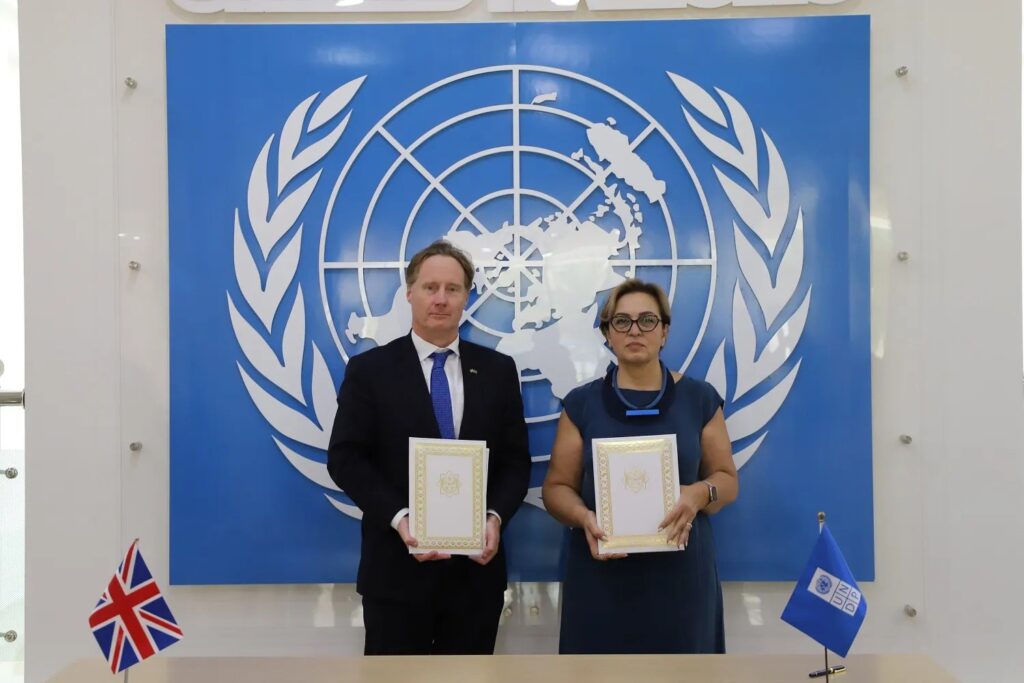
A new project developed by the United Nations Development Program (UNDP) in cooperation with the British Embassy has been launched in Turkmenistan to support the country's economic diversification and empowerment of women and youth. The project aims to stimulate sustainable economic growth and increase Turkmenistan's global competitiveness by developing a creative and innovative economy. Narine Sahakyan, UNDP Resident Representative in Turkmenistan, emphasized the importance of unlocking the creative sector's potential to achieve economic prosperity. She said stimulating entrepreneurship and innovation will open new economic diversification and growth opportunities. British Ambassador to Turkmenistan, Stephen Conlon also spoke about the importance of the creative economy, noting the UK's experience in this area. Conlon stated that the creative sector contributes to economic growth, strengthens national identity, and supports local communities, especially in rural areas. Within the project framework, the UNDP plans to launch recommendations for the development of the creative economy and support for entrepreneurship and innovation. One of the key events will be a forum on the creative economy, which will bring together representatives of the government, international organizations, and businesses. The forum will be a platform within which to share experiences and discuss legislative measures to support the creative sector. The United Nations Development Program (UNDP) is actively cooperating with Turkmenistan on various projects aimed at sustainable development. One of the key projects deals with managing the consequences of the Aral Sea crisis. Together with the Government of Turkmenistan, the UNDP is implementing a project aimed at preserving ecosystems in the Aral Sea basin, improving the use of land and water resources, and increasing the sustainability of local communities. Another important project is Digital Transformation, which aims to help Turkmenistan implement advanced inter-agency data exchange systems to improve the efficiency of public services.

Air Pollution Linked to One in Five Infant Deaths in Central Asia

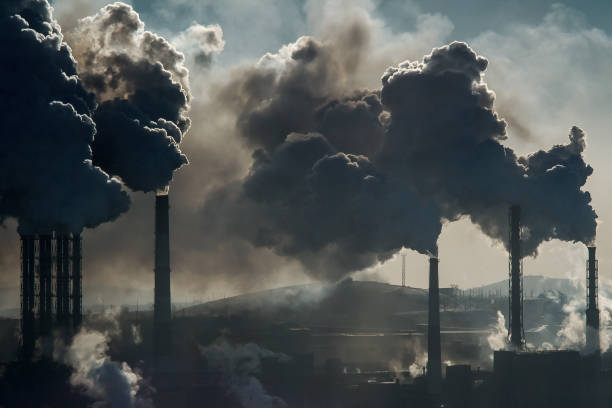
According to a report  by UNICEF, an estimated 6,441 children and teenagers died from causes attributable to air pollution in 23 countries across Europe and Central Asia in 2021. Statistics show that 85% of the children died in the first year of their lives, and one in five infant deaths were linked to air pollution. As stated in the report, “Most deaths were attributed to ambient and household fine particulate matter air pollution (PM2.5). And all of these deaths were preventable." In 2021, the region's children and teenagers lost more than 580,000 years of healthy life (DALYs) as a result of premature death and disability caused by air pollution. Compared to other environmental factors, including high temperatures, unsafe water, and poor sanitation,  polluted air has been found, by far, the most life-threatening. Exposure to PM2.5 air pollution is also associated with higher rates of miscarriage, early fetal loss, preterm birth, and low birth weight and in pregnant women, increases the risk of gestational diabetes, high blood pressure, and postpartum depression. By restricting fetal growth, air pollution can significantly increase the risk of disease, heart defects, pneumonia, asthma, eczema, allergies, and high blood pressure.   Even before birth, air pollution can harms a child’s lungs, brain, and organs, affecting cognitive development and raising the risk of respiratory diseases throughout the child's life. Since children breathe more air relative to their body weight, they absorb more pollutants than adults, and for this reason, newborns are especially vulnerable to pneumonia, a leading cause of infant death. Air pollution in Europe and Central Asia, especially from PM2.5 and PM10 particles, is mainly caused by the use of fossil fuels in homes, businesses, and institutions. Coal is especially harmful to children’s health. Energy sources vary between and within countries depending on power supplies and infrastructure. High levels of air pollution from the use of coal for residential heating in winter, coupled with the interaction of ambient air pollution with indoor air pollution in homes, schools, health care facilities, etc., are cited by UNICEF as the primary sources of exposure for children. UNICEF notes the importance of the region's governments and institutions focusing more attention and resources to air pollution prevention, energy efficiency, clean energy use, supporting clean air measures, and protecting children from exposure. The organization also emphasizes the need to develop air quality warning systems and corresponding action plans for schools and kindergartens in Europe and Central Asia. Last but not least, as a measure to improve air quality, UNICEF recommends enhancing data collection to better understand local pollution, campaigns promoting clean energy and energy efficiency in homes, and a strict smoking bans in indoor public spaces. High levels of air pollution observed in Central Asian countries is ongoing and the subject of several articles previously covered by The Times of Central Asia.

Ecological Limit: Five Year Countdown to Water Scarcity in Central Asia

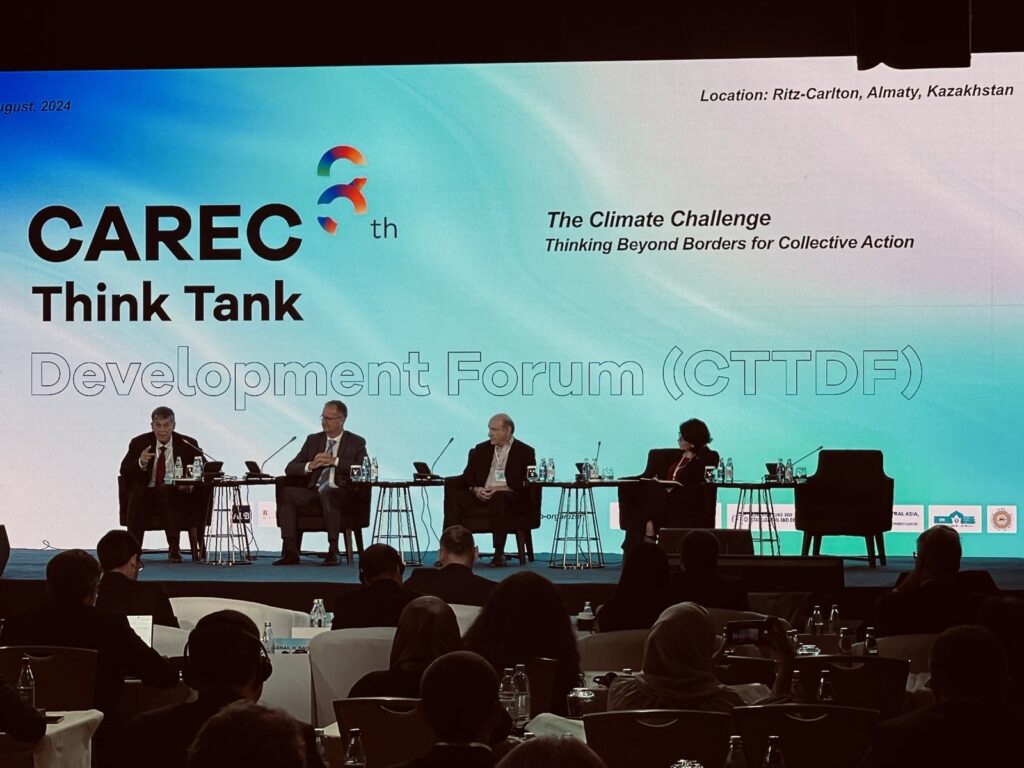
Combating climate change requires collective action by all or a sufficient majority of the world's players supporting global initiatives. Otherwise, it may soon be too late to take any action. To address the issue, the Eurasian Development Bank, the CAREC Think Tank, and the Asian Development Bank organized a two-day forum entitled “The Climate Challenge: Thinking Beyond Borders for Collective Action,” in Almaty, Kazakhstan. Focusing on means of achieving genuine regional cooperation on Asian climate action, the eighth CAREC Think Tank Development Forum was attended by policymakers, experts, and opinion leaders from more than 30 countries. The extensive two-day dialog, consisting of eight sessions, opened with a discussion on the effectiveness of current global initiatives related to climate change: the Paris Agreement, the Global Environment Facility, and the Green Climate Fund. Attention then turned to deepening cooperation among as many stakeholders as possible through multilateral platforms such as the UN Framework Convention on Climate Change. Asia's role in the global fight against climate change, and the difficult balancing act between economic growth and decarbonization efforts were discussed at length. Simply put, the rapid growth of the Asian economy is inevitably accompanied by an increasing consumption of energy, the generation of which leads to increased emissions and pollution. Climate damage due to human impact can be halted and even reversed. However, because this can only be achieved with technological intervention, it poses problems for developing economies unable to afford advanced technologies. Hence, establishing a framework and mechanisms for global technology transfer were key to discussions. Water and finance were also high on the agenda and the subject of a paper presented by Arman Ahunbaev, Head of the Center for Infrastructure and Industrial Research of the Eurasian Development Bank on “Ways to close the investment gap in the drinking water supply and wastewater sector in Central Asia." Ahunbaev reported that 10 million people, or 14% of the population in Central Asia, do not have access to safe drinking water and warned that without intervention, the situation would reach the point of no return in the coming years. To prevent this from happening, he stressed the urgent need for solutions to four problems. The first problem is a twofold increase in the volume of water intake for municipal and domestic needs, based on past figures which showed a growth from 4.2 cubic kilometers in 1994 to 8.6 cubic kilometers in 2020. The second problem is the severe deterioration of water supply infrastructure and treatment equipment, and the third, technological and commercial water losses in distribution networks. The fourth problem is related to the demographic boom and, consequently, the rapid urbanization of Central Asia's population. Cities are expanding and  their infrastructure needs to develop accordingly. According to experts, in 2023, urbanization in Central Asian countries will reach 49%, and by 2050, 61%. By 2030, the urban population will exceed that in rural areas. Ahunbaev noted the need for improvement in financing the water supply and sanitation sector in Central Asia since according to rough...

Countries of Central Asia Team up as Threat of Natural Disasters Grows

Central Asia is vulnerable to a panoply of natural hazards: Floods, landslides, droughts, sandstorms, avalanches and earthquakes. Countries in the region increasingly seek to collaborate on early warning systems and other emergency precautions, especially since disasters can spill across borders and because the effects of climate change are intensifying. To that end, the heads of the national emergency departments of Kyrgyzstan, Kazakhstan, Tajikistan and Uzbekistan met last week in Cholpon-Ata, a lakeside resort town in northern Kyrgyzstan whose attractions include ancient petroglyphs showing deer, leopards and hunting scenes. Turkmenistan´s flag – green expanse, red stripe with designs and white crescent and stars - was on display in the conference hall, though official announcements did not mention the presence of any delegation from the reclusive Turkmen government. The goal was to share information and experience, and deepen cooperation among the emergency agencies of those Central Asian countries, said Maj. Gen. Boobek Azhikeev, Kyrgyzstan’s minister of emergency situations. The five nations, which have a total of approximately 75 million people and encompass four million square kilometers, face growing risks from natural disasters, and the region has been warming faster than the global average according to a report released in May by the U.N. agency for the coordination of disaster risk reduction and the U.N. Development Programme. The two U.N. bodies, which helped to support the Central Asia meeting on the shores of Kyrgyzstan’s Lake Issyk-Kul on Aug. 15, also mentioned human-made hazards, such as industrial accidents, chemical waste facilities in densely populated areas, and severe air pollution in major cities in all the countries. “Many disaster risk management systems are still reactive, not proactive. Early warning processes are often fragmented, and poorly integrated into countries' development strategies and policies for risk-informed decision-making,” the U.N. agencies said. “There is a lack of anticipation of new and emerging risks, insufficient monitoring and forecasting, and limited financial and technological support. Early warning communication and dissemination are often unclear, especially for the most vulnerable.” The private sector and media can also get more involved in ways of reducing the risk from disasters, they said. The U.N. agencies also noted progress, saying Tajikistan had taken the lead in Central Asia in rolling out an early warning system focused on monitoring, forecasting, communication and other measures. Earlier this month TCA reported that the head of Tajikistan’s committee for emergency situations and civil defense, Rustam Nazarzada, stated that the economic damage caused by natural disasters in the country has amounted to over $12 million in this year alone. Additionally, Uzbekistan is updating an early warning system in the populous, economically important Ferghana valley that will promptly disseminate weather forecasts. Central Asian countries have sought to coordinate on environmental issues in the past, sometimes with mixed results. But the sense of urgency is growing. Earlier this year, Kyrgyzstan was among countries that sent aid to Kazakhstan after floods there that the Kazakh president described as the worst natural disaster in 80 years. Kazakhstan, in turn, sent tons of humanitarian aid to Kyrgyzstan after...