• KGS/USD = 0.01144 0%
  • KZT/USD = 0.00208 0%
  • TJS/USD = 0.10458 -0.1%
  • UZS/USD = 0.00008 0%
  • TMT/USD = 0.28490 0%
  • KGS/USD = 0.01144 0%
  • KZT/USD = 0.00208 0%
  • TJS/USD = 0.10458 -0.1%
  • UZS/USD = 0.00008 0%
  • TMT/USD = 0.28490 0%
  • KGS/USD = 0.01144 0%
  • KZT/USD = 0.00208 0%
  • TJS/USD = 0.10458 -0.1%
  • UZS/USD = 0.00008 0%
  • TMT/USD = 0.28490 0%
  • KGS/USD = 0.01144 0%
  • KZT/USD = 0.00208 0%
  • TJS/USD = 0.10458 -0.1%
  • UZS/USD = 0.00008 0%
  • TMT/USD = 0.28490 0%
  • KGS/USD = 0.01144 0%
  • KZT/USD = 0.00208 0%
  • TJS/USD = 0.10458 -0.1%
  • UZS/USD = 0.00008 0%
  • TMT/USD = 0.28490 0%
  • KGS/USD = 0.01144 0%
  • KZT/USD = 0.00208 0%
  • TJS/USD = 0.10458 -0.1%
  • UZS/USD = 0.00008 0%
  • TMT/USD = 0.28490 0%
  • KGS/USD = 0.01144 0%
  • KZT/USD = 0.00208 0%
  • TJS/USD = 0.10458 -0.1%
  • UZS/USD = 0.00008 0%
  • TMT/USD = 0.28490 0%
  • KGS/USD = 0.01144 0%
  • KZT/USD = 0.00208 0%
  • TJS/USD = 0.10458 -0.1%
  • UZS/USD = 0.00008 0%
  • TMT/USD = 0.28490 0%

Viewing results 55 - 60 of 310

Mirziyoyev and Berdymuhamedov Agree on New Projects as Trade Tops $1 Billion

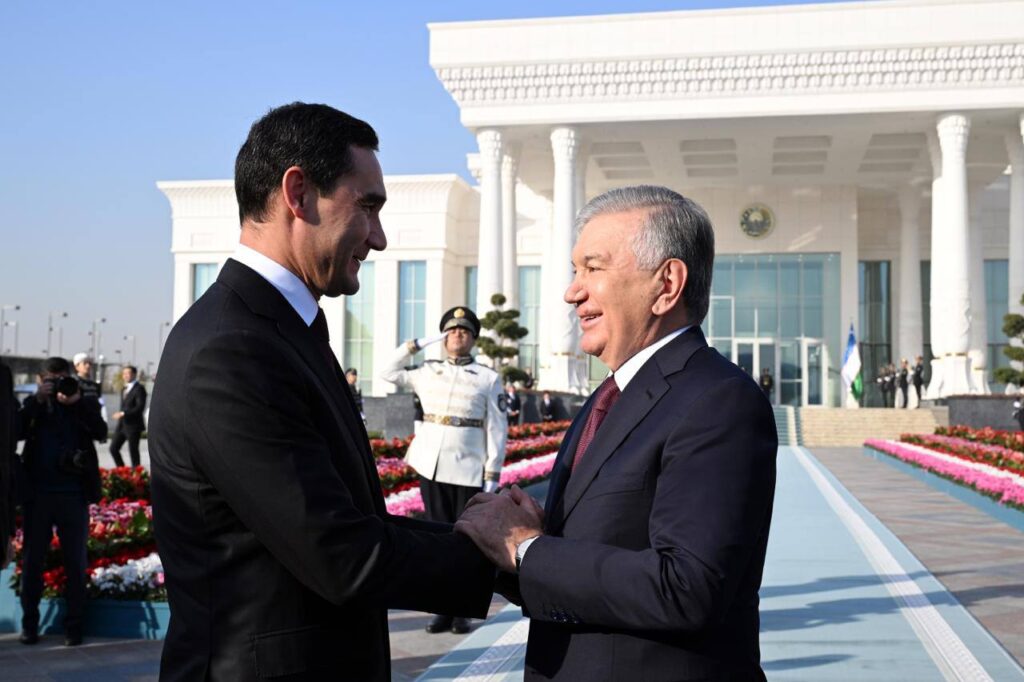
Uzbekistan and Turkmenistan have agreed to deepen political, economic, and humanitarian cooperation following President Serdar Berdymuhamedov’s state visit to Tashkent, where he held talks with President Shavkat Mirziyoyev on November 17. The summit began in a narrow format at the Kuksaroy Residence, where both leaders emphasized the significance of the visit in strengthening the growing strategic partnership. They noted the increasing dialogue across various sectors and highlighted recent cultural initiatives, including the Days of Turkmen Culture and Cinema held in Urgench and Tashkent. Bilateral trade continues to grow, having surpassed $1 billion last year, supported by rising freight flows through the Turkmenbashi port. The presidents explored new opportunities to boost mutual trade and deepen cooperation in industry, energy, transport, mechanical engineering, agriculture, and water management. They also agreed to expand interregional collaboration and to convene the next Forum of Regions in Khiva. Talks then continued in an expanded format with the participation of both delegations. Mirziyoyev stated that the visit reflects the “centuries-old ties of friendship and good neighborliness,” and he praised Turkmenistan’s progress under the leadership of Gurbanguly Berdymuhamedov, Chairman of the Halk Maslahaty. The two sides agreed to work toward increasing trade to $2 billion by expanding the range of goods and more effectively utilizing the free trade regime. They noted that the newly launched Shavat-Dashoguz cross-border trade zone would play a key role in achieving this target and agreed to replicate the model in other regions, starting with the Alat-Farab corridor. Industrial cooperation is set to expand, with both sides encouraging businesses to launch joint projects in sectors such as building materials, pharmaceuticals, and food production. In the energy sector, the two countries plan to embark on larger-scale cooperative projects, including the development of promising natural resource deposits. Transport cooperation will also deepen through joint development of the Turkmenbashi port and the resumption of direct flights between Tashkent and Ashgabat. The presidents instructed their governments to ensure timely implementation of all agreements by holding regular meetings of the Intergovernmental Commission and the Business Council. They also committed to intensifying collaboration in culture, education, youth exchanges, filmmaking, healthcare, and medical science. Following the talks, the leaders jointly inaugurated the Shavat-Dashoguz trade zone, which includes customs, quarantine, and veterinary services, as well as warehouse facilities, a trade pavilion, and public services operating under a single-window system. The zone is expected to significantly boost economic ties between Uzbekistan’s Khorezm region and Turkmenistan’s Dashoguz region, which together are home to more than 3.5 million people. At a ceremony held at Kuksaroy, Berdymuhamedov was awarded the “Oliy Darajali Dustlik” Order, Uzbekistan’s highest state honor. Mirziyoyev said the award reflects Turkmenistan’s contributions to strengthening friendship, trust, and strategic partnership. Berdymuhamedov expressed his gratitude and reaffirmed his commitment to enhancing bilateral relations. The two sides signed a Joint Statement and oversaw the exchange of intergovernmental and interagency agreements covering trade, healthcare, agriculture, transport, biological safety, justice, forestry, and regional cooperation. The Uzbekistan-Turkmenistan summit concluded the same day. As part of his visit, Berdymuhamedov also...
Central Asia Confirms Joint Water Plan for Shardara Reservoir Ahead of 2025-2026 Season

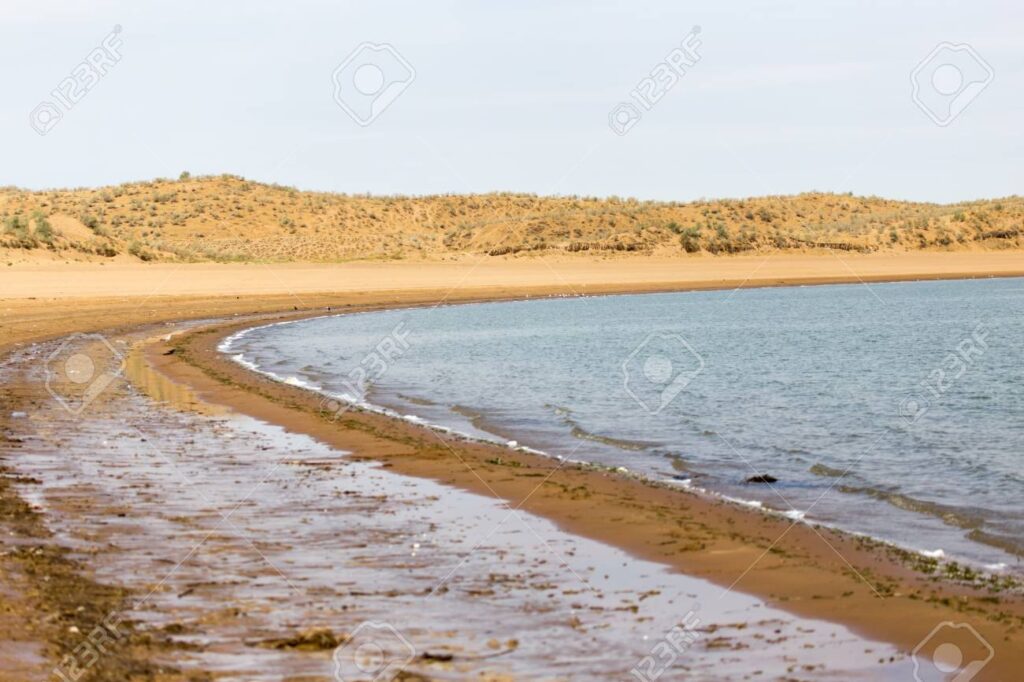
Central Asian nations have reached a consensus on projected water inflow volumes to the Shardara Reservoir for the upcoming non-vegetation period, according to Kazakhstan’s Ministry of Water Resources and Irrigation. The agreement was finalized during a regional meeting attended by senior officials: Durdy Gendjiev, Chair of Turkmenistan’s State Committee for Water Management; Nurzhan Nurzhigitov, Kazakhstan’s Minister of Water Resources and Irrigation; Shavkat Hamraev, Uzbekistan’s Minister of Water Management; and Jamshed Shodi Shoimzoda, First Deputy Minister of Energy and Water Resources of Tajikistan. Emil Shodikhanov, an adviser at the Kyrgyz Embassy in Turkmenistan, participated as an observer. Participants reviewed outcomes from the 2025 irrigation season and approved the operational forecast for the Naryn-Syr Darya reservoir cascade for the 2025-2026 non-vegetation period. A consensus was reached on expected inflow volumes to Shardara Reservoir, which is a critical node in the region’s transboundary water system. The meeting also included discussions on progress in implementing the commitments made during recent summits of the founding states of the International Fund for Saving the Aral Sea. The 92nd session of the Interstate Commission for Water Coordination (ICWC) is scheduled to take place next year in Tajikistan. “Last irrigation season took place under difficult climate conditions. However, coordinated cooperation among the ICWC member states made it possible to ensure stability throughout the vegetation period,” said Nurzhigitov. “Through such meetings, we reach common agreements and lay the foundation for future cooperation. Together with our colleagues in Central Asia, we aim for a fair distribution of transboundary water resources that considers the interests of all parties.” This agreement follows the 16 November regional summit chaired by Uzbek President Shavkat Mirziyoyev, during which Central Asian leaders discussed enhancing regional cooperation and accelerating joint infrastructure projects. The summit focused on escalating ecological and water challenges, and leaders stressed the need to adopt a “green development” framework for the region. They also proposed declaring 2026-2036 as the “Decade of Practical Action for the Rational Use of Water in Central Asia.”

Afghanistan Seeks Alternatives to Pakistan Trade; Fallout Likely for Central Asia

Afghanistan must look for “alternative trade routes” that bypass neighboring Pakistan, a senior Afghan official said Wednesday. The remarks reflect deepening tension after border clashes between the two countries and are a blow to some ambitious trade projects that would link South Asia and Central Asia. At the same time, the development could mean that Afghanistan will increasingly look to Central Asia for trade links as it cuts off business with Pakistan. “All Afghan traders and industrialists should turn to alternative trade routes instead of Pakistan,” said Abdul Ghani Baradar, Afghanistan’s deputy prime minister for economic affairs. “These routes have not only harmed our traders but have also caused difficulties for markets and the general public. I strongly urge all traders to implement alternative options for imports and exports as soon as possible.” Baradar also criticized what he called the poor quality of medicine being imported from Pakistan and said medicine importers have three months to close accounts there. He said that if Pakistan wants to reopen trade routes with Afghanistan, it must provide solid guarantees that they won’t be closed again. Pakistan has said it needs security guarantees to normalize trade. The minister’s comments were reported by TOLOnews, a Kabul-based outlet, as well as other regional media organizations. Afghanistan and Pakistan share a 2,600-kilometer border and trade was severely disrupted after clashes between the two sides last month. Pakistan accuses Afghanistan of providing sanctuary to militants who carry out attacks against Pakistani security forces, an allegation that the ruling Taliban in Afghanistan denies. Several big Central Asia-South Asia projects would require close collaboration between Afghanistan and Pakistan. They are the Trans-Afghan Railway, the TAPI natural gas pipeline and the CASA-1000 electricity project. Three Central Asian countries – Uzbekistan, Turkmenistan and Tajikistan – have borders with Afghanistan and share ethnic ties with minority populations there. In late October, the city of Shymkent in southern Kazakhstan, near the border with Uzbekistan, hosted a forum during which Afghan and Kazakh officials and business leaders discussed expanding trade. Deals worth several hundred million dollars were announced.

First Russian Freight Train Reaches Iran via Kazakhstan and Turkmenistan

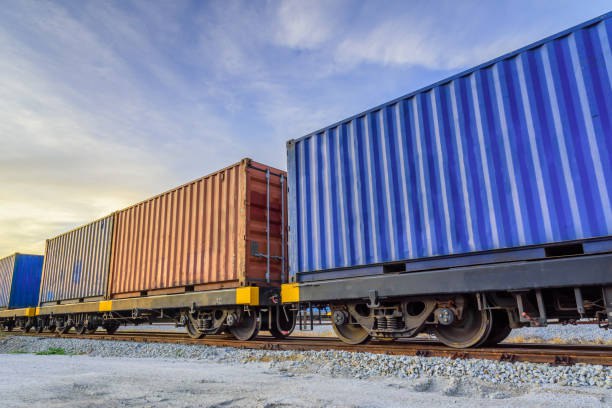
A Russian freight train has arrived at the Aprin dry port near Tehran after transiting through Kazakhstan and Turkmenistan, Iran’s ISNA news agency reported on November 8. The train carried 62 forty-foot containers loaded with paper, cellulose, and other paper products, according to Iranian officials. The cargo is destined for various regions in Iran and Iraq. The train crossed the Turkmenistan-Iran border at Incheh-Borun and reached Tehran in 12 days, marking a new phase in regional transit cooperation. Morteza Jafari, Deputy Director of Iranian Railways, said the arrival of the first Russian freight train is expected to enhance trade ties between Russia and Iran and lay the groundwork for regular rail services linking the two countries with Central Asia. He noted that Iran currently anticipates receiving one Russian container train every ten days, with plans to increase the frequency. Jafari emphasized Iran’s broader goal of becoming a regional hub for exports, imports, and transit by expanding coordination with neighboring and CIS countries. The new route underscores growing interest in enhancing rail connectivity across the Caspian region, where Iran is positioning itself as a key transit corridor. In August, Turkmenistan and Iran agreed to construct two additional railway lines at the Sarakhs border crossing to increase freight capacity. The decision followed discussions between Iranian Railways head Jabbar Ali Zakeri and Turkmenistan’s Minister of Railways Mammet Akmammedov during the UN Conference on Landlocked Developing Countries. Officials in both countries have stressed that expanded rail infrastructure will support faster, more reliable cargo movement across Central Asia and help integrate regional markets.

Washington Shifts C5+1 From Diplomacy to Deals

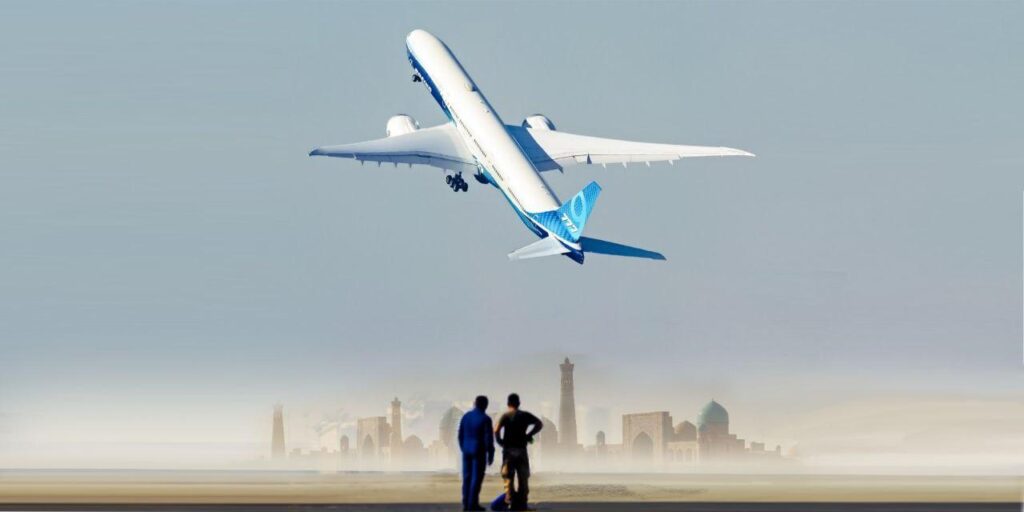
On November 6, 2025, Washington hosted the C5+1 summit, bringing U.S. President Donald Trump together with the leaders of Kazakhstan, Kyrgyzstan, Tajikistan, Turkmenistan, and Uzbekistan. The tone shifted from broad diplomacy to deliverable transactions, with officials emphasizing cooperation on critical raw materials. The timing signified a broader shift in supply chains away from China and Russia, and the discussion moved from general diplomacy to transactions that can be tracked and delivered. The private-sector track also accelerated. The B5+1 (“B” for “business”) platform is meant to carry follow-through on minerals, processing, logistics, and services. It complements state-to-state commitments by putting contract-ready work streams and policy dialogue in the same frame. Verification is simple: match U.S. and host-government readouts with company filings and ministry communiqués issued after the summit. Subsequent notices should specify instruments, values, financing, timelines, and the units responsible. What Was Signed Versus What Was Signaled The summit mixed firm orders with preliminary commitments. Uzbekistan Airways converted eight options for the Boeing 787-9 (covered by FAA Type Certificate Data Sheet T00021SE) into a firm order, bringing its total to twenty-two Dreamliners. That flows into the manufacturer’s backlog and starts financing and ground-side preparation. Tajikistan’s Somon Air announced up to four 787-9s and ten 737 MAX; that signals intent, with binding contracts and financing to follow. Engine families for the 787-9 are Rolls-Royce Trent 1000 TEN and GE Genx-1B, setting maintenance and training paths. Air Astana said it had selected up to fifteen 787-9s. Slot allocation and financing are next, along with sale-and-leaseback or operating-lease decisions. A parallel commercial package aimed to show that U.S.–Central Asia ties can move on a near-term clock, framed publicly through the Department of Commerce’s announced “C5+1 Deal Zone,” earmarked at “over $25 billion.” Rare earths and related inputs sat at the center of the talks. Aviation and other signings were presented as tangible outcomes. The substance rests with the underlying company agreements and national approvals, although the packaging usefully aggregates a single narrative for public consumption. Minerals were cast as the strategic core, even though many projects remain in the early stages. Public readouts emphasized supply-chain resilience and competition with China and Russia. For shipments into the European Union, the bottleneck remains the processing limits set by the EU Critical Raw Materials Act. Customs classification uses the Harmonized System (HS), a universal tariff code maintained by the World Customs Organization (WCO): tungsten falls under HS 8101, while rare-earth metals and their compounds are under HS 2805 and HS 2846. Bankability likewise depends on recognized industry disclosure rules for reporting mineral resources, which require standardized geology, sampling, and reserve estimates before serious financing proceeds. Wire services likewise underscored rare earths and closer cooperation along the value chain. Country Outcomes Kazakhstan. The most tangible non-aviation item was a tungsten venture at Northern Katpar and Upper Kairakty, with an indicated project scope of around $1.1 billion. A Letter of Interest (LOI) from the U.S. Export–Import Bank (EXIM) suggests a figure near $900 million on a 70/30 structure with...

C5+1: Diplomats and Executives Define Investment Path

Before the historic White House meetings on November 6 between President Trump and the five Central Asian presidents, U.S. and regional diplomats and business leaders met at the Kennedy Center on the occasion of the C5+1 Business Forum, hosted by the U.S. Department of State, to launch a new chapter of cooperation, with a focus on strengthening commercial and investment ties in energy, finance, and manufacturing. Deputy Secretary of State Christopher Landau, who moderated the panel discussion, said economic engagement is returning to the center of U.S. foreign policy. “The purpose of foreign policy is to increase the prosperity of the American people by finding opportunities for mutually beneficial economic and commercial interchange,” he said. Executives from Chevron, Citi, Freedom Holding, and Uzbekistan’s UzAvtosanoat described how decades of partnership  had demonstrated the wisdom of making strategic investments in the region. These partnerships continue to reshape  the economic and financial landscape for the better.  Participants highlighted Central Asia’s economic stability, solid reserves, and consistent policies, and were confident in faster growth to be driven by increased capital flows and by regional projects like Kazakhstan’s Tengiz oil expansion. Both sides promised to translate diplomacy into dealmaking. Landau further noted that under President Trump and Secretary of State Marco Rubio, the State Department has elevated commercial diplomacy to a core mission. He stressed that mutual respect, win-win agreements, and consistent engagement are key to driving results. Central Asians have waited decades for this: action, not talk. Two-way trade and investment are now front and center. Chevron Points to Long-Term Energy Investment Chevron Corp. Chief Executive Mike Wirth said the company’s 30-year presence in Kazakhstan remains one of its largest international operations. Chevron was the first major U.S. investor to enter the country after independence and is now the biggest foreign investor. The US$ 48 billion Future Growth Project at Kazakhstan’s Tengiz oilfield, co-managed by Chevron and 50%-partner Tengizchevroil LLP, is up and running with expansion underway. “Our history is really founded on relationships and trust,” Wirth said. “The most enduring aspect of it (our work) is the respect and love that our American employees have for the culture and people of Kazakhstan.” He said more than 500 Kazakh employees have trained in Chevron operations worldwide, many of whom now hold senior roles in government and industry. Citi Expands Access to Global Capital Citi’s Managing Director Stephanie von Friedeburg outlined the bank’s activities in Central Asia, where it began operations more than three decades ago. Citi now serves about 800 corporate clients across the region, supporting private companies, governments and state-owned enterprises with strategic planning, capital issuance, and risk management services. The bank has arranged Eurobond sales for the Kyrgyz Republic and Tajikistan and handled more than US$40 billion in fundraising for Kazakhstan since 2014. In Uzbekistan, Citi has supported 19 capital-market transactions and advised the government on improving its credit rating. “We help countries understand how rating agencies look at them (and) how to improve their ratings,” von Friedeburg said. “That allows them...