• KGS/USD = 0.01144 0%
  • KZT/USD = 0.00205 0%
  • TJS/USD = 0.10429 0.29%
  • UZS/USD = 0.00008 0%
  • TMT/USD = 0.28571 0.28%
  • KGS/USD = 0.01144 0%
  • KZT/USD = 0.00205 0%
  • TJS/USD = 0.10429 0.29%
  • UZS/USD = 0.00008 0%
  • TMT/USD = 0.28571 0.28%
  • KGS/USD = 0.01144 0%
  • KZT/USD = 0.00205 0%
  • TJS/USD = 0.10429 0.29%
  • UZS/USD = 0.00008 0%
  • TMT/USD = 0.28571 0.28%
  • KGS/USD = 0.01144 0%
  • KZT/USD = 0.00205 0%
  • TJS/USD = 0.10429 0.29%
  • UZS/USD = 0.00008 0%
  • TMT/USD = 0.28571 0.28%
  • KGS/USD = 0.01144 0%
  • KZT/USD = 0.00205 0%
  • TJS/USD = 0.10429 0.29%
  • UZS/USD = 0.00008 0%
  • TMT/USD = 0.28571 0.28%
  • KGS/USD = 0.01144 0%
  • KZT/USD = 0.00205 0%
  • TJS/USD = 0.10429 0.29%
  • UZS/USD = 0.00008 0%
  • TMT/USD = 0.28571 0.28%
  • KGS/USD = 0.01144 0%
  • KZT/USD = 0.00205 0%
  • TJS/USD = 0.10429 0.29%
  • UZS/USD = 0.00008 0%
  • TMT/USD = 0.28571 0.28%
  • KGS/USD = 0.01144 0%
  • KZT/USD = 0.00205 0%
  • TJS/USD = 0.10429 0.29%
  • UZS/USD = 0.00008 0%
  • TMT/USD = 0.28571 0.28%

Viewing results 133 - 138 of 534

Despite Ceasefire India-Pakistan Conflict Sends Ripples Through Central Asia

Despite a recent ceasefire agreement between India and Pakistan, renewed hostilities remain a looming threat. The latest clashes between the two nuclear-armed neighbors have direct and potentially lasting repercussions for Central Asia’s political stability and economic development. Ceasefire Amid Escalation Armed conflict erupted on May 7, when New Delhi launched “Operation Sindoor,” targeting what it described as terrorist infrastructure within Pakistan. The move followed a deadly terrorist attack on April 22 in Pahalgam, Jammu and Kashmir, which killed 26 people. India accused Pakistan of complicity, a charge Islamabad rejected, condemning the airstrikes as an “act of war.” Full-scale hostilities ensued for several days, raising alarms across the broader region. By May 11, a ceasefire was brokered, though both sides warned that fighting could resume if provoked. Given the eight-decade-long volatility along their shared border, the risk of future escalations remains significant. Whilst Pakistan credited the U.S. for facilitating the ceasefire, specifically highlighting Senator Rubio and what it described as direct intervention by President Trump, India maintained that the agreement was a result of direct communication between the Directors General of Military Operations (DGMOs). In a formal televised address, Foreign Secretary Vikram Misri emphasized that the ceasefire was a "bilateral" decision reached via military hotlines, omitting any mention of Trump or Rubio. “Both sides agreed to cease all firing and military actions on land,” Misri stated firmly, reiterating India’s stance that no third party played a role in its interactions with Pakistan. Disruption to Tourism Flows One immediate economic impact of the conflict has been felt in Central Asia’s tourism sector. In recent years, Kazakhstan, especially Almaty, has become an increasingly popular destination for Indian travelers, aided by a visa-free regime that permits 14-day stays. The country also hosts large numbers of Indian and Pakistani students, along with medical tourists and business travelers. Many Indian visitors rely on budget carriers such as IndiGo, which previously operated routes from Delhi to Almaty and Tashkent using airspace over Pakistan. The closure of this airspace led to increased costs and logistical complications. IndiGo suspended flights to both cities on April 27 and 28, respectively. Should hostilities resume, these suspensions could be extended, potentially setting back Central Asia’s still-fragile tourism recovery. Infrastructure and Trade at Risk The geopolitical instability also jeopardizes key infrastructure projects and trade routes. Kazakhstan and Uzbekistan have both enhanced connectivity with Pakistan through distinct strategies, with Kazakhstan integrating into multilateral frameworks like the Middle Corridor and QTTA, and Uzbekistan focusing on tactical bilateral projects such as the Termez–Karachi transport corridor and Trans-Afghan Railway. Both countries aim to reduce their reliance on Russian-controlled routes while leveraging Pakistan’s ports to boost regional trade. Political analyst Zhanat Momynkulov warns that the conflict could disrupt supply chains and raise the cost of goods across South and Central Asia. The rerouting of flights due to Pakistani airspace closures is already affecting logistics and regional connectivity. Kazakhstan, a central player in both the Shanghai Cooperation Organization and the Belt and Road Initiative (BRI), is particularly vulnerable. Projects...
L’Étranger: Paris Hosts the Reclusive Leader of Turkmenistan

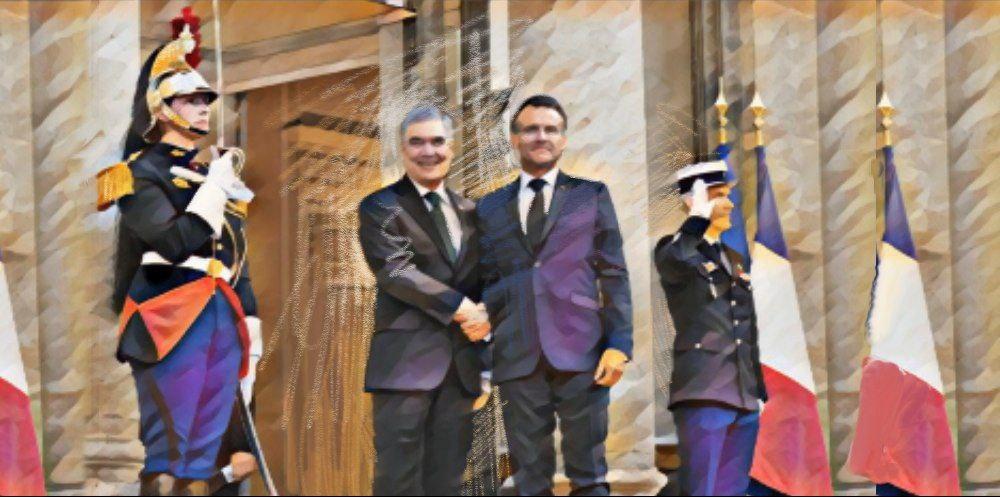
Gurbanguly Berdimuhamedov, Turkmenistan’s longtime ruler, no longer holds the title of president; that has been passed, along with much of the public burden, to his son. He now reigns from the shadows as Hero-Arkadag (“Hero-Protector”), but he retains the ability to open doors. Nearly 14 years after his last official visit, Berdimuhamedov landed at Paris’ Orly airport last Monday. He was in France ostensibly to attend the Franco-Turkmen Economic Forum, but the visit also saw him ushered into the Élysée Palace for an audience with President Emmanuel Macron. Characteristically, his presence in Paris was kept quiet, receiving very little coverage even in the French media. “It was much less discussed than the near-concurrent visit of the Syrian leader, Ahmed Al-Charaa,” Michaël Levystone, co-founder of l'Observatoire de la Nouvelle Eurasie, a Paris think tank told The Times of Central Asia. “You have to understand that Turkmenistan is a country that is virtually unknown to the general public in France – and for good reason: it goes out of its way to remain extremely discreet!” Nevertheless, the visit marks a rare moment of high-level Western diplomacy with one of the world’s most opaque regimes, as well as an extremely uncommon public diplomatic appearance from Berdimuhamedov Senior since ceding formal power in 2022. The questions are why France? And why now? What Was Discussed The two readouts of the encounter were notably different. The Élysée offered a terse summary on its website, noting vaguely that the meeting “provided an opportunity to review the bilateral relationship between Turkmenistan and France as well as regional issues.” Macron then followed this up with an equally laconic post on X, noting that the two had “signed several agreements between Turkmenistan and France in the areas of energy transition, infrastructure, education, and culture. They demonstrate the strengthening of our cooperation. We also took stock of major regional and international crises, including Russia's war of aggression against Ukraine and the situation in the Middle East.” On the other hand, the state-run news service Turkmenistan Today provided what can only be described as a detailed travelogue, noting the many dignitaries who had the pleasure of meeting the Hero-Arkadag on his whistle-stop tour of the City of Lights. According to the Turkmens, the visit yielded a flurry of agreements. A memorandum of understanding was inked between state-owned Türkmengaz and French tech firm Kayrros SAS, while France’s Thales Alenia Space Group signed a framework deal to provide Ashgabat with a second communications satellite. There were further promises of joint work on green energy, education, and archaeological research. A Foot in the Door One French company in particular is responsible for much of the engagement between the two countries. As part of his trip to Paris, Berdimuhamedov met with construction magnate Martin Bouygues, CEO of the firm that bears his family’s name. [caption id="attachment_31644" align="aligncenter" width="2560"] The Presidential Palace and ministries complex, built by the French company Bouygues; image: TCA, Stephen M. Bland[/caption] “Bouygues has built numerous monumental buildings in Ashgabat since Turkmenistan's independence,” Levystone told...

Victory Day Diplomacy: Central Asia’s Balancing Act and Putin’s Diminished Spotlight

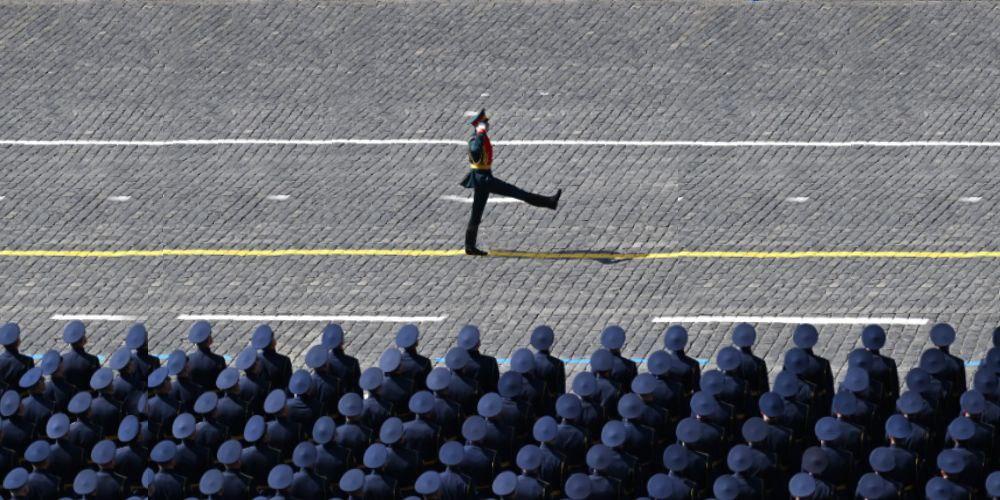
Every year, Moscow’s Red Square transforms into a stage for one of Russia's most celebrated traditions: Victory Day, an event which marks the Soviet Union’s triumph over Nazi Germany in World War II. Yet, as tanks roll through the cobblestone streets and military bands echo under the Kremlin walls, the occasion feels more heavily laden with geopolitical undertones than historical reminiscence these days. Against the backdrop of ongoing conflicts and shifting alliances, the presence of Central Asian leaders at this year’s event speaks to the region’s delicate relationship with the Russian Federation. But the question remains: amidst the pomp and circumstance, is there much for Vladimir Putin to celebrate? Central Asia’s Careful Balancing Act The attendance of Central Asian leaders at the Victory Day parade is a striking show of diplomatic choreography. On the surface, their presence will underscore the shared historical legacy of the Soviet era, when the sacrifices of the Central Asian republics contributed to the Allied victory in the Second World War. However, a more pragmatic lens reveals a balancing act that defines the region’s foreign policy. The region finds itself at the crossroads of global powers vying for influence in Central Asia. While Moscow leans on historical ties and cultural commonalities to retain its sway, Beijing’s economic clout continues to reshape the region’s trade networks and infrastructure projects. Meanwhile, as the inaugural EU-Central Asia Summit attests to, the European Union is eager to expand its reach, whilst hungry for Rare Earth Elements in which the region is rich, the U.S. is waiting in the wings. For Central Asian leaders, participating in Victory Day celebrations signals a nod to Russia’s historic role but also keeps the door open for economic and security cooperation. Amidst the shifting architecture of global politics, their diplomatic strategy remains one of pragmatism, seeking benefits from multiple partners while avoiding any over-alignment. What Does Russia Gain from the Optics? The presence of 29 leaders from across the globe – including Chinese President Xi Jinping - offers Moscow valuable optics at a time when its international relationships face significant strain. Last year, only nine attended. Isolated by Western sanctions over the invasion of Ukraine and with much of the world’s media painting Russia as cut off from the global stage, the impression of a united front with Central Asia helps the Kremlin portray the opposite. Victory Day, therefore, becomes a geopolitical tool, with the attendance of Central Asian leaders enabling Putin to send a message of shared unity within Russia’s historical sphere of influence. It tells both domestic and international audiences that Moscow retains significant allies, reinforcing the image of resilience despite ongoing challenges. How Much Does Moscow Truly Celebrate? The Victory Day parade is an event that is watched by an estimated three-quarters of the Russian public, drumming up patriotism as the state seeks to become the custodian of collective memory. Behind the spectacle, however, signs of disquiet are proving hard to ignore. Russia’s invasion of Ukraine has disrupted trade and migration flows...

Drone Attacks Intensify Security Worries Over Moscow Anniversary Event

Concerns about the security of dignitaries are circulating ahead of Russia’s plans for May 9 celebrations in Moscow of the 80th anniversary of the victory over Nazi Germany, an event that leaders from Central Asia are expected to attend as the Russo-Ukrainian war continues. The unease relates to Ukraine’s growing capacity in drone warfare, a dominant feature of the battlefield after years of war between Ukrainian troops and invading Russian forces. On Sunday, Moscow Mayor Sergei Sobyanin said air defense forces in the urban area of Podolsk, on the outskirts of Moscow, “repelled an attack” by four drones flying toward the capital. “According to preliminary data, there is no damage or casualties at the site of the fall of the debris. Emergency services specialists are working at the scene,” Sobyanin said on Telegram. Overnight, Ukrainian drones targeted Moscow again, disrupting operations at four of the city's airports. Sobyanin announced on Telegram that at least 19 Ukrainian drones were intercepted. Although no significant damage or injuries were immediately reported, debris from the intercepted drones landed on a major highway. On April 28, Russian President Vladimir Putin unilaterally declared a three-day ceasefire in the war with Ukraine from May 8 – 11 to coincide with the celebrations of victory in the Great Patriotic War, as the Soviet experience in World War II is called. But Ukraine rejected the proposal, saying it seems mainly designed to create a safe environment for its guests in Moscow and that a U.S-backed plan for a 30-day unconditional ceasefire would instead represent a serious step toward peace. Ukrainian President Volodymyr Zelenskyy has said Ukraine isn’t responsible for anyone’s safety on Russian territory on the day of the anniversary celebrations. Dmitry Medvedev, deputy chairman of Russia's Security Council, has warned of massive retaliation if Ukraine strikes Moscow during the May 9 event, saying on Telegram that “in the event of a real provocation on Victory Day, no one can guarantee that May 10 will come in Kyiv.” An analyst who tracks drone technology, Russian military weapons development and related issues said Russia’s concern about the May 9 parade stems from Ukraine’s growing expertise in drones. “Ukrainian long-range drones can already strike across the entire [of] Russia's European (west of Urals) territory,” Samuel Bendett, a researcher at the Center for Naval Analyses, said on X. The city of Sevastopol in Russia-controlled Crimea won’t hold a Victory Day parade for security reasons, said city Gov. Mikhail Razvozhayev, according to Russia’s state-run news agency TASS. Sevastopol hasn’t held a parade in the last couple of years because of similar concerns. In 2014, Russian forces occupied and annexed the Ukrainian territory of Crimea, where Ukraine has conducted periodic attacks with drones and other weapons since Russia’s full-scale invasion in 2022. The Kremlin says Chinese President Xi Jinping will visit Russia at Putin’s invitation on May 7-10 and will attend the Victory Day celebrations. Russian state media have reported that the leaders of the Commonwealth of Independent States, or CIS, will also attend....

Breaking Old Ties: Central Asia’s Delicate Dance Between Russia and the West

Central Asian countries are increasingly asserting their independence in foreign policy, distancing themselves from traditional centers of global influence. Recent developments highlight a nuanced balancing act as states in the region navigate growing tensions between Russia and the West. Kyrgyzstan Pushes Back In Kyrgyzstan, the recent arrest of Natalya Sekerina, an employee of the Russian House in Osh, marked a notable assertion of sovereignty. Sekerina was detained under Part 1 of Article 416 of the Criminal Code of the Kyrgyz Republic, which pertains to the recruitment, financing, and training of mercenaries for armed conflict or attempts to overthrow state authority. Earlier, Sergei Lapushkin, an employee of Osh city hall, and two others were also detained in connection with the case.  All suspects were later placed under house arrest. Nevertheless, the arrests are seen by observers as a clear signal that Kyrgyzstan is not simply aligning with Russian policy, despite its economic dependence on Moscow, particularly due to labor migration. The move was reportedly a response to the April 17 detention of over 50 Kyrgyz nationals in a Moscow bathhouse, where Russian security forces allegedly used excessive force. The Kyrgyz Ministry of Foreign Affairs issued a formal note of protest. Russia later stated that the detainees were in the country illegally and some were suspected of links to radical groups.  At the same time, Kyrgyzstan is scrutinizing Western influence as well. In February, U.S. President Donald Trump announced funding cuts and a wind-down of the U.S. Agency for International Development (USAID). The announcement triggered debate in Kyrgyzstan, where some voices argued that while USAID had supported civil society, it also fostered instability and economic dependency. Critics claim the agency promoted Western values and helped establish a network of NGOs that played outsized roles in the country’s politics.  Kazakhstan and Uzbekistan Seek Equilibrium In Kazakhstan, USAID also came under fire. Parliamentary Deputy Magherram Magherramov criticized the agency for promoting what he described as values alien to Kazakh society, referencing controversial events such as women’s rights marches and LGBTQ+ parades in Almaty. He called for a formal review of foreign-funded NGOs.  Meanwhile, Uzbekistan witnessed a diplomatic rift during an April visit by Russian Foreign Minister Sergey Lavrov to the “Grieving Mother” memorial in Samarkand. Lavrov commented on the absence of a Russian-language inscription, provoking widespread backlash on Uzbek social media. Sherzodkhon Kudratkhodzha, rector of the University of Journalism and Mass Communications, responded sharply: “We are not their colony.” He also cited ongoing discrimination against Uzbek migrants in Russia, which, he argued, has been met with silence from Russian officials.  A More Independent Foreign Policy Central Asian nations are increasingly holding intra-regional and international meetings, often excluding Russia. On April 25, intelligence chiefs from the region gathered in Tashkent to coordinate on regional security threats.  The following day, a meeting of foreign ministers from Central Asia and China took place in Almaty. It was attended by Kazakh Foreign Minister Murat Nurtleu, Chinese Foreign Minister Wang Yi, and counterparts from Kyrgyzstan, Tajikistan, Uzbekistan, and a...

China and Central Asia Deepen Ties at Almaty Foreign Ministers’ Meeting

The sixth meeting of foreign ministers in the “Central Asia-China” format was held in Almaty, attended by the foreign ministers of Kazakhstan (Murat Nurtleu), China (Wang Yi), Kyrgyzstan (Jeenbek Kulubaev), Tajikistan (Sirojiddin Muhriddin), Uzbekistan (Bakhtiyor Saidov), and a representative of Turkmenistan.  The main topics of discussion included strengthening political dialogue, expanding trade and economic ties, enhancing transport interconnectivity, and jointly countering global challenges. The ministers also addressed sustainable development and environmental security, outlining steps to improve the architecture of multilateral cooperation based on the principles of equality and mutual respect. A key item on the agenda was preparation for the second China-Central Asia Summit scheduled for this year. The foreign ministers engaged in in-depth political coordination and exchanged views on expanding cooperation across various fields. Challenges of Globalization and China's Position Chinese Foreign Minister Wang Yi expressed concern over growing trends of anti-globalization and protectionism. He criticized the United States for launching a “tariff war” against more than 180 countries, stating that it had undermined international trade rules and the stability of the world economy.  "China will consistently promote a high degree of openness, share opportunities with the world, and take responsibility for upholding international norms," Wang Yi emphasized. China proposed five areas for deepening cooperation with Central Asia: building political trust, promoting trade and investment, improving cooperation mechanisms, jointly celebrating historical anniversaries, and developing humanitarian ties. Positions of the Central Asian Countries The Central Asian foreign ministers highly supported China's proposal to build a "community of common destiny" and expressed intentions to intensify joint efforts under the Belt and Road Initiative. Particular attention was paid to facilitating trade, enhancing transportation connectivity, boosting industrial investment, and promoting agricultural development. The ministers reaffirmed their commitment to combating the "three forces of evil", terrorism, extremism, and separatism and to strengthening cooperation within the United Nations framework. A joint communiqué was adopted following the meeting, reaffirming the parties' commitment to good-neighborliness, sustainable development, and deepening partnership.  Kazakhstan at the Center of Integration Processes Kazakhstan’s Foreign Minister Murat Nurtleu highlighted that the leaders of Central Asian countries had set clear guidelines for cooperation in trade, energy, transport logistics, education, and science.  "In 2024, trade turnover between Central Asia and China reached a record $95 billion, with Kazakhstan accounting for 46% of that total," Nurtleu said. He noted that combining the region’s potential with China’s economic opportunities paves the way for a new architecture of strategic partnership. Plans to launch tourist railway routes between China and Central Asian countries were also discussed, and 2025 was declared the Year of Tourism of Uzbekistan in China. Bilateral Meetings on the Margins of the Event On the sidelines of the forum, Wang Yi held separate meetings with his counterparts from Kyrgyzstan, Tajikistan, and Uzbekistan.  With Kyrgyz Foreign Minister Jeenbek Kulubaev, Wang discussed expanding practical cooperation and accelerating the China-Kyrgyzstan-Uzbekistan railway project. Talks with Tajik Foreign Minister Sirojiddin Muhriddin focused on strengthening strategic partnership and promoting initiatives within the Belt and Road framework. With Uzbek Foreign Minister Bakhtiyor Saidov,...