• KGS/USD = 0.01144 0%
  • KZT/USD = 0.00211 0%
  • TJS/USD = 0.10526 0%
  • UZS/USD = 0.00008 0%
  • TMT/USD = 0.28530 0%
  • KGS/USD = 0.01144 0%
  • KZT/USD = 0.00211 0%
  • TJS/USD = 0.10526 0%
  • UZS/USD = 0.00008 0%
  • TMT/USD = 0.28530 0%
  • KGS/USD = 0.01144 0%
  • KZT/USD = 0.00211 0%
  • TJS/USD = 0.10526 0%
  • UZS/USD = 0.00008 0%
  • TMT/USD = 0.28530 0%
  • KGS/USD = 0.01144 0%
  • KZT/USD = 0.00211 0%
  • TJS/USD = 0.10526 0%
  • UZS/USD = 0.00008 0%
  • TMT/USD = 0.28530 0%
  • KGS/USD = 0.01144 0%
  • KZT/USD = 0.00211 0%
  • TJS/USD = 0.10526 0%
  • UZS/USD = 0.00008 0%
  • TMT/USD = 0.28530 0%
  • KGS/USD = 0.01144 0%
  • KZT/USD = 0.00211 0%
  • TJS/USD = 0.10526 0%
  • UZS/USD = 0.00008 0%
  • TMT/USD = 0.28530 0%
  • KGS/USD = 0.01144 0%
  • KZT/USD = 0.00211 0%
  • TJS/USD = 0.10526 0%
  • UZS/USD = 0.00008 0%
  • TMT/USD = 0.28530 0%
  • KGS/USD = 0.01144 0%
  • KZT/USD = 0.00211 0%
  • TJS/USD = 0.10526 0%
  • UZS/USD = 0.00008 0%
  • TMT/USD = 0.28530 0%

Viewing results 625 - 630 of 2925

Saida Mirziyoyeva, Uzbek President’s Daughter, Grows Her Authority

Saida Mirziyoyeva, the eldest daughter of Uzbekistan’s president Shavkat Mirziyoyev, will focus on education, business, the judicial and legal system, healthcare, and water resources in her new job as head of the presidential administration. Mirziyoyev has signed a decree with details about the structure of the office that his daughter took over last month, handing her authority in a wide range of areas that are critical to Uzbekistan’s efforts to modernize its economy and society. The move points to the increasing political influence of Mirziyoyeva, a polished operator who is comfortable interacting with foreign dignitaries and other international partners. The presidential decree announced the elimination of 284 staff positions and removed redundancies in other roles in the presidential administration, presidential spokesman Sherzod Asadov said Wednesday. Five deputies have been appointed to “ensure the effective implementation of reforms” in education and the other four areas that Mirziyoyeva’s office will work on, according to Asadov. Uzbekistan also has ministries and other agencies that work in those areas. Mirziyoyeva, 40, had served as a presidential aide before being promoted to head of the presidential administration. She has spoken in support of freedom of speech and women’s rights, issues that have sometimes run up against conservative culture and tight political controls in Uzbekistan. In a recent post on social media, she also noted that Uzbekistan earned a “BB” rating with a stable outlook from the Fitch Ratings agency, describing it as “the first upgrade since 2018!” Mirziyoyev, 67, has been president of Uzbekistan since 2016. He was re-elected in a 2023 vote after a constitutional amendment that reset the number of his terms in office and lengthened presidential terms from five to seven years.
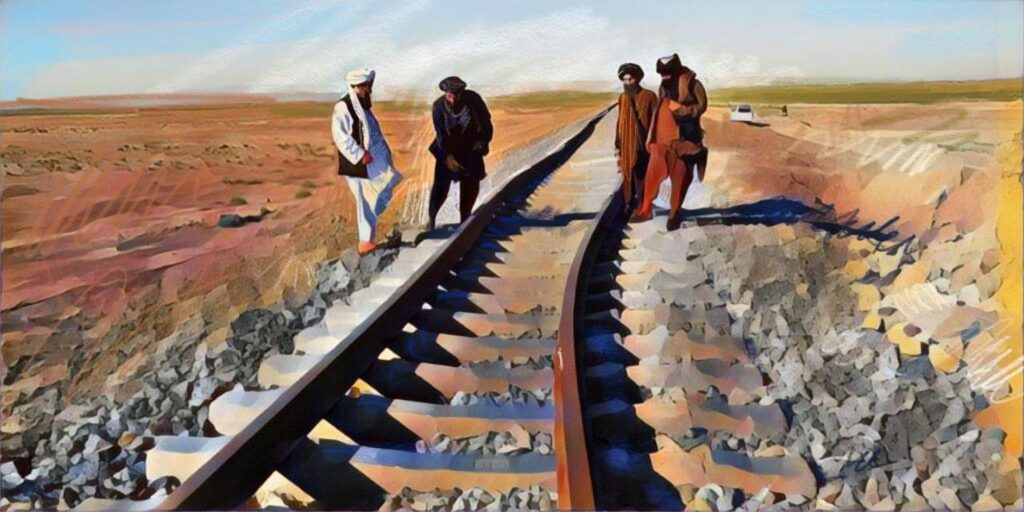
Steel Diplomacy: Central Asia’s Southern Push via Afghanistan

The United States and its allies may be uneasy about the Taliban’s return to power, given their extremist history, continued repression, and the collapse of decades-long Western efforts in Afghanistan. Nevertheless, the Taliban is strengthening ties with the Global South—particularly Central Asia—in search of investment for railway infrastructure. For landlocked Central Asian nations, Afghanistan is a key transit point on the shortest route to the Arabian Sea, offering an alternative to routes through Russia, China, or westward via the Caspian. The war-torn country – located at the crossroads of Central and South Asia – serves as a land bridge between the former Soviet republics and the major markets of the region, including India and Pakistan. This strategic position is why regional actors are eager to invest in the construction of the railway network in Afghanistan, fully aware that the new route would help them achieve at least some of their geopolitical and geoeconomics interest. Kazakhstani Foreign Minister Murat Nurtleu’s recent visit to Kabul was, according to reports, primarily focused on Afghan railway infrastructure. The largest Central Asian nation economy is reportedly ready to invest $500 million in the construction of the 115km (71 miles) railway from Towrgondi on Afghanistan’s border with Turkmenistan to the city of Herat. As Taliban railway officials told The Times of Central Asia, the Afghan and Kazakh delegations, who signed a memorandum of understanding on the project, are expected to finalize new agreements and contracts in the coming months. A detailed construction study is expected to be completed by winter, and Afghan authorities anticipate that construction will begin by the end of the year.  Meanwhile, Kabul hopes to reach similar deals with neighboring Uzbekistan and Turkmenistan, as well as with Russia and Pakistan. According to Taliban railway experts, these four nations – along with Kazakhstan – are expected to play a major role in the development of the 700-kilometer (approximately 435-mile) railway network in Afghanistan. The Taliban political officials, on the other hand, see the project as an opportunity for Afghanistan to increase its geopolitical importance. “It will help us reduce economic dependence and isolation, allowing Afghanistan to integrate more actively into the regional economy,” Muhammad Rehman, the Taliban-appointed Chargé d’Affaires of the Islamic Emirate of Afghanistan to Kazakhstan, told The Times of Central Asia, From his perspective, nations investing in Afghan railway infrastructure will become advocates for Afghanistan’s stability. Projects like the construction of the railway, in his view, can transform Afghanistan into a transit hub for regional countries through railway corridors. “Through the railway, Afghanistan can also import goods at a significantly lower cost, making essential commodities more affordable for its people,” Rahman stressed. More importantly, the railway opens a route for Central Asian natural resources to reach global markets via the ocean and further enhances the viability of the westward-flowing Middle Corridor. In short, the Afghan rail projects are important for connecting Eurasia. It is, therefore, no coincidence that Kazakhstan – being the richest country in terms of mineral wealth in Central Asia...

Central Asia Faces Growing Energy Deficit

Central Asia is heading toward a serious energy crunch. According to the Logistan.info portal, regional demand for imported natural gas is expected to reach 25 billion cubic meters annually by 2030. This looming shortfall is driven by rapid population growth, around one million people per year, industrial expansion, declining domestic production, and the deteriorating state of aging infrastructure. Recent accidents in Bishkek, Tashkent, Dushanbe, and Ekibastuz illustrate the scale and urgency of the problem. Kazakhstan: Rising Output, Falling Exports Kazakhstan produced 59.2 billion cubic meters of gas in 2024, representing a 6.4% increase from the previous year. However, nearly half of this was reinjected into oil reservoirs to sustain production. Only 29 billion cubic meters were available for domestic consumption. Soaring internal demand has already led to a sharp decline in exports to China, which fell 40% to 8.7 billion cubic meters. Uzbekistan: From Exporter to Importer Uzbekistan's situation is even more precarious. In 2024, the country produced 44.6 billion cubic meters of gas and 713,400 tons of oil, figures that are in decline, dropping 4.5% and 8.5% respectively. To cover the shortfall, Tashkent has turned to Russia and Turkmenistan, purchasing $1.7 billion worth of gas. Uzbekneftegaz expects to produce just 26.5 billion cubic meters of commercial gas in 2025, far short of projected domestic needs. Kyrgyzstan, Tajikistan, and Turkmenistan Kyrgyzstan and Tajikistan produce virtually no hydrocarbons and rely entirely on imports of these resources. Meanwhile, demand continues to grow in tandem with their populations, and domestic energy generation falls short of even basic consumption needs. Turkmenistan remains the region’s top gas exporter, sending 41.3 billion cubic meters abroad in 2024. However, Ashgabat’s ability to increase exports is limited by its own growing domestic consumption, binding long-term contracts with China, and a lack of large-scale infrastructure development. Investment, Delays, and Structural Challenges While Central Asian governments have announced plans for new hydroelectric plants, combined heat and power stations, and nuclear power facilities, tangible progress remains slow. Kazakhstan, Kyrgyzstan, and Uzbekistan have yet to break ground on any of their proposed nuclear power projects. Key obstacles include a shortage of qualified personnel, water scarcity, environmental concerns, and, above all, insufficient funding. Without substantial foreign investment, modernization efforts are likely to stall. To ease financial pressures, countries in the region have begun raising gas and electricity tariffs. These price hikes aim to offset upgrade costs but have provoked public backlash and fueled inflation. In Uzbekistan, for instance, inflation accelerated to 15% in May 2025, with energy prices cited as the primary driver. The Russian Option Forecasts for regional gas imports remain imprecise, but analysts estimate the need could rise to 20-25 billion cubic meters annually by 2030. Russia appears poised to become the main supplier, though details of supply agreements, including pricing, volumes, and terms, have not been disclosed. Central Asian governments are attempting to keep cooperation with Moscow strictly within the economic sphere, wary of entangling political dependencies. As a result, the region faces a dual challenge: securing energy stability through...

Declining Birth Rates in Central Asia Tied to Crisis in Reproductive Freedom

Birth rates across Europe and Central Asia are falling sharply, accompanied by aging populations and the migration of young people in search of better opportunities. In response, many governments have introduced financial incentives to encourage childbirth. However, the United Nations Population Fund (UNFPA) warns in its State of World Population 2025 report that these measures address symptoms, not causes. The real issue, the report contends, is a crisis of reproductive freedom. The report, compiled in partnership with the polling agency YouGov, surveyed over 14,000 people across 14 countries, including Germany and Hungary. Its findings highlight a deep disconnect between people’s reproductive intentions and their lived realities: 32% reported experiencing an unplanned pregnancy, while 23% said they were unable to have children when they wanted. Among respondents over the age of 50, nearly one-third (31%) reported having fewer children than they had hoped. Economic insecurity emerged as the leading barrier to planned parenthood. Financial hardship was cited by 39% of respondents, followed by job instability (21%), lack of suitable housing (19%), and concerns over war, pandemics, or climate change (19%). Relationship-related issues were also significant: 14% said they lacked a partner, while 10%, mostly women, said their partners did not contribute enough at home. Although Central Asia continues to report fertility rates above the global average, the region is not immune to this trend. The report notes a steady decline in birth rates across much of Central Asia, including Kazakhstan, which is experiencing a multi-year downturn despite having one of the region’s higher fertility rates. UNFPA emphasizes that these patterns reflect underlying socio-economic constraints, not shifting cultural values. Rather than framing the issue as one of declining birth rates, UNFPA urges a shift in perspective from “why aren’t people having more children?” to “why can’t people have the families they want?” Reproductive freedom, the report argues, means being able to decide freely and securely when, and how many children to have. This requires stable employment, access to quality healthcare and housing, and genuine gender equality. UNFPA calls on governments, particularly in Eastern Europe and Central Asia, to focus less on raising fertility rates and more on protecting individual rights. Key policy recommendations include greater investment in public health systems, affordable housing, decent work opportunities, and stronger protections against violence and discrimination. “The real crisis is that millions of people can’t build the families they want, not because they don’t want children, but because they can’t afford to have them,” the report states. As The Times of Central Asia previously reported, four out of five Central Asian countries are currently experiencing declining fertility. The exception is Uzbekistan, where birth rates remain high and continue to climb. In 2023, Uzbekistan recorded a fertility rate of 3.4 children per woman, the highest in the region. It was followed by Tajikistan (3.1), Kazakhstan (3.0), and Kyrgyzstan and Turkmenistan (each at 2.7). Uzbekistan also posted the region’s highest number of births last year, approximately 962,000, representing a 14% increase compared to 2020. By contrast, Kazakhstan registered...

Melting Mountains, Drying Futures: Central Asia Confronts Water Emergency

Central Asian countries are mobilizing against an emerging water crisis as a United Nations report highlights the vulnerability of mountain water systems to climate change. Identifying ranges like the Tien Shan and the Pamirs, the UN World Water Development Report 2025 – Mountains and Glaciers: Water Towers – warns that rapid glacier melt and erratic snowfall are threatening vital freshwater supplies worldwide. According to the report, mountains provide up to 60% of the world’s annual freshwater flows, with over two billion people depending directly on water from mountain sources. This risk is particularly acute in Central Asia: a UN drought outlook noted that rising temperatures and shrinking snowpack in the high mountains of Tajikistan and Kyrgyzstan are accelerating glacier retreat, posing a “long-term threat to the region’s water security.” Half of rural mountain communities in developing countries already face food insecurity, and receding glaciers could impact two-thirds of all irrigated agriculture globally – a dire scenario for Central Asia’s irrigation-dependent economies. Rivers like the Amu Darya and Syr Darya are fed by glacier runoff and support downstream agriculture, hydropower, and municipal needs in Uzbekistan, Kazakhstan, and Turkmenistan. But climate-driven glacial retreat, inefficient irrigation, and aging infrastructure have already pushed the region toward a breaking point. [caption id="attachment_33952" align="aligncenter" width="2560"] Lake Karakul in Tajikistan is expanding due to melting glaciers; image: TCA, Stephen M. Bland[/caption] Kazakhstan Steps Up Leading the regional response, Kazakhstan has launched sweeping reforms to modernize its water infrastructure and governance. The country has committed to building 42 new reservoirs, refurbishing 14,000 kilometers of irrigation canals, and investing heavily in digital water monitoring and conservation. Established in September 2023, the Ministry of Water Resources and Irrigation is coordinating the overhaul under an updated national Water Code. The government has also launched an integrated water portal, hydro.gov.kz, and pledged to digitize more than 3,500 kilometers of canals for precise flow tracking. In an address at the Astana International Forum, Deputy Prime Minister Kanat Bozumbayev framed water as a “powerful driver of cooperation, sustainable development and regional stability,” urging closer regional coordination. Kazakhstan is also leading environmental restoration efforts. As the current chair of the International Fund for Saving the Aral Sea (IFAS), it is overseeing projects to rehabilitate the North Aral Sea, including raising the Kokaral Dam to restore water levels and fisheries. In 2024 alone, local irrigation reforms in Kyzylorda saved 200 million cubic meters of water, which was redirected toward the shrinking sea. [caption id="attachment_12017" align="aligncenter" width="2560"] The Kokaral Dam in Kazakhstan; image: TCA, Stephen M. Bland[/caption] International Support and Financing Kazakhstan’s strategy has been backed by a plethora of international partners. The European Bank for Reconstruction and Development (EBRD) has financed over €255 million in water and wastewater projects in Kazakhstan, including a €96.4 million sovereign loan for a new treatment plant in Aktobe. Meanwhile, the Eurasian Development Bank (EDB) and UNDP have launched a regional partnership to expand access to modern irrigation, digitize water flows, and establish training centers. “We must act very quickly and...

Khiva Readies for Melon Festival: A Celebration of Heritage and Harvest

Khiva, the ancient Silk Road city in Uzbekistan’s Khorezm region, will host the traditional Melon Festival, or “Qovun sayli,” from August 8–10. The celebration will be held across the historic Itchan-Kala complex and the Arda Khiva cultural space. Organized by the State Tourism Committee and the Khorezm khokimiyat (local government), the festival promotes regional identity and agritourism by highlighting Khorezm’s famed melons. Farmers from across the region will exhibit scores of different melon varieties — around 125 types were showcased last year — in pavilions decorated with traditional designs. More than a fruit fair, the festival offers puppet shows, folk music, national costume displays, and culinary exhibitions, including Khorezm bread and other regional dishes. Artisans will host workshops on handicrafts such as silk weaving and pottery, giving visitors hands-on exposure to Uzbek heritage and traditions. Evening gala concerts featuring local and international performers will take place on August 8–9 in the Itchan-Kala and conclude on August 10 in Arda Khiva. [caption id="attachment_33945" align="aligncenter" width="2224"] Image: TCA, Stephen M. Bland[/caption] Qovun sayli will also have a competitive edge, with awards sponsored by the regional khokimiyat and private sponsors recognizing standout agronomists, artisans, and performers. [caption id="attachment_33947" align="aligncenter" width="2560"] Image: TCA, Stephen M. Bland[/caption] Melons occupy a special place in Uzbek tradition. Over 150 varieties are grown nationwide, many prized for their sweetness and storied past. In Khorezm, melons are more than food — they are cultural icons. Ancient Uzbek kingdoms would send the fruit as gifts by camel caravan to Baghdad, and to the Russian tsars and Mughal emperors. Writing in 1876, British colonel and explorer Frederick Burnaby noted that the “taste was so delicious that anyone only accustomed to this fruit in Europe would scarcely recognize its relationship with the delicate and highly perfumed melons of Khiva.” The festival has become a cornerstone of Khiva’s cultural calendar, attracting approximately 30,000 foreign and 400,000 domestic visitors in 2024 alone. Tourism officials view Qovun sayli as essential to boosting regional visibility and economic growth, with Khiva’s festivals, including the Lazgi International Dance Festival, a key part of Uzbekistan’s broader push to spotlight cultural tourism.