• KGS/USD = 0.01144 0%
  • KZT/USD = 0.00217 0%
  • TJS/USD = 0.10456 0%
  • UZS/USD = 0.00008 0%
  • TMT/USD = 0.28571 0%
  • KGS/USD = 0.01144 0%
  • KZT/USD = 0.00217 0%
  • TJS/USD = 0.10456 0%
  • UZS/USD = 0.00008 0%
  • TMT/USD = 0.28571 0%
  • KGS/USD = 0.01144 0%
  • KZT/USD = 0.00217 0%
  • TJS/USD = 0.10456 0%
  • UZS/USD = 0.00008 0%
  • TMT/USD = 0.28571 0%
  • KGS/USD = 0.01144 0%
  • KZT/USD = 0.00217 0%
  • TJS/USD = 0.10456 0%
  • UZS/USD = 0.00008 0%
  • TMT/USD = 0.28571 0%
  • KGS/USD = 0.01144 0%
  • KZT/USD = 0.00217 0%
  • TJS/USD = 0.10456 0%
  • UZS/USD = 0.00008 0%
  • TMT/USD = 0.28571 0%
  • KGS/USD = 0.01144 0%
  • KZT/USD = 0.00217 0%
  • TJS/USD = 0.10456 0%
  • UZS/USD = 0.00008 0%
  • TMT/USD = 0.28571 0%
  • KGS/USD = 0.01144 0%
  • KZT/USD = 0.00217 0%
  • TJS/USD = 0.10456 0%
  • UZS/USD = 0.00008 0%
  • TMT/USD = 0.28571 0%
  • KGS/USD = 0.01144 0%
  • KZT/USD = 0.00217 0%
  • TJS/USD = 0.10456 0%
  • UZS/USD = 0.00008 0%
  • TMT/USD = 0.28571 0%

Viewing results 97 - 102 of 2886

Belarus Aims to Increase Trade with Uzbekistan to $2 Billion by 2030

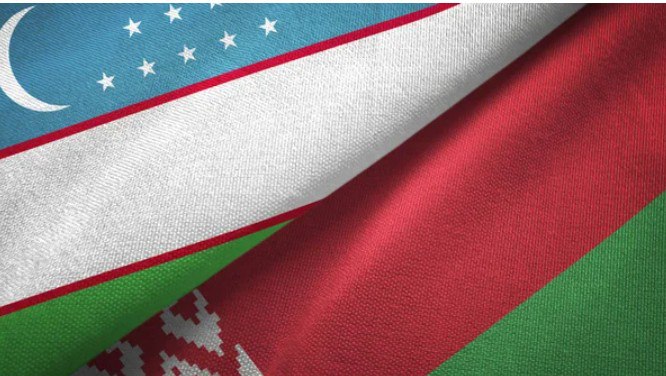
Belarus plans to increase its trade turnover with Uzbekistan to $2 billion by 2030, according to a statement issued by the Council of Ministers of the Republic of Belarus following high-level talks between the two countries’ prime ministers. Belarusian Prime Minister Aleksandr Turchin announced the target during a meeting with Uzbekistan’s Prime Minister Abdulla Aripov on February 24, underscoring the growing importance of bilateral cooperation. “Undoubtedly, Uzbekistan is one of our key partners in Central Asia and beyond,” Turchin said, adding that relations are supported by what he described as a trusting dialogue between the two presidents. He noted that both governments are focused not only on implementing previously reached agreements but also on developing new initiatives ahead of a planned high-level meeting later this year. According to the Belarusian government, a bilateral cooperation roadmap is being prepared in advance of President Shavkat Mirziyoyev’s upcoming visit to Belarus. Turchin described the $2 billion trade target as ambitious but achievable, pointing out that current trade turnover is already approaching $1 billion. “We are committed to fruitful work and open dialogue. A number of large-scale projects are already being implemented,” he said. Economic cooperation between the two countries has expanded into several strategic sectors. Last year, Uzbekistan and Belarus moved to strengthen collaboration in nuclear energy following talks in Minsk hosted by Belarusian Energy Minister Denis Moroz and attended by a delegation from Uzbekistan’s Uzatom Atomic Energy Agency led by Director Azim Akhmedkhadjaev. Discussions focused on nuclear infrastructure development, specialist training, and radioactive waste management.
Uzbekistan Continues Busy Sporting Year with Tashkent Judo Grand Slam

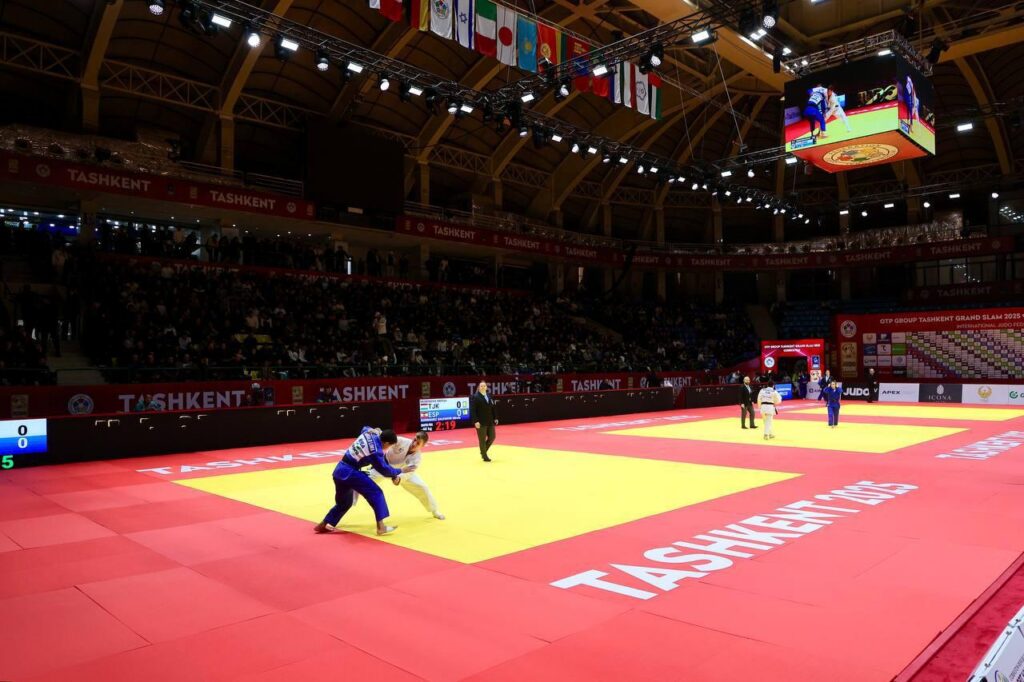
The 12,500-capacity Humo Arena in central Tashkent is preparing to host the OTP Group Tashkent Grand Slam 2026 this week. The three-day elite competition starts on 27 February. The event is the second stop on the 2026 World Judo Tour, following the Paris Grand Slam, and will feature 400 world-class judokas representing more than 40 countries. Home hopes are resting on the Olympic medallist and World champion Davlat Bobonov, while other high-profile competitors include Olympic champions Hidayat Hedarov and Zelym Kotsoiev from Azerbaijan, and the Georgian Lasha Bekauri. The Grand Slam is separated into 14 weight categories. Friday’s action focuses on the lighter weight classes, including the women’s 48kg and men’s 60kg divisions. On Saturday the competition switches to the middleweight categories, while the final day on Sunday features the heavyweights. Uzbekistan is quietly establishing itself as a host for judo tournaments, having previously hosted the 2022 Judo World Championships, and the Grand Slam for the last five years. Uzbek judo is on the rise, with Diyora Keldiyorova winning the country’s first ever gold medal at the Paris 2024 Olympic Games. “We look forward to welcoming the world’s best judokas to compete in Uzbekistan,” said Otabek Umarov, First Vice President of the National Olympic Committee of Uzbekistan, and Vice-President of the Olympic Council of Asia. “It is a great honour for Tashkent to continue to host major international judo events, and we thank the International Judo Federation for their continued trust. Hosting the Grand Slam not only inspires the next generation of athletes but stands as a testament to Uzbekistan’s dedication to the sport.” The 2026 Judo Grand Slam comes at the start of a standout year for Uzbek sports. The country’s football team will make its first appearance at a FIFA World Cup at the tournament in North America this summer. Samarkand will host the World Triathlon Championship Series on 25-26 April, then the 46th Chess Olympiad in September. The World Aquatics Swimming World Cup comes to Tashkent in October. To ensure the spirit of judo remains accessible to all fans and aspiring athletes across Central Asia, the Humo Arena will offer free admission to the public for the duration of the event. For fans abroad, the competition will be broadcast live to a global audience via the JudoTV platform.  

Uzbekistan Eyes UKEF Backing and Market Access at C5–UK Talks

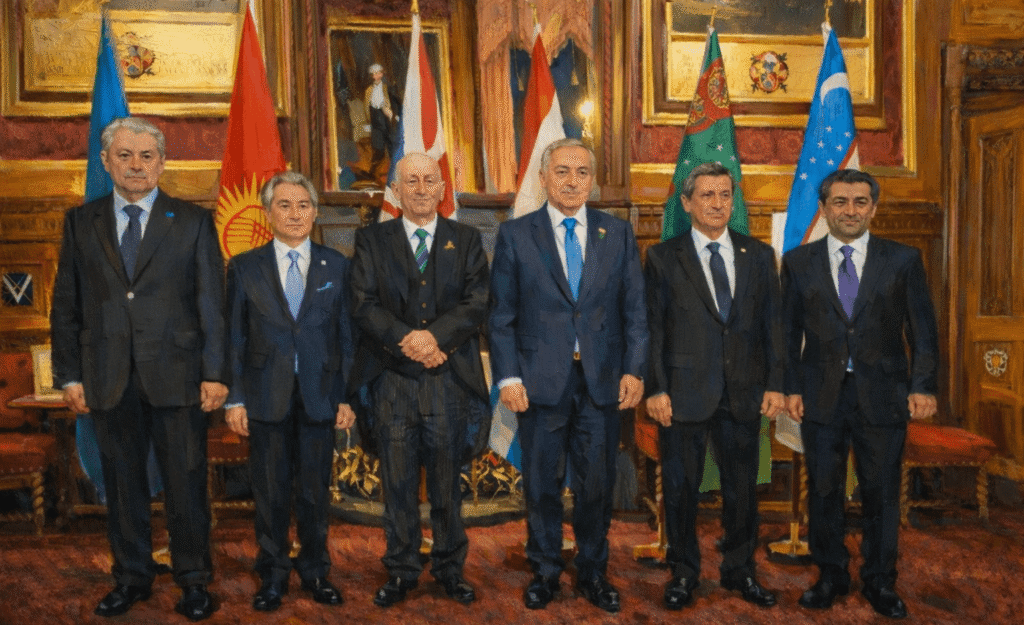
London is hosting the first formal meeting of Central Asian foreign ministers with the United Kingdom on February 26, opening a new “Central Asia–UK” ministerial track after a broader parliamentary program in London earlier in the week. Foreign ministers from Kazakhstan, Kyrgyzstan, Tajikistan, Turkmenistan, and Uzbekistan are attending. Kyrgyzstan’s Foreign Minister Jeenbek Kulubayev is expected to hold bilateral talks with UK Foreign Secretary Yvette Cooper, while Kazakhstan’s Foreign Minister Yermek Kosherbayev has also been holding meetings in London focused on trade, investment, and critical minerals cooperation. With delegations from all five Central Asian countries present, the format provides scope for further bilateral engagements on the margins. On the eve of the ministerial meeting, Central Asian foreign ministers, led by Kazakhstan’s Yermek Kosherbayev, held a session with the UK’s All-Party Parliamentary Group on Cooperation with Central Asia, with British MPs emphasizing political dialogue, legislative exchange, and deeper interparliamentary ties as foundations for advancing economic and regional cooperation. For Tashkent, the London meeting comes after a burst of bilateral engagement that has put finance and infrastructure at the center of the relationship. On February 17, President Shavkat Mirziyoyev received the UK Prime Minister’s Trade Envoy to Central Asia and Azerbaijan, Lord John Alderdice, and highlighted how heavily Uzbekistan has leaned on London’s markets: Uzbek sovereign and corporate bonds worth more than $15 billion have been placed on the London Stock Exchange, while trade turnover has doubled over the past five years, according to the presidential press service. Mirziyoyev also flagged potential projects spanning energy, finance, geology, and transport, and the sides agreed to prepare a joint roadmap. That roadmap is already acquiring project language. Uzbekistan’s Deputy Prime Minister and Minister of Economy and Finance, Jamshid Kuchkarov, met Alderdice in Tashkent with representatives of the London Stock Exchange Group, Arup, and UK Export Finance (UKEF), as well as the UK ambassador, Timothy Smart. According to the Uzbek government, talks focused on transport and logistics infrastructure—rail and road projects, airport modernization—alongside green energy and public–private partnerships. The same meeting produced a memorandum of understanding between Arup and the Ministry of Economy and Finance aimed at engineering and transport infrastructure planning and capacity-building for regions. Alderdice has also put a number on the UK’s offer. Speaking at a UK–Uzbekistan infrastructure conference, he said the UK has “about £4 billion available for export guarantees in Uzbekistan specifically,” linking the figure to potential backing for projects ranging from rail and airports to urban development. He pointed to London as a venue for Uzbek IPOs and bond issuance and said he was exploring potential collaboration with Uzbekistan’s mining sector, noting that the city also hosts the London Metal Exchange. The data suggests why Uzbekistan is pushing: the UK reported total trade in goods and services with Uzbekistan of £2.2 billion in the four quarters to the end of Q3 2025, including £545 million in UK exports and £1.6 billion in imports. Uzbek borrowers have already treated London as more than a diplomatic stop. In 2024, Uzbekistan’s National Bank...

Digital Inequality in Central Asia: Who Is Winning the AI Race in Finance?

AI in Central Asia’s financial sector is no longer a fashionable add-on. It has become a dividing line between leaders and laggards. A comprehensive report by the National Bank of Kazakhstan and the Fintech AI Center highlights a stark reality: while some institutions are building sovereign data centers, others are still attempting to automate basic document management processes. Kazakhstan is setting the pace. In his introduction to the report, Timur Suleimenov, Governor of the National Bank of Kazakhstan, echoes President Tokayev’s digital modernization agenda, writing: “Artificial intelligence is rapidly becoming a new paradigm for the development of the national economy… Our country faces the task of not only avoiding being left on the periphery of the global technological trend, but also of using its potential to accelerate economic modernization.” The regional AI race in finance is effectively underway, and the findings reveal deep digital inequality. The Balance of Power: Leaders and Followers A review of AI implementation across the region shows a pronounced technological divide. Kazakhstan remains the undisputed leader. Its banking sector has moved beyond experimental pilot projects. According to the report, AI is most actively deployed in the development of new products (14% of financial institutions) and marketing (13%), where neural networks enable hyper-personalized offerings. A further 10% of institutions use AI in operational activities and compliance. Elsewhere in Central Asia, governments are developing ambitious strategies, but implementation in the financial sector remains limited. Kyrgyzstan plans to launch a National AI Platform under its Digital Transformation Concept for 2024-2028. However, most of the country’s banks remain at the pilot or early implementation stage. Current AI applications focus primarily on decision-making optimization and advertising materials rather than complex financial operations. Tajikistan has positioned itself prominently at the policy level. It adopted an AI Development Strategy through 2040, the region’s first long-term framework, and initiated a United Nations General Assembly resolution on AI for Central Asia in July 2025. Yet in practice, the country’s financial market is dominated by microfinance organizations (MFOs), which are cautious in adopting advanced technologies. Their AI use is largely confined to risk management and documentation, while automation, software development, and data processing lag behind. Only 7% of institutions apply AI in financial consulting and customer support. Uzbekistan has taken a different route, prioritizing international and regional partnerships. In October 2024, the government approved its AI Development Strategy through 2030. Rather than building infrastructure independently, Tashkent is partnering with global technology providers. The state is working with Huawei to develop physical AI infrastructure and deploy ready-made industry solutions. At the same time, Uzbekistan is strengthening its academic capacity, including investments in high-performance computing for Inha University in Tashkent. Regional integration is also central to its strategy: IT Park Uzbekistan has signed a memorandum with Kazakhstan’s Astana Hub to integrate startup ecosystems. This combination, collaboration with global vendors, academic investment, and regional partnerships, is enabling Uzbekistan to narrow its technological gap more quickly. People Instead of Servers Digital inequality is most evident in spending priorities. Investment structures...

Uzbekistan and Afghanistan Aim to Boost Trade to $5 Billion

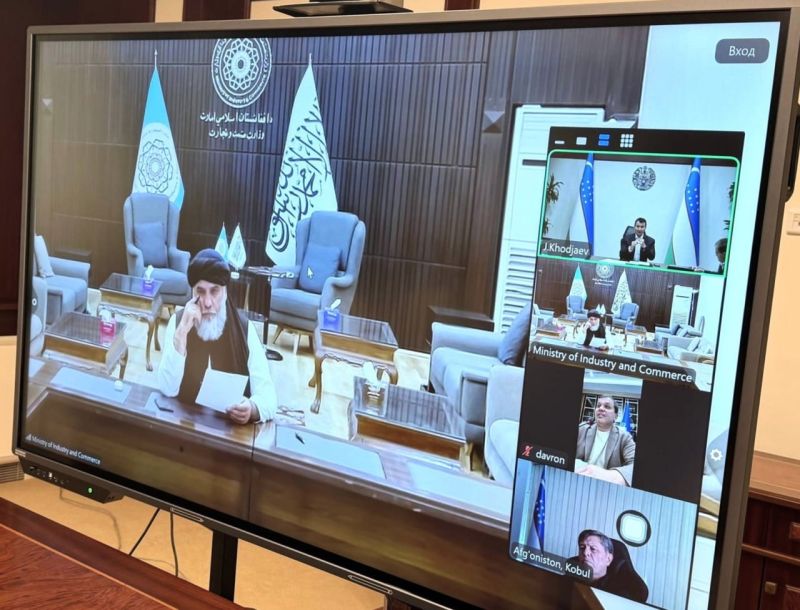
Uzbekistan and Afghanistan plan to accelerate the introduction of a preferential trade regime and significantly expand bilateral trade, Deputy Prime Minister Jamshid Khodjaev said. In a post on his LinkedIn page, Khodjaev wrote that on February 24 he held a video conference with Afghanistan’s Minister of Industry and Trade, Nuriddin Azizi. “We discussed practical steps to expand trade and economic cooperation and preparations for an upcoming visit of the Afghan delegation to Uzbekistan,” he said. Khodjaev noted that Uzbekistan values its “friendly and constructive relations” with Afghanistan. According to him, over the past five years bilateral trade has grown 2.5 times, from $653 million in 2021 to $1.7 billion in 2025. “Our shared goal is to increase this figure to $5 billion,” he wrote. The discussions also addressed the development of interregional ties and the infrastructure needed to promote goods, including showrooms and warehouse facilities. The two sides considered industrial cooperation in agricultural processing, construction materials, and textiles, as well as joint initiatives in food security. “We agreed to accelerate the entry into force of the Preferential Trade Agreement and to advance projects in investment and industrial cooperation,” Khodjaev stated. He added that, after Ramadan, work would continue in a practical format, including a business forum in Kabul and the preparation of a roadmap outlining priority areas. Earlier data indicate that in 2024 bilateral trade reached approximately $1.1 billion, with more than $1 billion accounting for Uzbek exports to Afghanistan.

Uzbek Janitor Who Saved Child in St. Petersburg Receives Awards and Ticket Home

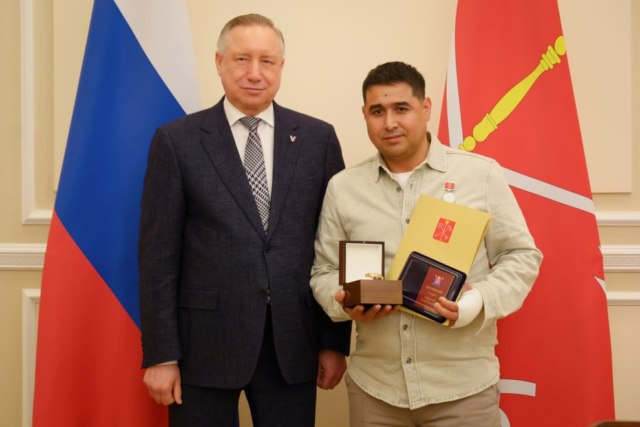
Khayrullo Ibadullayev, an Uzbek migrant worker who saved a child from falling out of a seventh-floor window in St. Petersburg, has received official recognition in both Russia and Uzbekistan, as well as a return air ticket to his home country. According to the press service of Uzbekistan’s Migration Agency under the Cabinet of Ministers, the agency presented Ibadullayev with a plane ticket to Uzbekistan and thanked him for his bravery. Officials stated that his actions had strengthened the image and reputation of Uzbek citizens working abroad. Ibadullayev was also awarded the Jasorat medal by President Shavkat Mirziyoyev, a state decoration given for acts of courage. His wife, Gullola Safarova, expressed gratitude to the Uzbek authorities. “First of all, I want to thank our President for awarding my husband the Jasorat medal and honoring him so highly,” she said. Safarova recalled that when her husband called and told the family he was holding a child in his arms, they were initially alarmed. “When he said he had caught a child who fell from above, the first thing we asked about was the child’s health. We were happy and told him he did the right thing,” she said. She added that her husband had previously demonstrated similar compassion. In 2025, he reportedly donated blood during a child’s surgery, contributing to saving the patient’s life. Russian state news agency TASS reported that St. Petersburg Governor Alexander Beglov presented Ibadullayev with the “For Valor in Rescue” distinction during a ceremony at the Smolny government complex. According to the city administration’s press service, Beglov said: “You did not think about yourself. You were injured but saved the life of a seven-year-old child. Our entire city thanks you.” Ibadullayev, who has been working in St. Petersburg since December 2025 for a cleaning company, also received a commemorative watch from the governor. The child survived the fall and was hospitalized. Officials have described his condition as stable.