• KGS/USD = 0.01144 0%
  • KZT/USD = 0.00209 0%
  • TJS/USD = 0.10528 0.19%
  • UZS/USD = 0.00008 0%
  • TMT/USD = 0.28490 0%
  • KGS/USD = 0.01144 0%
  • KZT/USD = 0.00209 0%
  • TJS/USD = 0.10528 0.19%
  • UZS/USD = 0.00008 0%
  • TMT/USD = 0.28490 0%
  • KGS/USD = 0.01144 0%
  • KZT/USD = 0.00209 0%
  • TJS/USD = 0.10528 0.19%
  • UZS/USD = 0.00008 0%
  • TMT/USD = 0.28490 0%
  • KGS/USD = 0.01144 0%
  • KZT/USD = 0.00209 0%
  • TJS/USD = 0.10528 0.19%
  • UZS/USD = 0.00008 0%
  • TMT/USD = 0.28490 0%
  • KGS/USD = 0.01144 0%
  • KZT/USD = 0.00209 0%
  • TJS/USD = 0.10528 0.19%
  • UZS/USD = 0.00008 0%
  • TMT/USD = 0.28490 0%
  • KGS/USD = 0.01144 0%
  • KZT/USD = 0.00209 0%
  • TJS/USD = 0.10528 0.19%
  • UZS/USD = 0.00008 0%
  • TMT/USD = 0.28490 0%
  • KGS/USD = 0.01144 0%
  • KZT/USD = 0.00209 0%
  • TJS/USD = 0.10528 0.19%
  • UZS/USD = 0.00008 0%
  • TMT/USD = 0.28490 0%
  • KGS/USD = 0.01144 0%
  • KZT/USD = 0.00209 0%
  • TJS/USD = 0.10528 0.19%
  • UZS/USD = 0.00008 0%
  • TMT/USD = 0.28490 0%

Viewing results 103 - 108 of 2913

The World Bank Backs Kazakhstan’s Rail Shortcut

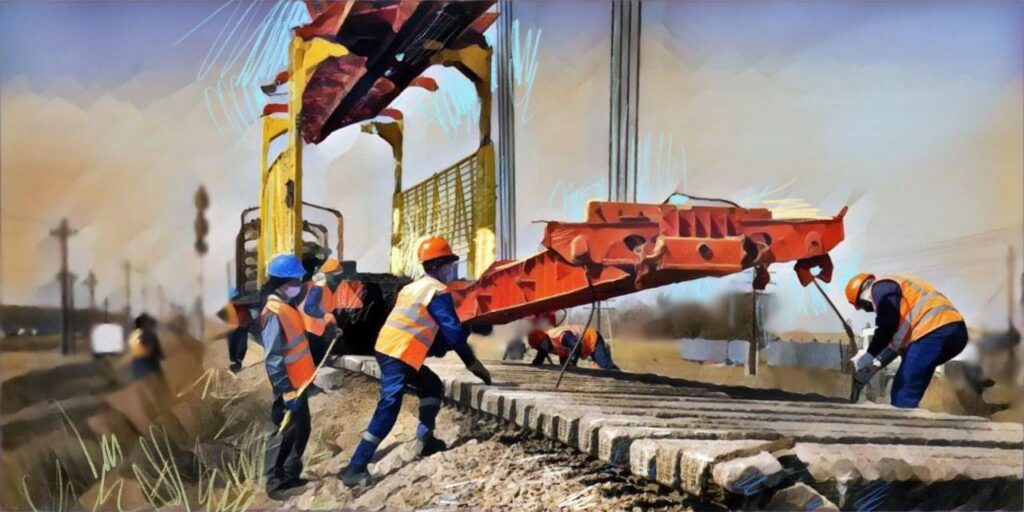
On February 19, 2026, the World Bank Board approved an $846 million IBRD guarantee to help the state-owned railway company Kazakhstan Temir Zholy (KTZ) mobilize $1.41 billion in long-term commercial financing. The financing is linked to a KTZ reform program under the umbrella “Transforming Rail Connectivity in Kazakhstan (Middle Corridor Development)” initiative. The purpose is to expand rail connectivity and upgrade logistics on Kazakhstan’s segment of the Trans-Caspian International Transport Route (TITR, Middle Corridor). The Asian Infrastructure Investment Bank (AIIB) will add a $564 million co-guarantee that shifts the financing away from a classic sovereign-loan model and toward private credit backed by multilateral risk coverage. The Multilateral Investment Guarantee Agency (MIGA) presents this operation as part of a wider World Bank Group approach that pairs corridor capital expenditure with steps to strengthen the operator’s financial sustainability and commercial viability. The operation is structured as a two-part package. First, it finances a new 322.3-kilometer railway on a new segment between Mointy and Kyzylzhar in central Kazakhstan. This segment is meant to remove a major network detour, shorten the TITR route within Kazakhstan by 149 kilometers, ease congestion on heavily used sections, and support double-stack container operations. The line is planned with modern signaling and telecommunications, plus design provisions for later expansion and electrification. Second, it ties the construction to a reform program at KTZ, including tariff reform, exploration of alternative financing mechanisms, stronger financial and environmental management, and preparatory work for a potential initial public offering. The World Bank is structuring delivery through a Multi-Phase Programmatic Approach with the stated aim of tripling freight volumes and halving end-to-end transit times on Kazakhstan’s Middle Corridor segment by 2030. Why This Segment Matters for the Middle Corridor Inside Kazakhstan, the Mointy–Kyzylzhar line is a central connector in the Trans-Kazakhstan east–west trunk carrying traffic from the China-facing gateways at Dostyk and Khorgos toward the Caspian outlets at Aktau and Kuryk. Mointy itself is a pivotal junction where train paths, locomotives, and crews are redistributed across multiple directions; as a result, any congestion there propagates quickly into corridor-wide delays. In early 2025, President Kassym-Jomart Tokayev directed acceleration of the Trans-Kazakhstan corridor. KTZ says the expected benefits include decreased pressure on heavily used central segments, fewer locomotive changeovers at key junction points, and, on some routings, the potential to cut more than a day from transit time between the Chinese border and Aktau. The World Bank’s 2023 Middle Corridor study stressed that the corridor’s most durable growth driver is regional trade among the core corridor economies: China–Europe movements remain important, but they compete with multiple alternatives, above all maritime shipping. An infrastructure upgrade adds economic value only if it reduces variability at the handoff points where delays accumulate, including rail-to-port interfaces, Caspian coordination, and national borders. Relieving the domestic bottleneck in Kazakhstan is economically meaningful only insofar as it stabilizes arrival times to Caspian terminals, creates more room for dispatching, and helps logistics providers offer shippers more predictable end-to-end service along the TITR. The emphasis is...
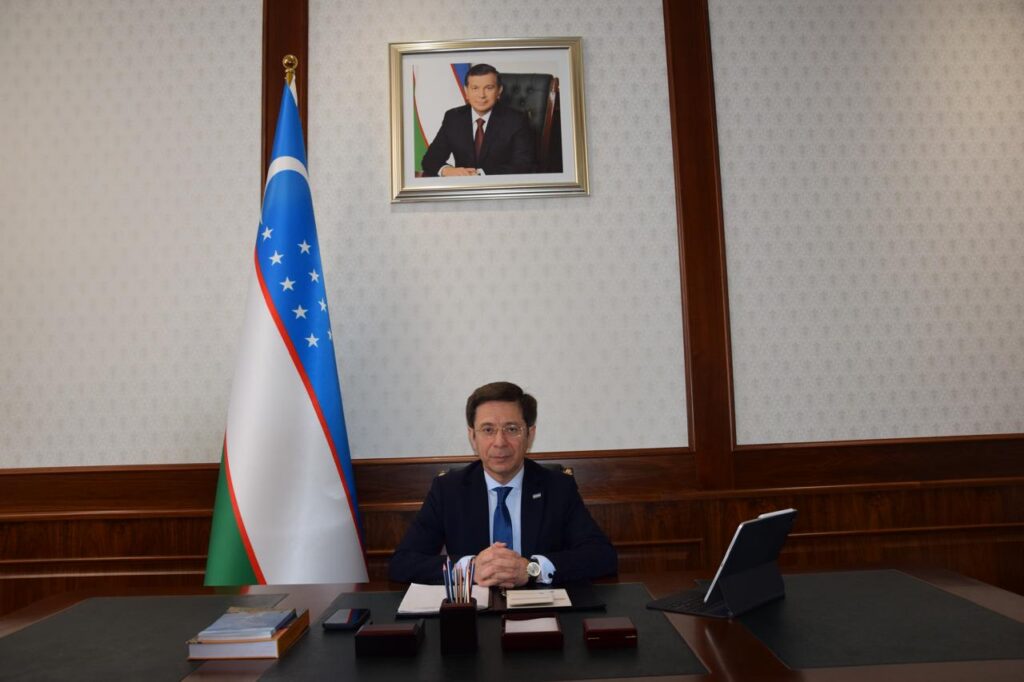

Uzbekistan’s Ambassador to Kazakhstan on Regional Integration and a Shifting Global Order

Amid shifting regional dynamics and an evolving global order, Uzbekistan has emerged as one of Central Asia’s most proactive diplomatic and economic actors. Since 2016, Tashkent has pursued an ambitious reform agenda at home while expanding cooperation with its neighbors and major global powers. In a wide-ranging interview with TCA, His Excellency Bakhtiyor Ibragimov, Ambassador Extraordinary and Plenipotentiary of the Republic of Uzbekistan to Kazakhstan, discusses regional integration, strategic partnerships, Afghanistan, China, and the future of economic diplomacy in Central Asia. TCA: Mr. Ambassador, Uzbekistan has demonstrated significant economic progress in recent years. What do you see as the key drivers behind this success? Ambassador Ibragimov: First of all, welcome to the Embassy of the Republic of Uzbekistan in Astana. We are familiar with your publication. We read it often, follow it, and analyze it. I would start with President Shavkat Mirziyoyev taking office at the end of 2016. It is no secret that until 2016, the Republic of Uzbekistan, despite its potential, was a fairly closed country. Our president always asks us, his representatives abroad, to speak openly about this. You cannot rewrite history or hide it. Relations with our neighbors were, frankly, at a very low level, and with some, there were no relations at all. The end of 2016 was a turning point, when reforms were not only declared but implemented and are now yielding results. One of President Mirziyoyev’s first foreign-policy priorities was normalization, and I want to emphasize this: normalization and then improving relations with neighbors. There is a saying in Uzbekistan: "If your neighbor is doing well, then you will also do well." Today, nearly a decade later, we can see that this policy is yielding results. Please note: this is not my personal assessment, but the assessment of international experts who recognize that the President has managed to achieve what once seemed impossible. I am speaking about regional integration with our neighbors. For example, a key issue for Central Asia is water. Many analysts warn that competition for water resources could, in the future, become a potential source of conflict. Two main rivers feed the region. Unfortunately, due to climate change, water volumes are not increasing year by year, while consumption is rising. We have managed to resolve almost all issues to date. In particular, based on the level of accumulation in the autumn-winter period in the upper reaches of the Amu Darya and Syr Darya rivers, and taking into account irrigation needs during the growing season, our water specialists jointly agree on and ensure the necessary water discharge within an agreed time frame. Uzbekistan, as you know, is located in the very center of Central Asia, bordering all Central Asian states, as well as Afghanistan. Today, border issues have largely been resolved. The final chord was struck on March 31, 2025, when the leaders of Uzbekistan, Tajikistan, and Kyrgyzstan signed an agreement on the border junction point, confirming the point of convergence of the three countries’ state borders. It should also be...

U.S. Sanctions Uzbek Citizen Over Alleged Cybercrime Links

The U.S. Department of the Treasury’s Office of Foreign Assets Control (OFAC) has imposed sanctions on an Uzbek citizen over alleged involvement in cybercrime activities linked to Russian actors, according to an official press release published on the agency’s website. OFAC reported that Azizjon Mamashoyev, a citizen of Uzbekistan born in 1987, was added to the sanctions list under regulations related to Russia-linked activities. U.S. authorities allege that he participated in cyber operations and maintained connections with individuals suspected of conducting malicious cyber activities. The announcement included identifying details, listing Mamashoyev’s date of birth as February 20, 1987, and confirming his Uzbek nationality. The designation was issued under the Ukraine-/Russia-Related Sanctions Regulations and forms part of measures targeting cyber-enabled threats. According to OFAC, Mamashoyev is linked to Sergey Zelenyuk, who has also been associated with cybercrime investigations. The sanctions were introduced pursuant to authorities under the Countering America’s Adversaries Through Sanctions Act (CAATSA) and a cyber-related sanctions program identified as CYBER4. The U.S. Treasury also designated Advance Security Solutions, a company reportedly connected to Mamashoyev. The firm, described as operating in computer programming, is registered in Dubai’s Jumeirah Living Marina Gate area and also lists operations in Tashkent. U.S. officials stated that the company was established in 2025 and may have engaged in activities posing secondary sanctions risks. Under OFAC sanctions, designated individuals and entities are generally subject to asset freezes within U.S. jurisdiction, and U.S. persons are typically prohibited from engaging in transactions with them.

Belarus Aims to Increase Trade with Uzbekistan to $2 Billion by 2030

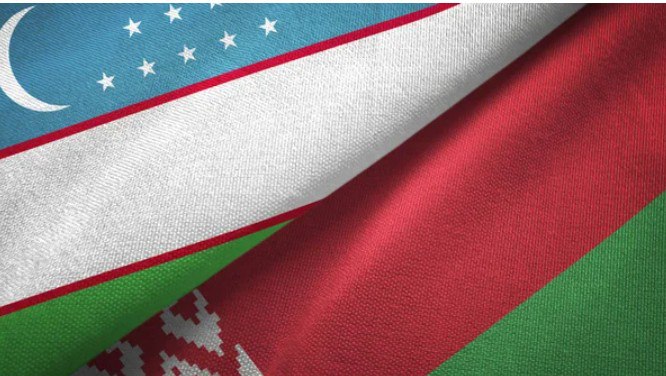
Belarus plans to increase its trade turnover with Uzbekistan to $2 billion by 2030, according to a statement issued by the Council of Ministers of the Republic of Belarus following high-level talks between the two countries’ prime ministers. Belarusian Prime Minister Aleksandr Turchin announced the target during a meeting with Uzbekistan’s Prime Minister Abdulla Aripov on February 24, underscoring the growing importance of bilateral cooperation. “Undoubtedly, Uzbekistan is one of our key partners in Central Asia and beyond,” Turchin said, adding that relations are supported by what he described as a trusting dialogue between the two presidents. He noted that both governments are focused not only on implementing previously reached agreements but also on developing new initiatives ahead of a planned high-level meeting later this year. According to the Belarusian government, a bilateral cooperation roadmap is being prepared in advance of President Shavkat Mirziyoyev’s upcoming visit to Belarus. Turchin described the $2 billion trade target as ambitious but achievable, pointing out that current trade turnover is already approaching $1 billion. “We are committed to fruitful work and open dialogue. A number of large-scale projects are already being implemented,” he said. Economic cooperation between the two countries has expanded into several strategic sectors. Last year, Uzbekistan and Belarus moved to strengthen collaboration in nuclear energy following talks in Minsk hosted by Belarusian Energy Minister Denis Moroz and attended by a delegation from Uzbekistan’s Uzatom Atomic Energy Agency led by Director Azim Akhmedkhadjaev. Discussions focused on nuclear infrastructure development, specialist training, and radioactive waste management.

Uzbekistan Continues Busy Sporting Year with Tashkent Judo Grand Slam

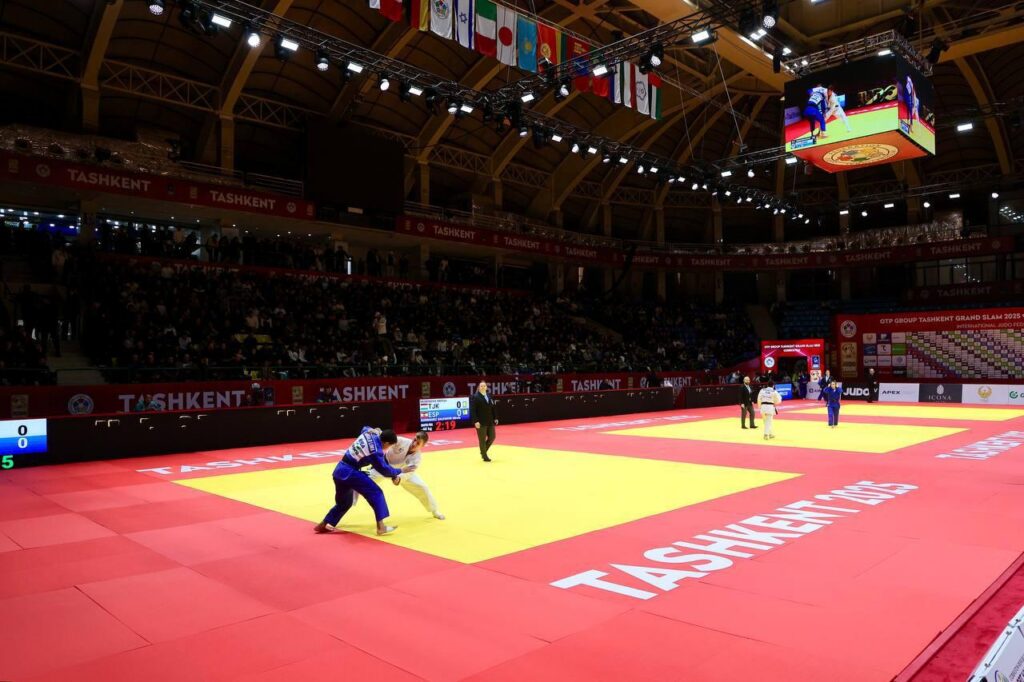
The 12,500-capacity Humo Arena in central Tashkent is preparing to host the OTP Group Tashkent Grand Slam 2026 this week. The three-day elite competition starts on 27 February. The event is the second stop on the 2026 World Judo Tour, following the Paris Grand Slam, and will feature 400 world-class judokas representing more than 40 countries. Home hopes are resting on the Olympic medallist and World champion Davlat Bobonov, while other high-profile competitors include Olympic champions Hidayat Hedarov and Zelym Kotsoiev from Azerbaijan, and the Georgian Lasha Bekauri. The Grand Slam is separated into 14 weight categories. Friday’s action focuses on the lighter weight classes, including the women’s 48kg and men’s 60kg divisions. On Saturday the competition switches to the middleweight categories, while the final day on Sunday features the heavyweights. Uzbekistan is quietly establishing itself as a host for judo tournaments, having previously hosted the 2022 Judo World Championships, and the Grand Slam for the last five years. Uzbek judo is on the rise, with Diyora Keldiyorova winning the country’s first ever gold medal at the Paris 2024 Olympic Games. “We look forward to welcoming the world’s best judokas to compete in Uzbekistan,” said Otabek Umarov, First Vice President of the National Olympic Committee of Uzbekistan, and Vice-President of the Olympic Council of Asia. “It is a great honour for Tashkent to continue to host major international judo events, and we thank the International Judo Federation for their continued trust. Hosting the Grand Slam not only inspires the next generation of athletes but stands as a testament to Uzbekistan’s dedication to the sport.” The 2026 Judo Grand Slam comes at the start of a standout year for Uzbek sports. The country’s football team will make its first appearance at a FIFA World Cup at the tournament in North America this summer. Samarkand will host the World Triathlon Championship Series on 25-26 April, then the 46th Chess Olympiad in September. The World Aquatics Swimming World Cup comes to Tashkent in October. To ensure the spirit of judo remains accessible to all fans and aspiring athletes across Central Asia, the Humo Arena will offer free admission to the public for the duration of the event. For fans abroad, the competition will be broadcast live to a global audience via the JudoTV platform.  

Uzbekistan Eyes UKEF Backing and Market Access at C5–UK Talks

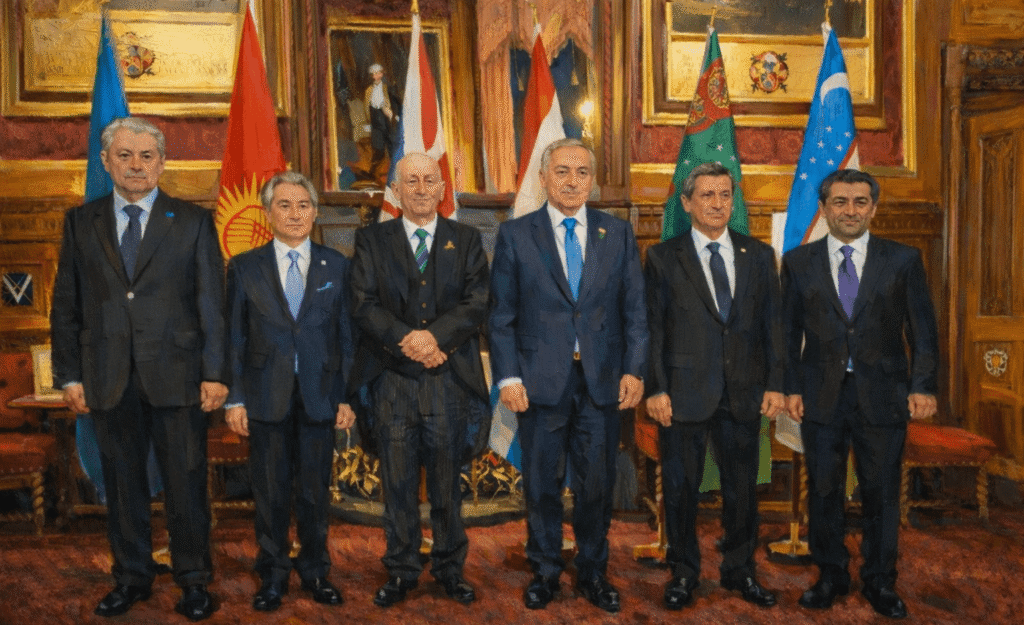
London is hosting the first formal meeting of Central Asian foreign ministers with the United Kingdom on February 26, opening a new “Central Asia–UK” ministerial track after a broader parliamentary program in London earlier in the week. Foreign ministers from Kazakhstan, Kyrgyzstan, Tajikistan, Turkmenistan, and Uzbekistan are attending. Kyrgyzstan’s Foreign Minister Jeenbek Kulubayev is expected to hold bilateral talks with UK Foreign Secretary Yvette Cooper, while Kazakhstan’s Foreign Minister Yermek Kosherbayev has also been holding meetings in London focused on trade, investment, and critical minerals cooperation. With delegations from all five Central Asian countries present, the format provides scope for further bilateral engagements on the margins. On the eve of the ministerial meeting, Central Asian foreign ministers, led by Kazakhstan’s Yermek Kosherbayev, held a session with the UK’s All-Party Parliamentary Group on Cooperation with Central Asia, with British MPs emphasizing political dialogue, legislative exchange, and deeper interparliamentary ties as foundations for advancing economic and regional cooperation. For Tashkent, the London meeting comes after a burst of bilateral engagement that has put finance and infrastructure at the center of the relationship. On February 17, President Shavkat Mirziyoyev received the UK Prime Minister’s Trade Envoy to Central Asia and Azerbaijan, Lord John Alderdice, and highlighted how heavily Uzbekistan has leaned on London’s markets: Uzbek sovereign and corporate bonds worth more than $15 billion have been placed on the London Stock Exchange, while trade turnover has doubled over the past five years, according to the presidential press service. Mirziyoyev also flagged potential projects spanning energy, finance, geology, and transport, and the sides agreed to prepare a joint roadmap. That roadmap is already acquiring project language. Uzbekistan’s Deputy Prime Minister and Minister of Economy and Finance, Jamshid Kuchkarov, met Alderdice in Tashkent with representatives of the London Stock Exchange Group, Arup, and UK Export Finance (UKEF), as well as the UK ambassador, Timothy Smart. According to the Uzbek government, talks focused on transport and logistics infrastructure—rail and road projects, airport modernization—alongside green energy and public–private partnerships. The same meeting produced a memorandum of understanding between Arup and the Ministry of Economy and Finance aimed at engineering and transport infrastructure planning and capacity-building for regions. Alderdice has also put a number on the UK’s offer. Speaking at a UK–Uzbekistan infrastructure conference, he said the UK has “about £4 billion available for export guarantees in Uzbekistan specifically,” linking the figure to potential backing for projects ranging from rail and airports to urban development. He pointed to London as a venue for Uzbek IPOs and bond issuance and said he was exploring potential collaboration with Uzbekistan’s mining sector, noting that the city also hosts the London Metal Exchange. The data suggests why Uzbekistan is pushing: the UK reported total trade in goods and services with Uzbekistan of £2.2 billion in the four quarters to the end of Q3 2025, including £545 million in UK exports and £1.6 billion in imports. Uzbek borrowers have already treated London as more than a diplomatic stop. In 2024, Uzbekistan’s National Bank...