• KGS/USD = 0.01144 0%
  • KZT/USD = 0.00212 0%
  • TJS/USD = 0.10432 -0.29%
  • UZS/USD = 0.00008 0%
  • TMT/USD = 0.28490 0%
  • KGS/USD = 0.01144 0%
  • KZT/USD = 0.00212 0%
  • TJS/USD = 0.10432 -0.29%
  • UZS/USD = 0.00008 0%
  • TMT/USD = 0.28490 0%
  • KGS/USD = 0.01144 0%
  • KZT/USD = 0.00212 0%
  • TJS/USD = 0.10432 -0.29%
  • UZS/USD = 0.00008 0%
  • TMT/USD = 0.28490 0%
  • KGS/USD = 0.01144 0%
  • KZT/USD = 0.00212 0%
  • TJS/USD = 0.10432 -0.29%
  • UZS/USD = 0.00008 0%
  • TMT/USD = 0.28490 0%
  • KGS/USD = 0.01144 0%
  • KZT/USD = 0.00212 0%
  • TJS/USD = 0.10432 -0.29%
  • UZS/USD = 0.00008 0%
  • TMT/USD = 0.28490 0%
  • KGS/USD = 0.01144 0%
  • KZT/USD = 0.00212 0%
  • TJS/USD = 0.10432 -0.29%
  • UZS/USD = 0.00008 0%
  • TMT/USD = 0.28490 0%
  • KGS/USD = 0.01144 0%
  • KZT/USD = 0.00212 0%
  • TJS/USD = 0.10432 -0.29%
  • UZS/USD = 0.00008 0%
  • TMT/USD = 0.28490 0%
  • KGS/USD = 0.01144 0%
  • KZT/USD = 0.00212 0%
  • TJS/USD = 0.10432 -0.29%
  • UZS/USD = 0.00008 0%
  • TMT/USD = 0.28490 0%

Viewing results 391 - 396 of 2856

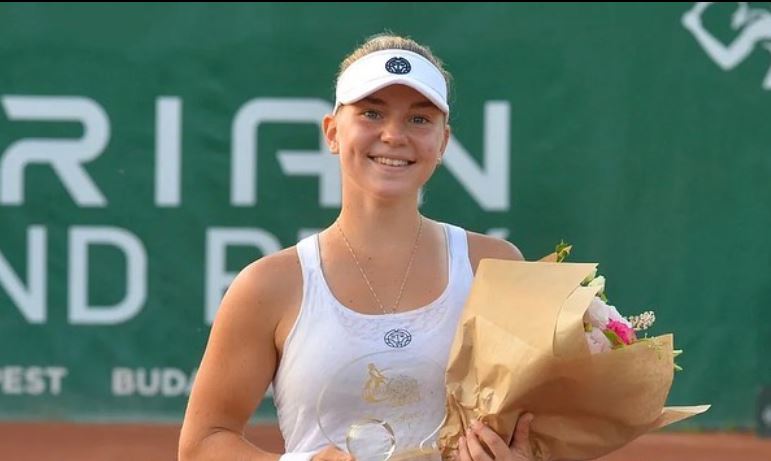
Maria Timofeeva Switches Tennis Allegiance to Uzbekistan

The Women’s Tennis Association (WTA) has officially listed 21-year-old Maria Timofeeva as representing Uzbekistan, marking a change in her sporting nationality. The update, first reported by Championat, now appears on the WTA’s official website, where the Uzbek flag is displayed next to her name. Born in Moscow, Timofeeva had not made any public statements about a possible change of federation. Speculation arose earlier this year after comments by Russian Tennis Federation President Shamil Tarpishchev, who said several Russian players were considering switching national representation because of ongoing restrictions on tennis events in Russia. “We have a difficult situation in Russian tennis: no domestic tournaments, no functioning league, and no funding for player development,” Tarpishchev told TASS. “Around a thousand of our players are competing abroad, and about 20 may soon start playing for other nations.” Timofeeva’s move appears to reflect this broader trend. Although she began her career in Russia, much of her training took place overseas, initially in Slovenia, and more recently in Germany. Her exposure to international academies and competition likely facilitated her transition to the Uzbek Tennis Federation. Currently ranked 146th in the world, Timofeeva reached a career-high of No. 93 in spring 2024. Her breakthrough performance came at the Australian Open, where she advanced to the fourth round after qualifying, defeating top-tier players including Caroline Wozniacki, Alizé Cornet, and Beatriz Haddad Maia. The move represents a significant gain for Uzbekistan’s national tennis program, which has been steadily raising its international profile. Timofeeva’s inclusion may enhance the visibility and competitiveness of Uzbek women’s tennis as the country continues to invest in sports infrastructure and athlete development. Neither Timofeeva nor the Uzbek Tennis Federation has issued an official statement on the change, but her WTA registration signals the start of a new chapter in her professional career.

First Uzbek Genome Project Reveals High Rate of Hereditary Mutations

Uzbek scientists have completed the country’s first full-scale human genome study, marking a significant milestone in both national science and global genomics. Conducted by researchers at the Center for Advanced Technologies, the study identified dozens of previously undocumented genetic mutations unique to the Uzbek population. The findings have been submitted to international genomic databases and signal Uzbekistan’s growing contribution to global biomedical research. The study revealed that 50% of children examined carried a hereditary mutation, and 86% were carriers of at least one defective gene, roughly double the global average. Experts linked the elevated rate to consanguineous marriages, which occur in up to a quarter of all unions in certain regions. Professor Shakhlo Turdikulova, Director of the Center for Advanced Technologies and head of the “1,000 Genomes of Uzbekistan” project, emphasized the significance of the findings. “For the first time, we have a clear picture of the genetic makeup of our people,” she said. “If most children carry hidden hereditary mutations, we cannot reverse this trend without a system of genetic counseling and preventive screening. That is why implementing premarital genetic testing programs is essential.” Beyond rare inherited conditions, the study found strong correlations between genetic mutations and common diseases such as diabetes, cardiovascular disorders, and cancer. More than half of the participants received precise genetic diagnoses, allowing physicians to tailor treatments more effectively. Roughly one-third of the mutations identified were previously unknown to global science. The “1,000 Genomes of Uzbekistan” project is part of a broader initiative to establish a national biobank and genetic map. Its goals include advancing personalized medicine, supporting pharmaceutical development, and enabling early disease detection. The Center for Advanced Technologies, which co-developed the ZF-UZ-VAC 2001 vaccine during the COVID-19 pandemic, continues to solidify Uzbekistan’s role as a regional leader in biotechnology and genetic science. Researchers believe the project’s results will help shape nationwide preventive healthcare strategies and improve the health outlook for future generations.

Five Countries Complete Large-Scale ‘Birlik-2025’ Military Exercises in Uzbekistan

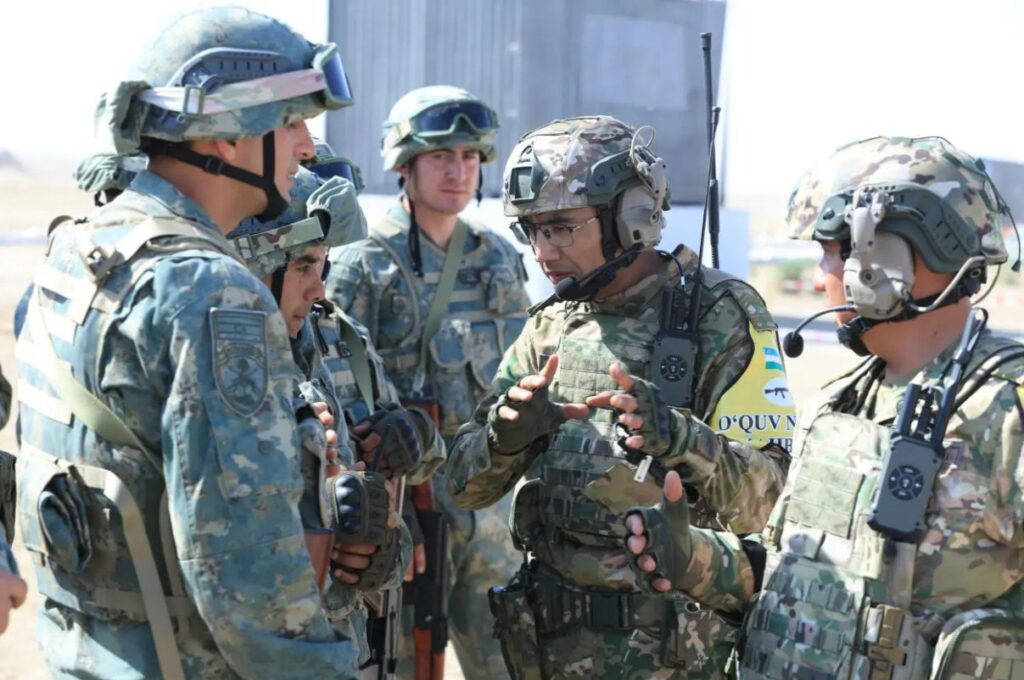
The multinational military exercises Birlik-2025 ("Unity-2025") have concluded at the Kattakurgan training ground in Uzbekistan’s Samarkand region. The joint maneuvers, which began on October 14, brought together armed forces from Uzbekistan, Kazakhstan, Kyrgyzstan, Tajikistan, and Azerbaijan. According to the Uzbek Ministry of Defense, the drills were among the largest in the history of regional military cooperation. The exercises focused on counterterrorism and defense operations, aiming to enhance interoperability, tactical coordination, and combat readiness among the participating countries. Scenarios included simulated urban warfare, reconnaissance, and joint air-ground operations. Commanders utilized computer modeling and simulation technologies to analyze battlefield decisions and identify optimal tactical responses. These digital tools played a key role in shaping the exercise outcomes and refining strategic planning. [caption id="attachment_37891" align="aligncenter" width="351"] @Ministry of Defense of Uzbekistan[/caption] Observers included the defense ministers of all participating states, along with military representatives from Turkmenistan, who attended in a monitoring capacity. The drills were conducted across more than 20 training grounds in multiple regions of Uzbekistan. In the initial phase, reconnaissance units deployed unmanned aerial vehicles to assess the territory of a hypothetical enemy. This was followed by a special operation to neutralize simulated illegal armed groups in an urban environment. Precision artillery and air strikes were executed by ground forces, while the air forces of Uzbekistan and Kazakhstan provided air cover and destroyed critical enemy positions. Combat helicopters and fighter jets demonstrated joint tactical coordination with land-based units. Troops also practiced offensive operations along the defensive line using a range of weapons and military equipment. The multi-stage training format included tasks of varying complexity, replicating conditions of high-intensity conflict. [caption id="attachment_37893" align="aligncenter" width="352"] @Ministry of Defense of Uzbekistan[/caption] According to the Uzbek Ministry of Defense, Birlik-2025 served as a valuable platform for exchanging experience in combating international terrorism, extremism, and armed insurgency. “Joint operations have made it possible to consolidate advanced methods of combat and improve interoperability between units from different countries,” the ministry stated. Following the conclusion of the active phase, participants visited mobile maintenance workshops, command posts, and exhibits showcasing modernized weaponry and defense technologies.

Congressional Panel Urges Trump to Host C5+1 Summit This Year

A U.S. congressional foreign affairs panel is asking U.S. President Donald Trump to host a meeting in Washington, D.C. with leaders from Central Asia by the end of 2025.   The proposal was made in an October 20 letter to Trump by Bill Huizenga, a Michigan Republican who chairs the House’s South and Central Asia Subcommittee, and Sydney Kamlager-Dove of California, the senior Democrat on the subcommittee.  The two representatives said that such a summit would mark the 10th anniversary of the C5+1 diplomatic forum and highlight the importance of Central Asia following Trump’s meetings with Uzbek President Shavkat Mirziyoyev and Kazakh President Kassym-Jomart Tokayev on the sidelines of the U.N. General Assembly last month. Multi-billion-dollar business deals were announced in connection with those meetings.  Established in 2015, the C5+1 formula refers to the United States and the five Central Asian countries of Kazakhstan, Kyrgyzstan, Tajikistan, Turkmenistan, and Uzbekistan. “A Leaders’ Summit with meaningful outcomes will strengthen regional cooperation and maximize the diplomatic potential of the 10th anniversary, setting the tone for strengthened U.S. engagement in the region for the rest of your presidency,” the representatives said in the letter to Trump. They said a meeting would advance U.S. priorities in Central Asia, “including security cooperation, economic ties, soft power, and good governance,” they said.  The letter noted U.S. interests such as the development of critical minerals, including tungsten, antimony, lithium, and rare earth elements; the full repeal of the Jackson-Vanik amendment, a Cold War-era law that imposes some restrictions on trade with several countries in Central Asia; and counterterrorism efforts against the regional branch of the Islamic State group.  “We also hope to see new agreements with the Central Asian countries to bolster people-to-people ties and expand U.S. soft power, such as additional American Peace Corps volunteers and the expansion of educational and cultural exchange programs, while addressing the accreditation issue surrounding U.S.-sponsored journalists and other U.S.-funded news broadcasters.  The Trump administration, however, has taken steps to cut most U.S. foreign aid programs, dismantling the U.S. Agency for International Development. USAID had been active in Central Asia. The administration has also cut aid for U.S.-funded domestic and international broadcasters. Analyst Temur Umarov wrote in the Carnegie Politika publication that Central Asia has found it relatively easy to work with the Trump administration.  “Business interests can be used to attract Washington’s attention, and there is no longer any need for demonstrative distancing from Russia or commitment to democratic reforms,” Umarov said.  He said that Uzbekistan and Kazakhstan have hoped to hold C5+1 anniversary events in their capitals, with top leaders in attendance. If that happens, Trump would be the first sitting U.S. president to visit any of the five Central Asian countries. 

Trade in Central Asia: China Deepens Influence, Europe Expands Presence, Region Seeks New Markets

Central Asia remains a theater of active economic competition, with countries in the region striving to diversify external partnerships and reduce dependence on traditional power centers, Russia and China. While both continue to dominate foreign trade, Kazakhstan, Uzbekistan, Kyrgyzstan, and Tajikistan are increasingly exploring new directions. The region’s evolving trade dynamics reflect each country's economic characteristics. Kazakhstan is driven by energy and metals exports, Uzbekistan by manufacturing and resource processing, while Kyrgyzstan and Tajikistan rely heavily on remittances and raw material exports. Amid global shifts and intensified competition for markets, Central Asian states are gradually shaping more multipolar trade strategies, opening up new routes and partnerships. Turkmenistan is excluded from this analysis due to the opacity of its national statistics. Kazakhstan As Central Asia’s largest economy, Kazakhstan relies heavily on natural resource extraction. Its main exports include oil, gas, metals, coal, grain, and agricultural products. Imports consist primarily of machinery, chemicals, vehicles, and consumer goods. Key export partners include Italy (21.6%), China (18.6%), Russia (10.2%), the Netherlands (7.4%), Turkey (4.7%), and Uzbekistan (4.3%). On the import side, China (29%) and Russia (28.8%) dominate, followed by Germany (4.8%), South Korea (3.7%), the United States (3.6%), and Turkey (2.5%). Kazakhstan has maintained a positive trade balance, buoyed by consistent demand for raw materials. In January-July 2025, the country’s foreign trade turnover totaled $78.18 billion, down 2.6% from the same period in 2024. Exports declined by 6.4% to $43.58 billion, while imports rose by 2.6% to $34.6 billion. Uzbekistan Uzbekistan's economy is focused on agriculture, textiles, natural resources, and manufacturing. Major exports include textiles, gold, gas, automobiles, cotton, and fruit. Imports are led by machinery, equipment, chemicals, and petroleum products. In the first half of 2025, foreign trade turnover reached $44.4 billion, up 19.9% year-on-year. Exports rose 34.9% to $20.1 billion, while imports increased 9.9% to $24.29 billion, leaving a trade deficit of $4.18 billion. Uzbekistan trades with 197 countries. Its largest trade partners are China (18.2%), Russia (16.1%), Kazakhstan (5.9%), Turkey (3.6%), and South Korea (2.2%). Export destinations include Russia (12.3%), China (5.5%), Kazakhstan (4.0%), Afghanistan (3.7%), Turkey (3.0%), France (2.6%), the UAE (1.8%), Kyrgyzstan (1.6%), Tajikistan (1.4%), and Pakistan (1.2%). Imports mainly come from China (28.7%), Russia (19.3%), Kazakhstan (7.6%), Turkey (4.1%), South Korea (3.9%), Germany (2.8%), and India (2.6%). Kyrgyzstan Kyrgyzstan, with limited natural resources, is heavily dependent on foreign trade. Its economy is rooted in agriculture, mining, and textiles. Key exports include gold and agricultural products, while imports are dominated by machinery, vehicles, petroleum products, and chemicals. From January to June 2025, foreign trade turnover fell 12.4% year-on-year to $6.99 billion. Exports made up only 15% of total trade, underscoring a continued trade deficit. Main partners remain Kazakhstan, Russia, and China. Tajikistan Tajikistan’s economy is centered on agriculture, hydropower, textiles, and mining. In January-August 2025, foreign trade turnover rose 16.8% year-on-year to $6.73 billion. Exports totaled $1.63 billion, while imports reached $5.1 billion, more than triple the export volume. Main exports are aluminum, textiles, agricultural goods, and minerals; imports...

Saudi Company to Launch 200 MW Power Plant in Samarkand

Saudi private company Pemco is set to begin construction of a new 200-megawatt gas-piston power plant in Samarkand by the end of this year, Uzbekistan’s Minister of Energy Jurabek Mirzamahmudov announced in an interview with the “Uzbekistan 24” TV channel. “The new power station will significantly strengthen the energy supply in the Samarkand region and support Uzbekistan’s efforts to ensure a stable electricity supply amid growing demand,” Mirzamahmudov said, following President Shavkat Mirziyoyev’s recent meeting with leading Saudi business representatives. The minister also outlined a range of ongoing energy projects in partnership with Saudi firms. “Together with ACWA Power, we have launched the first major thermal power plant,” he said. “Additionally, a solar power facility is operating in the Qibray district of Tashkent region, two large wind farms have started operations in Bukhara, and the first 100-megawatt wind power plant has been commissioned in Karakalpakstan.” Several new renewable energy initiatives are also in progress. “We have already begun practical steps on new wind and solar stations, and we plan to launch the first large-scale battery storage system in Parkent,” Mirzamahmudov added. He further noted that Uzbekistan is preparing to support operations at the new Tashkent airport with the production of renewable aviation fuel. This will be facilitated through a partnership between Saudi Arabia’s Vision Invest and U.S.-based Air Products, who have signed an agreement to develop a sustainable aviation fuel (SAF) plant. These developments come as Uzbekistan works to diversify its energy mix in anticipation of future demand. As previously reported by The Times of Central Asia, the country aims to bring a high-capacity nuclear power plant fully online by 2035. The first small modular reactor is expected to begin operations in 2029 in the Jizzakh region, followed by additional units in the early 2030s, according to Uzatom Director Azim Akhmedkhadjaev.