• KGS/USD = 0.01144 0%
  • KZT/USD = 0.00211 0%
  • TJS/USD = 0.10515 0.48%
  • UZS/USD = 0.00008 0%
  • TMT/USD = 0.28530 0%
  • KGS/USD = 0.01144 0%
  • KZT/USD = 0.00211 0%
  • TJS/USD = 0.10515 0.48%
  • UZS/USD = 0.00008 0%
  • TMT/USD = 0.28530 0%
  • KGS/USD = 0.01144 0%
  • KZT/USD = 0.00211 0%
  • TJS/USD = 0.10515 0.48%
  • UZS/USD = 0.00008 0%
  • TMT/USD = 0.28530 0%
  • KGS/USD = 0.01144 0%
  • KZT/USD = 0.00211 0%
  • TJS/USD = 0.10515 0.48%
  • UZS/USD = 0.00008 0%
  • TMT/USD = 0.28530 0%
  • KGS/USD = 0.01144 0%
  • KZT/USD = 0.00211 0%
  • TJS/USD = 0.10515 0.48%
  • UZS/USD = 0.00008 0%
  • TMT/USD = 0.28530 0%
  • KGS/USD = 0.01144 0%
  • KZT/USD = 0.00211 0%
  • TJS/USD = 0.10515 0.48%
  • UZS/USD = 0.00008 0%
  • TMT/USD = 0.28530 0%
  • KGS/USD = 0.01144 0%
  • KZT/USD = 0.00211 0%
  • TJS/USD = 0.10515 0.48%
  • UZS/USD = 0.00008 0%
  • TMT/USD = 0.28530 0%
  • KGS/USD = 0.01144 0%
  • KZT/USD = 0.00211 0%
  • TJS/USD = 0.10515 0.48%
  • UZS/USD = 0.00008 0%
  • TMT/USD = 0.28530 0%

Viewing results 571 - 576 of 2925

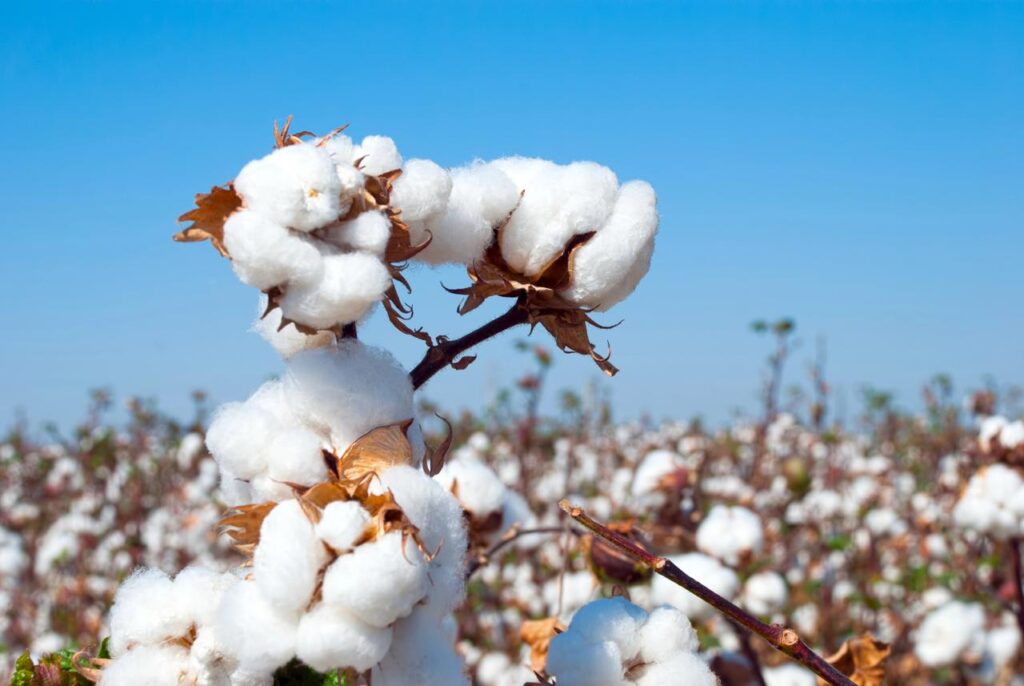
Uzbekistan Targets Premium Global Brands with U.S. Cotton Imports

Uzbekistan, one of the world’s largest cotton producers, may begin importing cotton from the United States, a move that has prompted public debate. Inomjon Abdurakhmonov, Head of the Foreign Trade Department at the Ministry of Investment, Industry and Trade, explained that the decision is aimed at helping Uzbekistan secure a foothold in premium global markets and boost the reputation of its textile exports. A rapidly growing textile sector Over the past seven years, Uzbekistan’s textile industry has expanded dramatically. Since 2017, cotton yarn output has more than doubled from 412,000 to 970,000 tons, knitted fabric production has risen from 68,000 to 312,000 tons, and ready-made garment output has jumped from 960 million to 3.1 billion pieces. Exports have grown from about $1.1 billion in 2016 to $2.8 billion in 2024. This growth stems from a deliberate policy shift away from exporting raw cotton in favor of domestic processing. Today, 100% of the national harvest is used locally, feeding factories that now export finished goods to more than 50 countries. Why import cotton? Abdurakhmonov emphasized that imports would supplement, not replace, domestic supply. “Uzbek cotton is fully consumed domestically, but our factories still operate at about 75% capacity,” he said. “Premium-grade imports allow us to expand production and meet the strict quality standards of top global brands.” Similar strategies are used by other textile leaders such as Turkey, India, Vietnam, and China, all of which import high-grade cotton to meet market requirements. The U.S. advantage The plan focuses on importing Strict Middling, a high-grade U.S. fiber recognized for its consistency, strength, and sustainability credentials under the U.S. Cotton Trust Protocol. “For major brands like Levi’s, Ralph Lauren, Puma, and Gap, ‘Made with U.S. Cotton’ is not optional, it’s a prerequisite,” Abdurakhmonov explained. Such quality cannot easily be replicated in Uzbekistan’s climate, and producing comparable fiber locally would take at least five years. Financing the imports Purchases will be supported by the U.S. Department of Agriculture’s GSM-102 program, which offers credit guarantees and deferred repayment terms of 12-18 months. This allows Uzbek manufacturers to sell finished goods before paying for the raw cotton, covering up to 98% of the deal value. Long-term benefits While U.S. cotton costs 15-20% more than domestic fiber, it will be used selectively for contracts where premium quality is mandatory, with higher margins offsetting the expense. Beyond immediate production gains, Uzbekistan aims to enhance its global textile reputation and strengthen its position in supply chains. Preferential access under the EU’s GSP+ system has already nearly doubled exports to Europe, from $74 million to $140 million and similar results are expected from U.S. partnerships. “Importing U.S. cotton is not about shortages, it’s about credibility,” Abdurakhmonov said. “This strategy will secure our place in premium markets and create long-term opportunities for our economy.”

World Bank: Central Asia’s Growth to Slow but Remain Resilient

Central Asia is set to remain one of the world’s fastest-growing regions, although its economic momentum is expected to moderate in the coming years, according to the World Bank’s Spring 2025 Europe & Central Asia Economic Update. The region posted a growth rate of 5.5% in 2024, with projections of 5.0% for 2025 and 4.4% for 2026 as oil output normalizes in Kazakhstan, re-exports fade, and remittance inflows settle. The World Bank also revised its 2024 forecast upward by 0.8 percentage points, citing stronger-than-anticipated domestic demand. The forecasts incorporate data available through April 10, 2025. Country-Level Outlook Uzbekistan is forecast to grow by 6.5% in 2024, followed by 5.9% in both 2025 and 2026. Kyrgyzstan is expected to expand by 9.0% in 2024 and 6.8% in 2025. Tajikistan will grow by 8.4% in 2024 and 6.5% in 2025. Kazakhstan’s growth is projected to be more moderate, at 4.8% in 2024 and 4.5% in 2025. The World Bank attributes much of the region’s expansion to robust domestic demand, including household consumption, investment, and government spending, rather than export performance. Remittances continue to play a vital role in economic stability: they account for nearly 40% of GDP in Tajikistan, over 20% in Kyrgyzstan, and are critical in reducing poverty in Uzbekistan, where poverty rates would nearly double in their absence. Investment and Long-Term Prospects With investment comprising about 26% of GDP, Central Asia boasts one of the highest investment-to-GDP ratios among developing regions. This is largely driven by construction and large-scale infrastructure projects, particularly in the energy and transport sectors. However, the road to high-income status remains long. According to the Bank, based on current trajectories, it would take Kazakhstan and Turkmenistan approximately 40 years, Kyrgyzstan 70 years, and Uzbekistan and Tajikistan over 100 years to reach the high-income threshold of $14,005 in per capita income, a benchmark set for 2023. Risks and Policy Recommendations These forecasts are based on data available through April 10, 2025, and reflect persistent challenges stemming from the COVID-19 pandemic, ongoing cost-of-living pressures, and regional trade disruptions since 2022. To sustain momentum, the World Bank urges policymakers to pursue structural reforms and channel investment into productivity enhancements, technology adoption, and innovation. Without such efforts, growth could fall below potential in the years ahead.

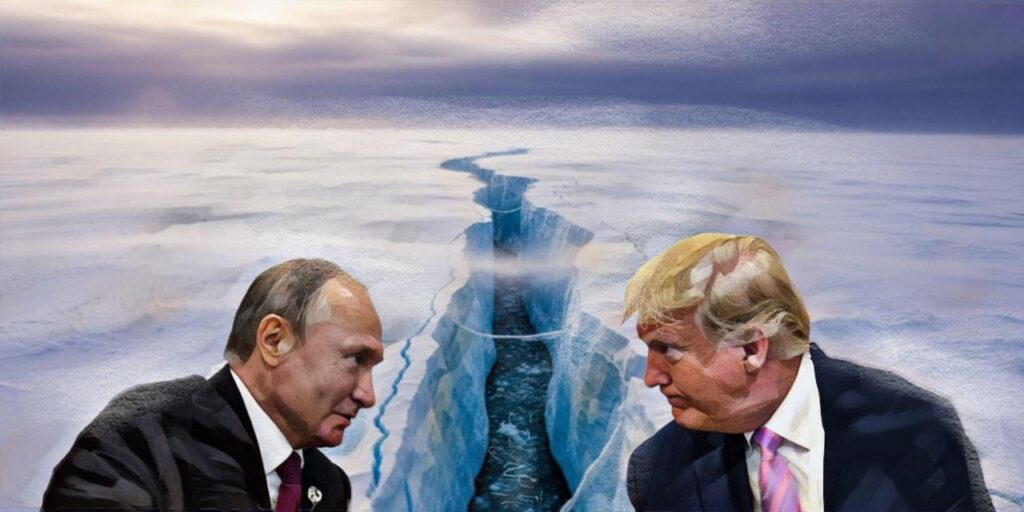
Trump–Putin Talks in Alaska: What Could They Mean for Central Asia?

As U.S. President Donald Trump prepares to meet Russian President Vladimir Putin at the Joint Base Elmendorf-Richardson, located just outside of Anchorage, Alaska, hopes and anxieties are reverberating across Central Asia. Trump has signaled that securing a ceasefire in Ukraine is his top priority, warning of “very severe consequences” for Moscow if Putin refuses to halt the war. For the five former Soviet republics of Central Asia, these peace talks carry high stakes. Any truce or breakdown could ripple into their economies and strategic calculus. The war has already fundamentally changed Central Asia’s strategic positioning, accelerating diversification away from Russian dependence. With Trump and Putin poised to negotiate, Central Asian leaders are mindful that all possible outcomes - a ceasefire, a prolonged conflict, or a major power realignment - could each reshape the region’s economic fortunes and foreign policy choices. Central Asian Stances on the Ukraine War All five Central Asian governments have officially maintained neutrality on the Ukraine conflict. On the first UN General Assembly resolution of March 2, 2022, Kazakhstan, Kyrgyzstan, and Tajikistan abstained, while Uzbekistan and Turkmenistan did not vote. On subsequent resolutions, Uzbekistan abstained alongside Kazakhstan, Kyrgyzstan, and Tajikistan; Turkmenistan continued not to vote. None has recognized Russia’s claims to Ukrainian territory. Seated beside Putin at a plenary session of the St. Petersburg International Economic Forum in June 2022, referring to them as “quasi-state territories,” President Kassym-Jomart Tokayev of Kazakhstan refused to recognize the independence of the so-called Donetsk and Lugansk People’s Republics. “Modern international law is the United Nations Charter,” Tokayev stated. Despite maintaining ties with Russia, Kazakhstan has boosted its engagement with China, Turkey, and Europe during the conflict. Whilst publicly affirming that it will comply with Western sanctions on Russia, Kazakhstan has stated that it will continue to prioritize its economic interests, vowing not to “blindly follow” such measures when they harm its domestic industries. “Kazakhstan will continue to comply with the sanctions but will pursue a balanced policy to minimize the impact on its own economy,” Deputy Prime Minister Serik Zhumangarin said in August 2024. Uzbekistan has adopted a similar “balanced and neutral” approach to the war in Ukraine. In March 2022, then-Foreign Minister Abdulaziz Kamilov stated that Uzbekistan “recognizes the independence, sovereignty and territorial integrity of Ukraine, and does not recognize the Luhansk and Donetsk People’s Republics.” Despite Kamilov leaving his position shortly after making this statement, the nation’s position appears largely unchanged. Calling for an immediate end to “hostilities and violence,” Tashkent has expanded links with Turkey, China, and the EU. According to a U.S. State Department report from 2024, “Uzbekistan formally committed to adhering to U.S. and EU sanctions and trade restrictions on Russia.” Kyrgyzstan has continued to maintain a close economic relationship with Moscow while abstaining from all key United Nations resolutions concerning the Ukraine war. President Sadyr Japarov has said the country “adheres to a neutral position” and that exports to Russia are civilian in nature. In January 2025, Kyrgyzstan’s Keremet Bank was designated by the U.S....

Afghanistan Generates 250 MW of Electricity, Imports 800 MW from Central Asia and Iran

Afghanistan’s state-owned electricity company, Da Afghanistan Breshna Sherkat (DABS), has signed or prepared agreements for domestic power generation projects totaling 1,070 megawatts over the past 11 months, with 70% of the funding coming from foreign investors, TOLOnews reported. Speaking in an interview, DABS chief Abdulbari Omar said the initiative marks a significant step toward energy self-sufficiency after years of underinvestment in the sector. “In the past 11 months, we have invested 69 billion Afghanis ($1.01 billion), 70% of which came from abroad. This shows we have encouraged foreign investors to enter the Afghan market,” he said. Afghanistan currently produces about 250 MW of electricity domestically and imports around 800 MW from Turkmenistan, Iran, Uzbekistan, and Tajikistan, at an annual cost of $250-280 million. Omar said the country would need between 6,000 and 7,000 MW to meet domestic demand, rising to 10,000 MW if industrial activity expands. He acknowledged the challenges of developing power from wind, water, gas, coal, and waste, but stressed that projects are moving forward with domestic funds and private investment, without relying on the World Bank or other international organizations. Omar also highlighted the problem of unpaid bills, citing 450 million Afghanis ($6.48 million) owed by former political leaders and warlords. “All individuals, from ministers to ordinary citizens, are treated equally under the law,” he said, noting that power has been cut to ministers who failed to pay. Last year, The Times of Central Asia reported that DABS extended its electricity import agreement with Uzbekistan until the end of 2025. The deal, signed in Uzbekistan by Omar and the National Electricity Company of Uzbekistan, remains vital for meeting Afghanistan’s needs. According to the Taliban-controlled Ministry of Energy and Water, Afghanistan requires around 1,500 MW of electricity, with roughly 720 MW imported and the rest generated domestically.

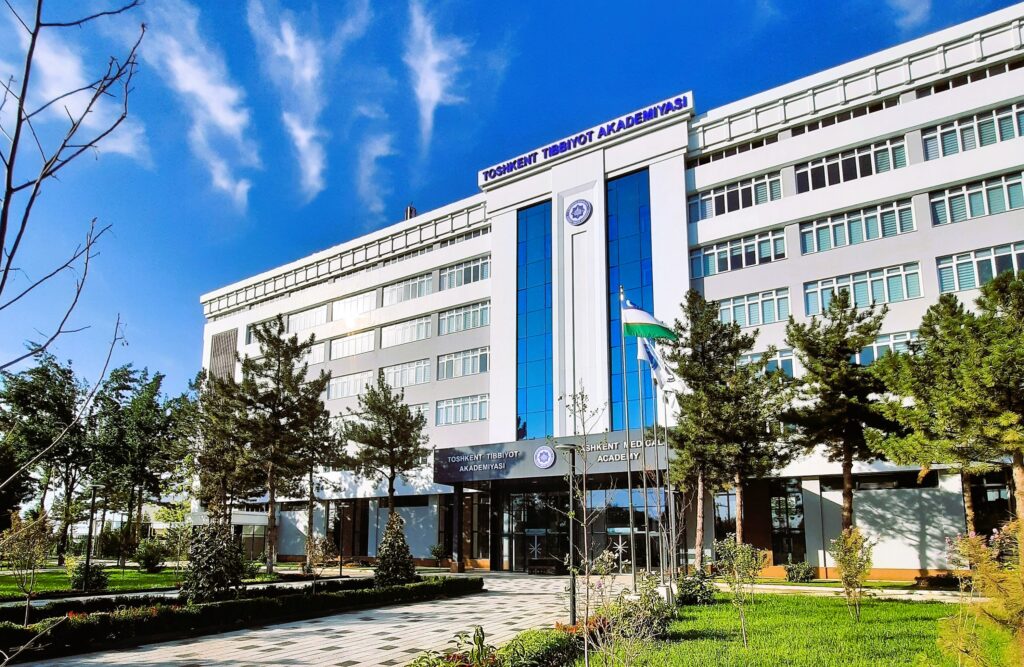
Tashkent Medical University Accused of Forcing Students to Study in Russian City Reportedly Under Drone Attacks

Tashkent State Medical University (TSMU) has rejected social media allegations that its students are being forced to study in Nizhny Novgorod, Russia, a city some reports claim is “under Ukrainian drone attacks.” The university called the reports “baseless and false,” stressing that the students are enrolled in a joint degree program requiring them to complete the final two years at a partner institution abroad. Videos shared by local media this week showed students opposing the move, citing recent drone strikes in the region that reportedly killed one person and injured several others. They claimed a previous rector had promised to transfer the program to Kazakhstan, but the current rector, Shukhrat Boymuradov, reversed that decision. Students alleged they were given an ultimatum: go to Russia or take academic leave and request to finish their fifth year in Uzbekistan. TSMU said all the students in question had signed contracts under a joint education program with Privolzhsky Research Medical University (PRMU) in Nizhny Novgorod, as stipulated by Uzbekistan’s Cabinet of Ministers Resolution No. 421 of July 6, 2021. The agreement requires participants to complete their fourth and fifth years at PRMU. According to the university, PRMU runs 12 joint programs with five Uzbek universities and currently hosts more than 400 Uzbek students. To ensure suitable conditions, TSMU and PRMU agreed on dedicated dormitories, a special dean’s office to help with administrative matters, and re-enrollment opportunities for students previously expelled from PRMU. The administration dismissed claims that Nizhny Novgorod is under martial law, noting that the city hosts active academic partnerships and that no state of war has been declared there. On August 11, Boymuradov met with students and parents to discuss the program, living arrangements, and support services. TSMU reported that most students expressed readiness to continue studies at PRMU, while a minority sought to remain in Tashkent, allegedly relying on “deliberately false information.” The university warned that spreading misinformation intended to mislead the public and damage its reputation could result in legal action under Uzbek law.

Uzbekistan, India Boost Strategic Partnership in High-Level Call

Uzbek President Shavkat Mirziyoyev spoke with Indian Prime Minister Narendra Modi on August 12, 2025, in a telephone conversation aimed at deepening the strategic partnership between Uzbekistan and India. The two leaders discussed expanding cooperation across trade, connectivity, healthcare, technology, and cultural exchanges, with Modi describing their conversation as “fruitful.” Posting on X, Modi stated that “We reviewed the progress achieved in key areas of our bilateral cooperation and reaffirmed our shared resolve to further advance the India-Uzbekistan Strategic Partnership.” Ahead of India’s 79th Independence Day, Mirziyoyev highlighted the longstanding friendship between the two nations. The talks underscored Uzbekistan’s growing role as a vital partner in Central Asia for India, as both countries seek to bolster regional stability and their economic development. Since Uzbekistan’s independence in 1991, the country has steadily built ties with India, which was among the first to recognize its sovereignty. The two nations formally established diplomatic relations in 1992 and elevated their engagement with a Strategic Partnership declaration in 2011. Uzbekistan has hosted several visits by Modi, most recently in September 2022, when he participated in the 22nd SCO summit held in Samarkand. Mirziyoyev has visited India on two occasions. Uzbekistan plays a central role in Central Asian connectivity initiatives such as the China–Kyrgyzstan–Uzbekistan railway project, enhancing trade routes and regional cooperation. It is also exploring collaboration with India in healthcare and technology, alongside efforts to promote cultural and educational exchanges that strengthen ties between their peoples. Bilateral economic ties are steadily growing, with trade between India and Uzbekistan reaching approximately $756.6 million in 2023, up from $444.2 million in 2020. Indian exports include pharmaceuticals, machinery, and food products, while Uzbekistan supplies fruits, fertilizers, and textiles. More than 300 Indian companies now operate in Uzbekistan, encouraged by a new Bilateral Investment Treaty signed in 2024, which is aimed at boosting joint ventures in healthcare, IT, and tourism. Both governments have signaled their intent to diversify into renewable energy, agriculture, and hospitality. Connectivity is a key pillar of the partnership. Uzbekistan is working with India on projects like the International North–South Transport Corridor and seeking operational access to Iran’s Chabahar Port, which would give Tashkent a direct route to the Indian Ocean. Security and defense cooperation have intensified since the creation of the Joint Working Group on Defense in 2019. The two countries hold the annual Dustlik military exercises, alternating between India and Uzbekistan, to strengthen counter-terrorism and urban warfare capabilities. The sixth edition was held in Pune from April 16–28, 2025, underscoring growing interoperability between the two militaries. Uzbek forces regularly train at Indian military academies, and discussions are underway on defense industry collaboration. Cultural and educational ties also remain vibrant. Bollywood and Indian music enjoy enduring popularity in Uzbekistan. Around 10,000 Indian students now study across Uzbek institutions, particularly in medicine. On the tech side, ministers agreed this year to launch an India–Central Asia Digital Partnership Forum, with Uzbekistan offering to host the inaugural meeting, linking India’s digital public infrastructure experience with Central Asia’s modernization...