• KGS/USD = 0.01144 0%
  • KZT/USD = 0.00207 0%
  • TJS/USD = 0.10437 0.19%
  • UZS/USD = 0.00008 0%
  • TMT/USD = 0.28490 0%
  • KGS/USD = 0.01144 0%
  • KZT/USD = 0.00207 0%
  • TJS/USD = 0.10437 0.19%
  • UZS/USD = 0.00008 0%
  • TMT/USD = 0.28490 0%
  • KGS/USD = 0.01144 0%
  • KZT/USD = 0.00207 0%
  • TJS/USD = 0.10437 0.19%
  • UZS/USD = 0.00008 0%
  • TMT/USD = 0.28490 0%
  • KGS/USD = 0.01144 0%
  • KZT/USD = 0.00207 0%
  • TJS/USD = 0.10437 0.19%
  • UZS/USD = 0.00008 0%
  • TMT/USD = 0.28490 0%
  • KGS/USD = 0.01144 0%
  • KZT/USD = 0.00207 0%
  • TJS/USD = 0.10437 0.19%
  • UZS/USD = 0.00008 0%
  • TMT/USD = 0.28490 0%
  • KGS/USD = 0.01144 0%
  • KZT/USD = 0.00207 0%
  • TJS/USD = 0.10437 0.19%
  • UZS/USD = 0.00008 0%
  • TMT/USD = 0.28490 0%
  • KGS/USD = 0.01144 0%
  • KZT/USD = 0.00207 0%
  • TJS/USD = 0.10437 0.19%
  • UZS/USD = 0.00008 0%
  • TMT/USD = 0.28490 0%
  • KGS/USD = 0.01144 0%
  • KZT/USD = 0.00207 0%
  • TJS/USD = 0.10437 0.19%
  • UZS/USD = 0.00008 0%
  • TMT/USD = 0.28490 0%

Viewing results 109 - 114 of 956

Uzbekistan Plans Full Launch of Large Nuclear Power Plant by 2035

Uzbekistan plans to fully launch a high-capacity nuclear power plant by 2035, according to Azim Akhmedkhadjaev, director of the “Uzatom” agency. Speaking on September 25 at World Atomic Week in Moscow, Akhmedkhadjaev said the first small modular reactor is expected to begin operations in 2029 in the Jizzakh region, followed by a second unit six months later. The large-scale plant will see its first reactor come online in 2033, with full capacity expected by 2035. He noted, however, that final timelines depend on the conclusion of outstanding contract agreements. Akhmedkhadjaev confirmed that production of reactor equipment is already underway and that the project is proceeding on schedule. Responding to a question from a Spot correspondent, he reiterated the target dates for the larger reactors and emphasized that the timeline will be refined once contracts are finalized. The announcement aligns with Uzbekistan’s broader nuclear energy strategy. As previously reported by The Times of Central Asia, the country plans to build both small modular and larger reactors at a single integrated nuclear facility. Under a revised agreement with Russia, Uzbekistan intends to construct two large VVER-1000 reactors alongside two smaller RITM-200N units. The initial framework for the project was established in 2018 and updated in 2024. Earlier this year, The Times of Central Asia reported that Rosatom had begun manufacturing reactor components for the smaller units, with the first steel castings for the RITM-200N already produced in Saint Petersburg. Uzbekistan’s pivot to nuclear energy is part of its strategy to meet rapidly increasing electricity demand, which is projected to reach 135 billion kWh by 2035, nearly double current consumption levels. To address this, the government is expanding generation capacity and modernizing the national grid. While the plans are ambitious, challenges remain. As Akhmedkhadjaev acknowledged, the full implementation timeline depends heavily on contract finalization. Nevertheless, Uzbekistan’s dual-track approach, combining scalable small reactors with large base-load units, suggests a strategic commitment to energy security and diversification.
Climbing the Value Chain: Uzbekistan’s Textile Transformation Through Chinese Investment

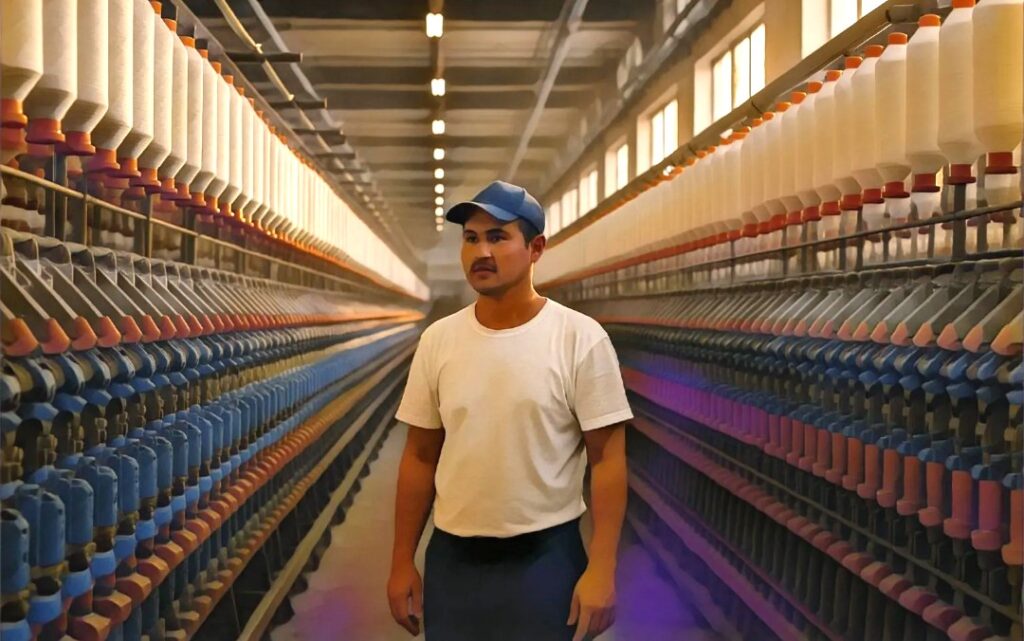
As relations between China and Uzbekistan deepen, cooperation is no longer confined to the traditional pillars of energy and infrastructure. The partnership has begun to branch into new and diverse areas, adding layers of complexity and opportunity to their bilateral ties. Emerging sectors such as pharmaceuticals and waste-to-energy are gaining traction, signaling a shift toward a more multidimensional relationship. At the same time, the textile industry has become an increasingly important bridge between the two countries, offering fresh avenues for collaboration. Recent agreements highlight this momentum. In the upstream segment of Uzbekistan’s textile sector, China Hi-Tech Holding has committed to a major investment in synthetic fiber and viscose yarn production. This move is particularly significant for Uzbekistan, as it reduces reliance on cotton and secures inputs essential for modern mixed-fabric production. Midstream, cooperation is expanding as well. An agreement between Uzbekistan and China’s Fong Group to develop dyeing and finishing facilities for mixed fabrics underscores the practical steps being taken to create a more integrated textile supply chain. These developments also reflect a broader trend of growing Chinese interest in Uzbekistan’s domestic market and its strategic location at the crossroads of the Middle East and Europe. With its young population and export potential, Uzbekistan is increasingly attractive to Chinese textile companies. The Red Dragonfly Group’s plan to establish a manufacturing base in Uzbekistan by 2026 is a clear example of how Chinese firms see the country not only as a production hub but as a gateway to wider regional markets. One of the main reasons Uzbekistan is emerging as a crucial destination for Chinese companies is the shifting incentive structure that encourages the relocation of manufacturing capacity abroad. Rising labor costs in China, particularly in the labor-intensive textile sector, are placing companies under pressure amid fierce domestic competition. In contrast, Uzbekistan offers an appealing alternative where the average monthly wage for a skilled worker is around 200-400 dollars, and energy costs are just 0.04 dollars per kilowatt-hour. Together, these factors significantly lower production costs and make the country highly attractive for firms seeking to maintain competitiveness. Equally important are Uzbekistan’s proactive regulatory policies, which create a favorable business climate for foreign investors. The government has relied heavily on Special Economic Zones and Small Industrial Zones and offers tiered incentive packages that reward higher commitments. Investors contributing between 3 and 5 million dollars receive three years of income tax holidays, while investments of 5 to 15 million dollars are rewarded with a five-year exemption. Those exceeding 15 million dollars benefit from an unprecedented ten-year tax holiday. Moreover, starting in September 2025, the social tax rate for textile companies and clusters will be cut to 1% for three years. At the same time, imports of blended fabrics and raw materials for the leather and sericulture industries will be exempt from customs duties. These measures provide Chinese companies with tangible cost advantages that rival opportunities in Southeast Asia. Another powerful driver is geopolitics. Growing trade tensions between China and the West, particularly the...

From Gas to Gigawatts: Uzbekistan Powers Ahead with Dual Nuclear Deal

Uzbekistan has confirmed it will be building a large nuclear power plant (NPP) with two 1000-megawatt (MW) reactors as the country prepares for a sharp increase in electricity consumption in the coming years. Uzbekistan’s state atomic energy company, Uzatom, posted on September 26 that a new agreement calls for both a large and small NPP to be constructed at the same site in Uzbekistan. The revised plan for NPPs in Uzbekistan combines agreements the country signed with the Russian state nuclear company Rosatom in 2018 and 2024. Uzbek Prime Minister Abdullo Aripov and his Russian counterpart at the time, Dmitri Medvedev, signed a deal in September 2018 for a large NPP with two VVER-1200 reactors.  However, in late May 2024, during Russian President Vladimir Putin’s visit to Uzbekistan, a new agreement was signed for six small reactors, each with a capacity of 55 MW. Preparation work for six RITM-200N reactors started shortly after in the Farish district of Jizzakh Province. In June 2025, Russia’s Ministry of Economic Development said the agreement was restructured. The latest official agreement, signed September 26, 2025, commits to building an integrated NPP with two large VVER-1000 reactors and two small modular RITM-200N units. The Farish facility will be the first to house both a large and a small NPP at the same site. Speaking on the sidelines of the World Nuclear Week conference in Moscow on September 25, Uzatom director Azim Akhmedkhadjaev said, “We are the first in Central Asia to create an innovative solution for the future… (a) project combining advanced small modular reactor technology with time-tested solutions from large-scale nuclear energy.” The new agreement calls for the construction of two VVER-1000 units instead of the original VVER-1200 models. There was no explanation for the change in the type of reactors for the Uzbek facility. Uzbek Deputy Prime Minister Jamshid Khodjaev was also at the conference in Moscow. Hojayev noted Uzbekistan is seeking to increase renewable energy sources so that by 2030, these sources will produce more than 40% of Uzbekistan’s energy. Khodjaev pointed to solar and wind projects in explaining why the small NPPs are necessary. “Large blocks (reactors) provide stable baseload generation, while small blocks cover peak loads and balance the erratic operation of solar and wind farms,” according to Khodjaev. Essentially, the smaller reactors will help ensure a constant flow of electricity into the domestic grid when there is insufficient wind or sun to keep wind farms and solar power stations operating at full capacity. As Much as Possible and More Khodjaev has said that when both the large and small NPPs are operational in 2035, it will add some 15-billion-kilowatt hours (kWh) to Uzbekistan’s power grid. Electricity production in Uzbekistan has risen from some 59 billion kWh in 2016 to about 81.5 billion kWh in 2024. A relatively small percentage of that is exported to neighbors. A recent agreement with Kazakhstan calls for sending some 900 million kWh of Uzbek electricity to its northern neighbor between March and December 2026....

Kazakhstan Enforces Fuel Export Ban

Kazakhstan’s Ministry of Energy has confirmed that the country’s six-month ban on fuel exports remains in full effect, with no gasoline shipments currently sent to Uzbekistan or other neighboring countries. Officials acknowledged a single exception earlier this year, when surplus volumes of AI-92 gasoline were exported to Uzbekistan in the spring. The ministry characterized the shipment as a routine measure aligned with international practice, designed to optimize domestic storage and increase tax revenues. Since June, all fuel exports have been suspended to build strategic reserves ahead of scheduled maintenance at Kazakhstan’s oil refineries. The ban, introduced on May 19, covers gasoline, diesel, and other petroleum products. Reports of Fuel Shortages and Smuggling Speculation over renewed fuel shortages in Kazakhstan surfaced in local media on September 22, with reports citing illegal cross-border smuggling as a contributing factor. Some sources also claimed that Uzbekistan had increased purchases of Kazakh gasoline amid a decline in fuel imports from Russia. In response, the Ministry of Energy reiterated that no current fuel exports are taking place and emphasized that the export moratorium is being strictly enforced. Uzbekistan’s Fuel Market in Transition Uzbekistan’s state energy company Uzbekneftegaz recently announced plans to phase out production of AI-80 gasoline starting in September. Beginning in 2026, the country intends to supply only higher-octane grades, including AI-92 and AI-95, to align with international fuel standards. The regional fuel market has already undergone significant restructuring. In April 2024, the Telegram channel Oil & Gas of Kazakhstan reported that Uzbekistan was scaling back crude oil imports from Kazakhstan in favor of cheaper Russian supplies. During the first quarter of 2024, Uzbek companies imported 15,200 tons of crude oil from Kazakhstan by rail, down from 25,600 tons during the same period in 2023. Most of this volume was refined at the Ferghana plant. Meanwhile, Russia’s Gazprom Neft significantly expanded deliveries to Uzbekistan. In the first quarter of 2024, the company shipped 75,000 tons of crude via pipelines through Kazakhstan, nearly seven times more than the 10,700 tons delivered a year earlier.

Uzbekistan to Host First-Ever Web Summit Spotlight in Central Asia

Uzbekistan will host its first Web Summit Spotlight on September 27 in Tashkent, marking a significant milestone for the country’s growing tech sector. The Ministry of Digital Technologies and IT Park Uzbekistan, co-organizers of the event, confirmed the announcement in an official press release. The event is being held in partnership with Web Summit, one of the world’s most prominent technology conferences, which draws more than 70,000 participants each year to its flagship gathering in Lisbon. In recent years, Web Summit has expanded globally with editions in Rio de Janeiro, Qatar, and Vancouver. Tashkent will now join this lineup, positioning Uzbekistan as a rising hub for innovation and international tech collaboration. According to organizers, Web Summit Spotlight: Uzbekistan will bring together leading global experts, venture capitalists, startup founders, and IT industry executives. The program will highlight Uzbekistan’s evolving role as a center for technological innovation, opportunities for international investment in emerging markets, and current trends in venture funding. President Shavkat Mirziyoyev has consistently stressed the importance of digital transformation for Uzbekistan’s future. “We are creating conditions for Uzbekistan to become a true center of innovation, where young people can turn their talent and energy into globally competitive projects,” the president said earlier this year while outlining the country’s digital development strategy. The forum comes amid rapid growth in Uzbekistan’s IT sector. As previously reported by The Times of Central Asia, revenues from IT outsourcing tripled to more than $300 million, following four consecutive years of annual doubling. The United States remains the primary destination for Uzbek IT exports, accounting for half of all outsourcing contracts. Authorities aim to grow outsourcing revenues to $5 billion by 2030, with a projected 300,000 people employed in the sector. IT Park Uzbekistan has played a pivotal role in this transformation. By the end of 2023, it was home to 1,652 resident companies, nearly half of which were founded that year. With attractive tax incentives and support services, the park has become a magnet for both domestic and international tech talent.

Uzbekistan Approves Share Purchase Plan to Join Eurasian Development Bank

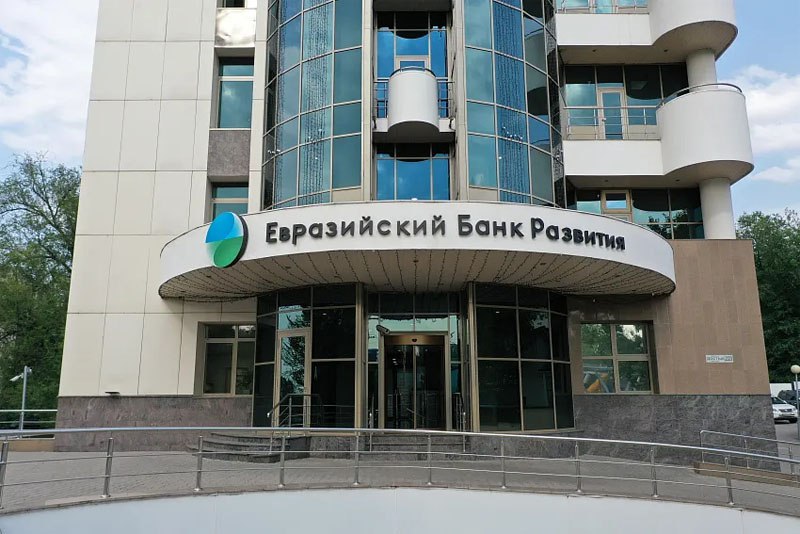
President Shavkat Mirziyoyev has approved Uzbekistan’s plan to acquire shares in the Eurasian Development Bank (EDB), formally initiating the country’s accession to the institution’s 2006 founding agreement. The decision was published on the official legal portal, Lex.uz. Under the approved terms, Uzbekistan will receive 777,777 shares in the EDB’s charter capital, each valued at $1,000. Of these, 168,411 shares (21.7%) are payable, while the remaining 609,366 shares (78.3%) will be paid on demand. The president’s decree also outlines a payment schedule, with funding to begin from the state budget in 2025. The Ministry of Investments, Industry, and Trade has been tasked with executing the share purchase in accordance with established procedures. The Ministry of Economy and Finance will allocate the necessary funds, which will be included in the state budget from 2026 onward. The Central Bank of Uzbekistan will serve as the depository for EDB funds and assets within the country. President Mirziyoyev described Uzbekistan’s participation in the EDB as a strategic move to strengthen regional economic ties. “Joining the Eurasian Development Bank will open new opportunities for financing infrastructure, industrial, and trade projects that directly serve our long-term development goals,” he said. Deputy Prime Minister Jamshid Khodjaev has been appointed Uzbekistan’s authorized representative to the EDB, with Deputy Minister Khurshid Teshabaev designated as his deputy. The Ministry of Investments, Industry, and Trade will serve as the country’s authorized body in dealings with the bank. This move is part of Uzbekistan’s broader strategy to deepen integration with Eurasian economic institutions. In 2024, officials confirmed that Uzbekistan aims to complete its accession to the EDB by early 2025. Uzbekistan has held observer status in the Eurasian Economic Union (EAEU) since 2020 and already participates in collaborative projects on trade, transport, e-commerce, and climate change. Founded in 2006 by Russia and Kazakhstan, the EDB now also includes Armenia, Belarus, Kyrgyzstan, and Tajikistan. The bank’s core mission is to finance large-scale investment projects that promote economic growth and regional integration.