• KGS/USD = 0.01143 0%
  • KZT/USD = 0.00205 0%
  • TJS/USD = 0.10433 0.1%
  • UZS/USD = 0.00008 0%
  • TMT/USD = 0.28577 0%
  • KGS/USD = 0.01143 0%
  • KZT/USD = 0.00205 0%
  • TJS/USD = 0.10433 0.1%
  • UZS/USD = 0.00008 0%
  • TMT/USD = 0.28577 0%
  • KGS/USD = 0.01143 0%
  • KZT/USD = 0.00205 0%
  • TJS/USD = 0.10433 0.1%
  • UZS/USD = 0.00008 0%
  • TMT/USD = 0.28577 0%
  • KGS/USD = 0.01143 0%
  • KZT/USD = 0.00205 0%
  • TJS/USD = 0.10433 0.1%
  • UZS/USD = 0.00008 0%
  • TMT/USD = 0.28577 0%
  • KGS/USD = 0.01143 0%
  • KZT/USD = 0.00205 0%
  • TJS/USD = 0.10433 0.1%
  • UZS/USD = 0.00008 0%
  • TMT/USD = 0.28577 0%
  • KGS/USD = 0.01143 0%
  • KZT/USD = 0.00205 0%
  • TJS/USD = 0.10433 0.1%
  • UZS/USD = 0.00008 0%
  • TMT/USD = 0.28577 0%
  • KGS/USD = 0.01143 0%
  • KZT/USD = 0.00205 0%
  • TJS/USD = 0.10433 0.1%
  • UZS/USD = 0.00008 0%
  • TMT/USD = 0.28577 0%
  • KGS/USD = 0.01143 0%
  • KZT/USD = 0.00205 0%
  • TJS/USD = 0.10433 0.1%
  • UZS/USD = 0.00008 0%
  • TMT/USD = 0.28577 0%

Viewing results 49 - 54 of 935

Uzbekistan to Import 300,000 Animals, Launch $367 Million in Livestock Projects

Uzbekistan’s President Shavkat Mirziyoyev has announced a sweeping expansion of the country’s livestock sector as part of broader agricultural reforms. Speaking on December 10 at a meeting with industry specialists to mark Agriculture Workers’ Day, the president outlined key initiatives aimed at boosting domestic production of meat and dairy products. According to the president’s press secretary, the government will import 100,000 head of cattle and 200,000 sheep and goats in 2026. Farmers working within cotton and grain clusters will be permitted to construct lightweight livestock facilities of up to 20 sotok (approximately 0.2 hectares) on their existing plots, a move designed to better integrate crop and livestock operations. Uzbekistan will also extend its subsidy program for imported breeding cattle and day-old chicks for an additional five years. To support the livestock sector’s growth, the government plans to allocate $157 million from funding provided by the World Bank and the International Fund for Agricultural Development. These loans will be issued to farmers at an interest rate of 17% for a term of up to 10 years, including a three-year grace period. Additional financing will include $150 million from the Japan International Cooperation Agency (JICA) and $60 million from the Asian Development Bank. Authorities say the efficient use of these resources could support the launch of 1,000 projects valued at 5 trillion UZS, including the establishment of 340 small livestock farms across 167 districts, modeled after a French framework. Last year, the European Union Delegation to Uzbekistan and the French Development Agency (AFD) signed agreements to support sustainable livestock development. The EU committed €4.7 million in grants for technical assistance and an additional €7.9 million to support Uzbekistan’s drinking water program, helping lay the groundwork for these agricultural reforms.
Wallet in Telegram Launches in Uzbekistan, Expanding Crypto Access to Millions

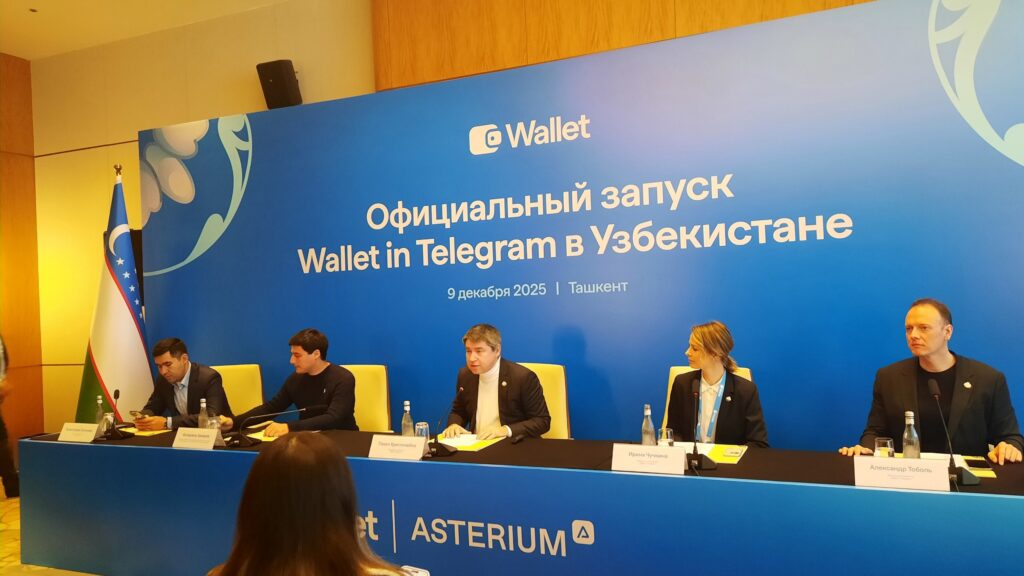
Wallet in Telegram, a global digital asset service integrated directly into the Telegram messaging app, officially launched in Uzbekistan on December 9, opening up crypto access to more than 27 million local users. The move marks a major expansion of Telegram’s financial ecosystem and reinforces Uzbekistan’s role as a regional leader in regulated digital finance. The service allows users to buy, store, and transfer cryptocurrencies without needing to install additional applications. Registration takes only seconds, and transactions can be completed using local payment systems such as Humo, Visa, and Mastercard. Wallet currently supports Bitcoin, Toncoin, USDT, and over 200 other digital assets. According to the company, the goal is to make crypto transactions as seamless as sending a message, an especially relevant approach in Uzbekistan, where Telegram usage exceeds 88% of the internet-connected population. By embedding financial tools into an everyday platform, Wallet aims to normalize digital asset use and broaden access to global financial technologies. The technical infrastructure for Wallet’s Uzbekistan launch is provided by Asterium, the country’s largest crypto ecosystem and a key fintech player. Asterium is responsible for ensuring secure transactions, identity verification, and data protection. “Our mission at Asterium is to make working with crypto assets simple and accessible for everyone. Wallet in Telegram reflects our product philosophy: it is convenient, transparent, and secure, meaning it is genuinely useful for people,” said Komilhodja Sultonov, CEO of Asterium. The service was licensed by Uzbekistan’s National Agency for Perspective Projects (NAPP), the regulatory body overseeing the digital asset sector. Uzbekistan has developed one of Central Asia’s most comprehensive legal frameworks for crypto, with a strong focus on user protection and structured innovation. In response to questions from The Times of Central Asia, NAPP clarified how Wallet aligns with current regulations. Askarjon Zakirov, Head of the Crypto-Assets Turnover Sphere Development Department, emphasized that Uzbekistan legally distinguishes crypto assets from fiat currency. “Firstly, we say that a crypto asset is not a means of payment or a monetary equivalent,” he said. [caption id="attachment_40689" align="aligncenter" width="300"] @TCA/Sadokat Jalolova[/caption] Zakirov explained that crypto is treated as a form of property under Uzbek law. As such, transferring cryptocurrency is regarded as a transfer of property rights rather than a financial transaction with monetary obligations. Pavel Khristolubov, COO of Fintech and Web3 at Wallet in Telegram, also underscored the platform’s commitment to regulatory compliance. “It’s very important for us to operate within the framework of our license. This means we don't compete with local payment systems,” he said. Khristolubov added that Wallet users can choose between custodial services and non-custodial, on-chain options, offering varying degrees of freedom and security. Andrew Rogozov, CEO of The Open Platform (TOP), the technology company behind Wallet, described Uzbekistan as one of the world’s most dynamic digital markets. “By combining Telegram’s scale with regulatory clarity and high mobile adoption, we see Uzbekistan as a model for how emerging markets can leapfrog into convenient, technology-driven finance,” he said. Globally, Wallet in Telegram has over 150 million registered users. Its launch...

EDB Establishes Investment Bridge Between Gulf Capital and Central Asian Projects

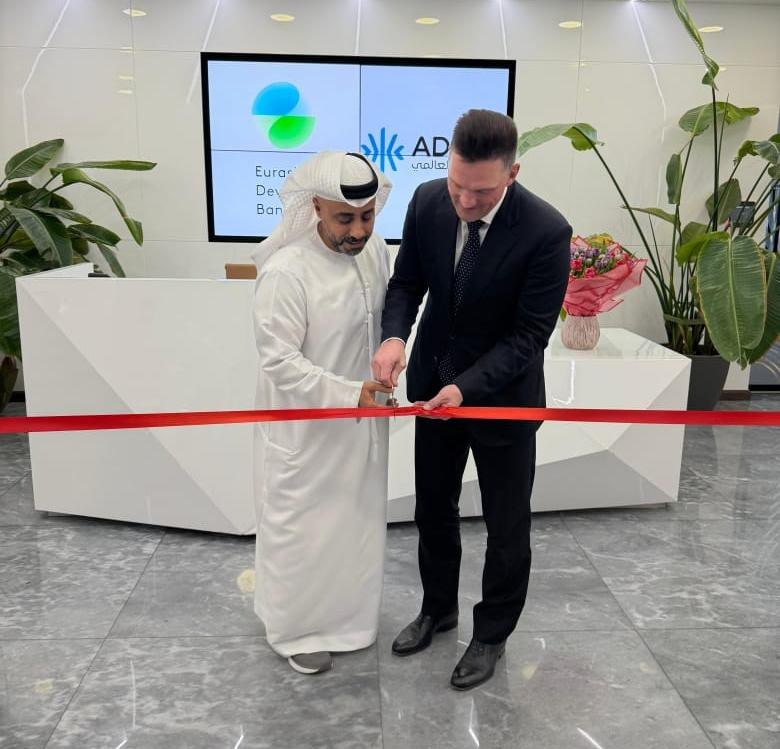
The Eurasian Development Bank (EDB), headquartered in Almaty, has opened a representative office in Abu Dhabi Global Market (ADGM), the United Arab Emirates’ international financial center, marking a strategic move to connect Gulf Cooperation Council (GCC) investors with high-potential projects across Central Asia. According to the Bank, the new platform will offer GCC investors structured investment opportunities backed by EDB analytics, regional expertise, and strong ties with the governments of its member states, Armenia, Belarus, Kazakhstan, Kyrgyzstan, Russia, Tajikistan, and Uzbekistan. Through this initiative, investors will gain access to infrastructure and sustainable development projects with optimized risk-return profiles. At the launch ceremony, EDB Management Board Chairman Nikolai Podguzov underscored the strategic significance of the move. “We are creating an ‘investment highway’ between Gulf capital and opportunities in Central Asia. Our new office in Abu Dhabi reinforces our role as a regional bridge, combining local knowledge with tailored financial instruments. Investors gain access to proven projects with favorable risk-return dynamics, while Central Asian economies unlock new development funding.” A centerpiece of the new platform is a specialized credit fund dedicated to financing infrastructure development in Central Asia. Registered under ADGM jurisdiction, the fund will focus on debt financing for EDB’s infrastructure portfolio. The Bank highlighted ADGM’s regulatory advantages, noting that the fund will offer Middle Eastern and global investors a secure and efficient entry point into the region’s development landscape. EDB will serve as both a structuring partner and co-investor, providing access to a diversified project pipeline. Priority Sectors for Investment Transport and Logistics: The development of the North-South Corridor could boost transit volumes through Central Asia by up to 40%, significantly reducing shipping distances between the Gulf and key Eurasian markets. Water Sector and Agribusiness: The irrigation equipment market in Central Asia is valued at approximately $426 million annually, while the broader water supply sector is worth up to $2 billion. Renewable Energy: The sector continues to attract major players such as the UAE’s Masdar, which has established a growing footprint across Central Asia. Strengthening Gulf-Central Asia Economic Ties In recent years, the Gulf states have become major trading partners and investors in Central Asia. According to EDB data, trade between the Gulf and Central Asia reached $3.3 billion in 2024, a 4.2-fold increase since 2020. Imports from the Gulf made up 80% of the total trade turnover. Top Central Asian trading partners with the Gulf in 2024 were: Turkmenistan - $2 billion (61%) Uzbekistan - $740 million (23%) Kazakhstan - $302 million (9%) The highest trade growth rates were recorded in: Turkmenistan - up 9.9 times Kyrgyzstan - up 9.5 times Uzbekistan - up 8.1 times The UAE accounted for 97% of all Gulf-Central Asia trade. For Turkmenistan, Gulf trade represented around 10% of total foreign commerce, while Kyrgyzstan’s share stood at approximately 1%, with even lower figures across other regional states. The EDB projects continued growth in trade, citing an unrealized potential of $4.9 billion, including $4.4 billion in potential Gulf exports (motor vehicles, electronics, jewelry) and $500...

Uzbekistan’s External Debt Reaches $43.97 Billion

Uzbekistan’s external debt reached 43.97 billion dollars as of October 1, according to data released by the Ministry of Economy and Finance. The increase of 473 million dollars over the previous quarter reflects a slowdown in borrowing, even as the government continues to rely on foreign funding to sustain public spending and major infrastructure projects. The country’s largest creditor remains the World Bank, which has extended 8 billion dollars in loans. This is followed by the Asian Development Bank with 7.5 billion dollars and international investors who hold 5.8 billion dollars in Eurobonds. Loans from Chinese financial institutions total 3.7 billion dollars, while Japanese lenders account for 3.1 billion dollars. Additional borrowing includes 1.7 billion dollars from the Asian Infrastructure Investment Bank and 1.2 billion dollars from France. Multilateral lenders such as the Islamic Development Bank also contribute to the total, along with a group of smaller international creditors that collectively account for 2.5 billion dollars. Debt denominated in U.S. dollars comprises 63% of Uzbekistan’s total external debt, while 12% is in Uzbek som, 8% in euros, and 6% in Japanese yen. The remainder is held in Special Drawing Rights and other currencies. In a related development, RIA Novosti, citing World Bank figures, reported that Uzbekistan increased its debt to Russia by 39 million dollars in 2024. This small rise came amid a broader trend across 38 countries whose combined debt to Russia grew to 33.1 billion dollars last year, the highest level since 1998.

Uzbekistan Lifts Import Duties and Advances ACWA Power Projects

Uzbekistan will remove unilateral import duties for seven countries as part of a government initiative to develop its construction materials sector, according to a presidential decree published on Lex.uz. The countries included in the exemption are Morocco, Tunisia, Egypt, Algeria, Saudi Arabia, Qatar, and Mongolia. The Ministry of Investments, Industry and Trade, in coordination with the Chamber of Commerce and Industry, the Customs Committee, and the Ministry of Foreign Affairs, has been given two months to draft a program of measures through 2027. This program will focus on lifting import duties and establishing systems for mutual recognition of certificates of origin with the designated states. A separate plan for conducting intergovernmental negotiations with each of the seven countries will also be prepared. In parallel, the interagency commission on cooperation with the World Trade Organization has been tasked with approving, within two weeks, a list of raw materials and inputs for the construction materials industry that will be exempt from customs duties until January 1, 2028. According to the decree, Uzbekistan aims to increase domestic production of construction materials to UZS 62 trillion and boost exports to $1.5 billion. The government plans to promote the use of energy-efficient and environmentally friendly materials, while facilitating investment in the sector. Projects totaling $3.5 billion are expected to be launched. Deputy Prime Minister Jamshid Khodjaev will supervise the approval of project parameters in cooperation with regional authorities and the O’zsanoatqurilishmateriallari association. Border security services have been instructed to ensure the safe passage of Uzbek business representatives through the Termez border crossing into Afghanistan. The decree coincides with Uzbekistan’s deepening economic ties with key international partners. On November 5, President Shavkat Mirziyoyev met with a delegation of Saudi companies led by Mohammad Abunayyan, chairman of ACWA Power and co-chair of the Uzbek-Saudi Business Council. The sides reviewed ongoing joint projects and explored new areas for collaboration. During the visit, four wind power plants with a combined capacity of 752 megawatts were connected to the national grid. Construction also began on five additional wind plants with a total capacity of 2.3 gigawatts, along with 300 megawatts of energy storage systems in Karakalpakstan and the Bukhara region. Work has also commenced on a 500-kilovolt power line spanning 1,790 kilometers, intended to improve energy transmission across Samarkand, the Tashkent region, Karakalpakstan, and Bukhara. The talks also addressed cooperation in transport infrastructure, IT, healthcare, agriculture, and other sectors, highlighting the government’s broader push to strengthen partnerships and attract investment across the Uzbek economy.

Blast Kills Four Workers at Explosives Plant in Uzbekistan

Four workers died and four were injured in an explosion and fire at a factory in Uzbekistan that supplies explosives to mining enterprises in Central Asia, emergency officials said on Saturday. The government said it was an accident. The blast at the Shams Ltd. facility happened in a workshop at 9:40 a.m. on Saturday in the Kogon district of the Bukhara region, and the fire was extinguished by 10:27 a.m., the Ministry of Emergency Situations said. Four out of the 30 workers who were in the warehouse died, the ministry said. “Four employees who received minor injuries were taken to the hospital; two of them received outpatient medical care and were allowed to return home,” it said. The government has established a commission to investigate the accident and provide urgent help to the victims. The Shams company, which has been operating since 2019, specializes in supplying explosives used to develop new deposits for mining operations in Uzbekistan and other parts of Central Asia.