
• KGS/USD = 0.01144 0%
  • KZT/USD = 0.00209 0%
  • TJS/USD = 0.10528 0%
  • UZS/USD = 0.00008 0%
  • TMT/USD = 0.28571 0%
  • KGS/USD = 0.01144 0%
  • KZT/USD = 0.00209 0%
  • TJS/USD = 0.10528 0%
  • UZS/USD = 0.00008 0%
  • TMT/USD = 0.28571 0%
  • KGS/USD = 0.01144 0%
  • KZT/USD = 0.00209 0%
  • TJS/USD = 0.10528 0%
  • UZS/USD = 0.00008 0%
  • TMT/USD = 0.28571 0%
  • KGS/USD = 0.01144 0%
  • KZT/USD = 0.00209 0%
  • TJS/USD = 0.10528 0%
  • UZS/USD = 0.00008 0%
  • TMT/USD = 0.28571 0%
  • KGS/USD = 0.01144 0%
  • KZT/USD = 0.00209 0%
  • TJS/USD = 0.10528 0%
  • UZS/USD = 0.00008 0%
  • TMT/USD = 0.28571 0%
  • KGS/USD = 0.01144 0%
  • KZT/USD = 0.00209 0%
  • TJS/USD = 0.10528 0%
  • UZS/USD = 0.00008 0%
  • TMT/USD = 0.28571 0%
  • KGS/USD = 0.01144 0%
  • KZT/USD = 0.00209 0%
  • TJS/USD = 0.10528 0%
  • UZS/USD = 0.00008 0%
  • TMT/USD = 0.28571 0%
  • KGS/USD = 0.01144 0%
  • KZT/USD = 0.00209 0%
  • TJS/USD = 0.10528 0%
  • UZS/USD = 0.00008 0%
  • TMT/USD = 0.28571 0%

Viewing results 133 - 138 of 1160

Vatican, Uzbekistan United in Pursuit of Diplomacy and Peace

On 6 December 2025, Pope Leo XIV accepted the credentials of thirteen new ambassadors, among them Abat Fayzullaev of Uzbekistan, in Vatican City’s splendid, fresco-festooned Sala Clementia in the Apostolic Palace. The accreditation of Uzbekistan’s ambassador marks a further milestone in the development of Tashkent’s relations with the Holy See. Addressing the new diplomats, Pope Leo XIV asserted the primacy the Holy See accords peace and diplomacy, and its conviction that peace can take root whenever the will to embrace it exists. “Peace is not merely the absence of conflict, but an active and demanding gift, one that is built in the heart and from the heart,” the Pope stated. He called on the ambassadors and the governments they represent to renounce “pride and vindictiveness,” and to resist “the temptation to use words as weapons. This vision of peace has become all the more urgent as geopolitical tension and fragmentation continue to deepen in ways that burden nations and that strain the bonds of the human family.” Pope Leo XIV said the Vatican would continue to publicly condemn grave inequalities, human rights abuses, and systemic injustice, while it defended the dignity of the poor and vulnerable.  This assertion is consistent with the Church’s age-old social teaching and constitutes a veiled jab at the global economic system and its evident defects from the Christian perspective. In line with Central Asia’s broader interest in stability and common-good capitalism, Pope Leo told the ambassadors that “in times of global instability, the poorest and most marginalized often suffer most.” He encouraged the new ambassadors to help lay "the foundations for a more just, fraternal and peaceful world." Uzbekistan has struck a similar chord but from a different angle: “If the greatest gift given to man is life, then the greatest goal humanity has always strived for is, without a doubt, peace and harmony. That is why we always wish each other peace and tranquility, health, and well-being,” Kahramon Sariyev, Chairman of the Committee on Interethnic Relations and Compatriots Abroad of the Republic of Uzbekistan, stated. Central Asians will surely welcome the Pope’s belief that “religions and interreligious dialogue can make a fundamental contribution to fostering a climate of peace and that truly peaceful relationships cannot be built apart from truth.”  Uzbekistan's state media—along with those of other Central Asian countries—have pointed out repeatedly that genuine interfaith and interethnic dialogue is not only possible but essential for peace and stability—perhaps an indication of the impact Central Asia’s Congress of Leaders of World and Traditional Religions has had in calling for a diplomacy rooted in respect for diverse traditions and cultural mores. Tashkent’s diplomatic engagement with the Vatican—embodied in the Uzbek ambassador’s accreditation to the Holy See last week—reflects a convergence of values. The Pope’s call for dialogue over discord sets the stage for deeper Vatican cooperation with Uzbekistan and the wider Central Asian region.
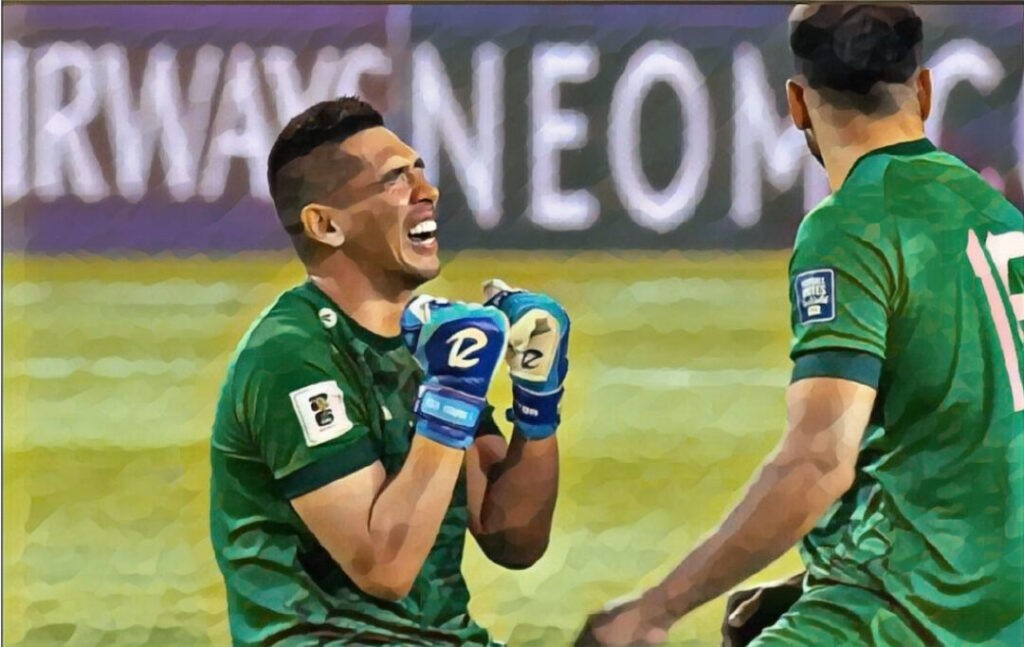
FIFA World Cup: Uzbekistan to Face Portugal and Colombia in Group K

Among the highlights for Uzbekistan at next year’s FIFA World Cup will be facing Portugal striker Cristiano Ronaldo in his last campaign in the event, to be held in Mexico, Canada and the United States. Uzbekistan, which has qualified for the World Cup for the first time and is ranked 50th in the FIFA rankings, is in the four-team group K, one of 12 groups in the draw that was announced on Friday in Washington D.C. Group K includes sixth-ranked Portugal; Colombia, which is 13th in the FIFA standings; and a fourth team that is yet to be decided. Either Jamaica, Democratic Republic of Congo or New Caledonia will take that last spot after facing each other in playoffs. A total of 48 teams are competing in the World Cup next year, up from 32 in previous contests. Ronaldo, 40, has said next year’s World Cup will be his last one. In Qatar in 2022, he became the first player to score at five World Cups. He currently plays for Al-Nassr in Saudi Arabia. Uzbekistan’s team is led by coach Fabio Cannavaro, a former defender who was captain of Italy’s winning team in the 2006 World Cup in Germany. Cannavaro replaced Timur Kapadze, an Uzbekistani former pro football player who led Uzbekistan’s national team to its first-ever qualification for the World Cup with a 0-0 draw against the United Arab Emirates in Abu Dhabi in June. “Everything” can happen in the World Cup, a smiling Cannavaro said after the draw was announced. “We are so happy because we are here,” the coach said, adding that he hoped the team would fight “until the end.”  

Information Sovereignty? Central Asia Tightens Control Over Its Information Space

Across the post-Soviet space, governments are adopting new measures that affect the scope of free expression. Similar trends are visible in Central Asia, the Caucasus, and parts of Eastern Europe, reflecting wider global shifts in how states manage their information environments. In Central Asia, where journalism has long faced political constraints, recent policies indicate a renewed emphasis on controlling the flow of information. From Georgia to Kazakhstan: Pushback Against Foreign Narratives Recent events in Georgia highlight these changes. The adoption of a controversial “foreign agents” law, widely described as a Russian-style or “pro-Russian” measure, reflected the ruling party’s growing hostility to foreign-funded media and NGOs, many backed by European donors, and triggered mass pro-EU protests in Tbilisi. Similar dynamics are emerging in Central Asia, where officials increasingly view foreign narratives as interference in domestic affairs. In Kazakhstan, legislative restrictions on so-called "LGBT propaganda" have sparked both domestic protests and criticism from international partners. At the same time, well-known media figure Gulnar Bazhkenova, editor-in-chief of Orda.kz, has been placed under house arrest, an episode that underscores the tightening environment for journalists. The Bazhkenova Case: A Turning Point for Kazakh Media Bazhkenova, a prominent editor known for critical coverage of Kazakhstan’s political elite and security services, came under scrutiny after Orda.kz falsely reported the arrest of Foreign Minister Murat Nurtleu, an unverified claim that was quickly debunked. Although Nurtleu remained in his position immediately afterward, he was dismissed later in September, prompting speculation that the incident had political consequences. Soon after his departure, law enforcement launched an investigation into Bazhkenova. On December 1, Almaty police searched her residence and the offices of Orda.kz. Authorities stated that a 2024 article had disseminated false information regarding a law enforcement officer allegedly caught accepting a bribe, an incident that officials assert never occurred. Another article reportedly misrepresented details in a property dispute, allegedly damaging the business reputation of the involved party. The Almaty police have since opened additional investigations into past publications from Orda.kz that may contain misleading content. Media organizations have largely responded with condemnation, urging the authorities to decriminalize the dissemination of false information and instead treat such cases under civil law. However, the Union of Journalists of Kazakhstan issued a pointed statement calling on media professionals to “treat the preparation and dissemination of information responsibly. Individual cases for the dissemination of inaccurate information cast a shadow on the entire journalistic community of our country,” the organization said.  An implicit acknowledgment, perhaps, that Bazhkenova’s actions may have crossed legal or ethical boundaries. Parallel Cases and Regional Patterns While suppression of the media in Tajikistan and Turkmenistan has long been widespread, Kyrgyzstan - long considered the most politically open country in Central Asia - has also moved to tighten control over its information space. In early 2024, authorities introduced a controversial “foreign representatives” law requiring NGOs and media outlets receiving international funding to register under a special status, echoing legislation seen in Russia and Georgia. Independent outlets such as Kloop, Temirov Live, and Azattyk...

China’s Power Play in Central Asia’s Energy Sector

China is steadily expanding its influence in Central Asia’s oil and gas sector through multi-billion-dollar investments, long-term supply agreements, and a growing network of strategic partnerships. From Kazakhstan to Turkmenistan, Beijing’s state-backed companies are securing key upstream and midstream assets, financing new petrochemical and pipeline projects, and positioning themselves as indispensable players in the region’s resource development. This expansion is driven not only by China’s rising energy demand, but also by Beijing’s ambition to establish durable overland energy corridors that reduce reliance on maritime routes vulnerable to disruption. Central Asia’s existing and planned pipelines provide China with rare direct access to oil and gas fields across its western frontier, making the region a focal point of its broader energy-security strategy and a cornerstone of Beijing’s efforts to diversify supply while deepening political and economic footholds across Eurasia. Kazakhstan Eyes Chinese Investment Amid Lukoil Sanctions Kazakhstan may seek to transfer Russian company Lukoil’s stake in the offshore Kalamkas-Khazar oil and gas project to a new partner, with some industry channels, including the Telegram channel Energy Monitor, speculating about possible Chinese interest. Lukoil, which has been targeted by Western sanctions, is reportedly planning to exit Kalamkas-Khazar Operating LLP, a joint venture with KazMunayGas (KMG). Each company currently holds a 50% stake. Some commentators have suggested that a Chinese investor could step in, but no replacement has been officially confirmed. Seconded engineers from KMG Engineering are expected to be withdrawn from the project as of January 1, 2026, with several Kalamkas-Khazar staff members temporarily reassigned to other KMG subsidiaries until a new partner is confirmed. The project is considered highly promising, with earlier estimates citing reserves of 81 million tons of oil and 22 billion cubic meters of gas. New exploration has identified additional oil-bearing structures. A final investment decision (FID) worth more than $6.5 billion was originally expected by the end of 2025. However, U.S. sanctions against Lukoil have delayed progress. Located 120 km from the Kashagan field in the North Caspian Basin, the Kalamkas-Khazar block comprises the Kalamkas-More and Khazar fields. The site is situated in Kazakhstan’s Mangistau Region, 60 km from the Buzachi Peninsula. KazMunayGas Chairman Askhat Khasenov previously confirmed that production was expected to begin in 2028-2029, with peak output reaching four million tons annually. Lukoil was sanctioned by the UK on October 15, followed by the U.S., complicating ongoing negotiations. Despite this, major projects where Lukoil holds minority stakes, such as Tengiz, Karachaganak, and the Caspian Pipeline Consortium, have not been impacted. A Lukoil withdrawal would create a rare opening for China to secure its first significant offshore position in the North Caspian, a zone historically dominated by Western majors and Russian firms. Such an entry would represent a notable shift in Kazakhstan’s offshore partnership landscape. Beijing's Billion-Dollar Energy Deals in Kazakhstan In September 2025, President Kassym-Jomart Tokayev announced a series of energy deals with China valued at $1.5 billion. During his official visit to China, more than 70 commercial agreements totaling approximately $15 billion were signed, several...

Why Regional Connectivity Is Reshaping Central Asia: Insights from ISRS Director Eldor Aripov (Part Two)

The Times of Central Asia presents the second part of an interview in Washington, D.C. with Eldor Aripov, Director of the Institute for Strategic and Regional Studies under the President of Uzbekistan. Dr. Aripov sat down with our Washington Correspondent, Javier M. Piedra, to discuss Uzbekistan’s geoeconomic and geopolitical strategic thinking. The conversation focused on Uzbekistan’s and the region’s efforts to cooperate diplomatically to maintain peace and stability with neighbors, irrespective of historical “hotspots,” cultural sensitivities, or the all-important matter of water resources. Aripov comments on Afghanistan, Chabahar Port (Iran), Ferghana Valley, and business development – key for U.S. investors thinking about Uzbekistan and the broader Central Asian region. TCA: What message do you have for businesses and private investors who do not have any experience in Central Asia? Many companies are sniffing around at this time – what do you want to tell them? Aripov: Uzbekistan is ready for committed investors - those who deliver lasting benefits, quality jobs, and shared prosperity. A decade of reforms has strengthened our fiscal discipline, boosted SMEs, and anchored stability. Coupled with our focus on good relations and a secure, integrated Central Asia, we offer a reliable platform for long-term, sustainable investment. While we have more work to do, we invite you to be part of our momentum. TCA: What are the risks that companies might face when considering long-term investment? Aripov: No country is immune to downside risks – not only in the developed but developing world. Having said that, downside risks, including trade shocks, commodity price volatility, tighter external financing, and contingent liabilities from state-owned enterprises, are mostly exogenous factors driven by global conditions. Risks are mitigated through political stability, diversification of the economy, prudent macroeconomic management, and reforms to state-owned enterprises and governance. For more in-depth commentary, I refer you to recent IMF, World Bank, and Asian Development Bank assessments about our economic conditions and trends. TCA: Let me move on to more regional issues. The first Ferghana Peace Forum was held in October 2025. How can it serve as a replicable model for other regions seeking sustainable peace? Aripov: First of all, I’d like to put this important forum on everyone’s radar. I’d like to underscore that peace is possible when hard work, respect for others, and a commitment to understanding guide our actions, despite historical memories and past differences. Someone should write a case study about our ability to bring consensus into an otherwise challenging region. In any event, the inaugural Ferghana Peace Forum brought together over 300 participants from more than 20 countries — representatives of Central Asian governments, international organizations, leading think tanks, research institutions, and local communities. A joint communiqué was adopted, confirming the intention to institutionalize the Forum as a permanent platform with rotating hosts. This broad participation highlighted an important reality: the Ferghana Valley is no longer viewed as a fragile zone; it is now viewed as a model of pragmatic peacebuilding. The Forum demonstrated how regional leadership — particularly the openness and...

The New Geoeconomics of Uzbekistan: Insights from ISRS Director Eldor Aripov

The Times of Central Asia presents a two-part interview in Washington, D.C. with Eldor Aripov, Director of the Institute for Strategic and Regional Studies under the President of Uzbekistan. Dr. Aripov sat down with our Washington Correspondent, Javier M. Piedra, to discuss Uzbekistan’s strategic thinking regarding its diplomatic posture, regional integration, and relations with Central Asian and global partners. The conversation includes commentary on “Great Game” geopolitics, U.S.–Uzbekistan relations, trade, the meaning of “Uzbekistan First,” the historically explosive Ferghana Valley, and water management. Recognizing the link between investment, a stable geopolitical ecosystem, and the need to de-risk potentially conflictive issues, Aripov further sheds light on Tashkent’s practical approach to internal governance and business development. [caption id="attachment_40284" align="aligncenter" width="2360"] Central Asia on the Front Lines; image: Defense.info[/caption] TCA: “America First” refers to U.S. policies prioritizing national interests, often associated with non-interventionism, nationalism, and protectionist trade. Given Uzbekistan’s pragmatic foreign policy, can we speak of an “Uzbekistan First” policy? It is certainly not isolationist — but how is it manifested on a day-to-day basis? Aripov: What you describe as “Uzbekistan First” is, in our understanding, fundamentally about prioritizing national interests – stability and predictability for the people of Uzbekistan. Yet Uzbekistan’s uniqueness lies in the fact that our national interests are closely intertwined with those of the entire region – this means shared upsides at the transactional and strategic levels and thinking long-term. We border every Central Asian country as well as Afghanistan, and therefore any issue — security, trade, transport, or water management — directly depends on the quality of our relationships with neighbors. From his first days in office, President Shavkat Mirziyoyev — with his strategic vision and deep understanding of regional dynamics — declared that regional unity and mutual benefit stand at the core of Uzbekistan’s foreign policy. The essence of his doctrine is to resolve agreeably any historically or materially problematic issues with neighbors, remove barriers to understanding, and create predictable, stable conditions for mutually beneficial cooperation and the free movement of goods, ideas, and people. That is the true meaning of “Uzbekistan First”: not isolation, but openness, predictability, and regional consolidation. TCA: How are you realizing “Uzbekistan First” in practice? Aripov: Uzbekistan is strengthening its economy domestically and global track - putting in place the building blocks for internal sustainable development and accelerating accession to the World Trade Organization. The latter means expanding the geography and composition of exports and increasing the country’s investment attractiveness. This approach is rooted in the logic of sustainable development within the broader international context: long-term national interests are best served by Uzbekistan integrating into global value chains and markets. The results speak for themselves: in 2024, Uzbekistan’s GDP grew by 6.5%, foreign direct investment increased by more than 50% to reach $11.9 billion, and the target for 2025 is to attract $42 billion. This performance is also a tribute to our style of diplomacy, grounded in respect and having a constructive attitude towards others. Thus, “Uzbekistan First” represents a modern model...
