• KGS/USD = 0.01144 0%
  • KZT/USD = 0.00214 0%
  • TJS/USD = 0.10508 0.48%
  • UZS/USD = 0.00008 0%
  • TMT/USD = 0.28571 0%
  • KGS/USD = 0.01144 0%
  • KZT/USD = 0.00214 0%
  • TJS/USD = 0.10508 0.48%
  • UZS/USD = 0.00008 0%
  • TMT/USD = 0.28571 0%
  • KGS/USD = 0.01144 0%
  • KZT/USD = 0.00214 0%
  • TJS/USD = 0.10508 0.48%
  • UZS/USD = 0.00008 0%
  • TMT/USD = 0.28571 0%
  • KGS/USD = 0.01144 0%
  • KZT/USD = 0.00214 0%
  • TJS/USD = 0.10508 0.48%
  • UZS/USD = 0.00008 0%
  • TMT/USD = 0.28571 0%
  • KGS/USD = 0.01144 0%
  • KZT/USD = 0.00214 0%
  • TJS/USD = 0.10508 0.48%
  • UZS/USD = 0.00008 0%
  • TMT/USD = 0.28571 0%
  • KGS/USD = 0.01144 0%
  • KZT/USD = 0.00214 0%
  • TJS/USD = 0.10508 0.48%
  • UZS/USD = 0.00008 0%
  • TMT/USD = 0.28571 0%
  • KGS/USD = 0.01144 0%
  • KZT/USD = 0.00214 0%
  • TJS/USD = 0.10508 0.48%
  • UZS/USD = 0.00008 0%
  • TMT/USD = 0.28571 0%
  • KGS/USD = 0.01144 0%
  • KZT/USD = 0.00214 0%
  • TJS/USD = 0.10508 0.48%
  • UZS/USD = 0.00008 0%
  • TMT/USD = 0.28571 0%

Viewing results 517 - 522 of 1151

Uzbekistan’s Financial Data Now Available on Bloomberg Terminal

Market data from the Uzbek Republican Currency Exchange (UZCE) is now accessible on the Bloomberg Terminal, marking a significant step toward integrating Uzbekistan’s financial market into the global economy. Bloomberg users can now analyze real-time pricing and indicators for Uzbekistan’s currency, money markets, state securities, and derivatives. Expanding Accessibility The UZCE, which includes 35 local commercial banks, six brokerage firms, and one foreign custodian bank, serves as Uzbekistan’s primary platform for liquidity. It offers trading in approximately 20 instruments across various market segments. In 2023, the UZCE reported a total trading volume of $81 billion. By making this data available on Bloomberg, Uzbekistan aims to attract foreign investors by providing them with the tools to understand its financial market and assess trends more effectively. This transparency simplifies risk assessment and enhances decision-making for global market participants. Strengthening Market Confidence Rashid Usmanov, Director General of the Central Bank of Uzbekistan, highlighted the impact of this partnership, stating: “This partnership with Bloomberg will help participants in global markets to get up-to-date and accurate information from the UZCE in different segments of the exchange, thereby more effectively managing their assets. Increasing transparency and openness of data will strengthen market confidence and ensure an increase in liquidity.” The Central Bank of Uzbekistan’s market data is available via Bloomberg’s data license and the “B-PIPE” channel, providing real-time market information. This collaboration enhances the global visibility of Uzbekistan’s financial sector, positioning the country as a more attractive destination for international investment.
Uzbekistan Targets $200 Billion GDP by 2030 with Transport Reforms

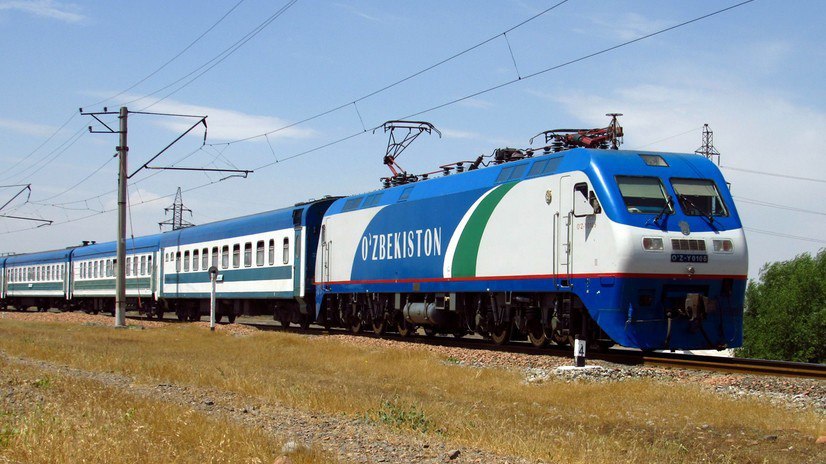
On November 26, President Shavkat Mirziyoyev outlined transformative plans for Uzbekistan’s state-owned railway and aviation sectors, setting an ambitious goal to increase the country’s GDP to $200 billion by 2030. Significant changes are already being implemented to enhance efficiency and convenience. In the railway sector, six independent enterprises have been created under “Uzbekistan Railways.” The company added 1,200 new freight cars, halving domestic freight transportation times. The digitalization of operations has streamlined processes, cutting the ordering stage for freight cars from seven days to three and reducing processing time from 72 hours to just 12 hours. Around Tashkent, train traffic has increased by 30%, and for the first time, the previously unprofitable enterprise posted a profit of 30 billion UZS ($2.3 million) this year. In the aviation sector, Uzbekistan Airways has seen flights increase by 25%, with domestic flights surging 2.5 times. The airline now holds a 20% share of international transport in Central Asia, and annual passenger traffic is projected to exceed 6 million. “Uzbekistan Airports” has also expanded services for planes, cargo, and passengers. Greater private sector involvement in airport management has yielded notable results, with 44 airlines currently operating in Uzbekistan. Cargo transportation through airports is expected to grow by 22% this year. “The economy and trade relations in our country are developing year after year. The population’s income and the tourism potential of the regions are also increasing. By 2030, we have set a goal to increase the volume of our gross domestic product to $200 billion. Therefore, we should pay special attention to the transport arteries,” Mirziyoyev said. To support these developments, a new version of the Law “On Railway Transport” has been signed, replacing the 25-year-old legislation. The updated law aims to attract private companies and investments to further develop infrastructure and accelerate industry growth.

The Amu Darya and the Aral Sea Crisis: Voices from the Heart of an Environmental Disaster

A documentary entitled Amu Darya: Missing to the River has been produced as part of Project Amu Darya. This initiative began in 2022, and is a collaboration between students from Karakalpakstan, Khorezm, and Oxford University in the UK. This research is important for several reasons. Firstly, the Aral Sea crisis, which is one of the most severe man-made ecological disasters in history, is under-reported by the global media. Secondly, the academic field is limited - outside of Uzbekistan, the historiography of the Aral crisis is still a developing field. Thirdly, the geographical scope of research is limited. Research is often focused on the Aral Sea itself, and does not take into account the impact on the wider region. Finally, there is no involvement of stakeholders. The personal experiences of those living along the Amu Darya River are often excluded from studies. [caption id="attachment_25946" align="aligncenter" width="1280"] Amu Darya: Missing to the River screening - image: TCA, Sadokat Jalolova[/caption] The Amu Darya is one of the two main rivers feeding the Aral Sea. Irrigation in the Amu Darya basin has been carried out for more than three thousand years. However, the current Aral Sea crisis was caused by mismanagement during the Soviet and post-Soviet eras. International donors have intensified their efforts to address the crisis. By December 2022, the UN Multi-Partner Human Security Trust Fund for the Aral Sea Region had raised over $16 million to support communities affected by the disaster. Established in 2018, the fund helps mitigate the environmental and social consequences of the crisis. President Mirziyoyev’s government has also lifted many data restrictions, allowing more research in the region. In 2017, the United Nations conducted the first socioeconomic survey of Aral Sea communities. [caption id="attachment_25948" align="aligncenter" width="884"] Aralkum Desert, former Aral Sea; image: TCA, Sadokat Jalolova[/caption] Central Asian countries are also cooperating to solve the problem of water level reduction in the Aral Sea. This year, as a result of the introduction of water-saving technologies on 55,000 hectares of rice fields in Kazakhstan, more than 200 million cubic meters of water were directed to the Aral Sea. The Times of Central Asia spoke with Annie Liddell, one of Project Amu Darya’s co-founders. She shared her thoughts about the inspiration behind the documentary. According to Liddell, the team were inspired by Svetlana Alexievich’s book Voices of Chernobyl. The author used oral interviews to highlight the personal stories behind the environmental disaster, making it more relatable. Liddell explained that the film aims to preserve the authenticity of interviewees’ voices and connect their stories of the Amu Darya’s past with the reality of its present state, which is a rapidly spreading desert. Local communities played a central role in the film’s creation. Students from Karakalpak State University and Urgench State University contributed to the research. Residents of Karakalpakstan and Khorezm also shared their personal stories, and provided insights into their culture and stability. [caption id="attachment_25949" align="aligncenter" width="1280"] Image: Project Amu Darya[/caption] The documentary depicts different historical periods and personal experiences. It covers...

United Arab Emirates: 3 Uzbek Citizens Arrested in Rabbi Killing

Authorities in the United Arab Emirates have arrested three Uzbek citizens in the killing of an Israeli-Moldovan rabbi, the UAE’s Ministry of Interior said Monday. Israel described the killing as an act of antisemitic terrorism. The suspects in the death of Zvi Kogan were identified as Olympi Tohirovich and Makhmodjon Abdulraheem, both 28, as well as 33-year-old Azizbek Kamlovich, according to the UAE ministry. It said a murder investigation was underway and the matter will be referred to public prosecutors. The ministry commended security forces for “their efficiency in addressing attempts to undermine the safety and stability of the UAE community.” The ministry posted photos of the suspects, showing them blindfolded, handcuffed and wearing blue detention clothing. Kogan, the envoy of the ultra-Orthodox Chabad-Lubavitch movement to Abu Dhabi in the United Arab Emirates, was killed after being abducted on Thursday and his body was recovered early Sunday morning, according to Chabad.org. Kogan’s funeral was held in Israel on Monday. “The murder of Zvi Kogan, of blessed memory, is an abhorrent act of antisemitic terrorism,” Israel said in a statement. “The State of Israel will use all means and will deal with the criminals responsible for his death to the fullest extent of the law.” There were no immediate public statements from Uzbek authorities.

Azerbaijan and Kazakhstan Stand Out at COP29

The 29th United Nations Climate Change Conference (COP29), held in Baku from November 11–22, 2024, has underscored the critical role of Azerbaijan and Kazakhstan in advancing Caspian Sea regional energy transitions. Both countries leveraged their positions along the Middle Corridor to present ambitious renewable and nuclear energy strategies.   Azerbaijan: Renewables and the Middle Corridor Azerbaijan, the host and chair of COP29, has positioned itself as a renewable energy connector between Central Asia and Europe. Its energy strategy reflects a pragmatic approach to transitioning from hydrocarbons, which accounted for 88% of government revenues in 2023, to a diversified portfolio incorporating solar, wind, and hydropower. Azerbaijan has prioritized key renewable energy projects to align with its goal of achieving a 30% renewable share in its electricity mix by 2030. Among these is the operational Garadagh Solar Power Plant, a 230-megawatt (MW) facility developed by the UAE's Masdar, which generates 500 million kilowatt-hours (kWh) annually. Complementing this is the planned Alat Solar Project, a 400-MW solar installation expected to be operational by 2027. These projects aim to bolster domestic electricity supply and expand Azerbaijan’s capacity to export renewable energy. The Caspian Offshore Wind Initiative, backed by the European Bank for Reconstruction and Development (EBRD), seeks to harness the Caspian Sea’s favorable wind conditions. A 1-gigawatt (GW) wind farm is under preliminary study, with construction anticipated to begin by 2026. This project could transform Azerbaijan into a renewable energy hub for the Middle Corridor, particularly as Europe reduces its dependency on Russian energy.   Kazakhstan: Nuclear Ambitions and Renewable Diversification Kazakhstan’s energy strategy focuses on nuclear power and renewables, driven by the need to reduce coal dependency, which still accounts for two thirds of its electricity generation. The government’s approval of its first nuclear power plant, following a nationwide referendum in October 2024, is central to this strategy. The planned nuclear reactor, located near Lake Balkhash, will generate 1.2-GW of electricity, replacing approximately 20% of coal-fired generation. This initiative complements Kazakhstan’s status as the world’s largest uranium producer, supplying over 40% of global demand and generating $3.6 billion in export revenues in 2023. Potential consortium members for the project include South Korea’s KEPCO, France’s Orano and EDF, China’s CNNC, and Russia's Rosatom, although economic-sanctions issues complicate Russia’s involvement in the nuclear sector. Kazakhstan is simultaneously scaling up renewable energy projects, with several key initiatives underway. The Zhanatas Wind Farm, operational since 2022, produces 100-MW of power, and the Shelek Solar Park, a 200-MW solar facility near Almaty, is expected to come online in late 2025. Together, these projects aim to increase renewables to 15% of Kazakhstan’s electricity mix by 2030, quintupling the level from 2023.   The Trans-Caspian Electricity Cable Project At the COP29 conference, Azerbaijan and Kazakhstan, along with Uzbekistan, announced an ambitious trans-Caspian electricity cable project through an underwater transmission system. This infrastructure initiative, estimated to cost $2.5 billion, seeks to establish an electricity corridor linking Central Asia with European markets, representing a significant step in regional energy integration. The project...

Former Uzbek Diplomat, Jailed In Case Criticized by UN, Dies at 73

Kadyr Yusupov, a former Uzbek diplomat with a distinguished career who was convicted of treason and jailed in a case that the United Nations said had violated his rights, has died at the age of 73, an international human rights group said on Thursday. Yusupov, who died on Nov. 14, was released from jail on June 10 after being imprisoned for five and a half years and suffering alleged torture and “deplorable” conditions during some of that time, according to the Norwegian Helsinki Committee. While Uzbek officials denied the torture allegations, the U.N. Working Group on Arbitrary Detention concluded in a 2021 report that Yusupov had been arbitrarily detained, he should be released immediately and that the government should take action against those responsible for violating his rights. The group said that the violations included the denial of “medication and treatment for the very serious health conditions from which he suffers.” Rights groups have said that Yusupov was suffering from a mental illness. “In December 2018 he was arrested on charges of treason which appear to have been based on a statement he made during a psychotic episode, when he was undergoing medical treatment,” the Norwegian Helsinki Committee said. “Whilst in hospital, suffering from brain trauma and clearly confused, Yusupov reportedly said that he had been a spy for the West.” It said there were “credible allegations” that state security officers coerced Yusupov into a confession. The former diplomat said he was treated better after being transferred from a prison in the city of Navoi to a jail in the Tashkent region. Yusupov had worked in a series of high-profile jobs for Uzbekistan’s Ministry of Foreign Affairs. The posts included head of the ministry’s Asia and Africa department, head of the European department and, from 2006 to 2009, chargé d’affaires in Austria and permanent representative to the Organization for Security and Cooperation in Europe and United Nations organizations in Vienna.