• KGS/USD = 0.01144 0%
  • KZT/USD = 0.00212 0%
  • TJS/USD = 0.10456 0.19%
  • UZS/USD = 0.00008 0%
  • TMT/USD = 0.28490 0%
  • KGS/USD = 0.01144 0%
  • KZT/USD = 0.00212 0%
  • TJS/USD = 0.10456 0.19%
  • UZS/USD = 0.00008 0%
  • TMT/USD = 0.28490 0%
  • KGS/USD = 0.01144 0%
  • KZT/USD = 0.00212 0%
  • TJS/USD = 0.10456 0.19%
  • UZS/USD = 0.00008 0%
  • TMT/USD = 0.28490 0%
  • KGS/USD = 0.01144 0%
  • KZT/USD = 0.00212 0%
  • TJS/USD = 0.10456 0.19%
  • UZS/USD = 0.00008 0%
  • TMT/USD = 0.28490 0%
  • KGS/USD = 0.01144 0%
  • KZT/USD = 0.00212 0%
  • TJS/USD = 0.10456 0.19%
  • UZS/USD = 0.00008 0%
  • TMT/USD = 0.28490 0%
  • KGS/USD = 0.01144 0%
  • KZT/USD = 0.00212 0%
  • TJS/USD = 0.10456 0.19%
  • UZS/USD = 0.00008 0%
  • TMT/USD = 0.28490 0%
  • KGS/USD = 0.01144 0%
  • KZT/USD = 0.00212 0%
  • TJS/USD = 0.10456 0.19%
  • UZS/USD = 0.00008 0%
  • TMT/USD = 0.28490 0%
  • KGS/USD = 0.01144 0%
  • KZT/USD = 0.00212 0%
  • TJS/USD = 0.10456 0.19%
  • UZS/USD = 0.00008 0%
  • TMT/USD = 0.28490 0%

Viewing results 91 - 96 of 855

Central Asia Launches Regional Electricity Market with World Bank Support

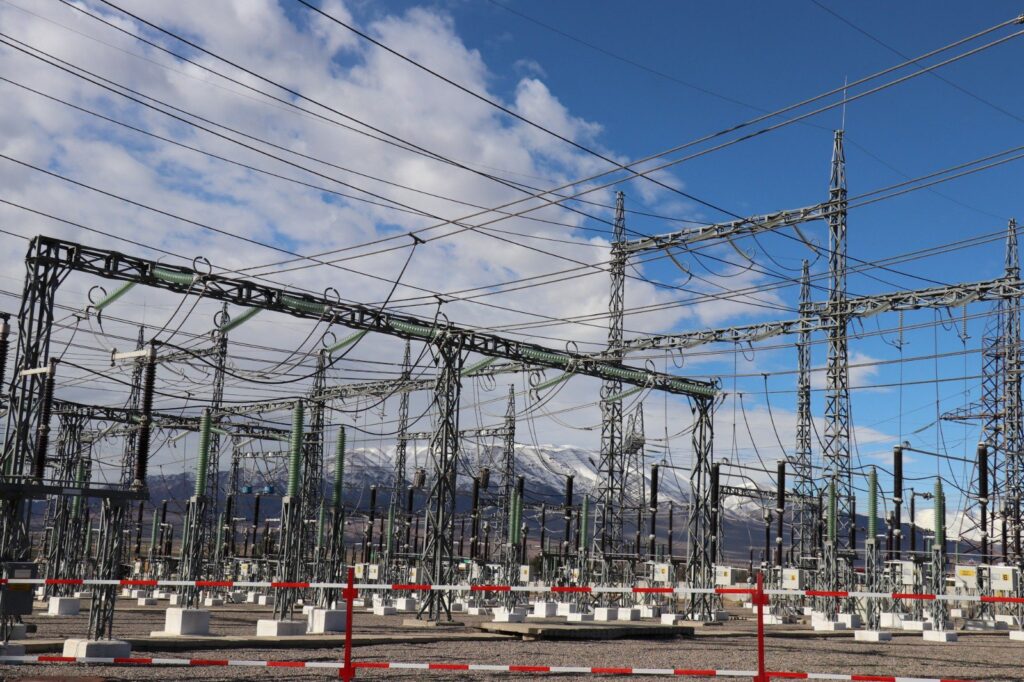
On January 22, the World Bank’s Board of Executive Directors approved the 10-year Regional Electricity Market Interconnectivity and Trade (REMIT) Program, an ambitious initiative to establish Central Asia’s first regional electricity market. The program aims to boost cross-border electricity trade, expand transmission capacity, and lay the foundation for large-scale renewable energy integration across the region. Electricity demand in Central Asia is projected to triple by 2050 under a business-as-usual scenario. Yet electricity trade in the region currently accounts for only 3% of total demand. The REMIT Program seeks to harness Central Asia’s diverse and complementary energy resources: hydropower in Kyrgyzstan and Tajikistan, thermal power from coal and natural gas in Kazakhstan, Turkmenistan, and Uzbekistan, and the region’s rapidly expanding solar and wind potential. Over the next decade, REMIT aims to: Increase regional electricity trade to at least 15,000 GWh annually, enough to supply millions of consumers Triple regional transmission capacity to 16 GW Enable up to 9 GW of clean energy integration The initiative is designed to enhance regional energy security, reduce power outages, lower electricity costs, and promote a more resilient and interconnected grid system. Total indicative financing for the program is $1.018 billion, to be deployed in three phases. These funds will support the creation and operation of a regional energy market, boost transmission infrastructure, introduce digital technologies to improve grid reliability, and strengthen regional energy institutions and coordination mechanisms. Investments are also expected to generate both construction-related employment and high-skilled jobs tied to market operations. In the program’s first phase, Kyrgyzstan, Tajikistan, Uzbekistan, and the Central Asian Countries’ Coordinating Dispatch Center (CDC) Energia will benefit from grants and concessional financing totaling $143.2 million. This comprises $140 million from the World Bank’s International Development Association (IDA) and $3.2 million from the Central Asia Water and Energy Program (CAWEP). “The REMIT Program supports Central Asian countries’ ambition to deepen energy cooperation and create a regional electricity market,” said Najy Benhassine, World Bank Regional Director for Central Asia. “This will enable more efficient use of energy resources, including cross-border deployment of clean energy, improve access to reliable and affordable electricity, and support jobs. By 2050, stronger regional connectivity could generate up to $15 billion in economic benefits.” Charles Cormier, World Bank Regional Infrastructure Director for Europe and Central Asia, added that REMIT will advance energy security and unlock private sector investment. “The first phase alone is expected to enable about 900 MW of new clean energy capacity, leveraging $700 million in private investment. This will pave the way for a more resilient and interconnected power system across this dynamic region,” he said. CDC Energia will lead the implementation of market and institutional activities, while national transmission companies will be responsible for infrastructure investments.

Uzbekistan Airways Boeing 767 Makes Emergency Landing in Krasnoyarsk

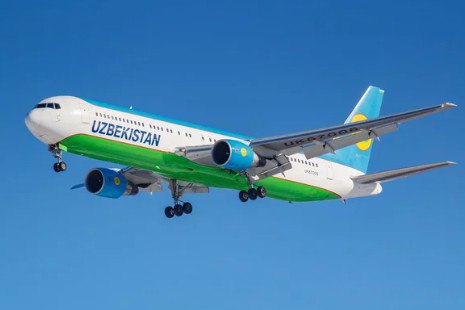
An Uzbekistan Airways Boeing 767 made an emergency landing at Russia’s Krasnoyarsk airport on January 21 while en route from Tashkent to Vladivostok, according to a statement published by Krasnoyarsk airport on its Telegram channel. The aircraft, a Boeing 767-300, was carrying 101 passengers, five flight crew members, and 16 cabin crew at the time of the incident. Airport authorities confirmed the plane landed safely. Passengers subsequently underwent border and customs procedures and were relocated to the airport’s general terminal area. The aircraft was temporarily taken out of service pending a technical inspection. Uzbekistan Airways was expected to dispatch a reserve aircraft to complete the journey to Vladivostok. Later that day, airport officials reported that the stranded passengers were transferred to local hotels and provided with meals. As of 17:45 local time, the reserve aircraft was expected to arrive early on January 22, with a scheduled departure shortly thereafter. A follow-up update confirmed that the replacement aircraft departed Krasnoyarsk at 7:11 a.m. on January 22. Uzbekistan Airways has not yet disclosed the technical issue that led to the emergency landing. This incident follows another serious aviation event earlier this month involving aircraft from Russia’s Pobeda Airlines and Uzbekistan Airways. On January 10, in the Shymkent regional airspace over southern Kazakhstan, Pobeda flight PBD997 from Moscow to Samarkand and Uzbekistan Airways flight UZB9609 from Termez to Moscow came into potential conflict. The incident was classified as serious under Kazakhstan’s aviation safety regulations and prompted a formal investigation, Kazinform reported.

Uzbekistan Among Countries Affected by Lactalis Infant Formula Recall

French dairy conglomerate Lactalis has announced a voluntary recall of several batches of its Picot infant milk formula, citing concerns over potential contamination with a toxin. The recall affects products distributed in France and more than a dozen other countries, including Uzbekistan, according to Al Jazeera, which cited a company statement. Lactalis reported that six batches of Picot infant formula, sold in pharmacies and major retail chains, are being withdrawn following the detection of cereulide in one ingredient supplied by an external provider. Cereulide is a heat-stable toxin that can cause gastrointestinal symptoms such as vomiting and diarrhea. In its statement, the company acknowledged that the recall may alarm parents of young children but emphasized that the move is a precautionary measure. The recall is voluntary and specific to the contaminated ingredient, not the entire Picot product range. Outside France, the recall impacts consumers in Australia, Chile, China, Colombia, the Democratic Republic of Congo, Ecuador, Spain, Madagascar, Mexico, Uzbekistan, Peru, Georgia, Greece, Kuwait, the Czech Republic, and Taiwan. A company spokesperson told AFP that only “a few batches” are involved in each country. Lactalis confirmed that no adverse health incidents linked to the affected formula have been reported to French authorities, and no illnesses have been officially attributed to the recalled products to date. This follows a similar recall earlier in the year by Nestlé, which voluntarily withdrew certain baby food products due to concerns over cereulide contamination. That recall, initiated in January, was also described as precautionary. Lactalis stated it is working closely with distributors and public health authorities to ensure the prompt removal of the affected products from shelves and to inform consumers of recall procedures.

Finland’s President Stubb Warns Russia’s Imperial Thinking Poses Risks for Central Asia

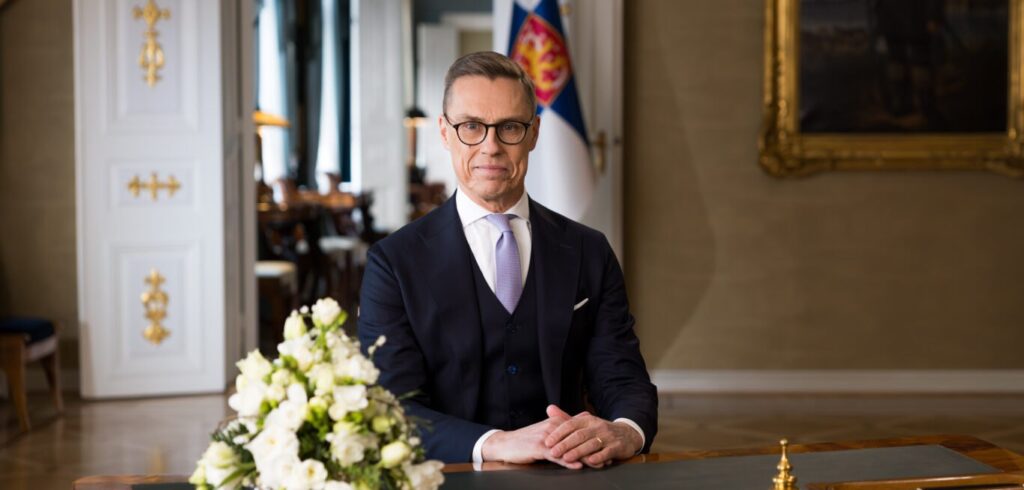
Russia’s imperial worldview may pose a greater long-term risk to Central Asia and the South Caucasus than to NATO member states, Finnish President Alexander Stubb said in an interview with The Washington Post, highlighting concerns that continue to resonate across the post-Soviet space. Speaking with columnist David Ignatius, Stubb referenced Finland’s long and complex history with its eastern neighbor, noting that expansionist thinking remains deeply rooted in Russian political culture. “I think the DNA of Russia is still expansion and imperialism,” he said, arguing that President Vladimir Putin views the collapse of the Soviet Union as a historical injustice. While much of the Western debate centers on potential threats to NATO countries such as the Baltic states, Finland, or Poland, Stubb suggested that more vulnerable regions lie elsewhere. “I think the more worrying aspect for others is the Central Asian countries, the Southern Caucasus and others,” he said, pointing to what he described as a top-down political system driven by the ideology of Russkiy mir, or the “Russian world.” Stubb also spoke about his personal interactions with Russian officials, including Putin and Foreign Minister Sergei Lavrov, stressing that meaningful political dialogue remains unlikely while the war in Ukraine continues. As previously reported by The Times of Central Asia, Russian television host Vladimir Solovyov sparked backlash after suggesting that Moscow could conduct “special military operations” in Central Asia and Armenia. The remarks were widely condemned by Uzbek scholars, journalists, and analysts as destabilizing and provocative. More recently, Russian ultranationalist Alexander Dugin, often described as an ideologue of the “Russian world”, publicly questioned the sovereignty of several former Soviet republics, including Uzbekistan, Kazakhstan, Tajikistan, and Kyrgyzstan. A video of his comments circulated widely online, drawing sharp criticism across the region. Russia’s Foreign Ministry later sought to distance the Kremlin from such statements. Spokesperson Maria Zakharova stated that Solovyov’s remarks did not reflect official policy and reaffirmed that Moscow’s relationships with Central Asian countries are based on partnership and respect for sovereignty.

Uzbek Citizen Sentenced to Life in Russia Over Killing of Russian General Kirillov

A Russian military court has sentenced Uzbek citizen Ahmadjon Qurbonov to life imprisonment for his involvement in a bombing that killed Lieutenant General Igor Kirillov, head of Russia’s Radiation, Chemical and Biological Protection Troops, and his aide, Major Ilya Polikarpov. The verdict was issued by a panel of judges at the 2nd Western District Military Court, according to a report by Russian outlet RBK. Qurbonov, who admitted guilt and cooperated with investigators, was also fined one million rubles (approximately $13,100). Prosecutors accused him of carrying out an attack on December 17, 2024, near the entrance of Kirillov’s apartment building in Moscow. Investigators allege that Qurbonov planted a remote-controlled bomb on an electric scooter and detonated it as the general and his aide exited the building. Russia’s Investigative Committee claims Qurbonov acted under orders from Ukraine’s Security Service. The attack was reportedly filmed and streamed live to Ukraine. Qurbonov was allegedly promised $100,000, forged documents, and residency in a country in the European Union. He was arrested within hours of the explosion and, according to investigators, never received the promised compensation. Several other individuals were implicated in the case. Prosecutors said Vladimir Safaryan delivered the explosive device, which was reportedly brought into Russia from Poland. Batukhan Tochiev and Ramazan Padiev were accused of providing Qurbonov with an apartment where he attempted to hide after the attack. All three denied knowledge of the planned bombing. Russian authorities further alleged that the operation was financed using USDT stablecoins. Qurbonov reportedly received multiple cryptocurrency transfers, later converted into cash through cryptomats in Moscow. The total cost of preparing the attack was estimated at 842,000 rubles (approximately $10,936), while damage to surrounding apartments and vehicles was valued at 3.3 million rubles (around $42,863). The trial, which began in November 2025, was held behind closed doors. Prosecutors argued that open proceedings could be exploited by foreign-linked media to justify the attack.

Guardiola Praises Uzbekistan’s “Top” Khusanov After Champions League Start

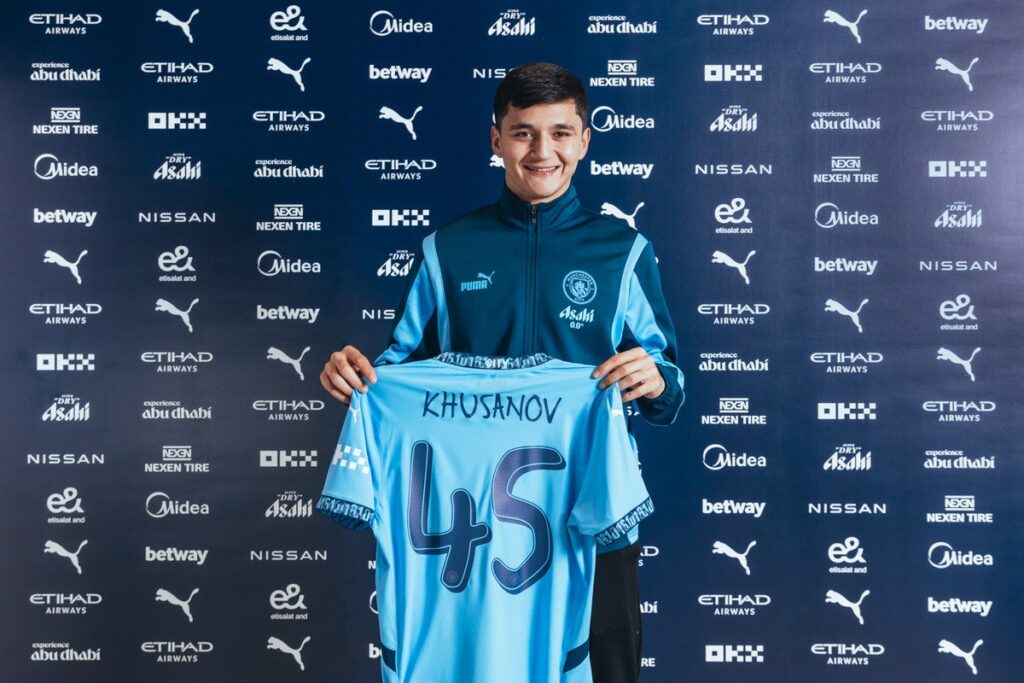
Manchester City head coach Pep Guardiola has praised Uzbek defender Abduqodir Khusanov for his standout performance and professionalism, before the club’s UEFA Champions League clash with Norway’s Bodo/Glimt. Guardiola’s remarks were shared by City Xtra on X following the pre-match press conference. “Just read the media, how they praised Khusanov. They’re right. He’s top,” Guardiola said. “We don’t have complaints. The last game he was exceptional and the previous one as well. We’re really pleased.” Manchester City lost 3-1 to Bodo/Glimt on January 20, in the seventh round of the Champions League. Khusanov started the match and played the full 90 minutes, anchoring City’s defense throughout. Guardiola commended Khusanov’s attitude during a period of limited playing time earlier in the season. “After Arsenal, a month without playing, and you cannot imagine how he behaved in training and in the locker room. That defines Khusanov,” he said. The manager attributed the defender’s discipline and adaptability to his formative years in Uzbekistan and his stint in France prior to joining the Premier League champions. “He listened, he learned, and of course his condition is exceptional,” Guardiola added. “Manchester City will have a central defender for many, many years, and at a top, top level.” According to statistics from SofaScore, Khusanov was a key figure in City’s build-up play, registering 110 touches and completing 94 of 96 passes, a 98% accuracy rate. SofaScore rated his overall performance at 6.3/10. Defensively, Khusanov made eight key actions, including three interceptions, three clearances, and five ball recoveries. He won both of his ground duels, though he was less successful in aerial challenges, losing all three attempts.