• KGS/USD = 0.01144 0%
  • KZT/USD = 0.00212 0%
  • TJS/USD = 0.10456 0.19%
  • UZS/USD = 0.00008 0%
  • TMT/USD = 0.28490 0%
  • KGS/USD = 0.01144 0%
  • KZT/USD = 0.00212 0%
  • TJS/USD = 0.10456 0.19%
  • UZS/USD = 0.00008 0%
  • TMT/USD = 0.28490 0%
  • KGS/USD = 0.01144 0%
  • KZT/USD = 0.00212 0%
  • TJS/USD = 0.10456 0.19%
  • UZS/USD = 0.00008 0%
  • TMT/USD = 0.28490 0%
  • KGS/USD = 0.01144 0%
  • KZT/USD = 0.00212 0%
  • TJS/USD = 0.10456 0.19%
  • UZS/USD = 0.00008 0%
  • TMT/USD = 0.28490 0%
  • KGS/USD = 0.01144 0%
  • KZT/USD = 0.00212 0%
  • TJS/USD = 0.10456 0.19%
  • UZS/USD = 0.00008 0%
  • TMT/USD = 0.28490 0%
  • KGS/USD = 0.01144 0%
  • KZT/USD = 0.00212 0%
  • TJS/USD = 0.10456 0.19%
  • UZS/USD = 0.00008 0%
  • TMT/USD = 0.28490 0%
  • KGS/USD = 0.01144 0%
  • KZT/USD = 0.00212 0%
  • TJS/USD = 0.10456 0.19%
  • UZS/USD = 0.00008 0%
  • TMT/USD = 0.28490 0%
  • KGS/USD = 0.01144 0%
  • KZT/USD = 0.00212 0%
  • TJS/USD = 0.10456 0.19%
  • UZS/USD = 0.00008 0%
  • TMT/USD = 0.28490 0%

Viewing results 97 - 102 of 855

Uzbekistan Signals Possible Retaliation Over Increased Trade Costs in Tajikistan

Uzbekistan may introduce reciprocal measures in response to trade barriers impacting its exports to Tajikistan, Deputy Prime Minister Jamshid Khodjaev announced on January 17 during a meeting of entrepreneurs, ambassadors, and government officials in Tashkent. Khodjaev highlighted challenges faced by Uzbek exporters, particularly in the construction materials sector, despite full compliance with required documentation. “We have problems related to Tajikistan. We export products to this market, but even when all documents are complete, our goods are cleared under a so-called ‘reserve’ procedure,” he said. “As a result, the price of our products in that market rises by about 15%.” Meeting participants reported that additional charges imposed at Tajik customs are inflating the cost of Uzbek construction materials and reducing competitiveness. Khodjaev warned that if such restrictions are not lifted, Uzbekistan may respond with similar trade measures. The issue was also raised by representatives of German construction materials giant Knauf. The company’s commercial director noted that exporters face similar obstacles not only in Tajikistan but also in Turkmenistan and parts of the Caucasus region. In Tajikistan’s case, the “reserve” customs clearance procedure was cited as a key driver of increased costs. “This is pushing the price of our products in the Tajik market up by as much as 15%,” the representative said. Entrepreneurs stated that combined logistics and customs costs for shipments to Tajikistan have surged from approximately $2,000 to $12,000. Despite multiple appeals to Tajik authorities, they said no resolution has been achieved, and the elevated costs are undermining export volumes. “If they impose duties, we can do the same,” Khodjaev stated. “Our customs officials will talk to their counterparts. If this practice continues, we will take response measures. Our ambassador should clearly convey this signal.” Despite the ongoing friction, trade between Uzbekistan and Tajikistan surpassed $700 million in 2024, nearly three times higher than in previous years. Both governments have indicated they are exploring new logistics corridors and simplified customs procedures to deepen bilateral economic ties.


Public Hearing Set for Sea Breeze Uzbekistan Project Near Charvak Lake

A public hearing on the environmental impact assessment of the Sea Breeze Uzbekistan tourist complex is scheduled for January 23 in the Bostanlyk district of Tashkent region, according to the State Center for Environmental Expertise. The hearing will take place at the Bostanlyk district administration building in the town of Gazalkent. Officials stated that the event aims to review the potential environmental effects of the proposed development and to gather feedback from residents, environmental specialists, and other stakeholders. The Sea Breeze Uzbekistan project is planned for the eastern shore of the Charvak reservoir in Bostanlyk. It envisions a large-scale, modern tourism infrastructure in one of Uzbekistan’s most frequented recreational zones. During the hearing, participants will assess land use and construction proposals, as well as potential impacts on air quality, water resources, and soil conditions. Additional topics for discussion include waste management, the preservation of green zones and water bodies, and environmental safety measures, including continuous ecological monitoring. The State Center confirmed that all project documentation complies with Uzbekistan’s environmental legislation. Residents and interested parties are invited to submit comments or proposals either during the hearing or in writing. Authorities emphasized that public involvement is a critical component of the environmental review process. As previously reported by The Times of Central Asia, businessman Emin Agalarov plans to develop Sea Breeze Uzbekistan as a $5 billion, all-season tourism complex spanning between 500 and 700 hectares along Charvak Lake. The development is set to include hotels, villas, swimming pools, sports and leisure facilities, retail areas, restaurants, and a bridge connecting both sides of the reservoir. Cultural events, festivals, and concerts are also planned throughout the year. Despite mounting public scrutiny and opposition from environmental activists, the Uzbek government has endorsed the project. In August 2025, Prime Minister Abdulla Aripov signed Cabinet Resolution No. 490, granting Sea Breeze Uzbekistan LLC a 25-year direct lease on 577 hectares of land for development.

Epiphany in Central Asia: Orthodox Traditions and Regional Unity

On the night of January 18-19, Orthodox Christians across Central Asia gather at frozen rivers and lakes to celebrate the feast of Epiphany by plunging into icy waters, three times each, in line with tradition. Though rooted in the Christian faith, this ritual has evolved into a broader cultural event, drawing participation from people of many backgrounds. A Test of Faith and Endurance In Central Asia, Epiphany coincides with some of the coldest days of the year, often referred to as the "Epiphany frosts." Despite subzero temperatures, participation in ice bathing continues to grow. According to Orthodox tradition, Epiphany commemorates the baptism of Jesus in the River Jordan. While the climate in Israel was mild, believers in the region embrace the symbolic cleansing despite the extreme cold. The Orthodox Church does not consider ice bathing a requirement for the faithful. Instead, the central ritual of the holiday is the Great Blessing of Water, performed both on Epiphany and the evening before. Priests encourage believers to collect holy water from churches, sprinkle it throughout their homes, and drink it in small amounts on an empty stomach. Many believe this brings health and protection for the year ahead. Nevertheless, in the main Orthodox churches of Central Asia, fonts and pools are prepared for those who wish to immerse themselves. Designated ice holes are also opened in lakes and rivers for traditional bathing. Strict Safety Measures in Kazakhstan In Kazakhstan, authorities take extensive precautions to ensure public safety during Epiphany bathing. In Astana, the celebration began with a religious procession from the Constantine and Helen Cathedral to the embankment of the Ishim River, where the water was consecrated despite temperatures dipping to minus 30 degrees Celsius. Warm changing rooms were provided, and teams from the Ministry of Emergency Situations, along with paramedics and rescue personnel, were on hand throughout the night. In Almaty, where temperatures hovered around minus 15 degrees, Epiphany fonts were set up at 10 churches. Authorities reminded residents that swimming in non-designated natural bodies of water is prohibited due to the risk of slipping or falling through the ice. However, safety teams and patrols were stationed at approved bathing sites, including the Bolshaya Almatinka, Malaya Almatinka, Butakovka, Goryachiy Istochnik, and Gorenik rivers. Officials advised those with cardiovascular or endocrine conditions to avoid the ritual and warned against participating while intoxicated. A Cultural Tradition Embraced by Many Over time, Epiphany bathing in Central Asia has grown beyond a strictly religious practice. In Kazakhstan, many ethnic Kazakhs and other non-Christian residents eagerly take part, viewing the ritual as a source of health and vitality. It has become a powerful symbol of interethnic and interfaith unity in the region. While Muslim clerics typically do not encourage participation, they generally refrain from direct criticism, recognizing the tradition's broader cultural significance. Orthodox priests also emphasize that the ritual is more custom than doctrine, open to anyone. Some compare Epiphany bathing to the festive atmosphere of Kurban Ait, when Muslims share food in public spaces. Likewise,...

Central Asia Trade with China Tops Record $100 Billion in 2025

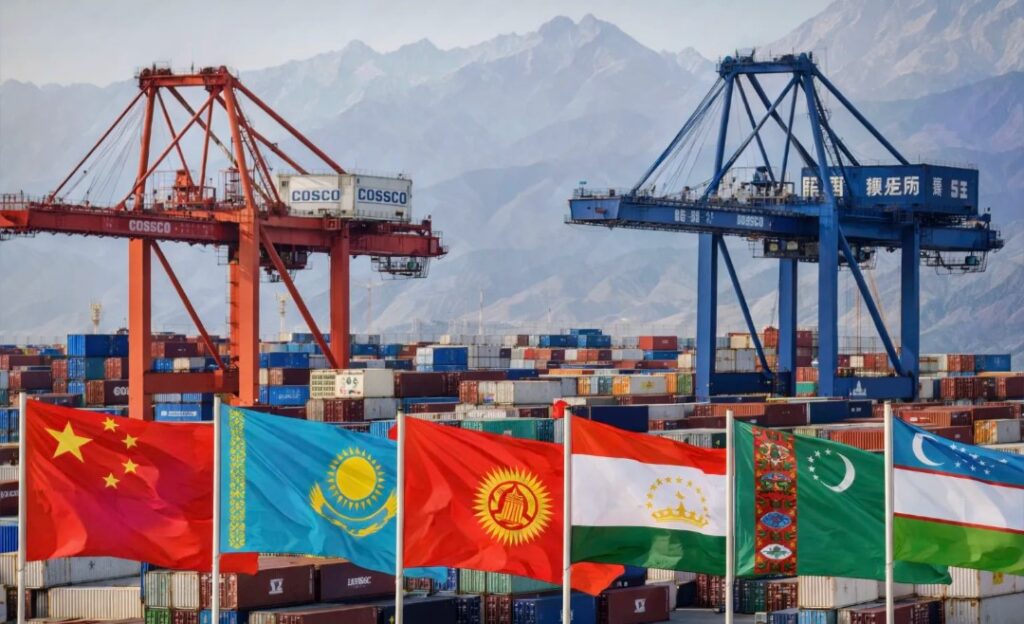
Trade between China and Central Asia increased to a record of more than $100 billion in 2025, despite challenges to global economic growth, the Chinese government said on Monday.  Citing data from China’s General Administration of Customs, Foreign Ministry spokesman Guo Jiakun said the trade structure with the Central Asian nations of Kazakhstan, Kyrgyzstan, Tajikistan, Turkmenistan and Uzbekistan had improved and that more high-end products were entering the Chinese market from the region.   “As global economic growth remains sluggish and the international trading system faces serious challenges, the economic and trade cooperation between China and Central Asian countries has withstood external headwinds, and the trade volume surpassed US$100 billion,” Guo said.  He attributed the increasing cooperation in part to a China-Central Asia summit in Astana, Kazakhstan last year that was attended by Chinese President Xi Jinping and the five Central Asian leaders.  China’s Belt and Road initiatives, which include the development of trade routes that pass through Central Asia and link up with Europe, are also making progress, according to the Chinese official.  Total trade between China and Central Asia was $106.3 billion in 2025, an increase of 12 percent over the previous year, China’s state-run Xinhua news agency reported. Chinese exports such as machinery, electronics and high-tech goods were $71.2 billion, an increase of 11 percent over the previous year. Imports from Central Asia amounted to $35.1 billion, a rise of 14 percent from 2024. China is involved in major projects in Central Asia, including the extraction of minerals used for “clean” technology, equipment manufacturing and the modernization of agriculture. China imports oil and natural gas as well as a growing number of other products from the region.  Russia was once the main trading partner of Central Asia after the fall of the Soviet Union, but China has the lead position now. The United States is also seeking to develop more trade with resource-rich Central Asia, which is diversifying its international partnerships.     

Uzbekistan’s Supreme Court Updates List of Banned “Extremist” Online Content

Uzbekistan has released an updated list of sources and materials banned for promoting extremism and terrorism, according to the press service of the Supreme Court. The revised register, current as of 10 January 2026, includes online content deemed to pose a threat to public safety and the country’s constitutional order. The Supreme Court reported that the updated list contains 1,593 profiles, channels, and other materials, most of which are linked to content distributed via social networks and messaging platforms. The listed materials were found to promote extremist ideologies, justify violence, or encourage terrorist activity. Telegram was the most frequently cited platform, with 790 channels, groups, and materials included. Facebook followed with 249 entries, while 265 profiles were identified on Instagram. The list also includes 167 YouTube channels and videos, 53 TikTok profiles, and 36 entries from the Odnoklassniki network. Beyond social media, the register includes 13 websites and standalone digital materials classified as prohibited sources. Additionally, 20 books, lectures, and religious chants were assessed as promoting religious extremism or violent ideology. At the same time, some legal experts and human rights advocates caution that broadly defined extremism regulations carry risks of misuse. They argue that vague or expansive interpretations of what constitutes extremist or unconstitutional content could potentially be applied to suppress political dissent, independent journalism, or peaceful criticism of state policies, particularly in online spaces where contextual nuance is often limited. Concerns have also been raised about the potential impact on religious freedom. Critics note that religious materials or sermons not aligned with officially approved interpretations could be vulnerable to restriction, even when they do not explicitly call for violence. Without transparent judicial oversight and clear public access to decisions, observers warn that such measures may unintentionally marginalize lawful religious expression or discourage open theological discussion. The court stated that all materials were evaluated using clear criteria, such as promoting extremist ideas, justifying violence or terrorism, or seeking to undermine the constitutional system. Materials meeting these thresholds were formally recognized as prohibited. Legal grounds for these designations are provided under Uzbekistan’s Criminal Code. Article 244-1 covers extremist content promoting terrorism and allows for criminal prosecution, including prison terms of up to eight years for the preparation, storage, or dissemination of such materials. Article 244-3 addresses the unlawful distribution of religious content that breaches legal standards without directly inciting terrorism. Initial violations under this article result in administrative penalties such as fines and equipment confiscation but repeat offenses may escalate to criminal charges. These actions are part of Uzbekistan’s National Strategy to Counter Extremism and Terrorism for 2021–2026. Under this strategy, state agencies are tasked with identifying and curbing the spread of extremist and terrorist materials online, while enhancing legal, technical, and informational capabilities to counter growing digital recruitment activities.

Central Asian Airlines Reroute Flights During Iranian Airspace Closure 

Iran closed its airspace to most international flights for several hours, disrupting flights of some airlines from Central Asia and other regions amid concerns about conflict between Iran and the United States. On Thursday morning, the Flightradar24 website, which provides live tracking of flights around the world, showed a number of civilian aircraft again operating in Iranian airspace after it was reopened. However, many planes were skirting Iran because of safety concerns after U.S. President Donald Trump said the United States was considering strikes on Iran because of the government’s deadly crackdown on nationwide protests. On Wednesday, Trump said he had received assurances that the killings of demonstrators had stopped, possibly signaling that the two adversaries were moving toward de-escalation. Kazakhstan’s Air Astana was among the airlines affected by the temporary disruption to flight paths over Iran. “Air Astana informs about changes in the routes of some regular and charter flights due to the closure of Iranian airspace,” the airline said. “Flights to Sharm el-Sheikh, Dubai, Doha and Medina will be carried out in a detour around Iranian airspace.” The Uzbekistan Airports company said some flights were forced to return to airports from which they had departed. It listed six flights traveling between Uzbekistan and Kuwait, as well as Medina and Jeddah in Saudi Arabia, that were not able to complete their journeys. The affected airlines were FlyOne Asia, Jazeera Airways, Sam Air, Fly Khiva and Uzbekistan Airways.