• KGS/USD = 0.01144 0%
  • KZT/USD = 0.00212 0%
  • TJS/USD = 0.10456 0.19%
  • UZS/USD = 0.00008 0%
  • TMT/USD = 0.28490 0%
  • KGS/USD = 0.01144 0%
  • KZT/USD = 0.00212 0%
  • TJS/USD = 0.10456 0.19%
  • UZS/USD = 0.00008 0%
  • TMT/USD = 0.28490 0%
  • KGS/USD = 0.01144 0%
  • KZT/USD = 0.00212 0%
  • TJS/USD = 0.10456 0.19%
  • UZS/USD = 0.00008 0%
  • TMT/USD = 0.28490 0%
  • KGS/USD = 0.01144 0%
  • KZT/USD = 0.00212 0%
  • TJS/USD = 0.10456 0.19%
  • UZS/USD = 0.00008 0%
  • TMT/USD = 0.28490 0%
  • KGS/USD = 0.01144 0%
  • KZT/USD = 0.00212 0%
  • TJS/USD = 0.10456 0.19%
  • UZS/USD = 0.00008 0%
  • TMT/USD = 0.28490 0%
  • KGS/USD = 0.01144 0%
  • KZT/USD = 0.00212 0%
  • TJS/USD = 0.10456 0.19%
  • UZS/USD = 0.00008 0%
  • TMT/USD = 0.28490 0%
  • KGS/USD = 0.01144 0%
  • KZT/USD = 0.00212 0%
  • TJS/USD = 0.10456 0.19%
  • UZS/USD = 0.00008 0%
  • TMT/USD = 0.28490 0%
  • KGS/USD = 0.01144 0%
  • KZT/USD = 0.00212 0%
  • TJS/USD = 0.10456 0.19%
  • UZS/USD = 0.00008 0%
  • TMT/USD = 0.28490 0%

Viewing results 103 - 108 of 855

U.S. to Pause Immigrant Visa Processing; Central Asia Affected

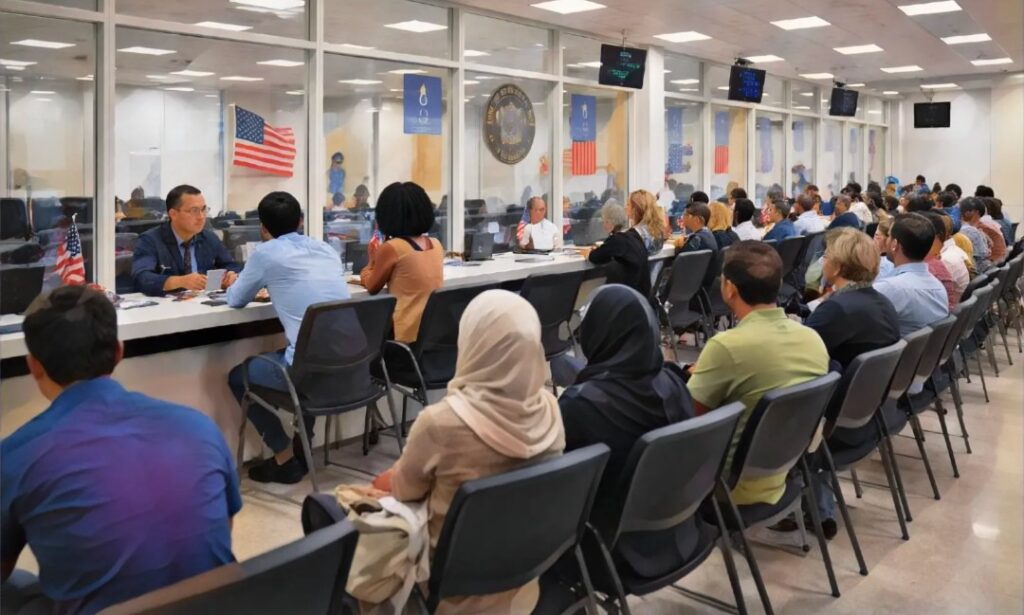
The U.S. State Department said on Wednesday that it will stop immigrant visa processing from 75 countries, and some reports said the affected nations include several in Central Asia.   The measure is part of a broad crackdown on immigration that has unfolded during the second term of U.S. President Donald Trump, who has said many people from other countries are threatening U.S. security and taking advantage of American resources. Critics say immigration raids and some other administration initiatives have gone too far, actually making U.S. cities less safe and violating basic rights.   “The State Department will pause immigrant visa processing from 75 countries whose migrants take welfare from the American people at unacceptable rates. The freeze will remain active until the U.S. can ensure that new immigrants will not extract wealth from the American people,” the U.S. agency said on X.  “The pause impacts dozens of countries – including Somalia, Haiti, Iran, and Eritrea – whose immigrants often become public charges on the United States upon arrival,” the State Department said. “We are working to ensure the generosity of the American people will no longer be abused.” The statement did not list all the countries affected by the new measure, which takes effect on January 21. Nor did it say how long the pause will last.  However, Fox News Digital, which reported that it had seen a State Department memo about the new policy, published a list of what it said were the 75 affected countries. It included Kazakhstan, Kyrgyzstan, and Uzbekistan. Tajikistan and Turkmenistan were not on the list. Some other media outlets reported the same information.  The State Department policy appeared to be partly linked to a Minnesota scandal in which dozens of people, including many Somali-Americans, were convicted of defrauding the state of welfare funds. Minneapolis, Minnesota’s biggest city, is currently a flashpoint for tension and protests over U.S. Immigration and Customs Enforcement (ICE) operations.   The new State Department measure does not apply to non-immigrant visas, which would include people traveling to the United States for tourism or business. But additional restrictions are also in place for people seeking those temporary visas.  Nationals from 38 countries, including Kyrgyzstan, Tajikistan, and Turkmenistan, are subject to U.S. visa bonds under a State Department policy. The policy took effect for citizens from Turkmenistan on January 1 and will be implemented for nationals from Kyrgyzstan and Tajikistan starting on January 21.

Uzbek Professor Hits Back at Vladimir Solovyov for Central Asia “Military Operation” Comments

Controversial remarks by Russian television host Vladimir Solovyov, suggesting that Moscow could conduct “special military operations” in Central Asia and Armenia, have continued to provoke a strong reaction in Uzbekistan. Scholars, journalists, and political analysts have all weighed in on the rhetoric as indicative of a dangerous political mindset developing in Russia. During a recent broadcast, Solovyov referred to Russia’s role in the region in terms that some Uzbek experts interpret as veiled threats of interference in the affairs of sovereign Central Asian states. The comments drew immediate responses from Uzbek academics, who underscored their nations' independence and territorial integrity. Political scientist and university professor Sherzodkhon Qudratkhodja issued a detailed rebuttal, emphasizing the historical and strategic gravity of Solovyov’s words. “As a citizen of a sovereign state, such remarks are unacceptable,” he said. “They challenge our independence, our territorial integrity, and our peoples' right to determine their own futures.” Qudratkhodja rejected the notion of Central Asia as a geopolitical periphery. “We are not subjects of external governance. Central Asia is a region with its own history and geopolitical agency. We are no longer objects in foreign policy, we are actors.” He warned that such public commentary normalizes the concept of military intervention by gradually expanding the so-called Overton window, the range of ideas tolerated in public discourse. “When statements like this are introduced as provocation, then normalized through discussion, and ultimately proposed as policy, it becomes a form of normalizing violence through public speech,” he said. Qudratkhodja also highlighted Central Asia’s long-standing sovereignty and global contributions. “Our history spans at least 3,500 years. Turkic peoples, including Uzbeks, pioneered the domestication of horses, early metallurgy for agriculture and warfare, and other advancements. Our ancestors were defenders of their lands and civilizations.” Turning to the geopolitical relationship between Russia and Central Asia, he said that strategic partnerships must be based on mutual respect. “Partnerships are not built on public threats or innuendo. Statements like Solovyov’s are unacceptable, especially when made about strategic partners in an increasingly multipolar world.” While Qudratkhodja acknowledged that Solovyov’s views do not represent official Russian policy, he warned that silence from Russian authorities allows such rhetoric to gain legitimacy. “Even when expressed as personal opinion, if such statements go unanswered by officials, they gain undue influence and risk becoming perceived signals that can destabilize the region.” Uzbek experts also pointed to the cultural and historical resilience of the region. Qudratkhodja invoked the legacy of Tamerlane, arguing that Central Asia has played pivotal roles in shaping regional history. “If our ancestor Tamerlane had not defeated Tokhtamysh in 1395, there would be no Russian Federation as we know it today. Our strategic role in Eurasia cannot be dismissed.” He also directly addressed Solovyov, rejecting any sense of professional kinship. “I do not consider Mr. Solovyov a colleague. His worldview belongs to the propaganda of the past. Today, discourse must be grounded in historical fact and mutual respect, not threats or insinuations.” The reaction in Uzbekistan has extended beyond academia. Social...

IAEA Extends Central Asia Uranium Cleanup Plan Through 2030

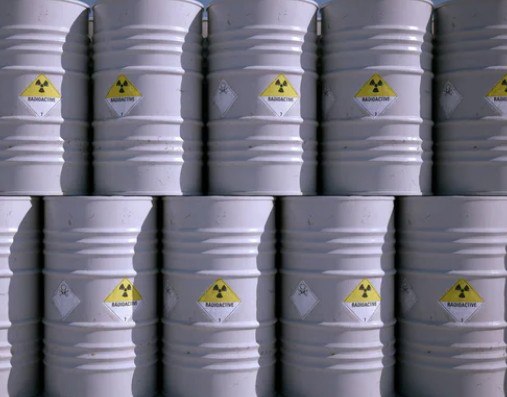
The International Atomic Energy Agency (IAEA) has released a new Strategic Master Plan extending its cooperation with Kyrgyzstan, Tajikistan, and Uzbekistan, alongside international partners, for the remediation of uranium legacy sites in Central Asia through 2030, according to World Nuclear News. Central Asia served as a key uranium source for the former Soviet Union, with mining and processing conducted over more than 50 years. In addition to local production, uranium ore was imported for processing, leaving vast amounts of radioactive waste stored in tailings and mining dumps. Most sites were shut down by 1995, but limited remediation both pre- and post-closure, has left behind long-term environmental and public health risks, including the threat of groundwater and surface water contamination in agriculturally vital areas. Since 2012, the IAEA’s Coordination Group for Uranium Legacy Sites has supported Central Asian countries with expert missions, legal and regulatory framework development, and remediation strategies. In 2017, the IAEA, the European Commission, the European Bank for Reconstruction and Development, the CIS Economic Council, and the governments of Kyrgyzstan, Tajikistan, and Uzbekistan adopted a Strategic Master Plan. Published in May 2018, it identified seven former uranium sites as the highest priority, with initial remediation costs estimated at €85 million. A revised plan was signed in September 2021, and the most recent version was presented in Tashkent in October 2025. It emphasizes long-term monitoring, maintenance, recordkeeping, and ongoing engagement with local communities to ensure the safe reuse of remediated land. “The new plan, an extension of our collaboration since 2017, focuses on enhancing the regulatory, technical, financial, and human resources for the long-term management of the remediated sites, according to IAEA safety standards,” said Hildegarde Vandenhove, Director of the IAEA Division of Radiation, Transport and Waste Safety. The updated plan puts the total cost of the Environmental Remediation Account programme at €113 million. This includes remediation work, project management, and contingencies. Since 2017, four of the seven high-priority sites have been fully remediated, two in Kyrgyzstan and two in Uzbekistan, while work continues at a fifth site in Kyrgyzstan. In Tajikistan, one site has been partially remediated, and another remains untouched. Lower-priority sites are also covered under the new plan, with some funding secured through bilateral agreements with Russia. Sardorbek Yakubekov, Deputy Chairman of Uzbekistan’s Industrial, Radiation and Nuclear Safety Committee, said the programme “stands as a vivid example of how the collective efforts of the international community… can yield tangible and lasting results.” As previously reported by The Times of Central Asia last December, Tajikistan still faces tens of millions of tons of radioactive waste from Soviet-era uranium mining, highlighting both the scale of the challenge and the critical need for sustained international support.

Central Asian Tourists Among Injured in Boat Collision in Thailand

Police in Thailand are investigating a collision between a fishing vessel and a speedboat carrying tourists from countries including Russia, Kazakhstan, Kyrgyzstan, and Uzbekistan. A Russian citizen was killed, and dozens of others were injured, according to official accounts.  The collision happened at about 9 a.m. on January 11 while the speedboat was heading from Phuket to the Phi Phi Islands in the Andaman Sea, the Russian embassy in Thailand said.  “According to preliminary information, there were 33 Russian citizens on board the boat, as well as citizens from Kazakhstan, Kyrgyzstan, Uzbekistan, and several other countries,” the embassy said. “As a result of the incident, a Russian girl born in 2008 died. 23 of our citizens with various degrees of injuries were hospitalized in several medical institutions in Phuket, where they are receiving medical care.” Thai authorities said the Russian who died was 17 years old.  Kazinform, a state news agency in Kazakhstan, said eight nationals from that country were on the speedboat at the time of the accident and that three were hospitalized in stable condition.  Akhror Burkhanov, press secretary to Uzbekistan’s Foreign Minister Bakhtiyor Saidov, said on Tuesday that there were three people from Uzbekistan on the speedboat. Two suffered minor injuries and were released from a hospital after treatment, he said.  “In addition, all medical and other necessary expenses of the injured parties were fully covered by the insurance funds of the company that owns the speedboat,” Burkhanov said on X.  Kyrgyzstan’s Ministry of Foreign Affairs said its embassy in Malaysia had immediately worked with its honorary consul in Thailand and learned that two Kyrgyz citizens were on the speedboat but did not suffer injuries. It said the two tourists will return to Kyrgyzstan on January 15.  Thailand’s Department of Disaster Prevention and Mitigation said several Thai citizens were also injured and that government marine authorities, as well as private fishing vessels, helped the tourists after the collision. It said the accident between the speedboat, Koravich Marine 888, and the fishing vessel, Pichai Samut 1, is under investigation.  Video of the incident that was posted on Instagram by the Thai Enquirer publication showed an overturned boat and people in the water nearby. On Tuesday, the Russian embassy in Thailand urged people to obtain extended medical insurance, with coverage of at least $100,000 if possible, before traveling to the country. “The presence of a valid insurance policy allows for promptly receiving the necessary medical assistance, covering the costs of treatment, hospitalization or emergency evacuation, as well as significantly reducing financial risks in unforeseen situations,” the embassy said. 

American Scholar Mark Reese Fights Intellectual Property Theft of Uzbek Classic ‘Bygone Days’

When American scholar Mark Reese set out to share Uzbekistan’s most celebrated novel with the world, he never imagined that his work would be pirated by the very institutions he had hoped to support. Reese, who first came to the country as a Peace Corps volunteer in the 1990s, spent more than a decade translating O‘tkan Kunlar (Bygone Days), the seminal 1920s novel by Abdulla Qodiriy. His English edition was a scholarly milestone – the first time the novel, considered Uzbekistan’s literary classic, had been made accessible to English-speaking readers. The book was warmly received. In 2019, Reese was awarded the Uzbek state’s Order of Do‘stlik, or Friendship, for his contribution to cultural understanding. During a follow-up visit the next year, he gave signed copies of the book to universities and ministries across the country. “All parties asked how they could support my work,” he tells The Times of Central Asia. “I presented a copy and explained that they could purchase more at a steep discount.” Each donation came with a clear stipulation: the book was not to be copied, resold, or distributed further. For a time, the project seemed to blossom. Uzbek students used the book in academic papers. One university even adapted it into an English-language stage play. Reese granted permission for such use, as long as it remained non-commercial and he was credited. By 2021, he had entered a publishing partnership in Tashkent and was preparing to distribute 5,000 official copies in 2026. Agreements to publish in Turkey and Qatar were also underway. Then, quietly, the book escaped his hands. Reese learned from students in the Ferghana Valley that a full PDF of the translation had been uploaded to the Telegram channel of a university library. When he opened the file, he recognized something chilling – his own handwriting on the inside cover. The scan had been made from a gifted copy. It was high-resolution and clearly done using professional equipment. The source of the leak soon became clear. The rector of Uzbekistan’s State World Languages University, known locally as Jahon Tilli, confirmed in an interview that his vice rector had scanned the book as part of a digitisation initiative. “They did so without my permission,” Reese said. “And the file was then shared with 1.3 million university students and 6.3 million school students.” The book was everywhere – on servers, in group chats, on flash drives. In at least one case, students tried to send the file to a printer and sell it. Reese took the case to court. The verdict was in his favour: the court ruled that copyright theft had occurred. But instead of holding the university responsible, the judge placed the blame squarely on the vice rector. Reese believes this was a calculated move. “It’s a common ploy to reduce damages,” he said. “I’m now expected to sue the individual for up to $30,000, but courts usually award just 20 to 40 percent of that.” This, for Reese, is the deeper problem. There...

Kazakhstan Boosts Trade with Turkic States on Back of Rising Exports

Kazakhstan has significantly increased mutual trade volumes with member states of the Organization of Turkic States (OTS), primarily driven by a surge in exports. According to data from the first ten months of 2025, trade turnover with OTS countries rose by nearly 11%, Deputy Minister of National Economy Asan Darbaev announced at the Third General Assembly of the Union of Turkic Chambers of Commerce and Industry (TCCI) in Astana. The OTS includes Azerbaijan, Kazakhstan, Kyrgyzstan, Turkmenistan, Turkey, and Uzbekistan as full members. Hungary and Northern Cyprus hold observer status and contribute to deepening economic, cultural, and political cooperation across the Turkic world. “At the end of ten months of 2025, the volume of mutual trade between Kazakhstan and OTS countries reached approximately $10.4 billion, which is almost 11% higher than the same period last year,” Darbaev stated. He noted that this growth was largely due to a 16.6% increase in Kazakhstani exports to OTS member states, which totaled $7.6 billion. Imports from these countries to Kazakhstan amounted to $2.8 billion. The export surge was driven by increased shipments of copper and copper cathodes, crude oil, wheat, petroleum products, sunflower oil, and a range of metallurgical and agro-industrial goods. According to Darbaev, this indicates not only the continued strength of Kazakhstan’s raw materials sector but also the gradual diversification of exports with higher value-added products. Turkey, Uzbekistan, Kyrgyzstan, and Azerbaijan remain Kazakhstan’s principal trading partners within the OTS. Turkey leads with a trade turnover of $4.36 billion, followed by Uzbekistan at $3.88 billion. Trade with Kyrgyzstan reached $1.78 billion, while trade with Azerbaijan stood at approximately $390 million. During the assembly, Kazakhstan assumed the rotating chairmanship of the TCCI for the first time since the Union's establishment in 2019. The organization includes chambers of commerce and industry from Azerbaijan, Kazakhstan, Kyrgyzstan, Turkey, Uzbekistan, Turkmenistan, and Hungary. It serves as a key platform for advancing trade, industrial cooperation, investment, and technology exchange among member and observer states. Raimbek Batalov, chairman of the presidium of Kazakhstan’s National Chamber of Entrepreneurs “Atameken,” was appointed head of the TCCI for a one-year term. “The Turkic economic space today possesses all the prerequisites for a qualitative leap forward, scale, resources, an institutional foundation, and political will. Our shared goal is to convert this potential into sustainable production, investment, job creation, and improved living standards,” Batalov said. Delegates at the assembly identified priority areas for future cooperation, including the development of joint industrial projects, operationalization of the Turkic Investment Fund, reduction of trade and technical barriers, and enhanced transport and logistics connectivity. Previously, The Times of Central Asia reported that energy ministers from OTS countries had discussed key joint initiatives in December 2025 as part of ongoing regional collaboration.