• KGS/USD = 0.01144 0%
  • KZT/USD = 0.00205 0%
  • TJS/USD = 0.10784 0%
  • UZS/USD = 0.00008 0%
  • TMT/USD = 0.28490 0%
  • KGS/USD = 0.01144 0%
  • KZT/USD = 0.00205 0%
  • TJS/USD = 0.10784 0%
  • UZS/USD = 0.00008 0%
  • TMT/USD = 0.28490 0%
  • KGS/USD = 0.01144 0%
  • KZT/USD = 0.00205 0%
  • TJS/USD = 0.10784 0%
  • UZS/USD = 0.00008 0%
  • TMT/USD = 0.28490 0%
  • KGS/USD = 0.01144 0%
  • KZT/USD = 0.00205 0%
  • TJS/USD = 0.10784 0%
  • UZS/USD = 0.00008 0%
  • TMT/USD = 0.28490 0%
  • KGS/USD = 0.01144 0%
  • KZT/USD = 0.00205 0%
  • TJS/USD = 0.10784 0%
  • UZS/USD = 0.00008 0%
  • TMT/USD = 0.28490 0%
  • KGS/USD = 0.01144 0%
  • KZT/USD = 0.00205 0%
  • TJS/USD = 0.10784 0%
  • UZS/USD = 0.00008 0%
  • TMT/USD = 0.28490 0%
  • KGS/USD = 0.01144 0%
  • KZT/USD = 0.00205 0%
  • TJS/USD = 0.10784 0%
  • UZS/USD = 0.00008 0%
  • TMT/USD = 0.28490 0%
  • KGS/USD = 0.01144 0%
  • KZT/USD = 0.00205 0%
  • TJS/USD = 0.10784 0%
  • UZS/USD = 0.00008 0%
  • TMT/USD = 0.28490 0%

Viewing results 19 - 24 of 936

Water in Central Asia: Between Reality and Alarmism

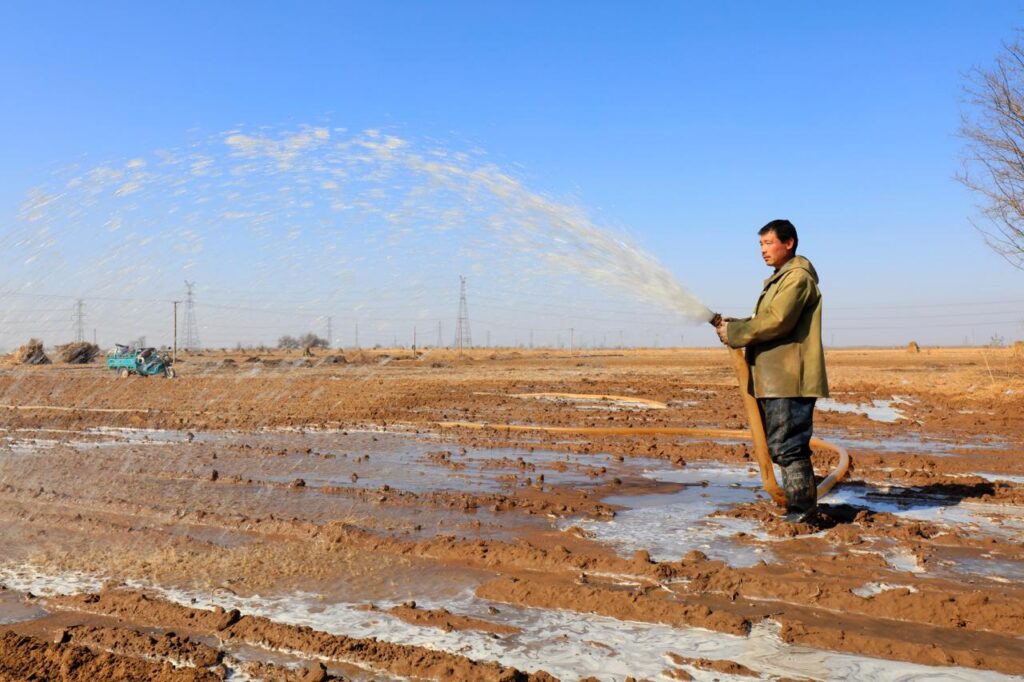
The Regional Ecological Summit 2026 will take place in Astana on April 22-24. The event is intended to elevate Central Asia’s water and environmental agenda to the level of systemic solutions. Alongside preparations for the summit, however, an increasingly alarmist narrative is gaining traction among some experts. In this framing, water resources in Central Asia are presented as being in crisis, with predictions of shortages, threats to food security, and even potential conflict. Phrases such as “there is not enough water,” “the harvest is at risk,” and “the region is on the brink” are used with growing frequency. Such assessments are typically based on generalized and dramatized claims that fail to differentiate between countries or specific river basins. This creates the impression of a single, simultaneous crisis, whereas in reality the situation is far more complex. Yes, there is a problem, but it is not sudden or one-dimensional. Water scarcity in Central Asia is real. However, it must be interpreted accurately and objectively. According to expert estimates, up to 40% of water in the region is lost through deteriorating irrigation infrastructure, while more than 80% of water consumption is accounted for by agriculture. Current practice supports these figures. In southern Kazakhstan, seasonal water supply restrictions are regularly imposed. This year, for example, the government approved consumption limits for southern regions due to an expected shortage during the growing season. Uzbekistan has said, in joining the World Bank’s Water Forward initiative, that it aims to introduce water-saving technologies across its 4.1 million hectares of irrigated land and reduce irrigation losses by 25%. Equally important are developments in upstream countries, Kyrgyzstan and Tajikistan. According to a study by the Organisation for Economic Co-operation and Development, the region exhibits a structural interdependence between water and energy. More than 80% of electricity in these countries is generated by hydropower, meaning water resources are used simultaneously for energy production and irrigation. This creates systemic interdependencies. At the same time, coordination of water releases and electricity generation remains suboptimal, and the absence of long-term regulatory mechanisms has already led to water shortages during certain summer periods. This is a key point: the issue is not so much an absolute lack of water, but the complexity of coordination between upstream and downstream countries, as well as between sectors within individual states. In other words, water shortages in Central Asia are often driven less by natural conditions than by how water is distributed and managed. Particular attention in alarmist narratives is given to Afghanistan and the Kushtepa Canal. Estimates commonly suggest that the Qosh Tepa Canal could eventually divert around 6-10 km³ of water per year from the Amu Darya, although projections vary and depend on how fully the canal is completed and operated. While the canal is not yet fully operational, regional officials already treat it as a serious medium-term risk, with the precise scale of future withdrawals still under discussion. Countries in the region, especially Uzbekistan, have been pursuing dialogue with Afghanistan over the canal and...

Uzbekistan Leases 4,000 Hectares in Belarus, Signs 60,000-Ton Export Deal

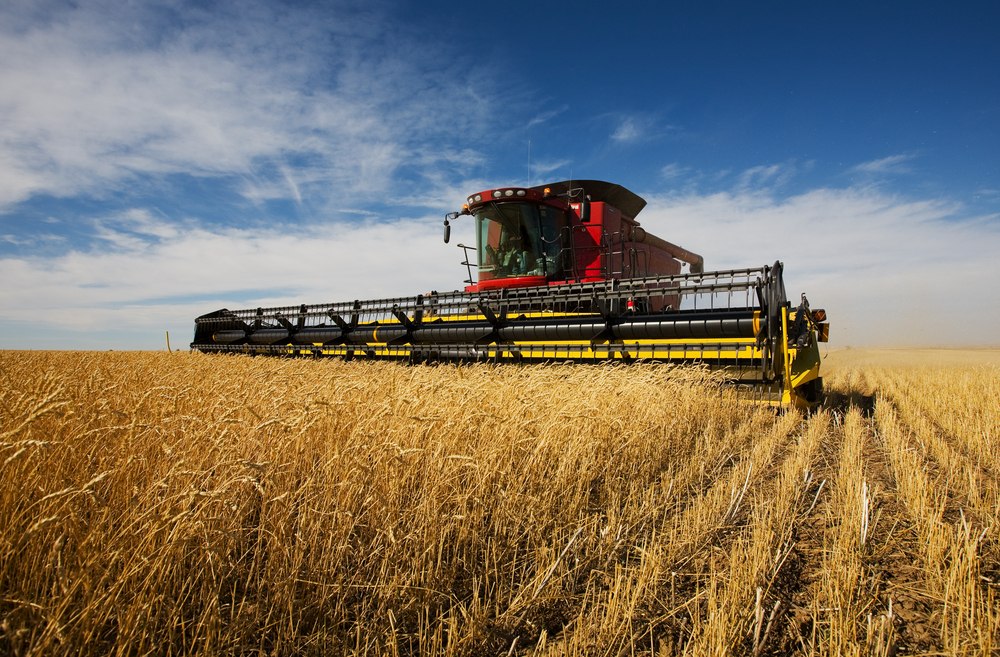
Uzbekistan’s Kashkadarya region has agreed to lease 4,000 hectares of farmland in Belarus and signed a major export contract as part of efforts to expand agricultural cooperation between the two countries, according to Dunyo Information Agency. The agreements were reached during a working visit to Belarus by a delegation from Kashkadarya region. As part of the trip, Uzbek representatives visited livestock and retail facilities in the Vitebsk region, including the districts of Braslav, Shumilino, and Postavy, where they studied local production practices. Talks with the leadership of the Vitebsk Regional Executive Committee focused on strengthening economic ties and building joint production chains. One of the key outcomes was a deal between Uzbek companies “Asl Yuksalish Savdo” and “Muborak qorako‘lchilik” and the Belarusian “Sirotinsky” livestock farm. Under the agreement, the Uzbek side will lease farmland on a long-term basis to launch an agricultural project. The first stage involves breeding 1,000 head of cattle, marking the beginning of a broader investment in livestock production. At the same time, Uzbekistan is expanding its export presence in the Belarusian market. “Asl Yuksalish Savdo” signed a contract with the retail chain CJSC “Dobronom” to supply 60,000 tons of agricultural products annually. The shipments will include dried fruits, legumes, melons, and grapes. The visit also included discussions on tourism and cultural cooperation. The two sides agreed to organize study tours for tourism sector representatives to boost travel exchanges. Cultural ties are also expected to deepen, with plans for performances by the Kashkadarya Regional Theater in Minsk ahead of an upcoming high-level visit. The agreements build on broader economic cooperation between the two countries. Earlier this year, Belarus announced plans to increase bilateral trade with Uzbekistan to $2 billion by 2030. Speaking after talks with Uzbek Prime Minister Abdulla Aripov, Belarusian Prime Minister Aleksandr Turchin described the target as “ambitious but achievable,” noting that trade turnover is already approaching $1 billion.

How Young Professionals from Central Asia Are Building Global Careers

Beyond opportunity, a new generation of Central Asians is learning how to compete, adapt, and fit into global work environments. “I felt like I would understand what real work is much faster by living in the U.S.,” Ruzana Ileuova says. Many people view building a career abroad as an opportunity. However, for Central Asian professionals, it also entails constantly adapting to new identities and expectations. While logging in to work every day from a location that feels both familiar and unfamiliar, Ruzana learns to trust her abilities and adapt to unspoken expectations. She says that pressure increases when working remotely, as it requires a high level of self-discipline. “I always feel like I have to do more to prove myself,” she says. Despite strong language skills and academic preparation, she describes an ongoing sense of self-doubt, particularly in high-performance environments. “Even the language barrier still gives me imposter syndrome,” she adds. “And I’m the youngest on my team.” Her narrative highlights a crucial aspect of this generation: success overseas requires constant negotiation of confidence, identity, and location, in addition to opportunity. Reinventing the Path For others, the path to an international career begins not with a plan, but with chance. Originally from Bishkek, Kyrgyzstan, Aman Arykbaev did not imagine a global career. His journey began when he was unexpectedly selected for the green card lottery. “I used to think the green card was not a real thing until I saw that I was selected,” he says. His early years were characterized by uncertainty, as he arrived in the United States with little money and no guidance. “I worked almost two years installing heating, ventilation, and air conditioning. At that time, my English was very weak,” Arykbaev recalls. After attending a six-month IT boot camp, he was able to enter a new field and land his first tech job in a matter of weeks. “I had several interview stages, and by the end of the week, I got an offer.” Arykbaev, who is currently a senior quality engineer, exemplifies a characteristic of this generation: the ability to change course. Careers are now rebuilt, sometimes from the ground up, rather than fixed. Breaking Into Global Systems The route was more regimented, but no less difficult, for Aldiyar Bekturganov, an Amazon software engineer. He followed a well-known path of internships, networking, and applications after relocating to the U.S. for college. However, the process was anything but easy. “I failed my first interview completely,” he says. That setback accelerated his learning curve. Even after landing a job, entering the workforce was not without its challenges. The shift from university to professional life, he explains, was immediate. “You suddenly realize the work actually matters,” he says. “If something is delayed, people are waiting on you.” Unlike academic settings, where mistakes are part of the process, professional environments demand results that affect teams and timelines. While Bekturganov represents a more traditional corporate trajectory, Dameli Bozzhanova offers a contrasting perspective shaped by entrepreneurship and flexibility. Working in...

Uzbekistan Joins World Bank’s “Water Forward,” Aiming to Reach 1 Billion People by 2030

The World Bank Group has launched a new global platform aimed at improving water security, as Uzbekistan continues to expand cooperation with international financial institutions on infrastructure development. In a statement released on April 15, the World Bank announced the launch of “Water Forward,” an initiative developed in partnership with multilateral development banks and other institutions. The platform aims to improve access to reliable water services for 1 billion people by 2030 by aligning policy reforms, financing, and international partnerships. For Uzbekistan, where water management remains closely tied to agriculture and regional climate conditions, such initiatives come as the country continues to modernize its infrastructure and attract international financing. Earlier, on March 23, the World Bank’s Board of Executive Directors approved a $200 million project to upgrade transport infrastructure in Uzbekistan’s Surkhandarya region. According to the bank, the project is intended to improve connectivity, support economic activity, and enhance access to services in the southern part of the country. “Water is foundational to how economies function. When water systems work, farmers produce, businesses operate, and cities attract investment,” World Bank Group President Ajay Banga said. “Our task now is to align reform, financing, and partnerships to deliver reliable water services at scale.” According to the World Bank, around 4 billion people globally experience water scarcity, despite water supporting health systems, agriculture, energy production, and an estimated 1.7 billion jobs. Weak regulations, unclear policies, and underfunded utilities have slowed investment in many countries, particularly in developing economies. The new platform will focus on country-led “water compacts,” under which governments set priorities for reforms, strengthen institutions, and outline investment strategies for the sector. Fourteen countries have already announced such compacts, while additional agreements are expected. The initiative also brings together a wide range of financial institutions, including the Asian Development Bank, the European Bank for Reconstruction and Development, and the Islamic Development Bank, to coordinate funding and technical expertise. The World Bank said it aims to help deliver water security to 400 million people directly, with partner contributions expected to raise the total to over 1 billion.

Uzbekistan’s Economy to Remain Strong in 2026, IMF Forecasts 6.8% Growth

The International Monetary Fund (IMF) has released its latest assessment of Uzbekistan’s economy, reporting strong growth in 2025 alongside recommendations for continued fiscal discipline and structural reforms. According to the IMF, Uzbekistan’s real GDP grew by 7.7% in 2025, driven by robust domestic consumption and investment. Growth was broad-based, with the services and construction sectors expanding the fastest. At the same time, the unemployment rate declined to 4.8%, down 0.7 percentage points from the previous year. Inflation showed a downward trend, with annual consumer price growth falling to 7.3% by the end of 2025, compared to 9.8% a year earlier. The IMF attributed this to the fading impact of energy price increases introduced in May 2024, a stronger national currency, and what it described as an “appropriately tight monetary policy stance.” Core inflation also declined over the same period. External balances improved. The current account deficit narrowed to 3.9% of GDP, supported by strong exports and remittance inflows. International reserves remained stable, covering around 13 months of imports, while the fiscal deficit fell to 2.1% of GDP, below the government’s 3% target. “The economic outlook remains favorable,” the IMF said, while pointing to increasing global uncertainties, particularly linked to geopolitical tensions and the conflict in the Middle East. Economic growth is projected at 6.8% in 2026, before moderating to around 6% in 2027. Inflation is expected to remain above the Central Bank’s 5% target in 2026, partly due to higher global oil prices, before easing toward the target level in 2027. The IMF stressed that monetary policy should remain focused on price stability, noting that the policy rate has been held at 14% since March 2025. The report also highlighted risks related to global economic conditions, including trade disruptions and commodity price volatility, as well as domestic challenges such as potential pressure for increased public spending and vulnerabilities linked to state-owned enterprises. The IMF recommended limiting additional government spending in 2026 to avoid fuelling inflation. It also called for targeted social support measures instead of broad subsidies, alongside continued reforms in tax policy, public financial management, and state-owned enterprises. Further recommendations included accelerating the privatisation of state-owned banks, strengthening financial sector oversight, and improving governance standards. The IMF also emphasised the importance of maintaining exchange rate flexibility to help the economy absorb external shocks. The findings build on last year’s IMF assessment, which reported 7.6% growth in the first nine months of 2025, also driven by strong consumption and investment, while inflation showed signs of easing.

1853 Map of the Aral Sea Published in the Journal of the Royal Geographical Society

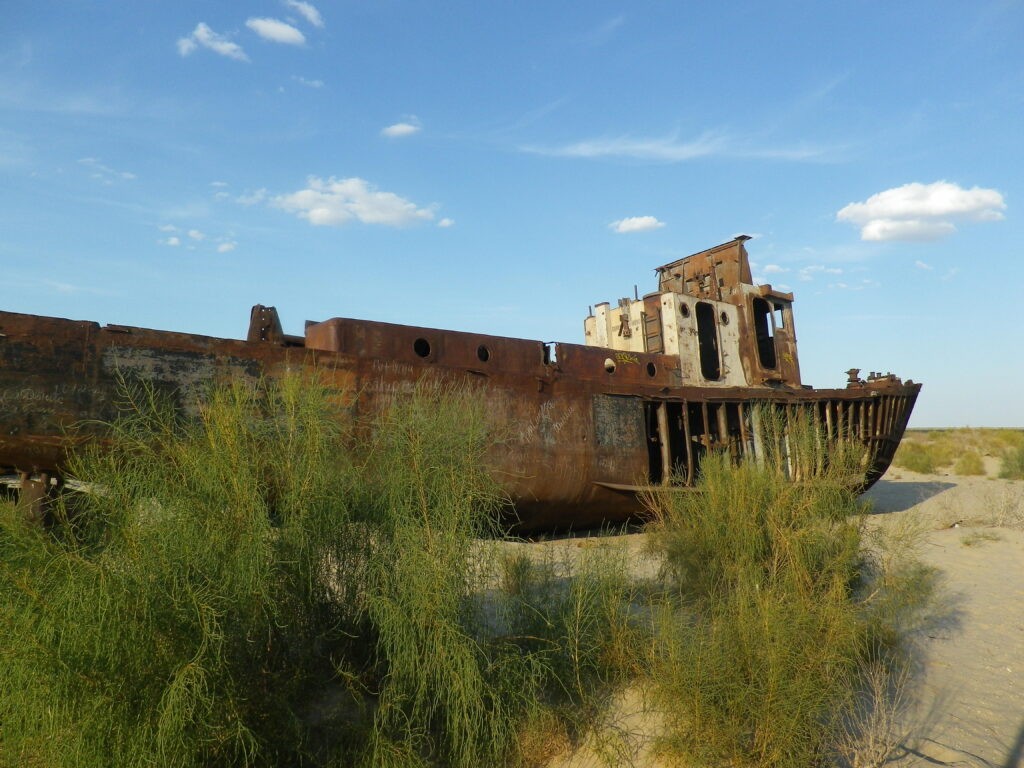
An 1853 map of the Aral Sea, published in the Journal of the Royal Geographical Society, depicts the vast inland water body at a time when it was near its historical peak. The engraving, created by German cartographer August Petermann, was based on findings from a scientific expedition conducted in 1848-1849, according to historical materials referenced in the project. The expedition, led by Russian naval officer Alexey Butakov, produced one of the first detailed studies of the Aral Sea. Researchers measured its depth, mapped its coastline, and documented its islands, providing a comprehensive picture of a body of water that would later become a symbol of environmental degradation. Although widely referred to as a sea, the Aral is in fact a lake. In the 20th century, it ranked as the world’s fourth-largest lake. Scientific evidence suggests it formed around 17,600 years ago as a result of glacial melt. Initially freshwater, it became increasingly saline over time, while its water levels fluctuated over centuries. From the 1960s, however, the lake began to shrink rapidly. Large-scale irrigation projects diverted water from the Amu Darya and Syr Darya rivers, primarily for cotton cultivation. Over the following decades, the Aral Sea lost more than 90% of its volume, transforming much of the region into desert and salt plains, and severely disrupting ecosystems and local livelihoods. In 1989, the lake split into two separate bodies. The southern part, largely located in Uzbekistan, has almost completely dried up, forming the Aralkum Desert. The northern section has shown some stabilisation, supported in part by infrastructure such as the Kokaral Dam. This transformation, and its historical context, will be explored in Uzbekistan’s cultural exhibition When Apricots Blossom, which draws on archival materials and contemporary interpretation. The exhibition takes its name from a poem by Hamid Olimjon, written in the 1930s, symbolising hope and renewal. According to organisers, the project will combine history, art, and environmental reflection to present the story of the Aral Sea to an international audience. The exhibition will run from April 20 to 26, at Palazzo Citterio in Milan’s Brera district as part of Milan Design Week.