• KGS/USD = 0.01144 0%
  • KZT/USD = 0.00205 0%
  • TJS/USD = 0.10784 0%
  • UZS/USD = 0.00008 0%
  • TMT/USD = 0.28490 0%
  • KGS/USD = 0.01144 0%
  • KZT/USD = 0.00205 0%
  • TJS/USD = 0.10784 0%
  • UZS/USD = 0.00008 0%
  • TMT/USD = 0.28490 0%
  • KGS/USD = 0.01144 0%
  • KZT/USD = 0.00205 0%
  • TJS/USD = 0.10784 0%
  • UZS/USD = 0.00008 0%
  • TMT/USD = 0.28490 0%
  • KGS/USD = 0.01144 0%
  • KZT/USD = 0.00205 0%
  • TJS/USD = 0.10784 0%
  • UZS/USD = 0.00008 0%
  • TMT/USD = 0.28490 0%
  • KGS/USD = 0.01144 0%
  • KZT/USD = 0.00205 0%
  • TJS/USD = 0.10784 0%
  • UZS/USD = 0.00008 0%
  • TMT/USD = 0.28490 0%
  • KGS/USD = 0.01144 0%
  • KZT/USD = 0.00205 0%
  • TJS/USD = 0.10784 0%
  • UZS/USD = 0.00008 0%
  • TMT/USD = 0.28490 0%
  • KGS/USD = 0.01144 0%
  • KZT/USD = 0.00205 0%
  • TJS/USD = 0.10784 0%
  • UZS/USD = 0.00008 0%
  • TMT/USD = 0.28490 0%
  • KGS/USD = 0.01144 0%
  • KZT/USD = 0.00205 0%
  • TJS/USD = 0.10784 0%
  • UZS/USD = 0.00008 0%
  • TMT/USD = 0.28490 0%

Viewing results 25 - 30 of 936

Russia to Boost Energy Exports to Uzbekistan as Trade Surpasses $13 Billion

Russia plans to increase deliveries of oil and natural gas to Uzbekistan, Prime Minister Mikhail Mishustin said at the sixth session of the intergovernmental commission at the level of the two countries’ prime ministers in Moscow. “Agreements have been reached to continue supplies of Russian oil and natural gas and to increase their volumes,” Mishustin said, noting that energy remains a key area of cooperation between Moscow and Tashkent. He added that Russian specialists are also involved in drilling new wells and modernizing refining and gas transportation infrastructure in Uzbekistan. The meeting brought together Mishustin and Uzbekistan’s Prime Minister Abdulla Aripov to review progress on agreements set by Presidents Vladimir Putin and Shavkat Mirziyoyev. Both sides emphasized the continued expansion of what they described as a comprehensive strategic partnership. Mishustin said bilateral trade increased by nearly 12.5% last year, approaching one trillion rubles, and is expected to grow further by 2030. Aripov, citing Uzbek data, said trade turnover exceeded $13 billion in 2025 and rose by a further 30% in the first two months of this year. Energy cooperation featured prominently in the discussions. Construction of a Russian-designed nuclear power plant in Uzbekistan’s Jizzakh region is underway, with concrete work beginning in March. Aripov described the project as opening “a new page” in bilateral relations, adding that Uzbekistan would become “the first country where both small and large nuclear power plants will be located on one site.” Beyond energy, the two sides highlighted expanding investment and industrial cooperation. Around 150 joint projects worth more than four trillion rubles are currently being implemented, while Uzbekistan hosts over 3,200 enterprises with Russian capital. Projects span sectors including mining, chemicals, textiles, pharmaceuticals, logistics, and digital technologies. Previous reporting indicates that Russia remains one of Uzbekistan’s largest trading partners, with both governments aiming to increase bilateral trade to $30 billion by 2030. Transport links are also expanding, with 367 weekly flights now operating between the two countries, according to Aripov.

Central Asia’s Climate Risks Could Cost Up to 130% of GDP by 2080

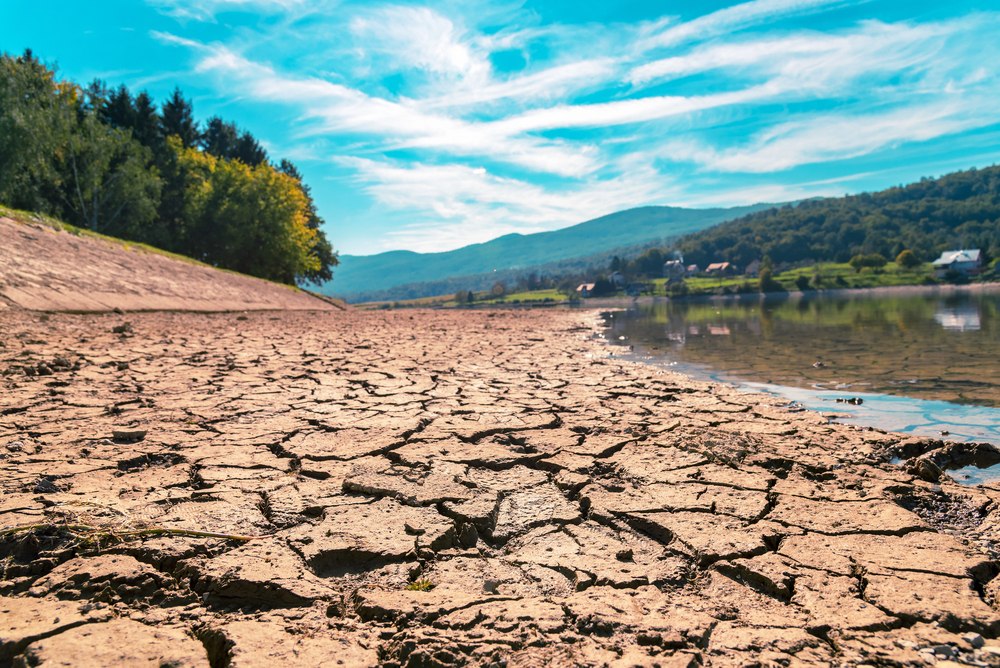
By 2080, climate change is expected to have a profound impact on the economies of Central Asian countries, with potential losses ranging from 20% to 130% of GDP. The most severe effects are projected for mountainous nations. These estimates were presented at a CAREC technology forum by Iskandar Abdullaev, a senior research fellow at the International Water Management Institute in Uzbekistan. According to Abdullaev, climate change is no longer solely an environmental issue but an increasingly significant economic factor. Key risks include droughts and water scarcity, floods, heatwaves, and glacier melt. The projected economic impact varies across the region. Tajikistan could face losses of between 80% and 130% of GDP, Kyrgyzstan 70% to 120%, Kazakhstan 40% to 80%, Uzbekistan 30% to 45%, and Turkmenistan 20% to 60%. Abdullaev emphasized that mountainous countries – Tajikistan and Kyrgyzstan – are particularly vulnerable, as climate change directly affects water resources. Glacier melt reduces river flows, creating challenges for both energy production and water supply. Droughts and extreme heat are already placing pressure on agriculture, with declining crop yields and reduced pasture productivity. Without adaptation measures, the region’s long-term sustainability could be at risk. Experts stress that mitigation and adaptation efforts are essential to reduce these risks. These include modernizing irrigation systems, adopting climate-resilient agricultural technologies, and expanding renewable energy capacity. This is not the only warning. According to the World Bank, natural disasters are already causing significant economic damage in Central Asia.  Losses from extreme events, including floods and earthquakes, can reach up to 6% of GDP, with earthquakes alone accounting for up to $2 billion in damages. At the same time, countries in the region face substantial financing gaps following major disasters. In Tajikistan, this gap could reach up to $1.5 billion. Experts warn that climate change is likely to intensify these risks, further increasing the economic burden on the region.

Pakistan Sends First Transit Shipment to Uzbekistan via Iran Corridor

Pakistan has launched trade operations under the Pakistan-Iran transit corridor, dispatching its first export consignment to Tashkent in Uzbekistan via Iran, Pakistan Today reported, citing customs officials. According to the report, the inaugural shipment consisted of frozen meat transported in refrigerated trucks. The cargo departed from Pakistan and is being routed through Gwadar and Iranian territory before reaching Central Asia. Officials say the corridor is intended to facilitate overland trade and provide an alternative to maritime routes. Sanaullah Abro, Director General of Transit Trade Customs, said the corridor has been operationalized under the TIR (Transports Internationaux Routiers) system, which enables goods to move across multiple countries with minimal customs checks. He added that key border crossing points including Taftan, Rimdan, Sost, and Gwadar, have been activated for TIR transit, with procedures streamlined to support faster cargo movement. At a launch ceremony, Abro and Director of Transit Muhammad Rashid formally flagged off the first consignment. Officials described the initiative as part of broader efforts to strengthen Pakistan’s trade connectivity with Central Asia and reduce logistics costs. Sources cited by Pakistan Today said the new route offers a more economical option for exporters and is expected to shorten transit times while easing pressure on maritime trade routes. The corridor may also increase traffic through Pakistan’s ports and support export growth. The development comes as Pakistan seeks to expand its economic engagement with Central Asia, including Uzbekistan. As previously reported by The Times of Central Asia, bilateral trade between the two countries reached nearly $500 million last year, with around 230 companies with Pakistani capital currently operating in Uzbekistan. Cooperation spans sectors such as textiles, pharmaceuticals, agriculture, and chemicals. Both sides have agreed to work toward increasing trade turnover to $2 billion in the near term. Measures under discussion include expanding the list of goods covered by the Preferential Trade Agreement, easing phytosanitary requirements, and strengthening trade infrastructure, including Uzbekistan’s trade houses in Lahore and Karachi.

Uzbekistan’s Sindarov Beats American Nakamura, Stays in Lead at FIDE Candidates 

Playing with the black pieces, Javokhir Sindarov defeated Hikaru Nakamura at the FIDE Candidates Tournament on Friday and maintained his lead at the elite chess event underway on the shores of the Mediterranean. The 20-year-old Uzbekistani grandmaster has won four games after five rounds at the tournament near Paphos, Cyprus, in what some commentators have described as the best start seen at the tournament in many years. Sindarov now has 4.5 points, one point ahead of Fabiano Caruana in second place. The winner of the eight-player, 14-round tournament will challenge the current world champion, India’s Gukesh Dommaraju, later this year. Sindarov’s win over Nakamura of the United States came after he defeated Caruana, who is also American, on Wednesday. Nakamura spent about one hour considering one move, and Caruana had also got into time trouble against Sindarov. “Interesting opening choice from Sindarov,” American grandmaster Hans Niemann, who is not playing in the candidates tournament, tweeted during the Sindarov-Nakamura game. “Slight surprise and betting that Hikaru won't have a dangerous counter-surprise prepared. If Sindarov remembers the line, it seems like it will end in a perpetual. Sindarov continues to impress.” In chess, a perpetual is a situation where one player can endlessly check the other player’s king, leading to a draw. Sindarov, however, turned expectations of a perpetual into a victory. Sindarov won the 2025 World Cup in Goa, India, but his wins over Nakamura, ranked second in the world, and third-ranked Caruana indicate that the Uzbekistani is a consistent contender at the very top of men’s chess. After defeating Nakamura, he signed autographs for children at the Cap St Georges Hotel & Resort, where the candidates tournament is being held. While Sindarov is ranked just outside the top ten in classical chess, his performance in Cyprus is expected to boost his ranking. Another player from Uzbekistan, Nodirbek Abdusattorov, has moved up to fourth place in the classical ratings list. Abdusattorov is currently playing in the Freestyle Chess Open in Karlsruhe, Germany. Top-ranked Magnus Carlsen is also playing there.

Meeting of the Organization of Turkic States Held in Baku

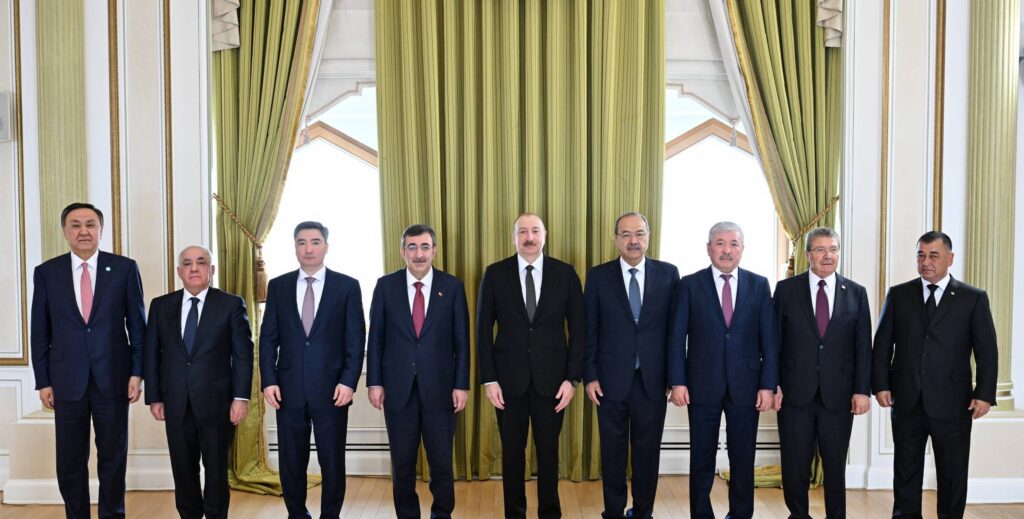
On April 2, Azerbaijani President Ilham Aliyev met with participants of a meeting of the heads of government of the Organization of Turkic States (OTS) in Baku, outlining key areas of cooperation. Among those attending were Turkish Vice President Cevdet Yılmaz, Uzbek Prime Minister Abdulla Aripov, Kazakh Prime Minister Olzhas Bektenov, Kyrgyz Prime Minister Adylbek Kasymaliev, Deputy Chairman of the Cabinet of Ministers of Turkmenistan Nokerguly Atagulyev, Prime Minister of the Turkish Republic of Northern Cyprus Unal Ustel, and OTS Secretary General Kubanychbek Omuraliev. Opening the meeting, Aliyev stressed the importance of dialogue. “This meeting of the heads of government of the Organization of Turkic States is being held in Baku. I warmly welcome you all,” he said. According to Aliyev, such meetings allow not only for the discussion of economic issues but also for reaffirming unity among member states. He noted that cooperation within the organization remains a priority of Azerbaijan’s foreign policy. He also reiterated a key message that ran throughout his speech: “We have repeatedly stated from various platforms that the Turkic world is our family; we have no other family,” Aliyev said. Special attention was devoted to economic cooperation. According to the president, trade between member states is growing, and investment volumes are increasing. He noted that Azerbaijan has invested more than $20 billion in the economies of OTS member states. Most of this has been directed to Turkey, though investment activity is expanding elsewhere. In particular, joint funds have been established with Uzbekistan, Kazakhstan, and Kyrgyzstan to support project implementation. Aliyev also thanked partners for their participation in the reconstruction of Karabakh. Facilities built with the support of OTS countries are already operational in the region, including the Mirza Ulugbek School, the Kurmangazy Children’s Creative Center, and the Manas School. In addition, a garment factory has been opened in Khankendi with the participation of Uzbekistan. He also highlighted mutual support among member states. Following the earthquake in Turkey, Azerbaijan financed the construction of the “Azerbaijani Quarter” in Kahramanmaraş, valued at $100 million. Transport and logistics projects were another key topic. According to the president, infrastructure development remains a top priority. These include the Middle Corridor, the Trans-Caspian route, and the Zangezur Corridor, all of which are gaining importance in the current geopolitical environment. Aliyev said that infrastructure within Azerbaijan is largely complete. Railways, the Baku port, highways, and airports are operational. Construction of the Zangezur Corridor is also progressing, with the highway nearly 90% complete and the railway approximately 70% complete. He also noted the construction of the Kars-Nakhchivan railway line in Turkey, which is expected to enable a new international route with an initial capacity of about 15 million tons of cargo. In conclusion, Aliyev said these projects are aimed not only at serving regional interests but also at expanding international transport connectivity. He expressed confidence that the meeting would contribute to the further development of the OTS and strengthen cooperation among member states.

Khusanov Named Manchester City’s Player of the Month for March

Uzbekistan national team defender Abdukodir Khusanov has been named Manchester City’s Player of the Month for March, the club announced. In a statement, Manchester City said the 21-year-old “beat the challenges of team-mates Rodri and Jérémy Doku to overwhelmingly win the public vote,” highlighting his strong performances throughout the month. “Khusanov was outstanding during March and has become a firm favourite with the City fans for his committed, all-action defensive style,” the club added. This marks Khusanov’s third monthly award, after also receiving the honor in January. Last year, he made history by being named the club’s Etihad Player of the Month for February, just six weeks after joining. At the time, the club praised his composure and tactical discipline, particularly his decision-making under pressure across multiple appearances. Khusanov’s rapid rise has been one of the standout stories in Uzbek football in recent years. Earlier, he was named Asia’s Best Young Footballer of 2025 by Goalpost, reflecting his growing reputation on the international stage. The defender made history in January as the first player from Uzbekistan to play in the English Premier League. Since then, he has gradually secured more playing time, making several appearances for one of Europe’s top clubs this season. His performances have also drawn wider recognition. Analysts from The Athletic recently included Khusanov in a list of the world’s most underrated footballers, noting that while his debut against Chelsea was difficult, he has since shown clear improvement and strong defensive qualities.