
• KGS/USD = 0.01144 0%
  • KZT/USD = 0.00202 0%
  • TJS/USD = 0.10486 0.48%
  • UZS/USD = 0.00008 0%
  • TMT/USD = 0.28571 0%
  • KGS/USD = 0.01144 0%
  • KZT/USD = 0.00202 0%
  • TJS/USD = 0.10486 0.48%
  • UZS/USD = 0.00008 0%
  • TMT/USD = 0.28571 0%
  • KGS/USD = 0.01144 0%
  • KZT/USD = 0.00202 0%
  • TJS/USD = 0.10486 0.48%
  • UZS/USD = 0.00008 0%
  • TMT/USD = 0.28571 0%
  • KGS/USD = 0.01144 0%
  • KZT/USD = 0.00202 0%
  • TJS/USD = 0.10486 0.48%
  • UZS/USD = 0.00008 0%
  • TMT/USD = 0.28571 0%
  • KGS/USD = 0.01144 0%
  • KZT/USD = 0.00202 0%
  • TJS/USD = 0.10486 0.48%
  • UZS/USD = 0.00008 0%
  • TMT/USD = 0.28571 0%
  • KGS/USD = 0.01144 0%
  • KZT/USD = 0.00202 0%
  • TJS/USD = 0.10486 0.48%
  • UZS/USD = 0.00008 0%
  • TMT/USD = 0.28571 0%
  • KGS/USD = 0.01144 0%
  • KZT/USD = 0.00202 0%
  • TJS/USD = 0.10486 0.48%
  • UZS/USD = 0.00008 0%
  • TMT/USD = 0.28571 0%
  • KGS/USD = 0.01144 0%
  • KZT/USD = 0.00202 0%
  • TJS/USD = 0.10486 0.48%
  • UZS/USD = 0.00008 0%
  • TMT/USD = 0.28571 0%

Viewing results 247 - 252 of 771

Central Asia Rethinks Trade Routes Amid Middle East Crisis

The escalating conflict between Iran and Israel is threatening to disrupt Central Asia’s southern trade and transport corridors, prompting governments in the region to reassess their export strategies. According to the Russian outlet Nezavisimaya Gazeta, Kazakhstan and Uzbekistan are exploring alternative routes to mitigate risks associated with instability in the Persian Gulf. A major concern is the potential closure of the Strait of Hormuz, a critical chokepoint for global trade. This poses a significant challenge for Kazakhstan, which relies on Iran as its sole southern railway outlet. Kazakhstan Seeks Alternative Kazakhstan’s Minister of National Economy, Serik Zhumangarin, emphasized the importance of maintaining uninterrupted cargo movement. “If rail service through Iran is disrupted, and this is our only southern route, the state is prepared to redirect cargo through alternative paths,” he said. Though exports via Iran remain relatively limited, about $350 million in 2024 and $120 million from January to May 2025, Kazakhstan had planned to expand its use of the Iranian corridor. In early June, Astana and Tehran agreed to boost wheat and barley shipments to three million tons annually. Alternatives under consideration include multimodal routes incorporating rail and ferry links across the Caspian Sea via Turkmenistan and Azerbaijan, as well as the Trans-Caspian or “Middle Corridor” connecting China to Georgia via the Caspian. Air freight is also being considered for select goods. While these alternatives involve added logistical challenges, the government has pledged support to businesses should the conflict persist. Zhumangarin reassured that rerouting exports is unlikely to significantly affect prices, noting that most of Kazakhstan’s exports are globally traded commodities whose prices are shaped by international markets. As previously reported by The Times of Central Asia, Kazakh officials had already warned of risks to southern routes. Nonetheless, Zhumangarin emphasized that contingency plans are in place and that “it’s too early to say how the situation will evolve.” Uzbekistan Focuses on Diversification Uzbek President Shavkat Mirziyoyev has likewise responded swiftly, ordering an immediate assessment of the crisis's impact on trade and transportation, and calling for urgent diversification of export routes. According to the presidential press service, transport costs could rise by as much as 30%. “The need to redirect cargo flows to safer ports and negotiate alternative trade corridors with partner countries was emphasized,” the statement said. Authorities have been instructed to support export-oriented businesses and identify new markets to help stabilize domestic prices. Until recently, Uzbekistan had been expanding trade ties with Iran, aiming to increase bilateral trade to $2 billion annually. However, these plans are now under review due to the regional instability. Experts: Southern Routes Not Yet Critical Despite the growing concerns, experts say Uzbekistan is not heavily dependent on southern corridors. Grigory Mikhailov, editor-in-chief of the logistics portal LogiStan.info, noted that most of Uzbekistan’s trade continues through Russian ports (St. Petersburg, Vladivostok, Novorossiysk) and China. “These routes are well-established, reliable, and offer predictable delivery times. Sanctions have had little to no impact on cargo passing through Russia,” Mikhailov said. He added that the Iranian route...
From Eurasia to Greater Central Asia: A Region Reclaims Its Voice

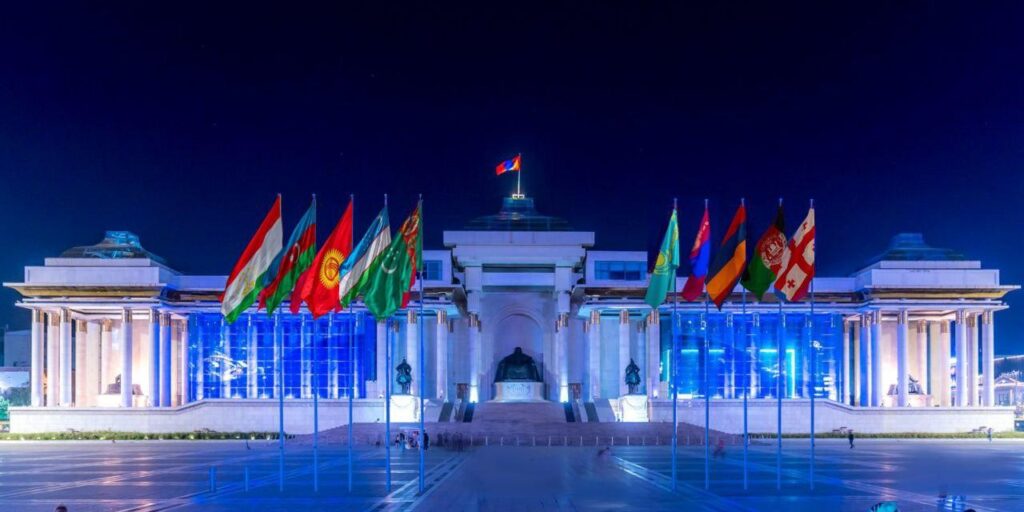
At its most basic, Eurasia refers to the combined landmass of Europe and Asia, stretching from the Atlantic Ocean in the west to the Pacific in the east, and from the Arctic in the north to South and Southeast Asia in the south. Yet when defined in political or economic terms, the concept becomes more complex. This vast region—covering over 36% of the world’s surface area—includes influential Western institutions in the west, such as the European Union and the Council of Europe. In contrast, the east is shaped by post-Soviet and Sino-Russian groupings, including the Commonwealth of Independent States (CIS), the Shanghai Cooperation Organization (SCO), and the Eurasian Economic Union (EAEU). In policy circles, the term "Eurasia" often refers more narrowly to the Caucasus (Armenia, Azerbaijan, Georgia) and Central Asia (Kazakhstan, Kyrgyzstan, Uzbekistan, Tajikistan, Turkmenistan, Mongolia, and Afghanistan). Yet countries in these regions rarely lead the institutions that shape their future. Instead, most regional organizations are dominated by larger powers, primarily Russia and China. One partial exception is the Organization of Turkic States (OTS), though it excludes non-Turkic members such as Tajikistan, Georgia, and Armenia. Many external actors—beginning with Japan's "Central Asia plus Japan" initiative in 2001—have formed dialogue platforms with the five post-Soviet Central Asian republics, often referred to collectively as the "C5." More recently, Turkey, China, the EU, and others have created similar frameworks. While these engagements have value, they are usually shaped by external agendas. The fundamental issue remains: Central Asia lacks strong, self-directed institutions of its own. In response to this institutional vacuum, Professor S. Frederick Starr proposed in 2015 a broader regional framing: Greater Central Asia. He called for moving beyond the Soviet-era definition of Central Asia to include neighboring regions with shared historical, cultural, and strategic ties. He also noted a stark reality: Greater Central Asia is the only region of its kind without its own exclusive institutions—ones not directed by outsiders. That may be starting to change. A more distinct regional identity is emerging, with new frameworks for cooperation gradually taking shape. As countries in the region increasingly define their own development priorities and diversify partnerships beyond Moscow and Beijing, there is growing momentum for a more autonomous and inclusive model of regional integration. One of the clearest examples is CAMCA—an initiative that reflects the full geographic and political scope of Greater Central Asia. Over the past decade, the Central Asia-Caucasus Institute (CACI), founded by Professor Starr, has worked with the Rumsfeld Foundation to support a new generation of regional leaders through the CAMCA Fellowship Program. Originally conceived by alumni of a joint initiative between Starr and former U.S. Secretary of Defense Donald Rumsfeld more than fifteen years ago, the CAMCA Network has become one of the few institutions uniting the entire Greater Central Asia region. Each year, the fellowship culminates in a regional forum hosted by a different CAMCA country. The most recent—held last week in Ulaanbaatar—marked the 11th such gathering and the second time the event has been hosted by CAMCA...

Tajikistan and Central Asia Face Escalating Water Crisis

Central Asia is emerging as one of the regions most vulnerable to drought, according to the latest Global Drought Outlook published by the United Nations. A Region Under Climate Pressure The report highlights a persistent rise in average annual temperatures, diminishing snow cover, and accelerated glacier retreat, particularly in the mountainous regions of Tajikistan and Kyrgyzstan, as key drivers of water insecurity. “Climate change is accelerating glacier retreat... This poses a long-term threat to the region's water security,” the report states. Tajikistan, which holds over 60% of Central Asia’s glaciers, plays a critical role in the region’s hydrology. Agriculture on the Brink The first sector to suffer from prolonged drought is agriculture, which underpins food security across Tajikistan, Uzbekistan, and Turkmenistan. Most agriculture in these countries relies on outdated irrigation systems ill-equipped to handle evolving climate conditions. According to the Food and Agriculture Organization (FAO), the global incidence of droughts rose by 29% between 2000 and 2023. In Central Asia, this trend has resulted in declining crop yields, income losses, and forced livestock sales. In Tajikistan’s Khatlon and Sogd regions, farmers experience income drops of 15-30% during dry years. Despite generating more than 60% of the region's freshwater through glaciers and high-altitude rivers, Tajikistan struggles with its own water shortages. Nearly 60% of water is lost due to leakage in dilapidated canals, compounded by inefficient water management. Rural communities are particularly affected, with thousands of families lacking regular access to clean water. Hydropower and Economic Risks Tajikistan relies on hydropower for over 90% of its electricity. However, inconsistent snowfall and prolonged summer droughts have drastically lowered reservoir levels, threatening national energy stability. More than half of the country’s 14,000 kilometers of irrigation canals require modernization. From 2000 to 2016, drought-related economic losses in Central Asia exceeded $2 billion. In 2023 alone, Tajikistan incurred $5.4 million in damages due to power shortages. Droughts are also impacting public health, employment, and migration. Natural disasters annually affect around 1.4 million people in Uzbekistan and 500,000 in Kazakhstan and Tajikistan. By 2050, drought-related losses are expected to reach 1.3% of regional GDP annually, with up to five million climate migrants projected. Regional and Global Responses Tajikistan, a signatory to the UN Convention to Combat Desertification, is pursuing land restoration and sustainable water management projects. Under the ISCAUZR-2 initiative (Central Asian Initiative on Sustainable Land Management), the country secured nearly $1.5 million to support sustainable agricultural practices. Efforts include the development of fruit tree nurseries, installation of drip irrigation systems, construction of freshwater reservoirs, and deployment of monitoring sensors at water sources. Agroforestry techniques and drought-resistant crop varieties are also being introduced. Despite these initiatives, the region continues to face rising temperatures, Asia has already surpassed a +1.04°C increase and Tajikistan has lost more than 1,000 glaciers. An estimated 10 million people across Central Asia lack sustainable access to safe drinking water. Natural phenomena increasingly compound one another: droughts cause dust storms, which in turn accelerate glacier melt. The UN report warns that without systemic...

Uzbekistan and Mongolia Sign Joint Declaration to Deepen Bilateral Ties

President of Uzbekistan Shavkat Mirziyoyev arrived in Mongolia on June 24 for a historic state visit at the invitation of President Ukhnaagiin Khurelsukh. This marks the first official visit by a Uzbek head of state to Mongolia, signaling a significant step forward in bilateral relations. The official welcoming ceremony took place at Sukhbaatar Square in central Ulaanbaatar, where the two leaders reviewed an honor guard and greeted members of their respective delegations as national anthems were performed. In formal talks, both presidents reaffirmed their countries’ commitment to deepening cooperation. President Mirziyoyev expressed gratitude for Mongolia’s warm reception, and extended congratulations in advance of the country’s upcoming People’s Revolution Day celebrations. Expanding Economic Cooperation Discussions focused on strengthening economic ties, including cooperation in healthcare, education, e-commerce, agriculture, and construction materials. A recent Uzbek-Mongolian business forum held in Ulaanbaatar highlighted growing commercial engagement, while the opening of a Trade House for Uzbek goods in the Mongolian capital further cemented trade ties. The two presidents emphasized the importance of expanding trade in high value-added products, and expressed readiness to finalize agreements on preferential trade and investment protection. Areas such as mining, technology transfer, and vocational training were also on the agenda. To support these initiatives, Uzbekistan’s Ministry of Geology has opened a representative office in Ulaanbaatar. Agro-Industrial Development and Connectivity Agro-industrial collaboration will be advanced through the creation of joint clusters in meat, dairy, wool, and leather processing. Both sides are also exploring the possibility of launching direct flights between Tashkent and Ulaanbaatar by the end of 2025 to facilitate business and tourism. Humanitarian and Educational Exchange Humanitarian cooperation featured prominently in the dialogue. The leaders agreed to resume educational exchange programs, enabling Mongolian students to study at universities in Uzbekistan, thereby strengthening cultural and academic ties. Formalizing a Comprehensive Partnership The visit concluded with the signing of a joint declaration establishing a comprehensive partnership, outlining key areas for long-term cooperation and reaffirming mutual commitment to deeper ties. President Mirziyoyev also invited President Khurelsukh for a reciprocal visit to Uzbekistan.

The Next Steps for Central Asian Finance: Interview with Azerbaijani Fintech Leader Dr. Fuad Karimov

This week The Times of Central Asia will be attending the CAMCA Regional Forum, which this year is being held in Ulaanbaatar, Mongolia.  The CAMCA network is a collection of professionals and policymakers dedicated to sharing ideas, knowledge and inspiration to accelerate the development of the Eurasia region; its name stands for Central Asia, Mongolia, the Caucasus and Afghanistan. Ahead of the Forum, The Times of Central Asia spoke with Dr. Fuad Karimov, Regional Managing Director of the payment software company Xsolla, about what the CAMCA program means for the Eurasian finance industry, and how Azerbaijan can work more closely with Central Asia. TCA: What condition do you feel fintech spaces are currently in, particularly in the Eurasia region? FK: Fintech [financial technology] across the CAMCA region is accelerating. Countries like Kazakhstan and Uzbekistan have made significant progress in regulation and adoption.  In Azerbaijan, key drivers include state-led digitalization and innovative companies like PashaPay and Birbank, which are transforming consumer payment behavior.  Cross-border transfers, mobile banking, and contactless solutions are increasingly common across the region. In what areas do you think CAMCA initiatives can help them improve? CAMCA can create platforms to harmonize financial regulations, facilitate cross-border fintech testing, and promote knowledge exchange. It can also help reduce friction in currency conversion.  Regional collaboration can attract investors from the West and Asia. Priorities should include cybersecurity, financial literacy, AI in finance, and coordinated exploration of digital currency pilots like e-Manat, e-Tenge, and e-Soum. You're moderating a session on harnessing fintech in CAMCA markets. What topics do you expect to touch upon, and who are you looking forward to hearing from? We’ll cover the rise of digital national currencies (CBDCs), crypto regulation, exchange rate risk, and the impact of AI on lending, compliance, and fraud prevention.  I’m especially looking forward to hearing from fintech leaders in the CAMCA region — each representing diverse policy environments and innovation models. Where do you see opportunities for Central Asia to work more closely with Azerbaijan? There’s strong potential in co-developing cross-border payment systems, digital identity frameworks, and startup accelerators.  Azerbaijan can share experience in building public-private fintech partnerships, while Central Asia offers scale and growing demand. Aligning exchange rate mechanisms, regulatory approaches, and education systems will enhance regional integration.  The CAMCA platform is an ideal space to turn these synergies into actionable policy and investment opportunities.  

Uzbekistan Allows Name Changes Following Official Gender Correction

Uzbekistan has updated its civil status regulations to allow individuals who have officially changed their gender to also change their first name, last name, and patronymic. The change follows a June 12 Cabinet of Ministers decision that amends the country’s procedures for registering personal status documents. According to the Ministry of Justice, the update is part of broader efforts to streamline legal documentation related to marriage, family, and civil status. Under the new rules, citizens aged 18 and older, who do not have minor children, may apply to change their names via the Unified Interactive Services Portal. The ministry clarified that the changes have been misinterpreted online as introducing broad legal provisions for gender transition. In fact, officials stressed, the amendment only affects the process of updating civil records after a gender change has already been made and recognized through medical documentation. Previously, individuals who had changed their gender could correct key documents such as birth, death, and marriage certificates. However, name changes were restricted and typically permitted only under cultural or national naming exceptions. Under the new rules, a recognized gender transition now constitutes sufficient legal grounds for a name change, provided that a medical statement confirming the change is submitted. The Justice Ministry also noted that each year, approximately five to six children in Uzbekistan are born with indeterminate gender characteristics. In many such cases, gender is assigned based on early medical assessments, though the child's actual gender identity may only become clear years later, sometimes not until adolescence. Officials cited one example involving a child born in 2008 who was initially registered as male. At age 16, medical evaluation confirmed the child was female. While her gender record was corrected in civil documents, existing laws at the time did not allow her to change her name and patronymic accordingly. To address such legal gaps, the government passed Decision No. 362. It ensures that once a medical institution verifies a gender correction, the individual may also update their full name to reflect their gender identity. The regulation is intended to improve consistency across civil documents and prevent identity mismatches for individuals who have undergone gender transition.
