• KGS/USD = 0.01144 0%
  • KZT/USD = 0.00208 0%
  • TJS/USD = 0.10429 0.1%
  • UZS/USD = 0.00008 0%
  • TMT/USD = 0.28530 0%
  • KGS/USD = 0.01144 0%
  • KZT/USD = 0.00208 0%
  • TJS/USD = 0.10429 0.1%
  • UZS/USD = 0.00008 0%
  • TMT/USD = 0.28530 0%
  • KGS/USD = 0.01144 0%
  • KZT/USD = 0.00208 0%
  • TJS/USD = 0.10429 0.1%
  • UZS/USD = 0.00008 0%
  • TMT/USD = 0.28530 0%
  • KGS/USD = 0.01144 0%
  • KZT/USD = 0.00208 0%
  • TJS/USD = 0.10429 0.1%
  • UZS/USD = 0.00008 0%
  • TMT/USD = 0.28530 0%
  • KGS/USD = 0.01144 0%
  • KZT/USD = 0.00208 0%
  • TJS/USD = 0.10429 0.1%
  • UZS/USD = 0.00008 0%
  • TMT/USD = 0.28530 0%
  • KGS/USD = 0.01144 0%
  • KZT/USD = 0.00208 0%
  • TJS/USD = 0.10429 0.1%
  • UZS/USD = 0.00008 0%
  • TMT/USD = 0.28530 0%
  • KGS/USD = 0.01144 0%
  • KZT/USD = 0.00208 0%
  • TJS/USD = 0.10429 0.1%
  • UZS/USD = 0.00008 0%
  • TMT/USD = 0.28530 0%
  • KGS/USD = 0.01144 0%
  • KZT/USD = 0.00208 0%
  • TJS/USD = 0.10429 0.1%
  • UZS/USD = 0.00008 0%
  • TMT/USD = 0.28530 0%

Viewing results 325 - 330 of 795

Interview: A Profile of Women’s Rights in Central Asia from Equality Now

Equality Now is an international human rights organization that uses the law to protect and promote the rights of all women and girls worldwide. The organization combines grassroots activism with legal advocacy at national, regional, and international levels, and collaborates closely with local partners to ensure governments enact and enforce laws protecting women’s and girls’ rights. The Times of Central Asia spoke with Equality Now's Eurasia consultant Janette Akhilgova about the issues that women and girls in Central Asia face, and how women's rights are being addressed. TCA: Equality Now works in all regions of the world. Which social issues and inequalities are most affecting women and girls in Central Asia at the present time?  JA: One of Equality Now’s main focuses in Central Asia is ending sexual violence and improving access to justice for survivors, specifically women and girls. In 2019, we published  “Roadblocks to Justice: How the Law is Failing Survivors of Sexual Violence in Eurasia,” examining laws on rape and other forms of sexual violence in 15 former Soviet Union countries. This report formed the basis of our work in Eurasia, helping us identify the major legal gaps in the region.  A critical legal gap is the absence of a consent-based definition of rape, which means the law does not recognize a broad range of coercive circumstances where consent cannot be genuine, willing, or voluntary. This omission leaves some forms of sexual violence unpunished, perpetuating a culture of impunity. Inadequate support systems for sexual violence survivors compound the problem, enabling miscarriages of justice and fostering a widespread lack of trust in legal systems. Another obstacle to justice for survivors is the provision for conciliation between parties in rape cases. This practice involves sexual violence survivors being encouraged or pressured to reach an agreement with their assailant outside of the formal criminal justice system. The approach often involves mediating a settlement, whether financial or otherwise, between the survivor and the accused, typically facilitated by families, communities, or even legal authorities. Conciliation is sometimes not voluntary as survivors are often subjected to societal pressure. The social stigma attached to rape, a strong culture of victim blaming, and a lack of awareness about legal procedures are also factors that contribute to sexual violence cases not being reported to authorities and instead being dealt with privately. TCA: Is progress being made to eradicate these issues? Conversely, are there any parts of life where women and girls see their rights eroded? JA: Central Asian countries have made varying progress in advancing women’s rights and welfare.  The 2022 Global Gender Gap Report highlighted significant strides by Kazakhstan, such as lifting restrictions on “banned professions” so that women are no longer legally prohibited from doing certain jobs previously deemed "too dangerous" or "unsuitable" for women. The country has also adopted new and comprehensive laws to protect women's and children’s rights.  Another progressive legal reform in Kyrgyzstan was the introduction in 2024 of a law on domestic, sexual, and gender-based violence that strengthened access to justice for...
Mirziyoyev Tells Uzbekistan’s Parliament That He Wants a Stronger Opposition

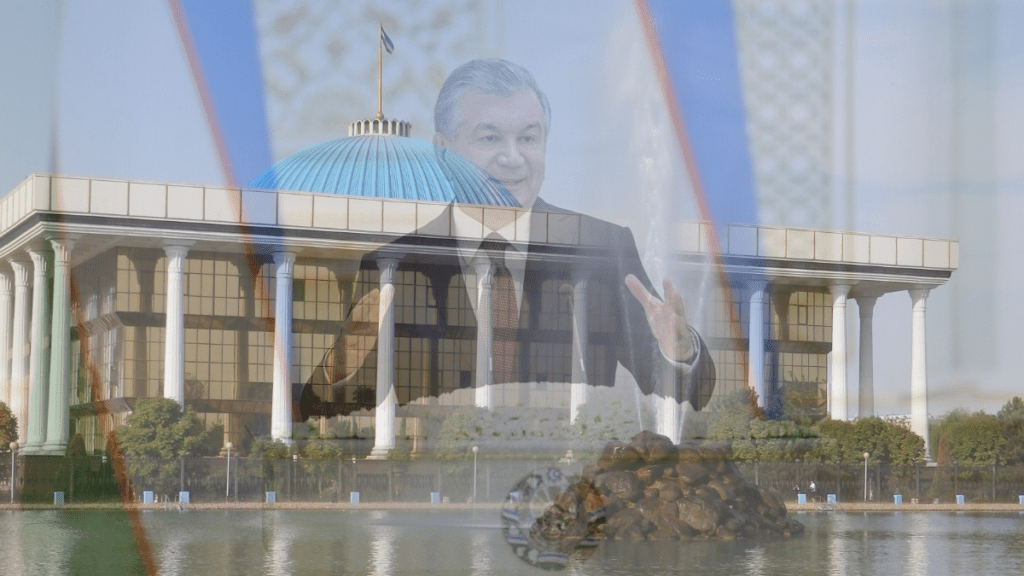
Uzbek President Shavkat Mirziyoyev said on Monday that the parliament should be more dynamic about solving society’s problems, and that the “opposition” should have more rights in the assembly. His comments were in line with the government’s reform push, but also reflected Mirziyoyev's tight political control over Uzbekistan, because none of the five registered political parties pose a meaningful challenge to him.   Mirziyoyev made the announcements in a speech to the Oliy Majlis, Uzbekistan’s parliament, in its first session since October 27 legislative elections. The elections were meant to underline the country’s evolution toward political liberalization, even though OSCE election observers said there was a lack of political competition and the vote “did not offer voters a real choice.” Those elections introduced a mixed system in which half of 150 lawmakers were elected individually and half from party lists, the result of a constitutional change that is part of a broader government campaign to develop the Central Asian country in socio-economic, judicial and other areas. While Mirziyoyev promised more openness and accountability after taking power following the death of longtime leader Islam Karimov in 2016, opponents say the government is often heavyhanded in its response to dissent and efforts to form a genuine political opposition are kept in check.   Mirziyoyev’s comment about giving more clout to the opposition came midway through a speech in which he reviewed the elections and urged parliamentarians to be more pro-active in “solving urgent problems” in Uzbekistan. He talked about legislative proposals to replace old residential buildings with modern ones, support private education and investors in energy, introduce mandatory health insurance and tackle themes related to artificial intelligence.  “In order to boost the opposition, it was proposed to increase the number of guaranteed rights of the parliamentary opposition from 3 to 6, including giving it the positions of one committee chairman and two deputy committee chairmen, as well as additional rights to submit questions within the framework of the “government hour” and parliamentary inquiries,” Mirziyoyev’s office said in a statement.  There are nuances between the government and some lawmakers on specific issues such as environmental policy or public pronouncements on Uzbekistan’s relationship with Russia, though the registered parties are essentially loyal to the president. In a constitutional referendum in 2023, voters approved measures that could let Mirziyoyev stay in power until 2040. 

Asia Now Creating a Market for Central Asian Art in Paris

When we think about spreading knowledge of Central Asian art in Europe, we might think of exhibitions, of festivals, of panels and talks, not necessarily of an art fair. However, in the contemporary art world, it is today the market, more than art critics, which dictates the emergence of certain art scenes as a whole. For the historically underrepresented Central Asian art market, smaller fairs represent today an important alley, more than the big fairs such as Art Basel – which just had its second Paris iteration this October. Smaller “boutique fairs,” as they are called, often present curated programming which allow a wide public – not just collectors and buyers – to enjoy the art as it was an exhibition. A selling one, of course.  In Paris, the most relevant fair which has historically presented Central Asian artists to the European public is called Asia Now, and it took place in Paris from October 17 to 20. Entirely dedicated to Asian art, the fair has historically tried to fill the gap for Central Asian art in the European market in the past ten years of its existence. The fair has selected more than 70 leading and emerging contemporary art galleries from all over the world, presenting more than 220 artists coming from 26 territories from all over Asia and its diaspora, stretching from Central Asia to the Asia-Pacific, including West, South, South-East, and East Asia. Their commitment to expanding knowledge of Central Asian art in Europe culminated last year in a show which was indeed focused on Central Asia, and curated by the artist group Slav and Tatars. While seminal Central Asian galleries such as the Aspan Gallery from Almaty and Pygmalion Gallery from Astana didn’t return to Asia Now this year, the fair still presented a number of Central Asian artists and practices, interspersed between the main show, and the booths.    Central Asian Artists in the Radicant’s Main Show The main exhibition of Asia Now was curated by Radicants, a collective founded by art critic Nicolas Bourriaud, and it was centered on sacred ceremonies seen as a powerful tool for re-examining societal structures and reconnecting with ancestral roots. Called “Ceremony,” the main show was co-curated by Nicolas Bourriaud and Alexander Burenkov, a curator of Russian origins who has been working for a long time with Central Asian narratives, which are also featured prominently in the show. [caption id="attachment_25510" align="aligncenter" width="2560"] Image: TCA, Naima Morelli[/caption] The idea of ceremony ties to the tenth anniversary of the art fair, but at the same time the curators opted to explore the nuances of ritual as both a "celebration of ancestral wisdom" and a "critical tool for interrogating and redefining established traditions and power dynamics." As Burenkov noted, the decision to use the theme of ceremony emerged after conversations with Asia Now director Alexandra Fain. “The choice fell on ‘ceremony’ in all its variability and polysemy [was used] to explore the non-obvious meanings of ritual through the eyes of contemporary artists...

U.S. Sanctions Uzbek Companies Supplying Russia with Equipment

The U.S. Department of the Treasury has sanctioned 275 individuals and entities involved in supplying Russia with advanced technology and equipment that it desperately needs to support its war machine. The Uzbek companies Uzstanex and The Elite Investment Group are among the sanctioned entities. Deputy Secretary of the Treasury Wally Adeyemo emphasized that the U.S. and its allies are committed to halting the flow of essential tools and technologies that enable Russia to pursue its unlawful war against Ukraine. “As demonstrated by today’s actions, we are unwavering in our resolve to weaken Russia’s military capabilities and to penalize those attempting to circumvent or evade our sanctions and export controls,” Adeyemo stated. Uzstanex is part of the StanexGroup holding. The company sells and adjusts machine tools in Uzbekistan, Kazakhstan, Kyrgyzstan, Tajikistan, and Turkmenistan. According to the U.S. Treasury Department, the machine tools purchased by Uzstanex were delivered to Russia through the Chinese company Shanghai Winsun Imp and Exp Co Ltd (Shanghai Winsun), which is why sanctions were imposed against it. The Elite Investment Group is a non-specialized wholesaler. It is noted that from mid-March to May 2024, using GUCLU GLOBAL as a carrier agent, the company delivered approximately $190,000 worth of high-priority goods, including electrical transformers, to companies in Russia, including the GS Group.

Uzbekistan’s Cricket Team: We’re Ready For International Matches

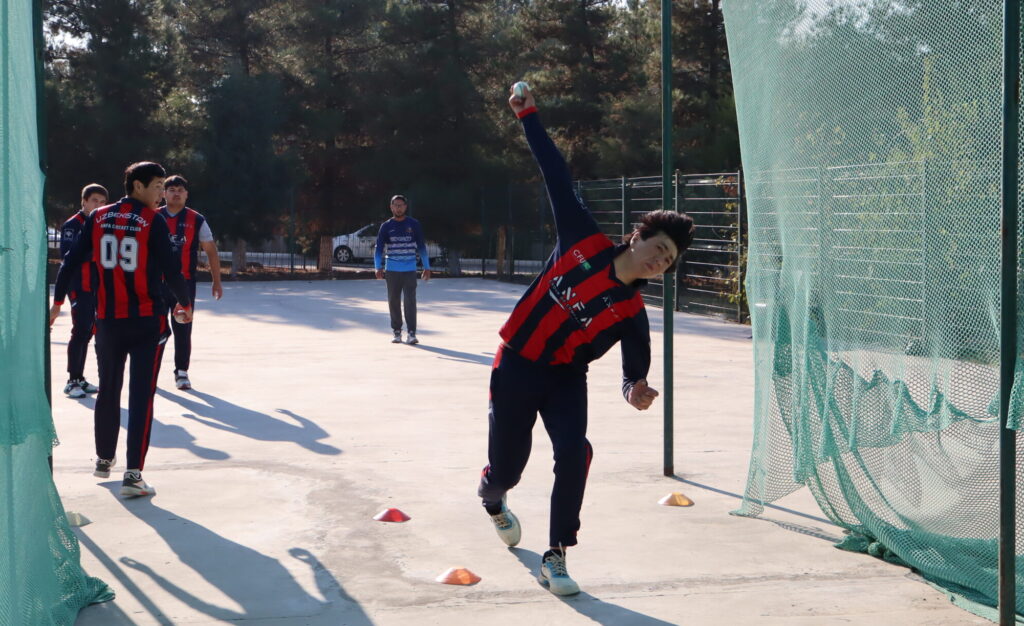
Supporters of Uzbek sport have had a lot to celebrate this year. The national football team currently sits at the top of its qualifying group for the 2026 FIFA World Cup, while eight of the country's athletes took gold at this summer's Paris Olympics.  But next year Uzbekistan wants to enter the world stage in a more surprising sport: cricket. The Central Asian country joined the game's governing body, the International Cricket Council (ICC), in 2022. As an “Associate” ICC member there are hopes that the Uzbek squad will play its first international matches in 2025, in the Twenty20 (T20) version of the game. T20 games are much shorter than traditional five-day Test matches. The nation's rapid progress is due to Aziz Mihliev, the owner of Tashkent pharmaceutical company Anfa. Mihliev fell in love with the game while living in India, where cricket is the national sport. As the founder and chairman of the O’zbekiston Kriket Federatsiyasi (Uzbekistan Cricket Federation), Mihliev has created the Anfa Cricket Academy in the capital's Yunusobod district, where three practice pitches cover a school playground. The federation invites students at Tashkent’s sports colleges to the academy to try their hand at cricket. Many of the players picked to wear the red and dark blue striped jerseys of the new Anfa Cricket Club are also talented tennis players. Mihliev has also built a cricket ground outside the capital, towards the town of Chirchiq, where a game between Salar Stars and Ferghana Rangers will be played this Sunday. There are plans to turn an abandoned Soviet-era stadium outside Samarkand into Uzbek cricket's second home. Travelling to represent Uzbekistan at global ICC conferences, Mihliev speaks with the ambition of a man who now rubs shoulders with the most influential people in the sport. From one such trip he writes: "My ambition is to see an Uzbekistan national team play a Test match against the England team. And win, of course!" Over 4,000 Uzbeks now play the game regularly at schools and universities, from Tashkent in the north of the country to the southern Surkhandaryo region.  Surkhandaryo borders Afghanistan, a passionate cricketing nation that reached the semi-finals of this year's men’s T20 World Cup. And it was to Afghanistan that Mihliev turned when recruiting a former international player to train his national team. Khaliq Dad Noori played a few games for Afghanistan at the beginning of the 2010s, when his own country was at the start of its journey to the top of world cricket.  Noori coaches his players in the Pashto language, which his Uzbek students can understand. But cricket in Uzbekistan still has a local flavour. Hitting techniques come straight from games of chilla, an old pastime played with sticks. Bats are known as tuqmoq – the name of a wooden club that Uzbek warriors used to brandish. Although some of Uzbekistan’s best cricketers have only been playing for a year or two, judging by the talent on show during a practice session they would beat most...

Secret Spots Favored by Tashkent’s City Dwellers

Tashkent, the capital of Uzbekistan, has a wealth of unique attractions, each with its own history and atmosphere. Residents, from students to entrepreneurs, have their favorite corners where they return again and again. Here some of a few recommended by locals to TCA.   [caption id="attachment_24632" align="aligncenter" width="1100"] photo: uzbekistan.travel Eco Park[/caption] Eco Park Located in the city center, the Eco Park is especially popular amongst students seeking somewhere to relax, take a break from their studies and immerse themselves in nature. “Here you can not only walk around, but also learn and be inspired by new ideas.” Saeed, 19, Programming student   [caption id="attachment_24625" align="aligncenter" width="900"] photo: www.tripadvisor -Seoul National Park[/caption] Seoul National Park Easily accessible by bus from the city center, Seoul National Park offers a taste of Korea in its landscaping and various pavilions. Passionate about Korean culture, Samira often visits the park to relax and socialise with friends. “This place has become my little world where I can enjoy nature and feel part of Korean culture.” Samira, 17, High school student   [caption id="attachment_24624" align="aligncenter" width="680"] photo: www.afisha -Patriki Coffee Shop[/caption] Patriki Coffee Shop For Dilshot, aside from its excellent coffee, the cozy atmosphere of Patriki is a perfect and inspirational spot in which to complete tasks on his computer. “There is always cool music here, and I can focus on my projects without being distracted by noise.” Dilshot, 22, Programmer   [caption id="attachment_24626" align="aligncenter" width="900"] photo: www.tripadvisor - Café 1991[/caption] Café 1991 Nasiba, prefers to chill in Cafe 1991; a venue renowned for its excellent menu and which she favors for its elegant and stylish atmosphere. “It is my place of rest. I like to relax here after work, enjoy delicious food and socialize with friends.” Nasiba, 30, Cafe Administrator   [caption id="attachment_24627" align="aligncenter" width="680"] photo: www.gazeta.uz - Chinorkent[/caption] Chinorkent Mountain Resort Lured by the great outdoors, Gafur likes to escape his daily routine and the hustle and bustle of the city by heading for the picturesque mountain resort of  Chinorkent. Located in Tashkent's  Bostanlyk district, 65 kilometers from the center, the resort has a cable car to transport visitors within ten minutes to an observation deck offering panoramic views. “The tranquil atmosphere makes it a perfect place to relax.” Gafur, 22, Entrepreneur