Kazakhstan Wants to Lift Ban on Saiga Horn Trade; Some Conservationists Object
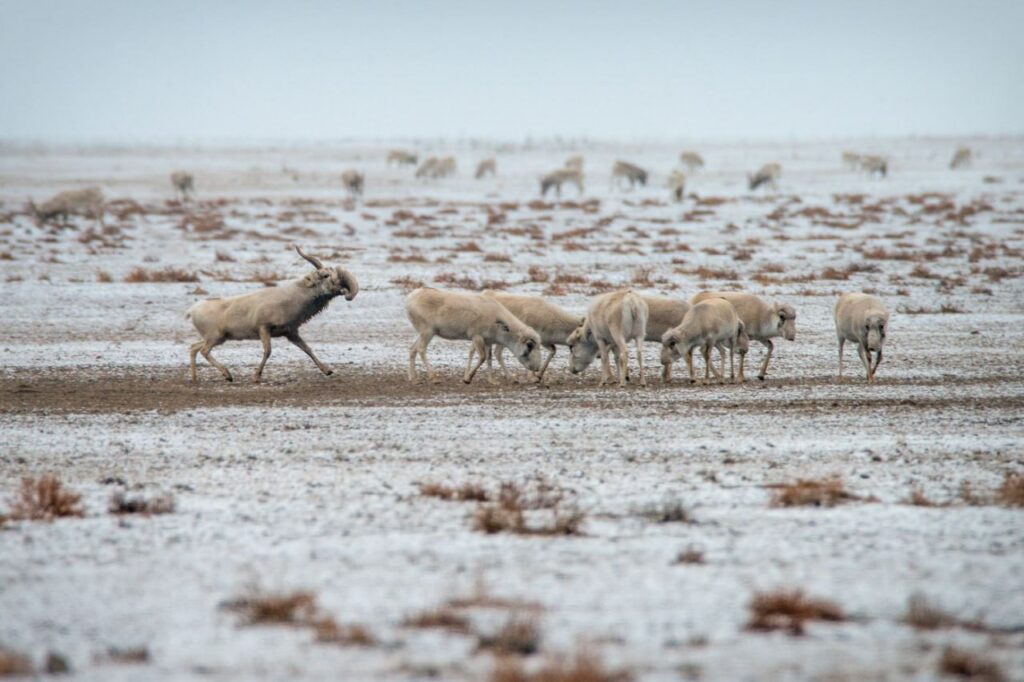
The extraordinary recovery of the saiga antelope population after being close to extinction has opened a debate about whether it is time to allow the international commercial trade of the species’ horns from Kazakhstan, home to the vast majority of saigas. Kazakhstan’s government says yes. It has submitted a pro-trade proposal that will be discussed at a conference in Samarkand, Uzbekistan of the Convention on International Trade in Endangered Species of Wild Fauna and Flora, or CITES. The United Nations meeting, which regulates trade in tens of thousands of species of animals and plants, is being held in Central Asia for the first time and runs from November 24 to December 5. It was last held in Panama in 2022. While applauding Kazakhstan’s conservation successes, some groups advise against trade in saiga horns, which are used in traditional medicine in parts of Asia. The New York-based Wildlife Conservation Society, warned on Tuesday that the population gains are fragile, saying “the saiga has a long history of boom and bust population cycles, and a precautionary approach is imperative.” Backed by international conservation groups and donors, Kazakhstan has guided the remarkable comeback of a species whose numbers were estimated at 20,000 in 2003 and then, after some growth, suffered another big population crash because of disease in 2015. A reduction in poaching and the expansion of land earmarked for conservation helped the saigas. But some farmers say rising saiga numbers threaten their crops and the government has considered mass kills and other ways to manage the population. Kazakhstan’s saiga population is estimated to be several million and the status of the species on the IUCN Red List was moved from critically endangered to near threatened in 2023. There are much smaller saiga populations elsewhere in the region, including Russia, Mongolia and Uzbekistan. Saiga populations in Kazakhstan “exceed historical levels, which has led to conflicts with local farmers over forage resources in certain regions,” according to Kazakhstan’s CITES proposal. It says that removing the current “zero quota” in the international commercial trade in saiga “derivatives” from Kazakhstan would help meet demand for horns and reduce poaching. The zero quota was introduced at the CITES meeting in Geneva in 2019. “The revival of sustainable commercial trade could not only restore the species' economic value but also regulate market pricing policies to make illegal trade unprofitable, as the price of saiga horns would no longer justify the risks and costs for poachers,” Kazakhstan’s proposal says. However, the Wildlife Conservation Society, which runs programs in more than 50 countries, said the ban should stay in place for now because horn exports from Kazakhstan would increase demand, complicate efforts to distinguish between legal and illegal horns and put pressure on saigas other countries where they are more vulnerable. “Mongolia’s saiga population has grown thanks to years of collaborative effort, but Mongolia’s subspecies remains endangered,” Justine Shanti Alexander, the group’s country director in Mongolia, said in a statement. “ Any move that increases international demand for saiga horn -...