• KGS/USD = 0.01144 0%
  • KZT/USD = 0.00205 0%
  • TJS/USD = 0.10771 0%
  • UZS/USD = 0.00009 0%
  • TMT/USD = 0.28571 0.28%
  • KGS/USD = 0.01144 0%
  • KZT/USD = 0.00205 0%
  • TJS/USD = 0.10771 0%
  • UZS/USD = 0.00009 0%
  • TMT/USD = 0.28571 0.28%
  • KGS/USD = 0.01144 0%
  • KZT/USD = 0.00205 0%
  • TJS/USD = 0.10771 0%
  • UZS/USD = 0.00009 0%
  • TMT/USD = 0.28571 0.28%
  • KGS/USD = 0.01144 0%
  • KZT/USD = 0.00205 0%
  • TJS/USD = 0.10771 0%
  • UZS/USD = 0.00009 0%
  • TMT/USD = 0.28571 0.28%
  • KGS/USD = 0.01144 0%
  • KZT/USD = 0.00205 0%
  • TJS/USD = 0.10771 0%
  • UZS/USD = 0.00009 0%
  • TMT/USD = 0.28571 0.28%
  • KGS/USD = 0.01144 0%
  • KZT/USD = 0.00205 0%
  • TJS/USD = 0.10771 0%
  • UZS/USD = 0.00009 0%
  • TMT/USD = 0.28571 0.28%
  • KGS/USD = 0.01144 0%
  • KZT/USD = 0.00205 0%
  • TJS/USD = 0.10771 0%
  • UZS/USD = 0.00009 0%
  • TMT/USD = 0.28571 0.28%
  • KGS/USD = 0.01144 0%
  • KZT/USD = 0.00205 0%
  • TJS/USD = 0.10771 0%
  • UZS/USD = 0.00009 0%
  • TMT/USD = 0.28571 0.28%

Viewing results 31 - 36 of 936

Air Quality Report Shows Central Asia’s Air Getting Rapidly Worse

Tajikistan ranked as the world’s third most polluted country in 2025, according to the latest World Air Quality Report by IQAir. The report analyzed PM2.5 concentrations across 9,446 cities in 143 countries and territories. PM2.5, fine particulate matter measured in micrograms per cubic meter, is widely used as a key indicator of air pollution. The five most polluted countries in 2025 were Pakistan (67.3 µg/m³), Bangladesh (66.1 µg/m³), Tajikistan (57.3 µg/m³), Chad (53.6 µg/m³), and the Democratic Republic of the Congo (50.2 µg/m³). Only 13 countries and territories met the World Health Organization annual PM2.5 guideline of 5 µg/m³, including Australia, Iceland, and Estonia. Overall, 130 out of 143 countries exceeded the guideline. Kazakhstan records the cleanest air in Central Asia, but still had the 29th worst air globally in 2025, a very significant decline from 71st in 2024. Uzbekistan has the region's dirtiest air, and the 10th worst worldwide, while Kyrgyzstan is only slightly better, in 19th. Like Kazakhstan, both countries have fallen down the rankings since they were last put together in 2024. Kyrgyzstan had been in 41st place, while Uzbekistan has fallen from 19th. Turkmenistan, which was also among the 30 most polluted countries in 2024, was not included in the 2025 report due to a lack of available data. Karaganda in Kazakhstan is Central Asia's most polluted city, ranking 26th globally in 2025. The city recorded an annual PM2.5 level of 72.6 µg/m³, more than ten times the WHO guideline. Other heavily polluted cities in the region included Fergana (30th, 68.8 µg/m³), Dushanbe (51st, 57.3 µg/m³), Guliston (100th), and Tashkent (225th, 39 µg/m³). The report also noted that the world’s 25 most polluted cities in 2025 were all located in India, Pakistan, and China, with India accounting for three of the top four.

Uzbekistan Becomes Top International Destination for Russian Airlines

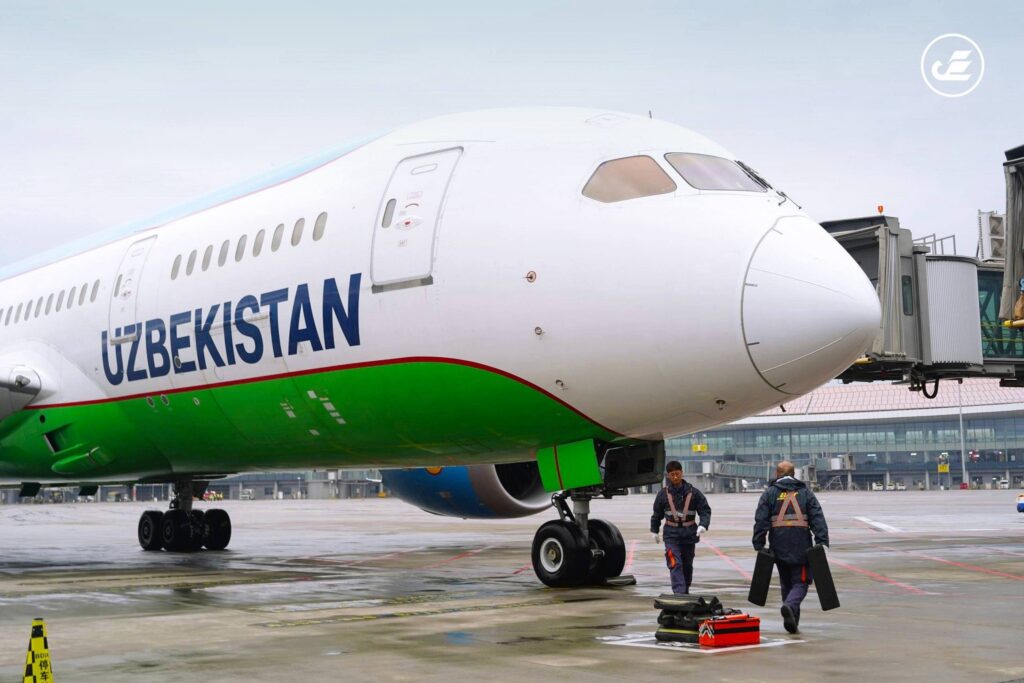
Uzbekistan has become the leading international destination for Russian airlines in the summer 2026 schedule, with flights planned on 67 routes between the two countries, according to data reported by ATO.ru, citing Russia’s aviation authority, Rosaviatsiya. The figures show Uzbekistan surpassing other popular destinations for Russian carriers, including China and Turkey, by a significant margin. Flights to Uzbekistan will operate on 10 more routes than to China and 12 more than to Turkey. Other traditional leisure destinations, such as Thailand and Egypt, will see considerably fewer routes, with 35 and 33 respectively. According to the report, this marks a major shift compared to pre-pandemic travel patterns. In 2019, Uzbekistan ranked ninth among international destinations for Russian airlines, with passenger traffic totaling around 1.24 million people, well behind Turkey and China. The growing number of routes reflects strong demand for travel between the two countries. Analysts attribute this to labor migration, as well as expanding business and tourism ties. Uzbekistan has also gained importance as a transit hub, particularly as Western airspace restrictions now limit routing options for Russian carriers. Tashkent, in particular, has emerged as a key connection point for long-haul travel, including flights to the United States. Uzbekistan Airways remains the only Central Asian carrier operating transatlantic flights to New York. The trend is mirrored on the Uzbek side. According to earlier estimates by Lufthansa Consulting cited in the report, Russia accounted for 49% of Uzbek airlines’ passenger traffic in 2019, rising to 52% by 2022. In the current summer schedule, Uzbekistan Airways operates flights to 19 Russian cities, while private carriers such as Centrum Air and Qanot Sharq serve multiple destinations, including Moscow and St. Petersburg. A new airline, FlyOne Asia, is also expected to launch services on five routes from Tashkent to Russian cities. Previously, The Times of Central Asia reported that Uzbekistan Airways continues to maintain regular operations on Russian routes, including a January incident in which a Boeing 767 flying from Tashkent to Vladivostok made a safe emergency landing in Krasnoyarsk.

Sindarov Ahead in Candidates, While Asaubayeva Shares Women’s Lead

Javokhir Sindarov of Uzbekistan is leading after four rounds of the FIDE Candidates Tournament, the elite chess contest that will determine the challenger to the world champion. In the women’s competition, Bibisara Asaubayeva of Kazakhstan is tied for first place. Sindarov, winner of the 2025 World Cup in Goa, India, played with the white pieces and defeated Fabiano Caruana on Wednesday for his third win of the candidates tournament at the Cap St Georges Hotel & Resort near Paphos, Cyprus. Sindarov put early pressure on the American and built a sizeable advantage on the clock. The 20-year-old Uzbekistani player faces Hikaru Nakamura of the United States in the fifth round on Friday. Featuring eight players, the 14-round tournament began on March 28 and ends on April 16. The winner will challenge the current world champion, India’s Gukesh Dommaraju, later this year. In an interview with the Lichess platform, Sindarov said preparation was the key to the win over Caruana and he hasn’t been focused on whether other players would catch his early lead in the tournament. He currently has 3.5 points, while Caruana is in second place with 2.5 points. “I don’t think about this a lot,” he said. “I was just playing chess.” Sindarov’s style of play often includes “bold sacrifices, energetic attacks, and creative solutions to difficult positions,” making him an unpredictable competitor in Cyprus, according to the candidates tournament website. It noted his strong results at the elite level, among them a gold medal at the Chess Olympiad in 2022 in Chennai, India, “where Uzbekistan sensationally won ahead of many traditional chess powers.” In the FIDE Women’s Candidates Tournament, Asaubayeva, 22, drew in a game against China’s Tan Zhongyi on Wednesday. The Kazakhstani player and Anna Muzychuk of Ukraine are currently joint tournament leaders with 2.5 points. Asaubayeva plays against Kateryna Lagno of Russia in round five on Friday. The winner of the tournament will challenge the women’s world champion, Ju Wenjun of China. Asaubayeva won the Women’s World Blitz Championship in 2021, 2022 and again in 2025. FIDE, the Switzerland-based governing body of chess, awarded grandmaster status to Asaubayeva last year. “Unlike purely positional grinders, she thrives in active positions where initiative and momentum matter,” says the candidates tournament website, noting the Kazakhstani player’s standout composure in knockout and high-tempo formats.

Uzbekistan and Afghanistan Establish Business Council to Boost Trade

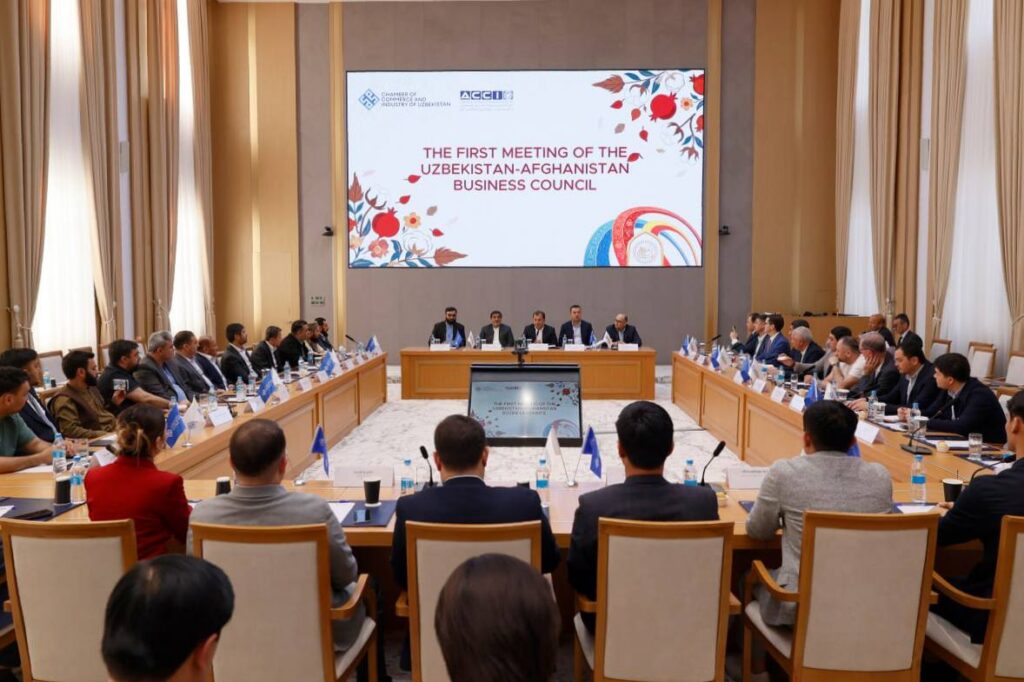
Uzbekistan and Afghanistan have established a joint Business Council aimed at strengthening trade and economic cooperation, according to Uzbekistan’s Chamber of Commerce and Industry. The council was formally launched on March 26 during a meeting in Tashkent attended by a delegation led by Mohammad Karim Hashimi, chairman of the Afghanistan Chamber of Commerce and Investment. The inaugural session brought together representatives from both countries’ business communities and relevant institutions. The council comprises 32 members. On the Uzbek side, participants include officials from the Chamber of Commerce and Industry and representatives of sectoral associations. The Afghan delegation includes members of the Chamber of Commerce and Investment as well as executives from leading private companies. Discussions focused on expanding bilateral trade, fostering direct business-to-business cooperation, and launching new joint projects. Priority sectors identified for collaboration include construction materials, pharmaceuticals, food production, textiles, electrical engineering, and petroleum products. Both sides set a target of increasing bilateral trade to $5 billion in the near term. To support this goal, they agreed on several priority measures, including expanding export capacity, introducing digital customs systems, improving financial and insurance services, and increasing transparency in trade procedures. Participants also emphasized the importance of regularly organizing exhibitions, business forums, and business-to-business meetings to strengthen ties between entrepreneurs and facilitate partnerships. Chairman of Uzbekistan’s Chamber of Commerce and Industry, Davron Vakhobov, highlighted the significance of the initiative, noting that it would help establish direct dialogue between businesses, create new partnerships, and boost investment activity. The creation of the Business Council builds on recent growth in economic ties between the two countries. Uzbekistan has described its relationship with Afghanistan as “friendly and constructive,” with bilateral trade reportedly increasing 2.5 times over the past five years-from $653 million in 2021 to $1.7 billion in 2025.

Uzbekistan Launches “Clean Air” Project to Cut Pollution by 2030

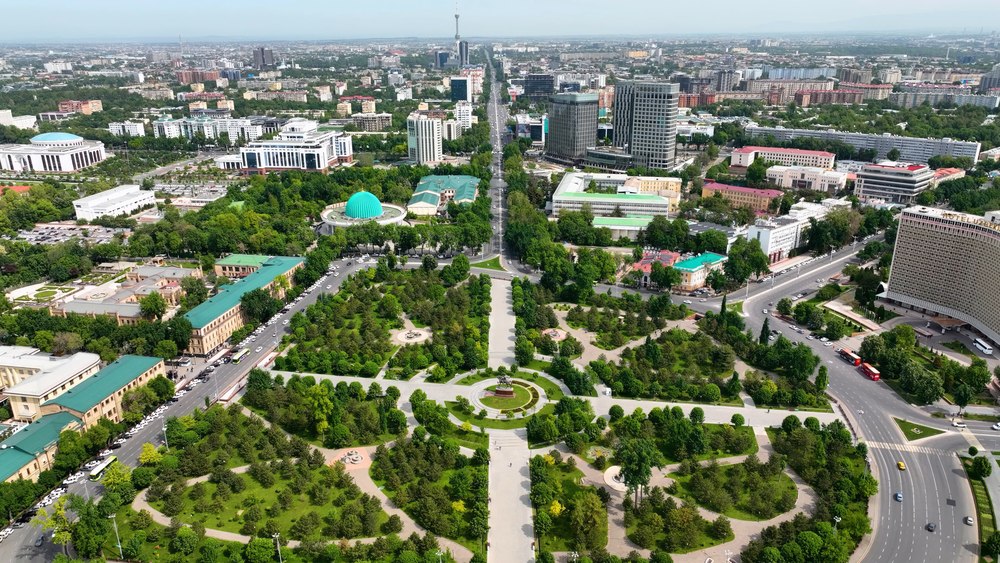
Uzbekistan has approved a nationwide environmental initiative aimed at improving air quality and reducing pollution over the next five years, according to a presidential decree published on March 25. The decree outlines the implementation of the “Clean Air” national project for 2026-2030. The program sets a target of reducing harmful emissions into the atmosphere by 10.5% and strengthening environmental monitoring across key industrial sectors. Under the plan, enterprises classified as having a significant environmental impact will be required to install automatic monitoring systems, as well as dust and gas purification equipment. The initiative also aims to reduce the number of days when air pollution levels, particularly fine particulate matter (PM2.5), exceed national safety standards. Special attention is being given to the capital. Authorities have extended the mandate of a government commission tasked with addressing environmental challenges in Tashkent until March 1, 2027. The body has also been elevated to a national-level commission, reflecting its expanded scope of responsibility. From April 1, 2026, a moratorium will be introduced on the creation of new industrial zones in Tashkent, with no specified end date. The measure is intended to limit additional pressure on the city’s already strained air quality. The decree also introduces stricter environmental requirements in the construction sector starting June 1. Developers will be required to equip building sites with environmental monitoring systems linked to a centralized database managed by the Ecology Committee. In addition, construction sites must install online surveillance cameras to ensure compliance with environmental standards. Companies found to be in violation of environmental regulations will face penalties through a rating system within the national “Transparent Construction” platform. Environmental impact assessments will also become mandatory for all major construction and urban planning projects. New building designs exceeding specified size thresholds must allocate at least 30% of land area to green spaces, reflecting a broader effort to expand urban greenery. In recent years, air quality in Tashkent has deteriorated significantly. Experts attribute the problem to industrial emissions, seasonal dust storms, rapid urban development, and the loss of green spaces. Despite a formal ban, an estimated 49,000 trees have been cut down since 2019. According to the Ministry of Ecology, PM2.5 levels in the capital frequently exceed World Health Organization guidelines. During severe smog episodes in early 2024, pollution levels reached up to 22 times the recommended annual limits, posing serious risks to public health.

Global Terrorism Index: Kazakhstan, Kyrgyzstan, Turkmenistan Show Zero Risk of Terrorism

The countries of Central Asia are among those least affected by terrorism globally, according to the newly published Global Terrorism Index 2026 report. However, the report suggests that the region’s stability is increasingly influenced by external factors, particularly its proximity to Afghanistan. Country scores are a composite measure made up of four indicators: incidents, fatalities, injuries and hostages. To measure the impact of terrorism, a five-year weighted average is applied. The main concentrations of terrorist activity remain in Africa and South Asia. The overall level of terrorism worldwide declined in 2025, although the nature of the threats became more complex and less predictable. The report indicates that no terrorist incidents were recorded in Kazakhstan, Kyrgyzstan, or Turkmenistan, who all scored 0 for terrorism risk, placing them all joint 163rd out of the 163 nations researched. Uzbekistan (95th) remains in the minimal-risk category. Tajikistan is the only country in the region with a higher threat level, ranking 41st globally. Central Asia’s relative stability is attributed to several factors, including robust security measures, the absence of active armed conflicts, and the limited presence of international terrorist organisations. Despite relative internal stability, risks to Central Asia are increasingly emerging from outside the region. The report highlights growing activity by extremist groups in Afghanistan and Pakistan, as well as worsening relations between the two countries, which could potentially escalate into open conflict by 2026. Particular concern is focused on the Tajik-Afghan border, where structural vulnerabilities persist. In addition to external pressures, experts are drawing attention to internal dynamics. The report notes an acceleration of radicalisation, particularly among young people, with digital platforms and online content playing a significant role.