• KGS/USD = 0.01144 0%
  • KZT/USD = 0.00214 0%
  • TJS/USD = 0.10508 0.48%
  • UZS/USD = 0.00008 0%
  • TMT/USD = 0.28571 0%
  • KGS/USD = 0.01144 0%
  • KZT/USD = 0.00214 0%
  • TJS/USD = 0.10508 0.48%
  • UZS/USD = 0.00008 0%
  • TMT/USD = 0.28571 0%
  • KGS/USD = 0.01144 0%
  • KZT/USD = 0.00214 0%
  • TJS/USD = 0.10508 0.48%
  • UZS/USD = 0.00008 0%
  • TMT/USD = 0.28571 0%
  • KGS/USD = 0.01144 0%
  • KZT/USD = 0.00214 0%
  • TJS/USD = 0.10508 0.48%
  • UZS/USD = 0.00008 0%
  • TMT/USD = 0.28571 0%
  • KGS/USD = 0.01144 0%
  • KZT/USD = 0.00214 0%
  • TJS/USD = 0.10508 0.48%
  • UZS/USD = 0.00008 0%
  • TMT/USD = 0.28571 0%
  • KGS/USD = 0.01144 0%
  • KZT/USD = 0.00214 0%
  • TJS/USD = 0.10508 0.48%
  • UZS/USD = 0.00008 0%
  • TMT/USD = 0.28571 0%
  • KGS/USD = 0.01144 0%
  • KZT/USD = 0.00214 0%
  • TJS/USD = 0.10508 0.48%
  • UZS/USD = 0.00008 0%
  • TMT/USD = 0.28571 0%
  • KGS/USD = 0.01144 0%
  • KZT/USD = 0.00214 0%
  • TJS/USD = 0.10508 0.48%
  • UZS/USD = 0.00008 0%
  • TMT/USD = 0.28571 0%

Viewing results 391 - 396 of 1151

U.S. Sanctions on Gazprombank Put Uzbekistan’s $4.8 Billion Copper Ambitions at Risk

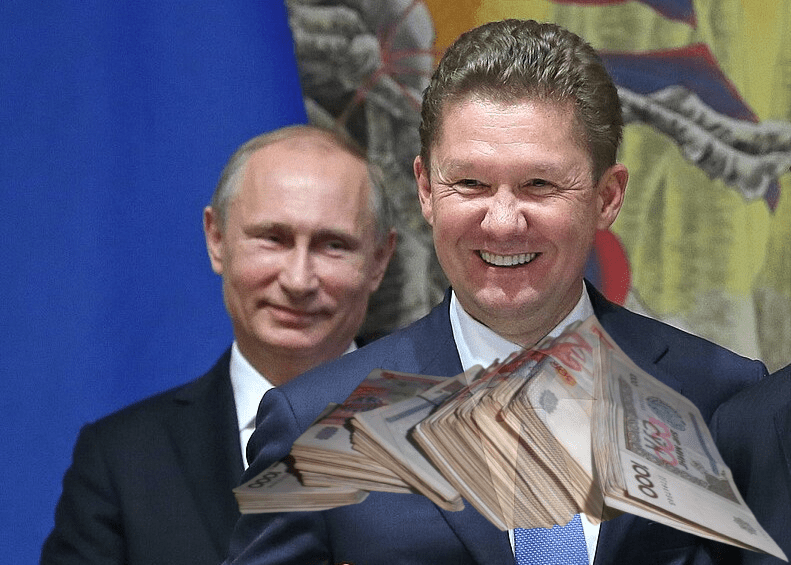
Uzbekistan faces a significant economic challenge as U.S. sanctions on Russia’s Gazprombank disrupt the $4.8 billion Yoshlik mine expansion project. The project, managed by state-owned Almalyk Mining and Metallurgical Combine (MMC), is critical to Uzbekistan’s plan to nearly double its copper production by 2026, according to The Diplomat. However, with Gazprombank now excluded from the international payments system, the project’s financing is at risk. The Russian Government directly owns 36.44% of Gazprombank's capital. Financing Challenges The Yoshlik mine expansion aims to increase copper output by 78% and gold production by 50%, making it a cornerstone of Uzbekistan’s economic development strategy. However, Almalyk MMC’s reliance on Gazprombank leaves it vulnerable to delays and potential secondary sanctions. This situation exacerbated earlier difficulties after U.S. and EU sanctions in 2022 suspended an $800 million tranche from Russian development bank VEB.RF, another key financial backer. Almalyk MMC must now urgently secure alternative financing to keep the project on track. Russia’s Role in Uzbekistan’s Economy Russia remains Uzbekistan’s largest trading partner, and remittances from Uzbek workers in Russia account for 18% of Uzbekistan’s GDP. Russia’s involvement in the Yoshlik project began in 2021 when Gazprombank and VEB.RF pledged $2 billion to finance mining equipment purchases. Impact on European and British Partners The Yoshlik project also involves significant participation from European and British firms: Germany: Engineering firms such as Thyssenkrupp have supplied critical equipment. Germany’s KfW IPEX-Bank recently arranged $2.55 billion in financing for the project. However, U.S. sanctions on Gazprombank could create legal and logistical hurdles, putting pressure on Germany’s government to reassess its support for exports to Uzbekistan. United Kingdom: The UK has taken a complex position. While it sanctioned Gazprombank in 2014, British firms, including Weir Group, remain involved in the project. In 2024, the U.K.’s export credit agency guaranteed a refinancing deal through Spain’s Santander Bank, reflecting the mine’s importance to British exporters. As reported by TCA, earlier this week, the UK Export Finance (UKEF) guaranteed a €12.6 million ($13.25 million) loan to the Almalyk Mining and Metallurgical Complex to refinance the purchase of fully automated vehicles. Urgency for Alternative Financing For Uzbekistan, securing alternative sources of funding is critical. Almalyk MMC must navigate a challenging sanctions landscape while keeping the Yoshlik project on schedule. Failure to do so could not only isolate the company but also hinder Uzbekistan’s broader economic goals, particularly its ambitions to expand its mining sector and boost foreign investment.
West Monitors Syria for Plans of Jihadis, Some From Central Asia

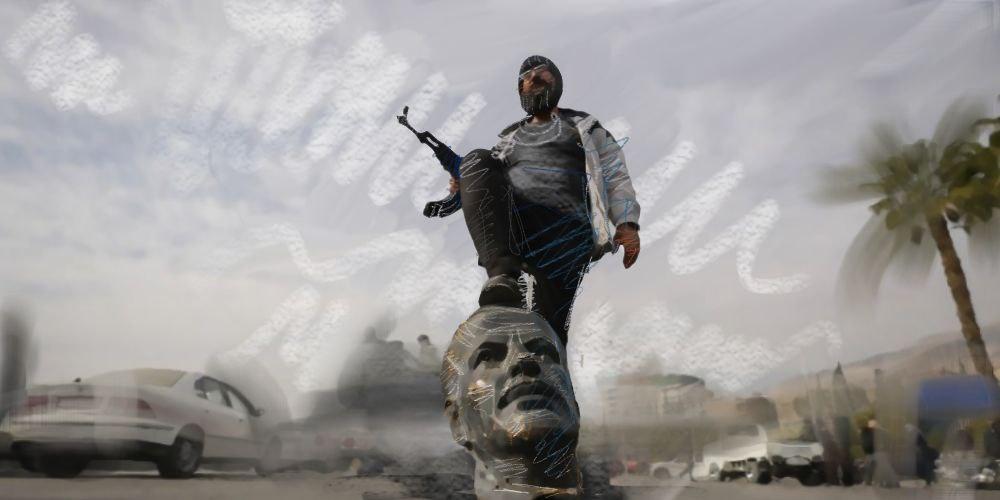
Some counterterrorism experts in the West are assessing whether the ouster of Bashar Assad´s regime in Syria will lead to a recalibration of the Islamic militant groups that opposed him, some of which include especially hardline recruits from Central Asia. Hayat Tahrir al-Sham (HTS), the Syrian group that led an offensive into Aleppo and Damascus and forced Assad to flee in a span of two weeks, is trying to turn to governance with a relatively moderate image even though it was associated with Al-Qaeda earlier in the Syrian civil war and is labeled a terrorist organization on some Western lists. It’s too early to say whether HTS leader Abu Mohammed al-Golani will stick to a message of tolerance or can make it work in a fractured country with gutted institutions, but there are signs that some jihadis object to his message of inclusiveness. “Many of them are Central Asians and they may look to go somewhere else. I think we’re inevitably going to see a certain amount of splintering from what happens in Syria,” said Colin Clarke, a terrorism researcher and author of After the Caliphate. At an Atlantic Council event in Washington on Wednesday, Clarke said there is an “interplay” between religious extremism in Afghanistan and Syria, and that a number of groups with Central Asian members have those connections. Clarke said he will be watching to see whether the connections grow following Assad’s abrupt exit after more than two decades in power. Some estimates put the number of Islamic militants who have traveled from Central Asia to Syria and Iraq over the years at around several thousand, though the figures vary and are difficult to confirm. Many joined the Islamic State group, which was defeated in Iraq and is much diminished in Syria although the U.S. recently carried out air strikes to prevent any resurgence by the group amid Syria’s current upheaval. One jihadist group with Central Asia links that collaborated with HTS in the successful campaign against Assad is Katibat al Tawhid wal Jihad, designated a terror group by the U.S. State Department in 2022. The group carried out a Saint Petersburg, Russia metro attack in 2017 that killed 14 passengers and injured 50 others, as well as a suicide car bombing of the Chinese embassy in Bishkek, Kyrgyzstan in 2016 that injured three people, according to the U.S. Katibat al Tawhid wal Jihad is comprised mainly of Uzbek, Tajik and Kyrgyz combatants, according to Daniele Garofalo Monitoring, which traces jihadist propaganda and military activity. There are an estimated 400-500 fighters in the group. Another HTS ally is Katibat Mujaheddin Ghuroba Division, which has between 200 and 400 fighters, according to the Garofalo site. Many are Uzbeks, Tajiks and Uyghurs, though the group also has Arab militants. There is also Jaysh al-Muhajireen wal-Ansar, which dates to the early stages of the Syrian civil war that began in 2011. The jihadist group is believed to have 400-500 fighters, mostly Chechens, Tajiks, Dagestanis, Azerbaijanis, Kazakhs and Ukrainians, as well as...

Uzbekistan’s Debt to Russia Climbs Amid Rising Regional Loans

Russia’s foreign lending surged to over $30 billion in 2023, the highest level since 1999, with Egypt, Bangladesh, and India receiving the largest new loans. Uzbekistan also saw a notable rise in its debt to Russia during the year. Uzbekistan’s debt to Russia increased by $41.3 million in 2023, contributing to the overall growth in the country’s financial obligations to foreign lenders. Russia’s Top Debtors Belarus remains Russia’s largest debtor, with $7.75 billion in loans, accounting for 25% of Russia’s total foreign lending. Bangladesh follows with $6.6 billion (22%), and India ranks third with $4.1 billion (14%). Other significant borrowers include Egypt, which owes $3.3 billion (11%), and Vietnam at $1.4 billion (5%). Egypt experienced the largest debt increase in 2023, with an additional $1.45 billion borrowed from Russia. Bangladesh and India saw increases of $745 million and $363 million, respectively. Afghanistan’s debt to Russia grew by $19.9 million, while smaller increments were recorded in countries like Zambia, Yemen, Sri Lanka, Ecuador, Sudan, and Moldova, which collectively added $26.54 million in debt. Uzbekistan’s Broader Debt Outlook As previously reported by The Times of Central Asia, Uzbekistan’s public debt is projected to reach $45.1 billion by the end of 2025, equivalent to 36.7% of the country’s GDP. By the end of 2023, public debt is expected to stand at $39.7 billion. The Uzbek government’s budget for 2025 highlights significant fiscal commitments, with 52% - amounting to $27.02 billion - allocated to social programs, reflecting the government’s emphasis on social spending.

Uzbek Government Files Criminal Case Against Citizen Over Jihadi Activities in Syria

The Uzbek Ministry of Internal Affairs has instigated a criminal case against Khudoyor Nuriddinov, also known as Abu Walid, who is accused of being a member of an international terrorist organization. The announcement was made via the ministry’s press service. Born in 1994 in the Rishtan district of Ferghana, Nuriddinov faces multiple charges under Uzbekistan’s Criminal Code, including: Article 155-2: Training or travel for the purpose of terrorist activities, Article 159: Undermining the constitutional order of Uzbekistan, Article 223: Illegal travel abroad or entry into Uzbekistan, Article 244-2: Creation, management, or participation in extremist, separatist, or banned organizations. According to the authorities, Nuriddinov left for Russia in 2016 as a labor migrant, where he became influenced by international terrorist ideologies. He later traveled to Idlib, Syria, where he engaged in propaganda activities. The Uzbek authorities report that his actions led to the deaths of several Uzbek citizens who were recruited and killed in fighting in Syria. Nuriddinov continues to promote jihad through social networks and YouTube, giving a religious pretext for his activities. His accounts and pages are banned in Uzbekistan, and those found storing, distributing, or transporting his content face legal action.

Uzbek Deputy Proposes Introducing Visa Regime With Russia

Russian politician Leonid Slutsky has proposed establishing a comprehensive set of mandatory rules for foreign workers in Russia, called the “Migrant Code.” Developed in coordination with diasporas and law enforcement agencies, the code outlines guidelines for migrants seeking legal employment in Russia. According to Slutsky, the Migrant Code will require foreign workers to learn Russian and ensure their families also acquire language skills if residing in Russia. Migrants, he says, must respect Russian culture and traditions, adhere to public behavior standards, obtain official employment, and pay taxes. Additional requirements include securing insurance against deportation or expulsion, undergoing fingerprinting, genomic registration, and mental health testing. In response, Alisher Qodirov, chairman of Uzbekistan’s Milli Tiklanish (National Revival) party, suggested introducing a visa regime with Russia to address potential instability and a rise in migration flows. Qodirov underscored the importance of Uzbekistan and other Central Asian countries implementing stricter entry and exit controls to Russia, alongside enhanced requirements for job seekers. He emphasized the need for migrants to respect their host country’s language, culture, and laws while reaffirming the significance of national values. He further stated that educating Uzbek workers on their rights and responsibilities would help mitigate social, political, and economic challenges for Uzbekistan. It would also protect citizens from exploitation and discrimination abroad, reinforcing the nation’s commitment to safeguarding its people.

Kazakhstan Opens Pavilion in Uzbek-Afghan Border Trade Center

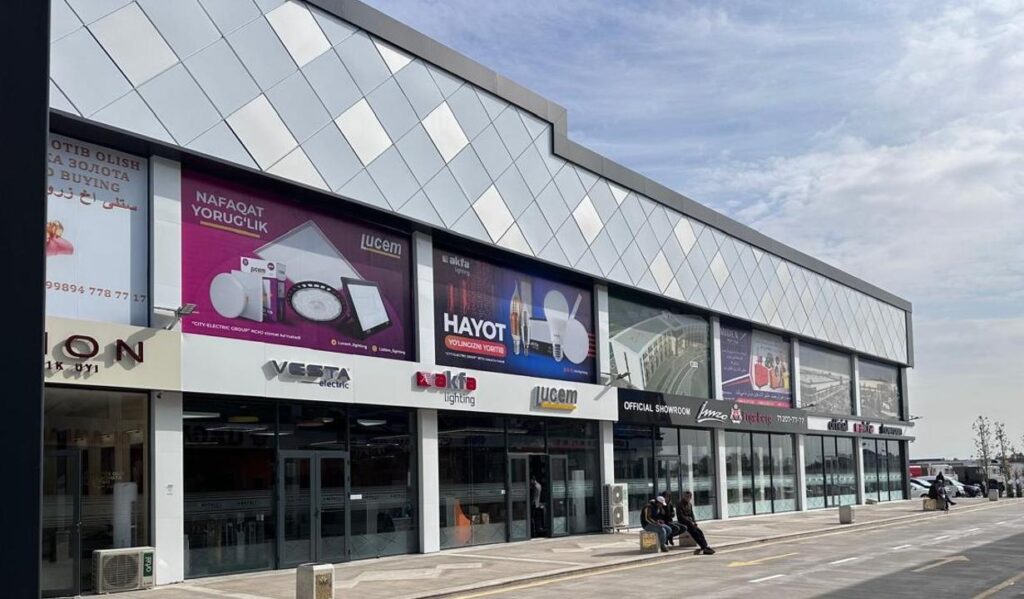
Kazakhstan’s Ministry of Trade and Integration has announced the opening of a trade pavilion showcasing Kazakh products at the Termez International Trade Center, located in the town of Termez, Uzbekistan, near the Afghan border. The pavilion is expected to serve as a strategic platform for promoting Kazakh goods in the markets of Uzbekistan and Afghanistan. The Termez International Trade Center is a crucial hub at the crossroads of Central Asian trade routes, facilitating significant trade flows between Uzbekistan and Afghanistan. Opened on August 29, the center was inaugurated by Uzbek Prime Minister Abdulla Aripov and acting Afghan Deputy Prime Minister Abdul Ghani Baradar. The facility includes retail spaces, hotels, a medical center, and other amenities. Notably, it supports transactions in multiple currencies, such as U.S. dollars, euros, rubles, and yuan. Afghan citizens can visit and conduct trade at the Termez center for up to 15 days without requiring an Uzbek visa. Kyrgyzstan has also secured a presence at the Termez International Trade Center. As The Times of Central Asia previously reported, on November 11, the Kyrgyz Ministry of Economy and Commerce acquired a trade pavilion, providing a strategic foothold to expand Kyrgyzstan’s influence in the markets of Uzbekistan and Afghanistan. Kazakhstan and Kyrgyzstan have both removed the Taliban from their lists of terrorist organizations, aligning with broader efforts by Central Asian nations to deepen trade and economic ties with Afghanistan.