• KGS/USD = 0.01144 0%
  • KZT/USD = 0.00209 0%
  • TJS/USD = 0.10438 0%
  • UZS/USD = 0.00008 0%
  • TMT/USD = 0.28490 0%
  • KGS/USD = 0.01144 0%
  • KZT/USD = 0.00209 0%
  • TJS/USD = 0.10438 0%
  • UZS/USD = 0.00008 0%
  • TMT/USD = 0.28490 0%
  • KGS/USD = 0.01144 0%
  • KZT/USD = 0.00209 0%
  • TJS/USD = 0.10438 0%
  • UZS/USD = 0.00008 0%
  • TMT/USD = 0.28490 0%
  • KGS/USD = 0.01144 0%
  • KZT/USD = 0.00209 0%
  • TJS/USD = 0.10438 0%
  • UZS/USD = 0.00008 0%
  • TMT/USD = 0.28490 0%
  • KGS/USD = 0.01144 0%
  • KZT/USD = 0.00209 0%
  • TJS/USD = 0.10438 0%
  • UZS/USD = 0.00008 0%
  • TMT/USD = 0.28490 0%
  • KGS/USD = 0.01144 0%
  • KZT/USD = 0.00209 0%
  • TJS/USD = 0.10438 0%
  • UZS/USD = 0.00008 0%
  • TMT/USD = 0.28490 0%
  • KGS/USD = 0.01144 0%
  • KZT/USD = 0.00209 0%
  • TJS/USD = 0.10438 0%
  • UZS/USD = 0.00008 0%
  • TMT/USD = 0.28490 0%
  • KGS/USD = 0.01144 0%
  • KZT/USD = 0.00209 0%
  • TJS/USD = 0.10438 0%
  • UZS/USD = 0.00008 0%
  • TMT/USD = 0.28490 0%

Viewing results 427 - 432 of 1136

Central Asian Leaders Arrive in Azerbaijan for UN COP29 Climate Summit

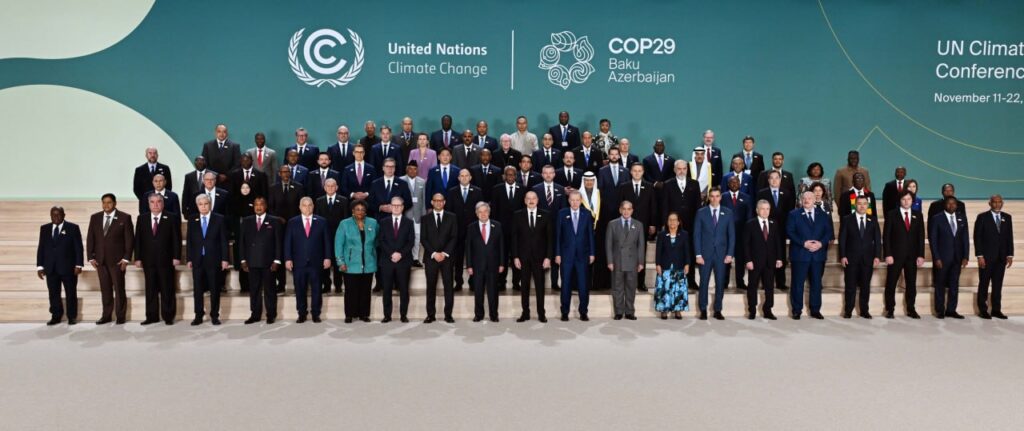
The 29th session of the Conference of the Parties to the UN Framework Convention on Climate Change (COP29) opened in Azerbaijan's capital Baku on November 11, drawing approximately 50,000 participants, including government representatives, politicians, investors, and environmentalists from 198 countries. Kazakh President Kassym-Jomart Tokayev attended the Summit, where he was welcomed by Azerbaijani President Ilham Aliyev and UN Secretary-General António Guterres. Tokayev will open the plenary session and hold talks with various heads of state, as well as representatives of international organizations and businesses. Kyrgyz President Sadyr Japarov has also arrived at the conference and is scheduled to address the opening session on November 12. He will participate in the special session “High-Level Dialogue: Advancing the Mountain Agenda and Mainstreaming Mountains and Climate Change,” organized by Kyrgyzstan with the support of Azerbaijan and Mongolia. This discussion will also feature Mongolian President Ukhnaagiin Khurelsukh, Nepali President Ram Chandra Poudel, and representatives of international organizations. Russia is represented at the summit by its Prime Minister Mikhail Mishustin. Additionally, representatives of the Taliban, which the UN does not recognize as the legitimate government of Afghanistan, have been included in the delegation for the first time. Armenia, however, has not yet confirmed its participation due to ongoing territorial disputes with Azerbaijan. The Summit is being held at the Baku Olympic Stadium, with sessions set to conclude on November 22. COP29 has been termed a “finance summit” due to its primary focus on financing developing nations in the fight against climate change. Delegates are also working to establish a framework to improve national emissions reduction programs.
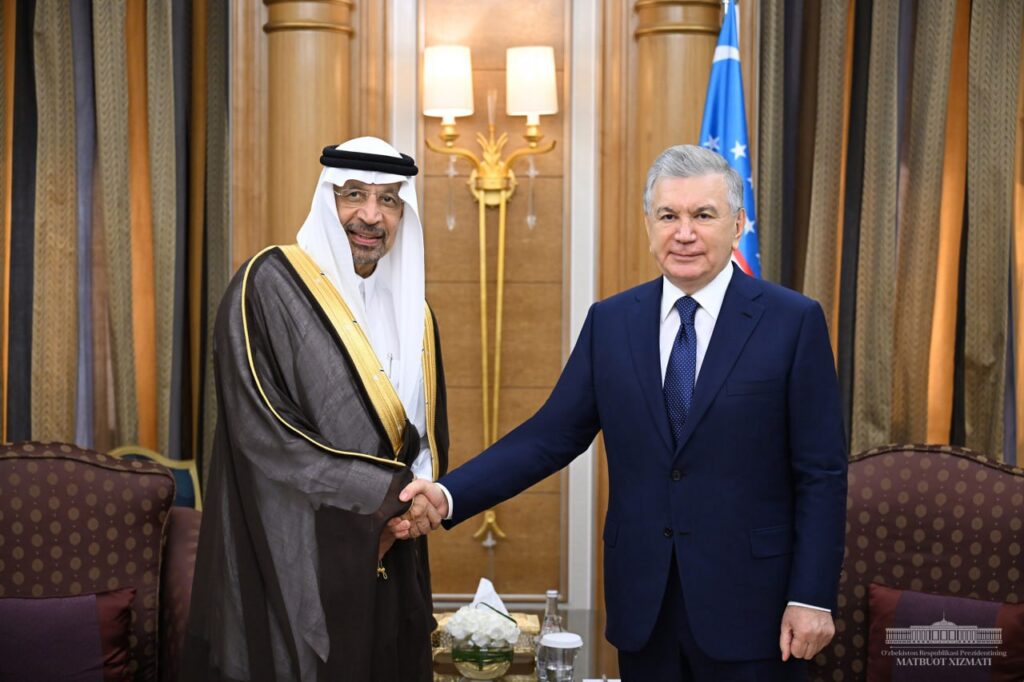
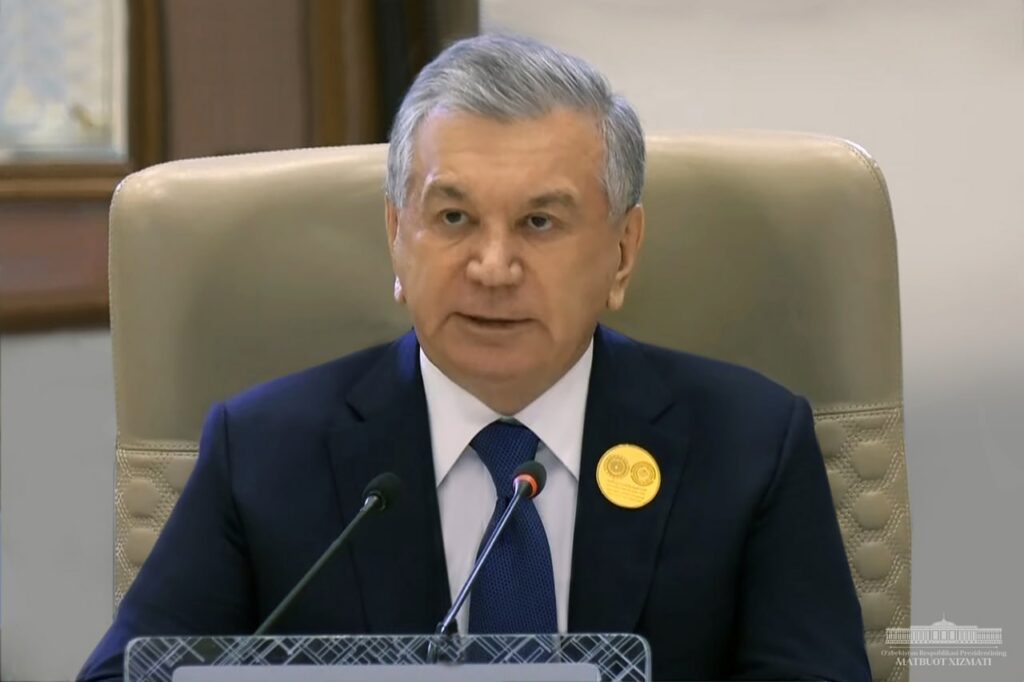
Uzbekistan and Saudi Arabia Strengthen Ties: $2.5 Billion Investment Expected by Year-End

On November 11, Uzbekistan's President Shavkat Mirziyoyev met Saudi Arabia's Minister of Investments, Khalid al-Falih, during the extraordinary Arab-Islamic Summit currently being held in Riyadh. Cooperation between Uzbekistan and Saudi Arabia has rapidly developed in recent years. The volume of mutual trade, the scope of cooperation, and also the number of flights between the countries are increasing. By the end of this year, Saudi Arabian companies are expected to attract about $2.5 billion worth of investments in areas such as “green” energy, healthcare, transport infrastructure modernization, heat and water supply, agriculture, housing, and communal economy. Mirziyoyev also met with Muhammad bin Salman Al Saud, the Crown Prince and Prime Minister of the Kingdom of Saudi Arabia. Mirziyoyev noted that effective cooperation has been established with the leading company “ACWA Power,” which is modernizing Uzbekistan's energy sector through direct investments and advanced technologies. Emphasis was placed on developing wind and solar power plants across various regions of Uzbekistan and accelerating projects to produce “green” hydrogen. Additionally, an agreement was reached to engage Saudi Arabian companies and consultants to localize production and improve energy efficiency in Uzbek enterprises.

Mirziyoyev Offers to Bring Wounded Palestinians to Uzbekistan for Treatment

On November 11, Uzbekistan's President Shavkat Mirziyoyev delivered a speech at the extraordinary Arab-Islamic Summit in Riyadh, Saudi Arabia, expressing concern over the spread of the Middle East conflict into Lebanon. He reiterated Uzbekistan’s support for initiatives to resolve the Palestinian-Israeli issue peacefully and diplomatically. In his speech, Mirziyoyev said, “Uzbekistan fully supports all practical initiatives to address the Palestinian-Israeli problem through peace and diplomacy. We believe today’s Summit will demonstrate common political will and unity, develop effective global and regional mechanisms and specific solutions, and swiftly put them into practice.” Mirziyoyev called for the United Nations and the Security Council to play an increased role in ending hostilities. He emphasized the need for safe humanitarian corridors and the immediate initiation of peace talks. With the Palestinian national holiday on November 15 approaching, Mirziyoyev underscored the nation’s right to an independent state with East Jerusalem as its capital, based on the 1967 borders. He also supported the Global Alliance for Implementing the Two-State Solution initiated by Saudi Arabia. Mirziyoyev called for expanding humanitarian aid to Palestine and Lebanon to prevent the escalation of the crisis and confirmed Uzbekistan’s readiness to treat wounded Palestinian children and women in its hospitals. He announced plans to discuss further assistance at the Gulf Arab States – Central Asia summit in Samarkand next year. Finally, he stressed the importance of preserving the Al-Aqsa Mosque and other cultural monuments in Jerusalem, urging members of the Organization of Islamic Cooperation to prioritize protecting these historic sites. Mirziyoyev concluded by urging an urgent and unified response to the crisis and highlighting Uzbekistan’s commitment to peace and humanitarian support in the region.

CAREC Ministers Approve Climate Action Plan and Launch Regional Climate Fund

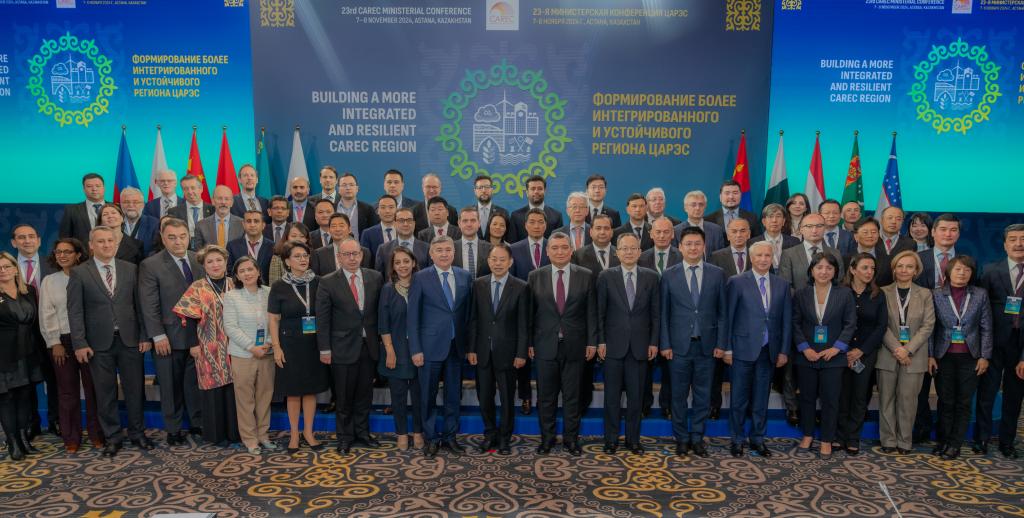
At the 23rd CAREC Ministerial Conference held in Astana on November 8, member countries of the Central Asia Regional Economic Cooperation (CAREC) Program—Afghanistan, Azerbaijan, China, Georgia, Kazakhstan, Kyrgyzstan, Mongolia, Pakistan, Tajikistan, Turkmenistan, and Uzbekistan—endorsed a new Climate Change Action Plan (CCAP) and launched the CAREC Climate and Sustainability Project Preparatory Fund (CSPPF). These initiatives aim to strengthen regional collaboration on climate resilience, low-carbon growth, and sustainable development. The CAREC Program is a partnership of 11 countries and development partners that promotes sustainable development through regional cooperation, with the Asian Development Bank (ADB) hosting the CAREC Secretariat. In his address at the conference, ADB President Masatsugu Asakawa stated, “The approval of the CAREC Climate Change Action Plan and the establishment of the Climate and Sustainability Project Preparatory Fund are significant milestones in our collective efforts to address climate change. By working together, we can build resilient infrastructure, develop early warning systems, and create a greener future powered by renewable energy.” The CCAP, covering the period from 2025 to 2027, prioritizes initiatives aligned with the CAREC Climate Change Vision and focuses on four main areas to address climate challenges in the region. It aims to enhance climate risk preparedness, strengthen the water-energy-food nexus, promote low-carbon growth by reducing emissions and expanding renewable energy, and create a CAREC climate platform. The CSPPF will support CAREC countries in developing viable regional climate projects that align with their commitments under the Paris Agreement. On November 8, ADB signed fund contribution agreements with China’s Ministry of Finance and South Korea’s Ministry of Economy and Finance, generating an initial $5 million in funding for the CSPPF. Speaking at the Ministerial Conference, Kazakhstan’s Prime Minister Olzhas Bektenov highlighted the CAREC Program’s significance for Central Asia, noting that over the past 20 years, it has mobilized about $51 billion for the region, with more than $9 billion invested in Kazakhstan. During his visit to Kazakhstan, ADB’s Asakawa met with President Kassym-Jomart Tokayev to discuss ongoing cooperation and future initiatives. From 1994 to 2024, ADB financed projects in Kazakhstan valued at approximately $7 billion. Notably, ADB participated in the construction of the Western Europe–Western China highway corridor and the reconstruction of the Aktobe–Kandyagash road.

Central Asia to Develop a Unified Platform for Electricity Trade

Uzbekistan's Deputy Minister for Energy Umid Mamadaminov announced at the European Economic Days in Tashkent on November 6 that a unified platform for electricity trade is being developed in Central Asia. Mamadaminov said that Uzbekistan is developing this platform with the support of the World Bank and other partners. “Infrastructure is very important for integrating renewable energy sources such as wind and solar, and many countries face this problem. We need at least 5,000 km of power lines, including 500 kV and 200 kV high-voltage lines and substations,” Mamadaminov said. At least 2,000 km of power lines should be built in the next two years. “We have already signed contracts to install more than 2,000 MW of energy storage systems with a total capacity of more than 400 MW, as each is a two-cycle network. We will have at least 4,000 MW of basic capacity in the next two years. This helps to respond to fluctuations in solar energy production quickly,” the deputy minister said. According to Mamadaminov, automation is the main problem in integrating renewable energy sources into the electric grid because the system cannot be controlled without it. In addition, this year, reforms to modernize and regulate energy consumption, including a new plan developed by the Cabinet of Ministers, were implemented in Uzbekistan. Uzbekistan’s energy system, especially electricity generation, relies heavily on fossil fuels. However, the country aims to produce 25% of its electricity from renewable sources by 2030. Uzbekistan plans to focus on solar energy while using wind, biomass, and hydro sources to achieve this goal. The government is working to attract investors to build 8 GW of solar and wind power and increase hydroelectric capacity to 1.935 GW by 2030. Biogas production from biomass and organic waste will also be developed.

Organization of Turkic States Changes Its Flag

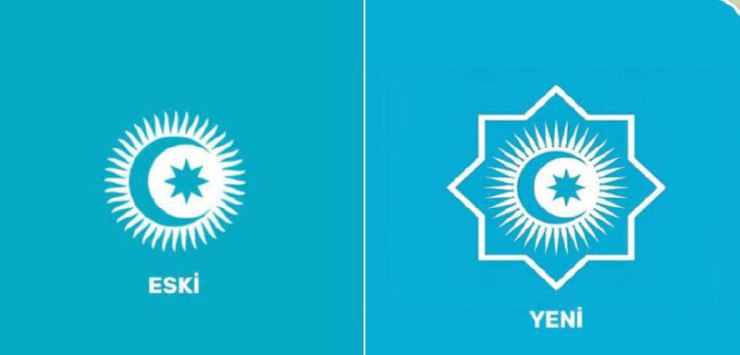
At the 11th summit of the heads of state of the Organization of Turkic States (OTS) in Bishkek, a new flag to represent the organization was adopted. The leaders of Azerbaijan, Kazakhstan, Kyrgyzstan, Turkey, and Uzbekistan—Ilham Aliyev, Kassym-Jomart Tokayev, Sadyr Japarov, Recep Tayyip Erdogan, and Shavkat Mirziyoyev—unanimously approved it as a symbol reflecting the Turkic world's shared values and cultural identity. The flag is designed on a turquoise background, symbolizing a clear sky, peace, and prosperity. In the center are a crescent moon, a star, and a sun with forty equal rays. These elements represent Turkic statehood, vitality, and aspiration for the future. The octagon, symbolizing centuries-old Turkic statehood and stability, expresses the participating countries' common cultural roots and interconnectedness. The sun's rays symbolize light and openness, and the crescent moon and star, well-known symbols of the Turkic world, emphasize the desire for development and progress based on a rich historical heritage. The Organization of Turkic States covers several countries in Eurasia and plays a vital role in their political and economic interaction. Its member countries are Azerbaijan, Kazakhstan, Kyrgyzstan, Turkey, and Uzbekistan, and its observer countries are Turkmenistan and Hungary. The OTS's headquarters are in Istanbul. Adopting the new flag was also a landmark step in strengthening the organization's international status. The first flag of the Organization of Turkic States was adopted in 2012. Earlier, Tokayev summarized the results of Kazakhstan's chairmanship of the Organization of Turkic States. The countries' leaders adopted the Charter of the Turkic World, while central banks of the OTS will create a new Council to strengthen financial cooperation.