• KGS/USD = 0.01143 0%
  • KZT/USD = 0.00216 0%
  • TJS/USD = 0.10684 -0.28%
  • UZS/USD = 0.00008 0%
  • TMT/USD = 0.28571 0%
  • KGS/USD = 0.01143 0%
  • KZT/USD = 0.00216 0%
  • TJS/USD = 0.10684 -0.28%
  • UZS/USD = 0.00008 0%
  • TMT/USD = 0.28571 0%
  • KGS/USD = 0.01143 0%
  • KZT/USD = 0.00216 0%
  • TJS/USD = 0.10684 -0.28%
  • UZS/USD = 0.00008 0%
  • TMT/USD = 0.28571 0%
  • KGS/USD = 0.01143 0%
  • KZT/USD = 0.00216 0%
  • TJS/USD = 0.10684 -0.28%
  • UZS/USD = 0.00008 0%
  • TMT/USD = 0.28571 0%
  • KGS/USD = 0.01143 0%
  • KZT/USD = 0.00216 0%
  • TJS/USD = 0.10684 -0.28%
  • UZS/USD = 0.00008 0%
  • TMT/USD = 0.28571 0%
  • KGS/USD = 0.01143 0%
  • KZT/USD = 0.00216 0%
  • TJS/USD = 0.10684 -0.28%
  • UZS/USD = 0.00008 0%
  • TMT/USD = 0.28571 0%
  • KGS/USD = 0.01143 0%
  • KZT/USD = 0.00216 0%
  • TJS/USD = 0.10684 -0.28%
  • UZS/USD = 0.00008 0%
  • TMT/USD = 0.28571 0%
  • KGS/USD = 0.01143 0%
  • KZT/USD = 0.00216 0%
  • TJS/USD = 0.10684 -0.28%
  • UZS/USD = 0.00008 0%
  • TMT/USD = 0.28571 0%

Viewing results 115 - 120 of 566

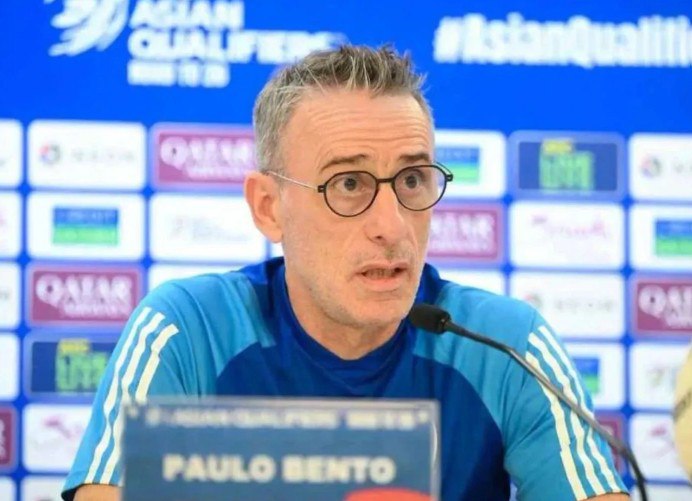
Uzbekistan Eyes Paulo Bento as National Team Coach Amid Ambitious Football Reforms

Reports regarding Uzbekistan’s search for a new head coach for its national football team have taken a significant turn, with Paulo Bento, former manager of South Korea and Portugal, emerging as a leading candidate, according to Football-Asian. The Uzbekistan Football Association (UFA) is seeking a seasoned tactician to lead the team during its landmark debut at the 2026 FIFA World Cup. Initial approaches to high-profile names such as Germany’s 2014 World Cup-winning coach Joachim Löw and veteran Turkish manager Fatih Terim failed to yield results. Attention has since shifted to Bento, a 56-year-old Portuguese coach with a strong international and club-level résumé. Bento previously guided Portugal to the semi-finals of Euro 2012 and led South Korea to the Round of 16 at the 2022 World Cup in Qatar. His coaching career also includes stints with clubs in Portugal, Brazil, Greece, and China, as well as a recent tenure with the UAE national team. For Uzbekistan, which qualified for the World Cup for the first time this year, Bento’s tournament experience and tactical acumen are considered valuable assets. “Whether Bento accepts the challenge of leading Central Asia’s standard-bearers remains to be seen, but the very fact he is in the frame underlines Uzbekistan’s determination to think big,” Football-Asian reported. Current manager, Timur Kapadze, who led Uzbekistan to their first World Cup finals appearance, has dismissed rumors that he is to be replaced. "No one from the Football Association has informed me of anything. There was no talk about bringing someone in. It’s hard for me to comment on this news,” Kapadze stated. Domestic Football Reforms Underway In parallel with their reported search for a new coach, Uzbekistan is undertaking structural reforms to strengthen its football development pipeline. A recent presidential decree mandates the creation of a “Legionnaires’ Club” under the UFA, aimed at uniting Uzbek footballers and specialists with experience abroad. These members will collaborate with local academies and football schools to share their expertise. In support of these efforts, state-owned land plots will be allocated under public-private partnerships to help them establish football academies and clubs throughout the country.
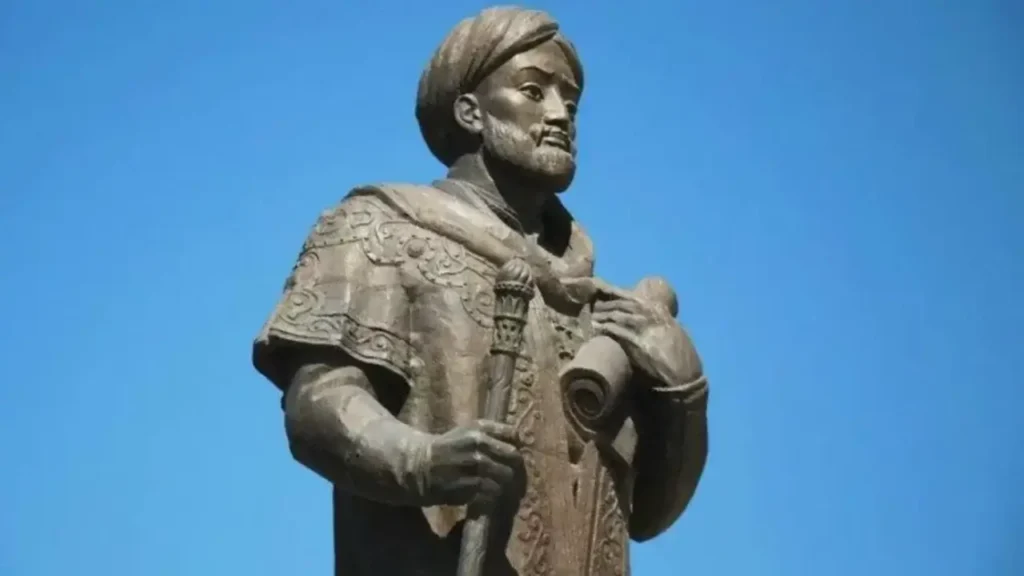
Afghanistan Dismantles Navoi Statue, Plans New Memorial Amid Uzbek Backlash

The Taliban authorities in Afghanistan have dismantled the statue of renowned Timurid-era poet and thinker Alisher Navoi in Mazar-i-Sharif, according to a report by Amu. Local sources told the outlet that the monument, located in the telecommunications square of the city’s third district, was completely removed. The decision has drawn criticism from Uzbek cultural figures and officials, who argue that the Taliban are disregarding the spiritual heritage of other peoples and eroding the region’s historical and cultural uniqueness. In response, Uzbekistan’s Ministry of Foreign Affairs, through spokesperson Ahror Burhonov, sought clarification on August 21. “As soon as we learned that the monument to the great poet and thinker Alisher Navoi in Mazar-i-Sharif had been dismantled, Uzbekistan’s Foreign Ministry immediately contacted representatives of the Afghan authorities to obtain an official explanation,” Burhonov said. Initial explanations from Afghan officials claimed the statue’s location was not dignified enough to properly honor Navoi. They announced plans to construct a new memorial complex, which would include a new statue, restored inscriptions on Navoi’s life and work, and the renaming of the square in his honor. Burhonov added that Afghan authorities had expressed regret over the statue’s removal without prior consultation with the Ministry of Culture or the public. He emphasized that the Afghan side reaffirmed its commitment to preserving Navoi’s legacy and pledged to take appropriate measures to commemorate him respectfully. Alisher Navoi (1441-1501), born in Herat, modern-day Afghanistan, is widely recognized as the father of early Turkic literature. He remains a powerful cultural symbol for Uzbeks and other peoples across Central Asia. The statue had stood in Mazar-i-Sharif for approximately 17 years. It was previously damaged before its complete removal. As reported by Dunyo, Afghan officials reiterated that the statue’s location was unsuitable and reaffirmed plans to establish a larger and more dignified memorial site. The new monument is expected to include multilingual plaques in Uzbek, English, Dari, and Pashto, recounting Navoi’s life and contributions. At a public event on August 21 attended by local officials, diplomats, and journalists, Mazar-i-Sharif Mayor Abdurahman Himmat said that Afghans deeply respect Navoi’s legacy. “We will turn this monument into a worthy place of remembrance for both local residents and foreign visitors,” he stated. Himmat noted that around 40 projects are currently planned in the city, including restoration efforts for monuments dedicated to cultural icons such as Navoi, Magtymguly Pyragy, and 13th-century poet Jalal ad-Din Rumi. He also highlighted the construction of the Imam al-Bukhari madrasah, supported by Uzbekistan, as a symbol of close bilateral ties. The project was first announced by Uzbekistan last year. Jafar Fattayev, head of the Uzbek Council in Mazar-i-Sharif, welcomed the Afghan initiative, calling it a gesture of respect for Navoi and Uzbek cultural heritage.

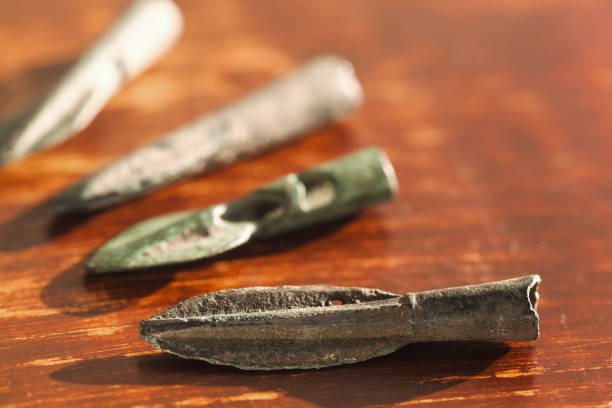
Archaeologists Uncover 80,000-Year-Old Arrowheads in Uzbekistan

Archaeologists in northeastern Uzbekistan have discovered stone arrowheads in the Obi-Rahmat cave that could significantly alter current understandings of early human hunting practices. The findings, published in PLOS ONE, date back approximately 80,000 years and represent some of the earliest known examples of long-range hunting technology in Central Asia. The excavation site, located in the western foothills of the Tian Shan Mountains, yielded a collection of small, triangular stone points embedded within sediment layers representing 40,000 years of human occupation. Researchers concluded that the arrow-like tips are too slender to have served any purpose other than as projectiles, making them among the oldest ranged hunting tools ever found in the region. Until now, such finely crafted projectile points had been primarily associated with later Homo sapiens sites in Europe, dating back only 25,000 years. Their presence in Uzbekistan suggests that sophisticated hunting techniques involving lightweight weapons may have developed far earlier than previously believed. The arrowheads were uncovered alongside a broader assemblage of Early Middle Paleolithic tools, including blades, bladelets, and flakes. The toolset reflects both continuity with Levantine lithic traditions and unique adaptations specific to Central Asia. Researchers used microscopic trace analysis to identify impact damage patterns on the points, clear evidence of high-speed delivery mechanisms such as arrows or darts. Experts note that ranged weapons would have provided early humans with significant evolutionary advantages, allowing them to hunt more efficiently and with reduced risk. This technological innovation may have been crucial in supporting human migration and adaptation across Eurasia. Broader Archaeological Context This discovery adds to a growing body of archaeological breakthroughs in Uzbekistan. In October 2024, researchers using advanced laser scanning technology revealed two lost cities in the country’s southeast. These urban centers, which thrived between the 6th and 11th centuries AD, include a site believed to have been a metalworking hub and another that showed early Islamic cultural influences, underscoring the importance of Uzbekistan along ancient trade routes. Further excavations in December at Mengchaktepa, a key Silk Road settlement on the northern bank of the Syr Darya River, yielded new insights. Known as the “Living Fossil of the Silk Road,” the site has been under continuous investigation since 2012 through a joint expedition by the Chinese Academy of Social Sciences (CASS) and Uzbekistan’s Institute of Archaeology.

Young Uzbek Engineers Set Guinness World Record with 1,946 Robots

Uzbekistan has entered the Guinness World Records after 1,946 young engineers simultaneously assembled mini-robots at a public event in Tashkent. The Ministry of Higher Education, Science and Innovation announced the achievement via its official Telegram channel. The record-setting event took place in Yangi O‘zbekiston Park, where each participant built a robot in unison, surpassing the previous record set in India in 2023, when 1,459 students completed a similar task. Describing the achievement as a “historic milestone,” the ministry said: “Our youth achieved it, Uzbekistan has broken a Guinness World Record! This success once again inscribes our country’s name in the Guinness Book of Records. It demonstrates the scientific-technical potential, creativity, and teamwork of Uzbek youth, opening the door to new achievements in technology and innovation.” The event served as both a technical showcase and a celebration of collaboration, innovation, and national pride. The accomplishment adds to a growing list of Guinness World Records from across Central Asia. In May, acrobats Batyr Zhanuzak and Marlen Maratov from the Almaty Circus earned a record in Milan for the “Fastest time climbing and descending two ladders with a person standing on their hands on the head.”

Uzbek Politician Calls for Passport Photo Rule Change Amid Headscarf Debate

Alisher Qodirov, leader of Uzbekistan’s Milliy Tiklanish (National Revival) Democratic Party, has called for an end to the practice of requiring women to remove headscarves when taking passport photographs. In a statement on his Telegram channel, Qodirov affirmed that Uzbekistan’s status as a secular state is beyond question but argued that secularism should not infringe on personal freedoms. Prosperity Without Discrimination “A secular state, governed by laws adopted by a popularly elected parliament and approved by a popularly elected president, allows citizens to live as they choose, as long as they do not violate the law,” Qodirov said. “Our priority is to ensure that citizens of all nationalities and beliefs can strive for prosperity without discrimination. Everyone is equal, and no one should be demeaned.” Drawing analogies, Qodirov said that just as one citizen may choose to drink beer and another may choose not to, without having to explain themselves, women should be free to cover their hair if it aligns with their beliefs. “Advertising alcohol is prohibited by law, but if a political force wins a parliamentary majority, it could change the law, making alcohol a ‘national value’ or same-sex marriage a free choice. You grant that right,” he added. Qodirov emphasized that all social development must rest on values. Referring to pop star Jennifer Lopez’s recent concert in Tashkent, he said: “If Jennifer Lopez wants to perform at a private, ticketed concert, as long as she doesn’t distribute drugs or promote anti-state ideas, that’s her choice. Showing her body is her decision; watching it is the decision of those who bought tickets. That’s secularism.” By the same logic, he continued, “A woman who chooses to wear a headscarf is protected by law. We accepted public nudity as secularism; we must also accept the right to cover up. Just as we don’t tell Lopez how to dress, we shouldn’t dictate how religious women wear their headscarves nor should we force women, who have lived by their faith for years, to remove them for passport photos. Identification requirements demand an open face, not uncovered hair. Let’s extend the same tolerance to devout women as we do to Lopez.” He concluded that secularism means equality for both believers and non-believers, “not the strong lecturing the weak about life.” Mixed Reactions to Lopez Concert Lopez’s August 7 performance at Tashkent’s Bunyodkor Stadium, part of her “Up All Night – Live in 2025” world tour, drew mixed reactions online. Some praised her discipline and appearance, while others criticized her revealing outfits. Psychogenetics specialist Maryam Mahmudova told her Instagram followers that Lopez’s appearance reflected years of disciplined self-care. “At 56, she maintains her figure thanks to discipline. We, on the other hand, often feel worn out before 40, with no goals or passion. We have no right to judge anyone, instead, we should learn discipline from her, because discipline is a form of self-love,” she said. Neurologist Bahtigul Holmurodova, who followed the concert via social media, commented: “Yesterday, JLo once again showed all Uzbeks what...

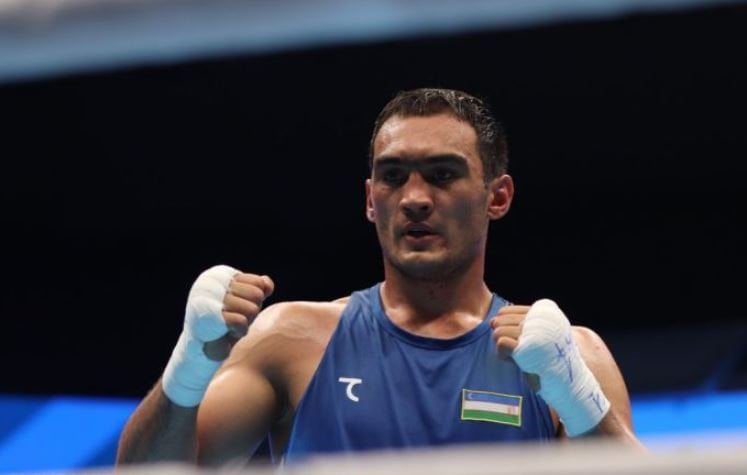
A Year After Olympic Gold, Uzbek Boxer Mullojonov Enmeshed in Doping Probe

The Uzbekistan Boxing Federation is defending Olympic gold medalist Lazizbek Mullojonov after he tested positive for a banned steroid, saying he may have ingested “prohibited doping substances” during a hair transplant last year.  The federation responded this week to online commentary about Mullojonov’s case, which threatens to tarnish his heavyweight victory at the Paris games last year. The boxer has been suspended under international anti-doping codes pending the outcome of the investigation. Some media reports have said he could lose his Olympic medal if a doping violation is confirmed, though Uzbek boxing officials say his Olympic result won’t be affected. “On June 11 of this year, a doping test was taken from our athlete according to international doping rules, and an information letter was submitted to the International Testing Agency (ITA) indicating the presence of prohibited substances based on the test results,” said the federation, stating that Mullojonov had “always” complied with doping rules.  “Our athlete underwent a hair transplant surgery on November 19, 2024, at a private clinic in Fergana city after the Paris 2024 Olympic Games. It is assumed that during the four-stage surgery and postoperative treatments, he took medications provided by the clinic for treatment, which may have contained some prohibited doping substances.”  On July 29, the International Testing Agency said it informed Mullojonov that he had tested positive for methasterone, a steroid that can promote fast muscle growth and increased strength. It said he had the right to request an analysis of a second sample, which would confirm or contradict the first test, and that he can also provide explanations for a positive test.  In line with the World Anti-Doping Code and World Boxing anti-doping rules, “a mandatory provisional suspension has been imposed on the athlete,” said the testing agency, which is based in Lausanne, Switzerland. Mullojonov can challenge the provisional suspension, it said.  The boxer had reached the quarterfinals of the Boxing Grand Prix in Riyadh, Saudi Arabia, the tournament said on July 27. Two days ago, in an apparent reference to Mullojonov, it said that there was one “adverse finding” among 95 anti-doping tests that had been conducted in connection with the tournament and an investigation is ongoing.  “The Tournament participant whose sample yielded the adverse finding had won his bouts in Phases 1 and 2. He will not participate in Phase 3,” said the tournament, which is organized by the World Boxing Council. Phase 3 is the quarterfinals stage.  Mullojonov, 26, also won gold in the super-heavyweight category at the Asian Championships in 2022. Now he awaits a final decision on what the International Testing Agency called “an apparent anti-doping rule violation.”