• KGS/USD = 0.01143 0%
  • KZT/USD = 0.00216 0%
  • TJS/USD = 0.10684 -0.28%
  • UZS/USD = 0.00008 0%
  • TMT/USD = 0.28571 0%
  • KGS/USD = 0.01143 0%
  • KZT/USD = 0.00216 0%
  • TJS/USD = 0.10684 -0.28%
  • UZS/USD = 0.00008 0%
  • TMT/USD = 0.28571 0%
  • KGS/USD = 0.01143 0%
  • KZT/USD = 0.00216 0%
  • TJS/USD = 0.10684 -0.28%
  • UZS/USD = 0.00008 0%
  • TMT/USD = 0.28571 0%
  • KGS/USD = 0.01143 0%
  • KZT/USD = 0.00216 0%
  • TJS/USD = 0.10684 -0.28%
  • UZS/USD = 0.00008 0%
  • TMT/USD = 0.28571 0%
  • KGS/USD = 0.01143 0%
  • KZT/USD = 0.00216 0%
  • TJS/USD = 0.10684 -0.28%
  • UZS/USD = 0.00008 0%
  • TMT/USD = 0.28571 0%
  • KGS/USD = 0.01143 0%
  • KZT/USD = 0.00216 0%
  • TJS/USD = 0.10684 -0.28%
  • UZS/USD = 0.00008 0%
  • TMT/USD = 0.28571 0%
  • KGS/USD = 0.01143 0%
  • KZT/USD = 0.00216 0%
  • TJS/USD = 0.10684 -0.28%
  • UZS/USD = 0.00008 0%
  • TMT/USD = 0.28571 0%
  • KGS/USD = 0.01143 0%
  • KZT/USD = 0.00216 0%
  • TJS/USD = 0.10684 -0.28%
  • UZS/USD = 0.00008 0%
  • TMT/USD = 0.28571 0%

Viewing results 109 - 114 of 563

97% of Uzbeks Express Pride in Independence, Survey Finds

Ahead of Uzbekistan’s 34th Independence Day, a national survey conducted by the “Ijtimoiy Fikr” Public Opinion Research Center revealed widespread pride and optimism among citizens. According to the findings, 97% of respondents said they feel proud of their country on Independence Day, while 87.6% described the occasion as joyful and festive. Another 84.7% associated the holiday with national unity, and 95.5% expressed pride in being citizens of Uzbekistan. The survey also reflected how deeply independence is viewed as both a historic milestone and a catalyst for personal growth. Some 79.1% of respondents reported that, in recent years, they have had more opportunities to realize their potential and achieve personal goals. Nearly all participants shared a positive outlook for the country’s future. When asked about their vision for Uzbekistan, 97.8% imagined it as strong and prosperous, 88.9% as peaceful and stable, 85.3% as spiritually rich and cultured, and 81.9% as modern and innovative. Researchers concluded that Independence Day has become not just a commemorative date but a potent symbol of national pride and collective confidence in the country’s direction. The findings echo Uzbekistan’s rising profile in international well-being indices. According to the World Happiness Report, published by the World Population Review and based on Gallup poll data, Uzbekistan ranked 47th globally in 2024, making it the happiest country in Central Asia. The ranking considers six categories: income, social support, life expectancy, freedom of choice, generosity, and perceptions of corruption. Kazakhstan followed at 49th, down from 44th the previous year.
“Ergenekon Is Not Just a Myth, It’s a Cultural Bridge”: An Interview with Artist and Designer Emre Erdur

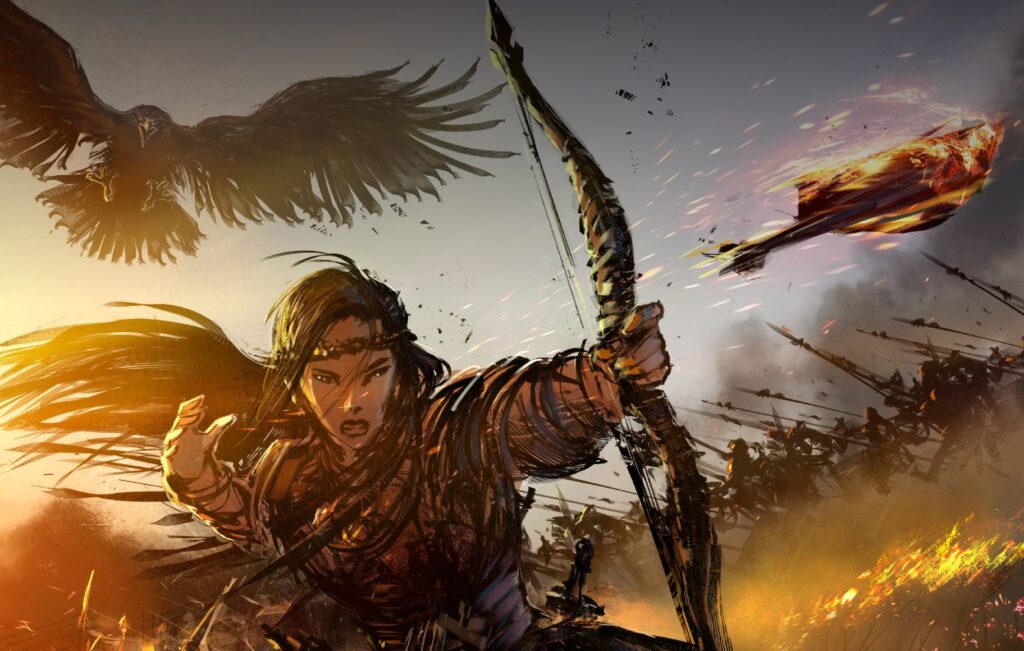
Today, comics and visual storytelling are increasingly going beyond entertainment. They are becoming part of a cultural dialogue, helping audiences reconnect with their roots. One such project is the graphic novel series The Legend of Ergenekon (Ergenekon Destanı), created by Turkish artist and designer Emre Erdur. The Legend of Ergenekon is a Turkic origin myth that tells of a people driven into a remote valley after defeat in battle, where they lived in isolation for centuries until a blacksmith forged a path through the surrounding mountains. Guided by a gray wolf, they emerged to reclaim their strength and expand across the steppe. In Central Asia, the story symbolizes resilience, unity, and renewal, often invoked as a metaphor for nations overcoming hardship to reassert independence and identity on the Eurasian crossroads. It resonates strongly in Kazakhstan, Kyrgyzstan, Turkmenistan, and Uzbekistan, where Turkic identity, language, and heritage are foundational. Born in Istanbul and trained as an architect at Mimar Sinan Fine Arts University, Emre Erdur worked for many years in the entertainment and design industries. Since 2019, however, he has dedicated himself to developing a multi-volume graphic novel series inspired by ancient Turkic history and mythology. His work was first presented at a festival in Taldykorgan. As part of his research, he visited the National Museum of Kazakhstan in Astana and collaborated with historian Assoc. Prof. Dr. Talgat Moldabay to ensure historical accuracy. [caption id="attachment_35647" align="aligncenter" width="1824"] Image: Emre Erdur[/caption] For Central Asia, Ergenekon Destanı is more than a creative project; it represents an effort to connect a shared heritage through the language of comics and popular culture. In an interview with The Times of Central Asia, Emre Erdur spoke about his inspiration, research, the role Kazakhstan plays in his work, and his plans for expanding this unique visual universe. TCA: You were born and educated in Turkey, yet you chose to dedicate yourself to wider ancient legends and Turkic history. When did you first feel drawn to this theme? Erdur: Yes, I was born in the westernmost corner of Turkic geography, but every individual in this world has cultural roots that reach out and nourish them. Naturally, as an artist, the desire to draw from and explore my own roots is an inner force. Although I was born and raised in Istanbul, you can find traces of our roots as far as Yakutia in Russia, Buryatia, Mongolia, the Altai, further south in East Turkestan, in the Gobi Desert, and even in Korea. None of these places feels separate from us; you can sense the connection. Of course, as a human being, every part of this world is valuable and fascinating; each region holds its own beauty and heritage. But there is also something called “national identity,” which is different from our individual identity. Our soul cannot be confined to this world; it knows no geography or race, it belongs beyond time and space. Yet during our lifetime on Earth, we do carry both national and individual identities, and defining them correctly...

Knowledge Day in Central Asia: What’s Changing in Schools This Academic Year?

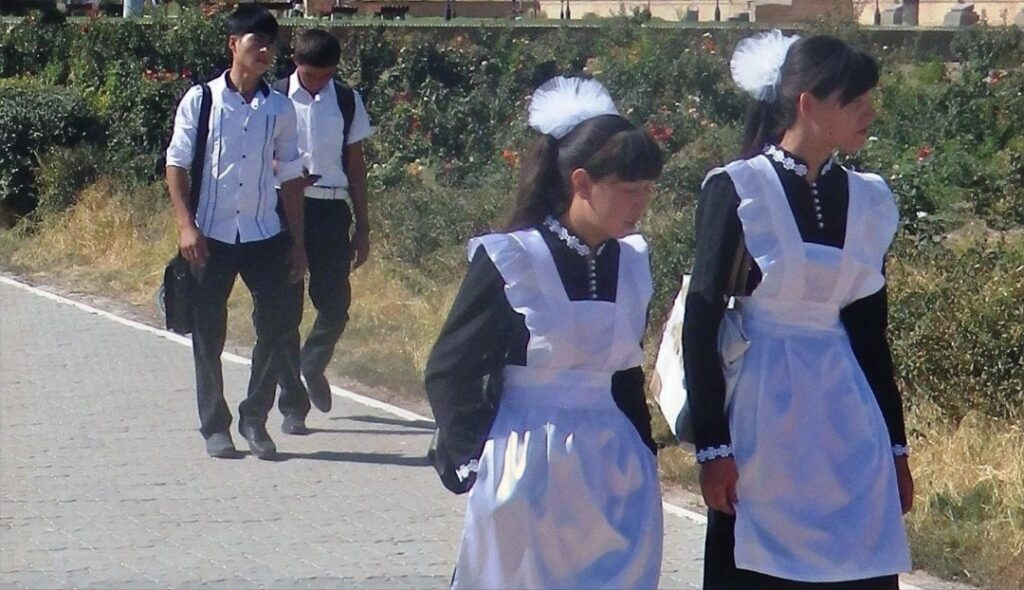
Secondary schools across Central Asia are embracing modern teaching methods and aiming to elevate the status of teachers, as the new academic year begins with a wave of reforms. Kazakhstan: AI in Classrooms and Teacher Protections In Kazakhstan, the academic year begins on September 2, as Constitution Day on the 1st is a national holiday. Over 370,000 first-graders are expected to enter school this year. As previously reported by The Times of Central Asia, significant reforms are underway in the country’s education system. Amendments to the Law “On the Status of Teachers” will shield educators from non-teaching duties and protect them from undue legal responsibility. President Kassym-Jomart Tokayev has emphasized that educators should not be held accountable for incidents involving children that occur outside school or due to parental negligence. New “personal safety” lessons will also be introduced across all educational levels, from kindergartens to colleges. These age-appropriate classes will cover topics ranging from water safety and interaction with strangers to cyberbullying, financial literacy, and legal awareness. Schools and colleges are also rolling out DosbolLIKE, an anti-bullying initiative piloted in 50 schools last year, designed to curb bullying in student communities. Artificial intelligence will be introduced into the curriculum via “Digital Literacy” and “Computer Science” classes. AI-focused online courses called Day of AI are now available for grades 1-11, with training programs also developed for teachers. Despite the construction of 1,200 new schools accommodating over a million students in recent years, the high birth rate continues to strain infrastructure. In Almaty alone, the shortage exceeds 34,000 school places. Uzbekistan: Ivy League Aspirations and Civic Values In Uzbekistan, school also starts on September 2, a customary date. The first lesson will be conducted under the motto: “In the name of the Motherland, in the name of the nation, in the name of the people!” According to the Ministry of Preschool and School Education, 738,000 first-graders will receive gifts from President Shavkat Mirziyoyev. An international school is set to open this September, initially enrolling 60 top-performing graduates of the 8th grade. The curriculum will include leadership and social activism training, with a focus on preparing students for admission to Ivy League universities. A nationwide talent identification and development program is also in development. The weekly Kelazhak Soati (“Hour of the Future”) class will debut this year, aiming to strengthen students’ moral values and encourage reflection on their future roles in society. Kyrgyzstan: Transition to 12-Year Education This academic year marks Kyrgyzstan’s official transition to a 12-year education system. The reform affects lesson structures, curricula, and textbooks. The transition, to be completed by 2028, includes the redistribution of students across grade levels. For example, third graders born in 2015 will skip to fifth grade, and sixth graders born in 2012 will advance to eighth grade. Further shifts are scheduled for the next two academic years. While the extended education model is expected to allow deeper learning and skills development, the transition period may cause confusion among students, parents, and educators. Adapting to new...

“Recipes for Broken Hearts”: Bukhara Launches First Art Biennale

This autumn, the ancient Silk Road city of Bukhara is poised to reemerge as a global cultural destination, hosting its first-ever international art biennale, Recipes for Broken Hearts. Running from September 5 to November 20, the ten-week festival will transform Bukhara, a UNESCO Creative City, into a vibrant arena for contemporary art, community rituals, and culinary experiences. The initiative is spearheaded by Gayane Umerova, chair of the Uzbekistan Arts and Culture Development Foundation (ACDF), with renowned curator Diana Campbell at the helm. More than 70 new works, created in Uzbekistan, will be displayed in historic madrasas and caravanserais, reimagined as immersive exhibition spaces. The event promises to be among the region’s largest cultural gatherings, aiming to reclaim Bukhara’s place on the global cultural map. Not Just an Exhibition, A Sensory Ritual Recipes for Broken Hearts is not a traditional exhibition. Designed as a “ritual for the senses,” it invites audiences to engage with art not just visually but through touch, scent, sound, and taste. Sculptures, textiles, music, and food converge into an experimental space for “emotional healing.” Visitors become participants rather than spectators. At the opening ceremony, instead of a red carpet, guests will be welcomed by the scent of fermentation. Korean Buddhist nun and chef Jeon Kwan will prepare kimchi, place it in a clay pot, and bury it. Ten weeks later, the fermented dish will be unearthed and shared with the public, symbolizing transformation and healing through time. A Dialogue Between Cultures The biennale’s installations span a wide geographic and cultural range. Egyptian-American artist Laila Gohar will craft navata, a crystal made from grape juice and saffron. Colombian artist Delcy Morelos will construct a dome of clay, sand, and spices to symbolize human connection to the earth. Uzbek artist Oizhon Khairullaeva and ceramist Abdurauf Tahirov will create “organs of the city,” including a beating ceramic heart and a “stomach” integrated into historic architecture. Indian sculptor Subodh Gupta will build a giant dome from enamel teapots and bowls, shaped like a yurt, where guests will be served fusion cuisine. Central to the project is the in situ approach: every piece is created in Bukhara with the support of local artisans, potters, weavers, and carpet makers, infusing contemporary works with traditional skills. “This isn’t an art fair,” explained the curators. “Each piece speaks from this land, even if the whole world sees it.” [caption id="attachment_21936" align="aligncenter" width="2560"] The Kalon Mosque, Bukhara; image: TCA, Stephen M. Bland[/caption] Bukhara as a Living Gallery Festival venues are dispersed throughout Bukhara’s historic core, effectively turning the city into an open-air gallery. Four restored caravanserais symbolize the emotional journey from grief to hope. The 16th-century Gavkushon madrasa, repurposed as the “House of Softness,” will host workshops, public readings, and a symposium titled The Craft of Mending. There, artists and scholars will explore the “culture of repair”, from object restoration to the preservation of historical memory. “Erasing history is also a form of pain. Restoration is resistance to oblivion,” notes Harvard-based art historian Aziza Izamova. Concurrently,...

Discovery in Uzbekistan Reveals Early Steps Toward Agriculture 9,200 Years Ago

An international team of archaeologists has uncovered evidence that hunter-gatherer communities in southern Uzbekistan were harvesting wild barley as far back as 9,200 years ago, reshaping current understanding of how agriculture first emerged. Until now, scholars largely believed that the domestication of crops such as barley and wheat began in the Fertile Crescent about 10,000 years ago, particularly among the Natufian people. But new findings from Uzbekistan’s Surkandarya Valley indicate that the cultural practices leading to farming extended much further afield. Researchers argue this challenges long-held assumptions that agriculture arose only once, in response to climate change or population pressures, in a single geographic cradle. Excavations at Toda Cave The discovery was made at Toda Cave, excavated under the direction of Xinying Zhou of the Institute of Vertebrate Paleontology and Paleoanthropology in Beijing, with oversight from Farhad Maksudov, director of the Institute of Archaeology in Samarkand. From the cave’s oldest layers, the team recovered stone tools, charcoal, and plant remains. Archaeobotanical analysis by Robert Spengler of the Max Planck Institute of Geoanthropology confirmed the presence of wild barley, along with pistachio shells and apple seeds, suggesting a diverse diet. Stone blades and flakes, mostly made from limestone, showed clear use-wear patterns consistent with cutting grasses and plants. These tools closely resemble those found at early farming sites elsewhere. Rethinking the Origins of Agriculture “This discovery should change the way scientists think about the transition from foraging to farming,” Zhou said. Spengler added that repeated harvesting of wild plants may have led to unintentional domestication, with early foragers gradually shaping the plants they relied on. The researchers suggest that the behaviors seen in Toda Cave could represent either an independent experiment in cultivation or evidence of an earlier-than-assumed eastward spread of farming traditions from the Fertile Crescent. Either way, the findings highlight the role of Central Asia in the global story of agriculture. Next Steps The team plans to expand excavations in the region to determine whether similar practices existed among other communities. “These ancient hunters and foragers were already tied into the cultural practices that would lead to the origins of agriculture,” Spengler noted. The discovery underscores that Central Asia, long overlooked in studies of agricultural origins, may have played a crucial role in humanity’s shift from foraging to farming.

Uzbekistan Eyes Paulo Bento as National Team Coach Amid Ambitious Football Reforms

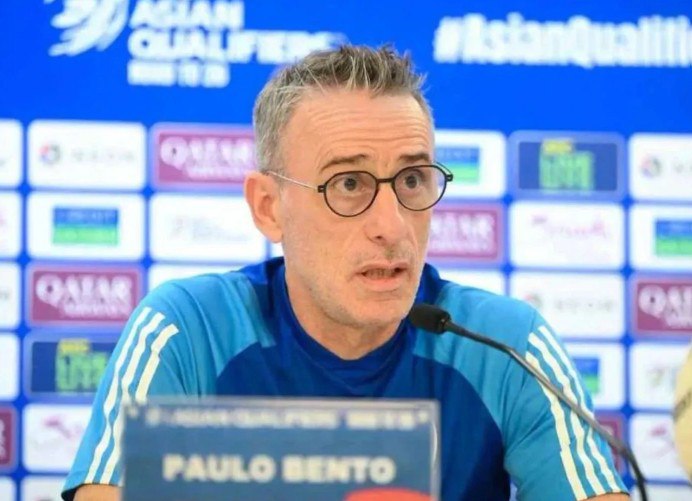
Reports regarding Uzbekistan’s search for a new head coach for its national football team have taken a significant turn, with Paulo Bento, former manager of South Korea and Portugal, emerging as a leading candidate, according to Football-Asian. The Uzbekistan Football Association (UFA) is seeking a seasoned tactician to lead the team during its landmark debut at the 2026 FIFA World Cup. Initial approaches to high-profile names such as Germany’s 2014 World Cup-winning coach Joachim Löw and veteran Turkish manager Fatih Terim failed to yield results. Attention has since shifted to Bento, a 56-year-old Portuguese coach with a strong international and club-level résumé. Bento previously guided Portugal to the semi-finals of Euro 2012 and led South Korea to the Round of 16 at the 2022 World Cup in Qatar. His coaching career also includes stints with clubs in Portugal, Brazil, Greece, and China, as well as a recent tenure with the UAE national team. For Uzbekistan, which qualified for the World Cup for the first time this year, Bento’s tournament experience and tactical acumen are considered valuable assets. “Whether Bento accepts the challenge of leading Central Asia’s standard-bearers remains to be seen, but the very fact he is in the frame underlines Uzbekistan’s determination to think big,” Football-Asian reported. Current manager, Timur Kapadze, who led Uzbekistan to their first World Cup finals appearance, has dismissed rumors that he is to be replaced. "No one from the Football Association has informed me of anything. There was no talk about bringing someone in. It’s hard for me to comment on this news,” Kapadze stated. Domestic Football Reforms Underway In parallel with their reported search for a new coach, Uzbekistan is undertaking structural reforms to strengthen its football development pipeline. A recent presidential decree mandates the creation of a “Legionnaires’ Club” under the UFA, aimed at uniting Uzbek footballers and specialists with experience abroad. These members will collaborate with local academies and football schools to share their expertise. In support of these efforts, state-owned land plots will be allocated under public-private partnerships to help them establish football academies and clubs throughout the country.