• KGS/USD = 0.01143 0%
  • KZT/USD = 0.00216 0%
  • TJS/USD = 0.10633 -0.28%
  • UZS/USD = 0.00008 0%
  • TMT/USD = 0.28571 0%
  • KGS/USD = 0.01143 0%
  • KZT/USD = 0.00216 0%
  • TJS/USD = 0.10633 -0.28%
  • UZS/USD = 0.00008 0%
  • TMT/USD = 0.28571 0%
  • KGS/USD = 0.01143 0%
  • KZT/USD = 0.00216 0%
  • TJS/USD = 0.10633 -0.28%
  • UZS/USD = 0.00008 0%
  • TMT/USD = 0.28571 0%
  • KGS/USD = 0.01143 0%
  • KZT/USD = 0.00216 0%
  • TJS/USD = 0.10633 -0.28%
  • UZS/USD = 0.00008 0%
  • TMT/USD = 0.28571 0%
  • KGS/USD = 0.01143 0%
  • KZT/USD = 0.00216 0%
  • TJS/USD = 0.10633 -0.28%
  • UZS/USD = 0.00008 0%
  • TMT/USD = 0.28571 0%
  • KGS/USD = 0.01143 0%
  • KZT/USD = 0.00216 0%
  • TJS/USD = 0.10633 -0.28%
  • UZS/USD = 0.00008 0%
  • TMT/USD = 0.28571 0%
  • KGS/USD = 0.01143 0%
  • KZT/USD = 0.00216 0%
  • TJS/USD = 0.10633 -0.28%
  • UZS/USD = 0.00008 0%
  • TMT/USD = 0.28571 0%
  • KGS/USD = 0.01143 0%
  • KZT/USD = 0.00216 0%
  • TJS/USD = 0.10633 -0.28%
  • UZS/USD = 0.00008 0%
  • TMT/USD = 0.28571 0%

Viewing results 19 - 24 of 560

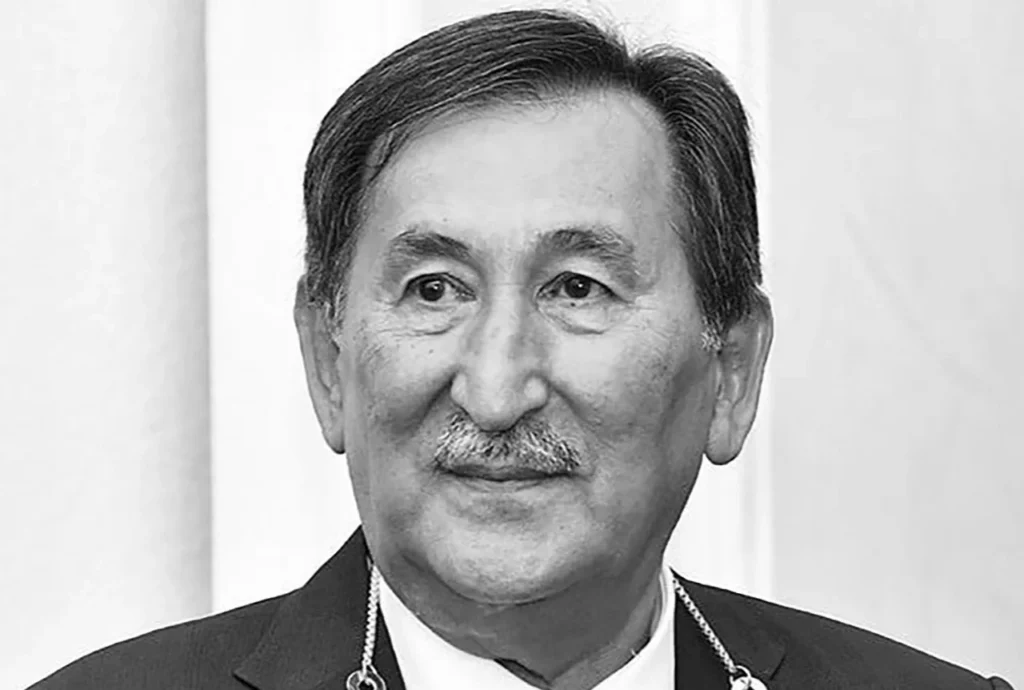
Olimjon Toshkenboyev, Uzbek Tightrope Master and Cultural Figure, Dies

Olimjon Toshkenboyev, an acrobat from a family dynasty of performers who promoted the Uzbekistani tightrope walking art known as dorbozlik, has died at the age of 81. In a condolence message to Toshkenboyev’s family, Uzbekistan’s Ministry of Culture said he was “a famous representative of Uzbek circus art” who made big contributions to national heritage and was a mentor to many students. “Under his leadership, the ‘Uzbekistan Dorbozlari’ group successfully showcased their art in many foreign countries, including Poland, Germany, Egypt, Belgium, the Netherlands, Switzerland, Brazil, Argentina, Colombia, Ecuador, and others,” the ministry said on Telegram on March 28. Toshkenboyev, whose son and daughter participated in dorbozlik programs, was also the director of Uzbekistan’s state circus association. The Tashkent circus is housed in a landmark Soviet-era building that some observers have compared to a flying saucer. Dorbozlik has a storied history in Uzbekistan. Some accounts say ropewalkers participated in shows in the palace of Amir Temur, the 14th-century Central Asian conqueror who is also known as Tamerlane. “Dorbozes skillfully demonstrated their stunts (running back and forth; jumping; walking with knives and trays tied to their legs; dancing on one or paired ropes blindfolded and with a sack on their heads, etc.) by holding langar (a balancer or long balancing pole) on a rope, which was installed at the height of 25-30 m,” says a website listing Uzbekistan’s “intangible cultural heritage.” Ropewalkers' performances were combined with those of strongmen, illusionists, dancers, comedians and musicians, according to the account. As the folk art evolved, performances moved from fairgrounds and market squares to indoor circuses, wire replaced ropes, metallic poles replaced wooden ones, and safety belts were introduced. At a UNESCO meeting in Namibia in 2015, a committee noted that boys and men were the traditional practitioners of ropewalking in Uzbekistan, and girls were increasingly getting involved. It said there were more than 40 ropewalking troupes in Uzbekistan and that skills were transmitted from generation to generation within families. However, the committee did not accept Uzbekistan’s proposal that the art be included on the U.N. cultural agency’s list of intangible cultural heritage. It raised concerns about the danger, particularly to children, of ropewalking, as well as questions about the originality of the art, since other countries have similar types of performance.

From a Vanishing Sea to Milan’s Spotlight: When Apricots Blossom, a Lost Sea Speaks

From April 20 to 26, 2026, Uzbekistan will present one of its most ambitious cultural projects to date at the Milan Design Week. Titled When Apricots Blossom, the exhibition will take place at Palazzo Citterio in Milan’s Brera district, transforming the historic space into a multi-layered exploration of craft, memory, and environmental change. Organized by the Uzbekistan Art and Culture Development Foundation, the exhibition is commissioned by its chairperson, Gayane Umerova, and curated by architect Kulapat Yantrasast, founder of WHY Architecture. Bringing together twelve international designers and Uzbek artisans, the project explores how traditional knowledge can help societies respond to environmental crises. At its core lies Karakalpakstan, an autonomous region in northwestern Uzbekistan that has experienced one of the world’s most severe ecological disasters. A Story Rooted in Loss and Resilience The exhibition takes its name from a poem by Hamid Olimjon, written in the 1930s as a reflection on hope and renewal. Today, that symbolism carries renewed relevance. For decades, the Aral Sea has been shrinking. Once one of the largest inland bodies of water in the world, it has lost more than 90% of its volume since the 1960s, largely due to irrigation policies that diverted its feeder rivers. The result is a transformed landscape of desert, salt plains, and fragmented ecosystems, with communities forced to adapt to rapid environmental change. [caption id="attachment_30520" align="aligncenter" width="2560"] Moynaq. Aral Culture Summit 2025; image courtesy of Iwan Baan and ACDF[/caption] Rather than focusing solely on loss, When Apricots Blossom highlights how communities continue to live, create, and adapt. Visitors enter through a façade transformed by a large textile installation by British designer Bethan Laura Wood, created in collaboration with Uzbek artisans. Drawing on decorative elements used in nomadic yurts, tassels, ribbons, and woven patterns, the work creates a vivid and tactile threshold. Inside the courtyard, an installation of apricot trees by Uzbek floral artist Ruben Saakyan sets the tone. The apricot, both a symbol of hospitality and a key Uzbek export, also reflects resilience, continuing to grow even in the harsh conditions of the Aral Sea region. Further inside, a “deconstructed yurt” designed by WHY Architecture serves as a central gathering space, reflecting the adaptability of nomadic shelter traditions. Craft as Knowledge, Not Decoration For Umerova, this distinction is central. “Craft in Karakalpakstan is more than tradition, it is a system of knowledge,” she told The Times of Central Asia. “It has evolved over centuries in close relationship with the land.” [caption id="attachment_46319" align="aligncenter" width="1440"] Handwoven textiles on a traditional loom at “When Apricots Blossom”; image: ACDF[/caption]   Umerova notes that materials such as wood, silk, felt, ceramic, and reed reflect a deep understanding of local ecosystems. These practices are passed down through generations, carrying both technical skills and cultural knowledge. In the context of the Aral Sea crisis, this knowledge takes on renewed importance. “The communities there have long developed ways of adapting to changing environments,” she told TCA. “Their craft traditions embody this resilience.” For Umerova, sustainability is as...

World’s Top Fencers Compete in Astana and Tashkent 

Kazakhstan and Uzbekistan are hosting World Cup fencing competitions this week, reflecting the growth of the sport in Central Asia. Top fencers from around the world have gathered in the Kazakhstani capital of Astana for the men’s and women’s epee competition, which started on Thursday and runs until Sunday. The two-day women’s saber contest in Tashkent, Uzbekistan began on Friday. A third World Cup, in men’s saber, is currently underway in Budapest, Hungary. In total, more than 800 elite fencers are participating in the three events, according to the International Fencing Federation. The federation says second-ranked Giulia Rizzi of Italy and sixth-ranked Hungarian Eszter Muhari are the fencers “to watch” on the women’s side in Astana, while on the men’s side, tenth-ranked Tristen Tulen of the Netherlands has had a breakout year. In Tashkent, two-time world champion Misaki Emura of Japan is a favorite. Still, Kazakhstan and Uzbekistan are establishing their presence in international fencing, winning medals in high-level competitions. Last year, the men’s epee team of Kazakhstan won bronze at the World Fencing Championships in Tbilisi, Georgia, beating France for the medal. The Uzbek competition will be hosted in the state-of-the-art Olympic City, the largest sports complex in Central Asia, and the designated hub for the 4th Asian Youth Games in 2029. One of Uzbekistan’s top women is Zaynab Dayibekova, who competed in the Olympic Games in Tokyo and Paris and is currently ranked 29th in the world. She was part of the women's saber team from Uzbekistan that won gold at the 2023 Asian Games, defeating host China in the semifinal and then Japan in the final. Speaking at the opening ceremony in Tashkent, Otabek Umarov, First Deputy Chairman of the National Olympic Committee of Uzbekistan and Vice-President of the Olympic Council of Asia, said: “We are delighted to welcome the world’s best senior female fencers to Tashkent to experience Uzbekistan’s renowned hospitality, rich cultural heritage, and world-class sports facilities. We are grateful to our friends at the International Fencing Federation for their trust in our ability to host a spectacular event."

Uzbekistan´s Footballers Prep for World Cup with Friendlies at Home

Uzbekistan's national football team will play friendly matches against Gabon and Venezuela in the coming days as part of its preparation for this year’s FIFA World Cup. First up for Uzbekistan is Gabon on Friday at Bunyodkor Stadium in Tashkent, followed by a matchup with Venezuela on Monday, March 30 at the same location. Trinidad and Tobago is also participating in the round of friendly matches, and will face Venezuela and Gabon at Pakhtakor Stadium, which is also in the Uzbek capital. Uzbekistan will compete in the World Cup for the first time and faces some tough contenders in the four-member group K. Its first match is against Colombia in Mexico City on June 17. The Uzbek national team then heads to the United States to play Portugal in Houston on June 23. The fourth member of group K is yet to be determined, pending the outcome of play-off matches. Uzbekistan will play that final group match in Atlanta on June 27. Uzbekistan’s team is led by coach Fabio Cannavaro, a former defender who was captain of Italy’s winning team in the 2006 World Cup in Germany.

Mosques in Uzbekistan Begin Broadcasting Emergency Alerts in New Warning System

Uzbekistan has introduced a new system for warning citizens about emergencies using mosque loudspeakers, significantly expanding the reach of early warning messages across the country. The initiative was reported by the United Nations Development Programme (UNDP) and is being implemented in partnership with the Ministry of Emergency Situations. According to a UNDP report, the project provides a technical solution aimed at strengthening Uzbekistan’s multi-hazard early warning system. As part of the pilot phase, special alert broadcasting devices have been installed in 272 mosques across seven regions: Fergana, Jizzakh, Kashkadarya, Namangan, Samarkand, Syrdarya and Tashkent. These devices enable authorities to transmit emergency messages through mosque loudspeakers. UNDP noted that mosques were selected because of their established role in local communities, and their wide geographic distribution. Most are equipped with powerful external loudspeakers capable of covering distances of between 500 and 2,000 meters. Since announcements are broadcast outdoors, residents within range can receive alerts regardless of whether they are inside the mosque. Project estimates cited by UNDP suggest that the system could reach around 6.5 million people, including vulnerable groups such as children and the elderly. Another advantage highlighted in the report is its potential reliability during disruptions to mobile networks or electricity supply, when conventional communication channels may be unavailable. UNDP also stated that the initiative forms part of broader efforts to modernise Uzbekistan’s early warning capabilities in response to growing climate-related risks. Alongside mosque-based alerts, 28 large outdoor screens have been installed along major highways in densely populated areas to provide emergency information. The wider project, funded by the Green Climate Fund and implemented jointly by UNDP, the Ministry of Emergency Situations and Uzhydromet, focuses on improving preparedness for hazards such as floods, landslides, avalanches, mudflows and drought, particularly in Uzbekistan’s eastern mountainous regions.

Tajikistan Loses Chance to Host the Asian Cup

Asian football is set for a major overhaul of its schedule. Under pressure from FIFA, the Asian Football Confederation (AFC) has decided to cancel the current selection process for Asian Cup hosts and effectively restart it, while also changing the traditional timing of the tournaments. The AFC has informed national federations of the suspension of the bidding process for the 2031 and 2035 Asian Cups. The decision came as a surprise, as the list of candidates had been published only a few weeks earlier. Among the bids was a joint proposal from Tajikistan, Uzbekistan, and Kyrgyzstan. However, the entire process has now been “reset”: all submitted applications are no longer valid, and the selection procedure will have to begin again. The changes follow a FIFA initiative to revise the schedule of continental competitions and move them to even-numbered years. After consultations, the AFC agreed to adopt the new model. As a result, the 2031 Asian Cup has been postponed to 2032, and the 2035 tournament to 2036. The 2027 Asian Cup, however, will take place as planned. The revised calendar is expected to place additional pressure on the international football schedule. With the rescheduling of major competitions, tournaments such as the UEFA European Championship, the Copa América, and the Asian Cup could be held in the same years. This may significantly “overload” national team calendars, forcing federations, coaches, and players to adapt to a more congested schedule and more complex planning requirements. The cancellation of the current bidding procedures means that countries will have to compete again for the right to host the tournaments. A new selection cycle has not yet been announced, and the timeline for its launch remains unclear.