• KZT/USD = 0.00209
  • TJS/USD = 0.10810
  • UZS/USD = 0.00008
  • TMT/USD = 0.29760
  • KZT/USD = 0.00209
  • TJS/USD = 0.10810
  • UZS/USD = 0.00008
  • TMT/USD = 0.29760
  • KZT/USD = 0.00209
  • TJS/USD = 0.10810
  • UZS/USD = 0.00008
  • TMT/USD = 0.29760
  • KZT/USD = 0.00209
  • TJS/USD = 0.10810
  • UZS/USD = 0.00008
  • TMT/USD = 0.29760
  • KZT/USD = 0.00209
  • TJS/USD = 0.10810
  • UZS/USD = 0.00008
  • TMT/USD = 0.29760
  • KZT/USD = 0.00209
  • TJS/USD = 0.10810
  • UZS/USD = 0.00008
  • TMT/USD = 0.29760
  • KZT/USD = 0.00209
  • TJS/USD = 0.10810
  • UZS/USD = 0.00008
  • TMT/USD = 0.29760
  • KZT/USD = 0.00209
  • TJS/USD = 0.10810
  • UZS/USD = 0.00008
  • TMT/USD = 0.29760

Viewing results 25 - 30 of 392

Campaign Targets New York Concert by Uzbekistan’s Yulduz Usmonova

A campaign has been launched in the United States against a planned concert by singer Yulduz Usmonova from Uzbekistan, according to a report by Brighton Beach News. The controversy is unfolding in Brooklyn, where Usmonova is scheduled to perform on May 9 at the Oceana Theater in the Brighton Beach area. Local politicians have voiced strong criticism and announced plans to hold a press conference calling for the event to be canceled. Among those involved are New York State Assembly members Michael Novakhov and Alec Brook-Krasny, as well as Nassau County Executive Bruce Blakeman. According to statements cited in the report, the officials accuse the singer of having made remarks in the past that they consider offensive toward the Jewish community. The issue has drawn particular attention due to the location and timing of the concert. Brighton Beach is known as a major center for Russian-speaking and Jewish communities in New York, and May 9 is widely observed as a day marking the victory over Nazi Germany in World War II. Organizers of the campaign say they have called on the singer to publicly reject and apologize for the alleged statements but claim that she has declined to do so. They have also reportedly submitted a request to U.S. Secretary of State Marco Rubio asking for the revocation of her visa. This is not the first time a concert by Usmonova in New York has come under pressure. In 2024, another planned performance in the city was canceled after protests over remarks attributed to the singer that critics described as antisemitic.

Victory, Memory, and Moscow: Central Asia’s Changing May Calendar

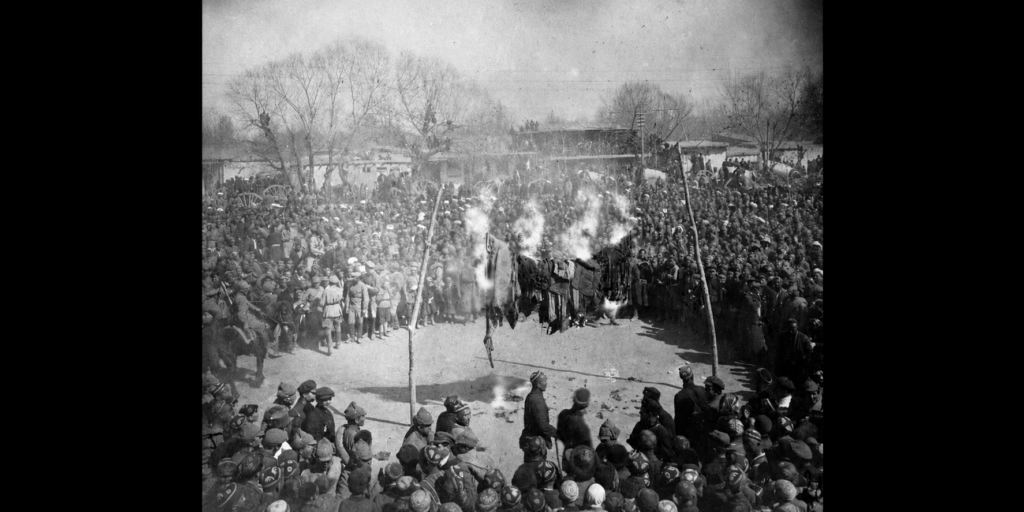
May is when Central Asia’s past crowds into the public square. Workers, soldiers, veterans, constitutions, unity campaigns, and the legacy of World War II all compete for space on the calendar. The dates are familiar across the region, but their meanings are no longer the same. Kazakhstan marks People’s Unity Day on May 1, Defenders’ Day on May 7, and Victory Day on May 9. Kyrgyzstan has a May calendar built around Labor Day, Constitution Day, and Victory Day. Uzbekistan has recast May 9 as the Day of Remembrance and Honor. Turkmenistan lists May 9 as Victory Day of the 1941-1945 Great Patriotic War, but it no longer carries the same public weight as the country’s main state holidays. Those choices show how each state is handling its Soviet past. May 1 can mean labor, unity, or almost nothing. May 9 can mean victory, mourning, family memory, or careful diplomacy. In Central Asia, the politics of memory rarely move through open rejection. It works through renaming, recalibrating, and changing the optics. Russia still treats May 9 as a central ritual of state power. Victory Day marks the Soviet defeat of Nazi Germany in what Russia calls the Great Patriotic War. Under Vladimir Putin, it has become a display of military strength, national sacrifice, and confrontation with the West. Since Russia’s full-scale invasion of Ukraine in 2022, that message has become more direct. This year, the image projected from Moscow will be weaker. Russia is preparing to hold its May 9 parade on Red Square without the usual display of military hardware. Tanks and missile systems, long central to the spectacle, are being kept away. Russia’s Defense Ministry cited the “current operational situation,” while the Kremlin linked the change to Ukrainian attacks. For Central Asian governments, that image will be hard to separate from their own handling of Victory Day. Moscow has long used May 9 to gather friendly leaders and place the post-Soviet region inside a shared wartime story. Attendance in Moscow has become a diplomatic signal. Absence has become one too. In recent years, Victory Day diplomacy has shown how Central Asian governments try to respect wartime memory while avoiding full alignment with Russia’s narrative. This year, at least some Central Asian leaders are again expected in Moscow. Kazakhstan’s Kassym-Jomart Tokayev and Kyrgyzstan’s Sadyr Japarov have been reported among those planning to attend, though the Kremlin has not yet published a full list of foreign guests. Central Asian states cannot simply discard May 9. Millions of people from the region served in the Red Army or worked behind the front during World War II; from Kazakhstan alone, around one million people contributed to the war effort, with nearly 271,000 soldiers still listed as missing. Families still carry those memories. Monuments, veterans’ payments, school events, and wreath-laying ceremonies remain important. For many people, Victory Day is personal before it is geopolitical. Yet governments have changed the tone. Kazakhstan still marks Victory Day as a public holiday, but large military parades...

European Athletes Dominate World Triathlon Championships in Samarkand

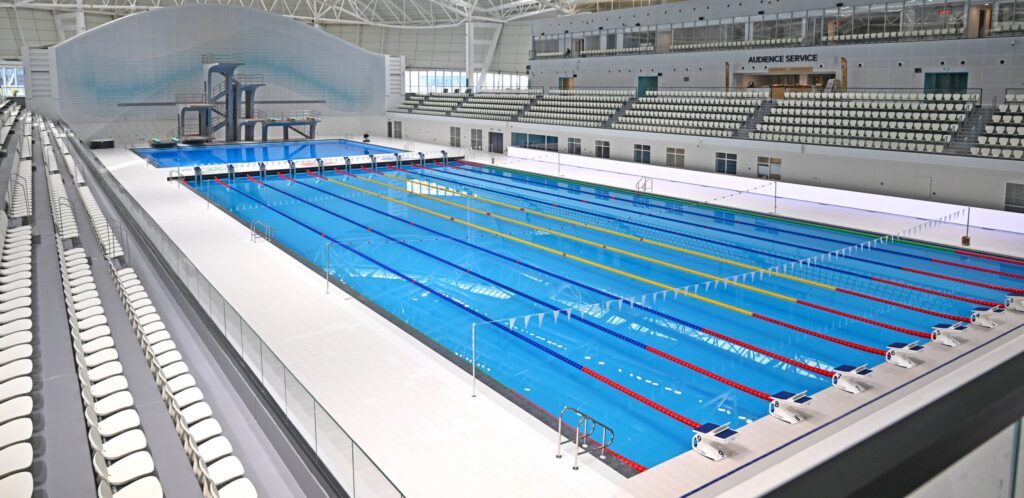
The city of Samarkand hosted the World Triathlon Championship Series (WTCS) from 25-26 April, further cementing Uzbekistan's reputation within the Olympic Movement. The event saw more than 150 athletes from over 40 countries compete on Samarkand’s Olympic-distance course, weaving through UNESCO World Heritage sites and historic Silk Road landmarks, including the breathtaking Eternal City complex.  In the elite races, the world’s top triathletes battled for crucial ranking points. Vasco Vilaça from Portugal took gold in the men’s category with a time of 1:43:33, while the UK's Beth Potter secured the top spot on the podium for the women’s race after a dramatic final run segment through the historic city centre. "This weekend marked another landmark sporting occasion for Uzbekistan," said Otabek Umarov, Vice President of the Olympic Council of Asia (OCA) and Deputy Chairman of the National Olympic Committee of Uzbekistan. "By bringing the World Triathlon Championship Series to Samarkand, we have once again shown that Uzbekistan can successfully deliver some of the world’s biggest sporting events, blending our warm hospitality with world-class sport." This event follows a series of major international sporting events recently hosted in Uzbekistan, including the record-breaking World Taekwondo Junior Championships in April, the Fencing World Cup and the Judo Grand Slam, alongside the largest-ever OCA General Assembly. These successes underline a national strategy driven by President Shavkat Mirziyoyev, who has made the promotion of healthy and active lifestyles a cornerstone of the country's development. With 60% of Uzbekistan’s population under the age of 30, Mirziyoyev's initiatives focus on leveraging world-class sporting events to inspire the next generation to engage in physical activity and pursue excellence on the global stage.

Uzbekistan Launches Global Cinema Weekend to Attract Film Industry

Uzbekistan is taking a new step to position itself as an international filming destination with the launch of Global Cinema Weekend, an industry platform designed to connect cinema, tourism, and the creative economy. The initiative was formalized through a memorandum signed between the National PR-Center and Global Tech Weekend. The platform will be held as part of Global Tech Weekend Tashkent on May 15-17. Organizers say the new platform aims to bring together international film professionals, government representatives, and local businesses. The goal is to foster partnerships and promote Uzbekistan as a competitive destination for global film production. Global Cinema Weekend will take place across Tashkent as part of Global Tech Weekend, described as the region’s largest decentralized innovation forum. The event is expected to attract participants from across the global creative industry, including producers, directors, and investors. A key focus of the initiative is developing film-induced tourism, a model in which films and television productions drive interest in filming locations and increase visitor numbers. Organizers say this approach aligns with Uzbekistan’s broader tourism strategy and could help boost international visibility. The memorandum outlines plans for long-term cooperation, including the annual organization of similar events with participation from leading global film industry figures, including representatives from Hollywood. Officials say this could open new opportunities for collaboration, knowledge exchange, and improvements in production standards. The initiative is also supported by government incentives designed to attract foreign production companies, including cash rebate programs. These measures are intended to make Uzbekistan more competitive as a filming location. “Signing this memorandum marks an important step in positioning Uzbekistan as an open and competitive destination for international film production,” said Shakhboz Saidkhanov, Director of the National PR-Center. “We are building an ecosystem where the film industry contributes to tourism growth, investment attraction, and the country’s global image.” Nodo Ivanidze, co-founder of Global Tech Weekend, said Uzbekistan already offers strong potential for filmmakers. “Uzbekistan has everything a filmmaker needs: ancient cities, dramatic landscapes, and a government that is actively building the infrastructure to welcome international productions,” he said. “What has been missing is a dedicated industry platform that connects that potential directly to global decision-makers.” He added that Global Cinema Weekend is intended to become a long-term initiative rather than a one-time event. “This memorandum is not a one-time activation. It is the beginning of a long-term effort to make Uzbekistan a permanent fixture on the map of global film production,” Ivanidze said. Global Tech Weekend, launched in 2025, is expanding its activities across the Eurasia region, with events planned in Tashkent, Tbilisi, and Baku in 2026.

Uzbekistan’s ‘When Apricots Blossom’ Shortlisted for Fuorisalone Award at Milan Design Week

Uzbekistan’s first national exhibition at Milan Design Week 2026 has closed with strong international recognition, drawing large crowds and earning praise from critics for its focus on culture, craft, and environmental change. Titled When Apricots Blossom, the exhibition ran from April 20 to 26 at Palazzo Citterio, welcoming around 25,000 visitors over seven days. Organized by the Uzbekistan Art and Culture Development Foundation (ACDF), the project was commissioned by its chairperson Gayane Umerova and curated by architect Kulapat Yantrasast, founder of WHY Architecture. The exhibition was shortlisted for the main Fuorisalone Award, which recognizes leading installations among the thousands of events held across Milan during the week. It also received a Special Mention from a panel of media partners and critics. The jury praised the project for creating “a dialogue between the space and the content” and for encouraging deeper engagement with its themes. Uzbekistan’s debut comes at a time when design is increasingly addressing global challenges, including climate change and sustainability. In this context, When Apricots Blossom stood out for its focus on the Aral Sea region, one of the world’s most widely recognized environmental disasters. [caption id="attachment_47943" align="aligncenter" width="451"] Cooking demonstration led by Bayrangul. Still from the film Where the Water Ends by Manuel Correa and Marina Otero 2026. Courtesy of ACDF[/caption] Over the past six decades, the Aral Sea has largely disappeared, reshaping life in Karakalpakstan, an autonomous region in northwestern Uzbekistan. The exhibition explored how communities in the area have adapted to these changes, not only through new solutions but also through long-standing traditions. Rather than presenting craft as something of the past, the project framed it as a form of living knowledge. “Our intention was for the Aral Sea to be recognized not only as a site of loss, but as a lens through which design considers broader questions of climate, culture, and responsibility,” Umerova said. She emphasized that collaboration played a key role in the exhibition. Designers from different countries worked alongside Uzbek and Karakalpak artisans, creating a space for exchange between tradition and contemporary practice. “The knowledge exchange between our craftspeople and international designers has helped reconnect past, present, and future,” she said. Inside Palazzo Citterio, visitors moved through installations centered on three fundamental aspects of life: food, shelter, and clothing. These were represented through bread-making, yurt-building, and textile weaving, practices that have helped communities adapt to changing environments. Twelve designers created new works inspired by these traditions, including bread trays and stamps used in the preparation of non, a staple of Uzbek cuisine. Made from materials such as wood, ceramics, felt, and reeds, the objects reflected both local resources and evolving design approaches. The exhibition also included artifacts selected by participants of the Aral School, an international educational program focused on the region through design and research. A film, Where the Water Ends, offered visitors a closer look at the lives and landscapes shaped by the disappearance of the sea. For Yantrasast, the project marks the beginning of a longer process. “This...

Silver, Silk, and Forgotten Power: Central Asia’s Islamic Past Comes to London

At Sotheby’s in London, Central Asia comes into view as a world of dazzling craft and taste. The Arts of the Islamic World & India auction on April 29th  gathers rare eastern Islamic works that show how the region turned faith, power, and luxury into art. The standout lot is a 12th or 13th-century silver ewer, catalogued as Persian or Central Asian. Most related vessels are brass or bronze. This one is comparable to vessels from the Harari Hoard, a group of 10th and 11th-century silver objects now largely held in the L.A. Mayer Museum for Islamic Art in Jerusalem. The ewer’s presence gives the sale its sharpest point of entry. It is rare, ambitious, and unusually personal. [caption id="attachment_47817" align="aligncenter" width="2447"] A pair of Seljuk gold bracelets, Persia, Khurasan, 12th century; image: Sotheby's[/caption] A 10th-century Nishapur calligraphic dish shifts the focus from metal to script, turning a simple object into a work shaped by the visual grace of the written word. Timurid horse trappings, Qur’an pages, Sogdian silks, golden Mongol cloths, an embroidered robe, and a Shakhrisabz suzani broaden the picture from courtly power to sacred text and textile brilliance, ending in a tradition still closely associated with Uzbekistan. The timing gives the auction added weight. Uzbekistan is building a major new stage for Islamic heritage. The Times of Central Asia reported in April 2026 that its Center of Islamic Civilization has entered the Guinness World Records as the world’s largest museum. TCA asked Frankie Keyworth, a Specialist in Islamic and Indian Art at Sotheby’s, why Central Asia’s artistic legacy is commanding fresh attention now. [caption id="attachment_47818" align="aligncenter" width="8984"] A turquoise-set silver and brass belt buckle, Bukhara, Central Asia, 19th century; image: Sotheby's[/caption] TCA: Why are the artifacts in this auction so important for understanding Central Asia as a center of artistic production, rather than just a corridor between other civilizations? Keyworth: They really reiterate the breadth of artistic production in Central Asia, which is incredibly rich in terms of medium, design and chronology. The works presented here range from the 8th to the 19th century, from textiles to ceramics, metalwork to manuscripts, and they reveal traditions that are distinct to Central Asia, and others that inform and are informed by artistic production in other regions. The impressive silver ewer is a good example of this. Its nielloed decoration on silver is typical of a distinct group of silver vessels produced in Central Asia, but its form would go on to inform examples in other materials, such as bronze or ceramics produced later in Persia. [caption id="attachment_47819" align="aligncenter" width="2560"] A Timurid or early Ottoman tinned copper goblet (mashrabe), Central Asia or Eastern Anatolia, late 15th century; image: Sotheby's[/caption] TCA: Which object best captures Central Asia’s wider historical importance, and what makes it so revealing? Keyworth: It’s hard to pinpoint such a vast artistic tradition to one object, but luxurious textile production is synonymous with the arts of Central Asia. In this sale, we can see one of the earliest...