• KGS/USD = 0.01144 0%
  • KZT/USD = 0.00212 0%
  • TJS/USD = 0.10803 0%
  • UZS/USD = 0.00008 0%
  • TMT/USD = 0.28571 0%
  • KGS/USD = 0.01144 0%
  • KZT/USD = 0.00212 0%
  • TJS/USD = 0.10803 0%
  • UZS/USD = 0.00008 0%
  • TMT/USD = 0.28571 0%
  • KGS/USD = 0.01144 0%
  • KZT/USD = 0.00212 0%
  • TJS/USD = 0.10803 0%
  • UZS/USD = 0.00008 0%
  • TMT/USD = 0.28571 0%
  • KGS/USD = 0.01144 0%
  • KZT/USD = 0.00212 0%
  • TJS/USD = 0.10803 0%
  • UZS/USD = 0.00008 0%
  • TMT/USD = 0.28571 0%
  • KGS/USD = 0.01144 0%
  • KZT/USD = 0.00212 0%
  • TJS/USD = 0.10803 0%
  • UZS/USD = 0.00008 0%
  • TMT/USD = 0.28571 0%
  • KGS/USD = 0.01144 0%
  • KZT/USD = 0.00212 0%
  • TJS/USD = 0.10803 0%
  • UZS/USD = 0.00008 0%
  • TMT/USD = 0.28571 0%
  • KGS/USD = 0.01144 0%
  • KZT/USD = 0.00212 0%
  • TJS/USD = 0.10803 0%
  • UZS/USD = 0.00008 0%
  • TMT/USD = 0.28571 0%
  • KGS/USD = 0.01144 0%
  • KZT/USD = 0.00212 0%
  • TJS/USD = 0.10803 0%
  • UZS/USD = 0.00008 0%
  • TMT/USD = 0.28571 0%

Viewing results 25 - 30 of 295

Uzbekistan Says Border Troops Acted Lawfully in Shooting of Two Kyrgyz Citizens

Uzbekistan’s Border Troops have confirmed that Uzbek servicemen acted lawfully during a fatal shooting near the Kyrgyz-Uzbek border on August 15, which resulted in the deaths of two Kyrgyz nationals. The official statement was released by the press service of the Border Troops under the State Security Service on September 4. According to the report, the incident occurred near the Ugam-Chatkal nature reserve in Tashkent region’s Bostanlyk district. Border patrol officers reportedly spotted two unidentified individuals in a restricted area near the state boundary. When ordered to stop, the individuals attempted to flee. Border guards fired several warning shots into the air, but the individuals continued moving toward the border. Weapons were then used “as a last resort,” according to the statement. Both individuals were wounded and died at the scene, despite first aid being administered by border personnel. A search of the area revealed a tent, three horses, food supplies, and tracks indicating the presence of a third individual who reportedly fled back into Kyrgyz territory. The border services of both Kyrgyzstan and Kazakhstan were immediately notified. On August 31, authorities confirmed the deceased were Kyrgyz citizens, and their bodies were returned to their families. A joint site inspection by Uzbek and Kyrgyz border officials was conducted on September 2-3. Following the inspection, a bilateral commission concluded that the Uzbek border patrol had acted in accordance with national law and that the individuals had illegally crossed the state border. Both sides agreed to continue investigating the identity of the third individual and to pursue further action as appropriate.

Uzbekistan Remembers Victims of Repression with Renewed Educational Focus

On August 29, a solemn ceremony was held at the Shahidlar Xotirasi alley in Tashkent to commemorate the Day of Remembrance for Victims of Repression, an annual event observed on the eve of Uzbekistan’s Independence Day. The event honored the memory of over 100,000 innocent citizens who suffered during waves of political repression. Thousands were executed on fabricated charges, while many others were exiled, leaving deep scars on families and communities. In recent years, Uzbekistan has taken steps to more fully acknowledge and document this painful history. More than 1,200 names of victims have recently been rehabilitated. The Museum of the Memory of Victims of Repression has been expanded with thousands of newly added archival documents, and regional museums dedicated to the memory of the repressed are being established across the country. A major development this year is the establishment of the State Museum of Jadid Heritage in Bukhara. The opening coincides with the 150th anniversary of Mahmudkhoja Behbudi, a key figure in the Jadid movement, an early 20th-century reformist movement that sought to modernize Muslim society through education, journalism, and national consciousness. Leaders of the Jadid movement, including Behbudi, Fitrat, Avloni, and Chulpon, were pioneers in opening secular schools, publishing newspapers, and founding institutions such as the Turkestan People’s University, now the National University of Uzbekistan. Nearly all of them fell victim to Stalin’s purges in the 1930s, and their works were banned for decades. Students from Turkestan who studied in Germany in the 1920s also became targets of repression. President Shavkat Mirziyoyev has commented: “If those young men had returned, they could have transformed society. It is important that our youth know and take pride in such examples.” Under Soviet rule, it was long taboo to acknowledge that a site near the Bozsu Canal in central Tashkent concealed a mass grave of intellectuals executed during Stalin’s purges. At the initiative of previous leader Islam Karimov, a memorial complex and museum were established on the site, and August 31 was officially designated as the Day of Remembrance. The Shahidlar Xotirasi Memorial, inaugurated on May 12, 2000, near the Tashkent TV tower, includes a park, a museum, and a rotunda featuring a symbolic jade tombstone inscribed in Arabic, English, and Uzbek: “The memory of those who died for their country will live forever.” Mirziyoyev has called for greater educational integration, through school curricula, media programming, and youth competitions. “Every year on the eve of Independence Day, we offer prayers in memory of our ancestors who gave their lives for freedom,” he said. “Their courage and sacrifice will always serve as an example for us.”

Marking 34 Years of Independence: Uzbekistan’s Past, Present, and Future

Uzbekistan declared its independence from the Soviet Union on August 31, 1991, during the final, turbulent months of the USSR's collapse. On that day, an extraordinary session of the Uzbek SSR Supreme Council in Tashkent adopted a Declaration of Independence and passed the law “On the Foundations of State Independence.” The same session resolved that September 1 would henceforth be celebrated annually as Independence Day. The move came just days after the failed Moscow coup attempt (GKChP) against Soviet leader Mikhail Gorbachev, and in the wake of Ukraine and Belarus declaring their own independence. Uzbekistan’s then-leader Islam Karimov moved swiftly to follow suit. At the time, Karimov served both as the leader of Soviet Uzbekistan and First Secretary of the Communist Party of Uzbekistan. He presided over the landmark session on August 31 and proposed September 1 as the national holiday. Shortly afterward, his administration began establishing the institutions of statehood, including a Ministry of Defense and a National Security Service, both created in early September 1991. Later that year, on December 29, a national referendum overwhelmingly supported independence, and Karimov was elected the first president of the new republic. Karimov’s position in 1991 was not without contradictions. Earlier that year, during a USSR-wide referendum in March, he had campaigned for the preservation of the Soviet Union. At the time, he reportedly warned Uzbeks: “Our rivers will run with milk if we stay within the Soviet Union, but if we leave it, our rivers will fill with blood.” For many Uzbeks, the first Independence Day came as a surprise. The declaration was made hastily, and the celebrations of September 1, 1991, were unlike the orchestrated commemorations seen in later years. According to Kursiv, citizens awoke to an unfamiliar atmosphere, karnay horns echoed through the streets, cars were spontaneously decorated, and celebrations broke out informally. “Citizens didn’t even know they had woken up in a new independent state,” one account recalled. Emotions ranged from pride and elation to confusion and concern. The post-Soviet transition proved challenging: economic hardship and shortages left some wondering whether independence had been a mistake. “People in the villages were very unhappy, a bit scared, and already wondering if independence was a big mistake,” wrote Bruce Pannier in 2016. At the time, Pannier, now a contributor to The Times of Central Asia, was traveling through Uzbekistan in 1992. Others remained hopeful, viewing independence as a long-awaited moment of self-determination. For older generations raised under Soviet rule, the sense of historic transformation was profound. Today, 34 years later, Independence Day remains Uzbekistan’s most important national holiday, marked by public ceremonies and official remembrances. The events of 1991 continue to shape national identity and memory. Islam Karimov is remembered by some as the founding father of the republic; a legacy still debated in public discourse. For those who lived through the early 1990s, memories of watching a new flag rise and hearing a new anthem are inseparable from the hardship and promise of the era. Journalist Aziza Qurbonova reflected...

Trilateral Summit in Turkmenistan Focuses on Transport, Energy, and Trade

On August 22, a trilateral summit was held in Turkmenistan’s Avaza National Tourist Zone, bringing together Uzbekistan President Shavkat Mirziyoyev, Chairman of the Halk Maslahaty of Turkmenistan Gurbanguly Berdimuhamedov, and Azerbaijan President Ilham Aliyev. The leaders focused on strengthening cooperation in trade, the economy, transport, energy, and humanitarian affairs, while also emphasizing the development of political, cultural, and multilateral ties. Transport and Transit Mirziyoyev presented several initiatives aimed at expanding regional transport routes and maximizing the region’s transit potential. He highlighted the strategic importance of integrating existing and new corridors to better connect China with South Asia, the Middle East, and Europe. Construction of the China-Uzbekistan railway is underway, and a memorandum has been signed with Pakistan and Afghanistan to establish the Trans-Afghan Corridor. According to Mirziyoyev, these projects could significantly enhance infrastructure utilization across Azerbaijan, Turkmenistan, and Uzbekistan. The development of the Middle Corridor and the Zangezur Corridor was also discussed. The leaders agreed to collaborate on increasing the capacity of regional transport hubs, constructing modern logistics infrastructure at the ports of Turkmenbashi and Baku, implementing a unified tariff policy, and digitizing freight systems. Uzbekistan expressed its willingness to reduce tariffs on a reciprocal basis to facilitate improved access to global markets for regional businesses. Energy Cooperation Energy cooperation was another key focus. The participants emphasized the need to expand collaboration in energy exports and to explore new supply routes. A proposed project to export “green” energy to Europe was described as promising. Additionally, in the hydrocarbon sector, the leaders proposed deeper cooperation in geological exploration and offshore field development in the Caspian Sea. “Joint efforts in the fields of transport, transit, and logistics will be of great importance not only for our countries but also for the wider region,” said President Aliyev, stressing the strategic nature of trilateral cooperation. Aliyev also noted that Azerbaijan’s state oil company SOCAR has begun developing an oil field in Uzbekistan, with results expected in the coming years. Trade and Industry According to summit participants, mutual trade volume between Uzbekistan, Turkmenistan, and Azerbaijan has doubled in recent years, with industrial goods making up 40% of this trade. Talks included preparations for a Comprehensive Action Plan aimed at developing trade and logistics chains, establishing wholesale distribution centers, unifying phytosanitary standards, introducing digital product labeling, and launching joint online platforms. The leaders also underscored the importance of regional engagement and called for increased organization of trade fairs and business forums under the auspices of national chambers of commerce and industry. Summit Outcomes The summit concluded with the endorsement of a new trilateral program for cultural and tourism exchanges, aimed at boosting regional tourism and promoting shared cultural heritage. A joint presidential statement was issued, alongside memoranda of cooperation in the fields of transport and logistics, shipbuilding, and aviation. Additionally, an agreement was signed on cooperation between national commodity and raw material exchanges. To ensure implementation, President Mirziyoyev proposed the development of a roadmap and the institutionalization of regular ministerial meetings focused on key cooperation areas.

Saida Mirziyoyeva, Uzbek President’s Daughter, Grows Her Authority

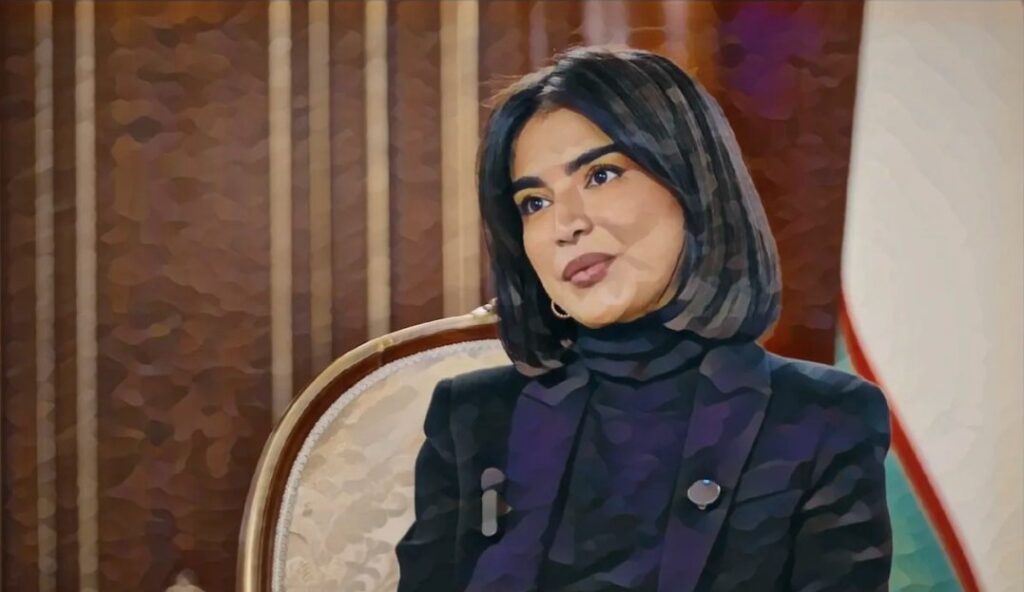
Saida Mirziyoyeva, the eldest daughter of Uzbekistan’s president Shavkat Mirziyoyev, will focus on education, business, the judicial and legal system, healthcare, and water resources in her new job as head of the presidential administration. Mirziyoyev has signed a decree with details about the structure of the office that his daughter took over last month, handing her authority in a wide range of areas that are critical to Uzbekistan’s efforts to modernize its economy and society. The move points to the increasing political influence of Mirziyoyeva, a polished operator who is comfortable interacting with foreign dignitaries and other international partners. The presidential decree announced the elimination of 284 staff positions and removed redundancies in other roles in the presidential administration, presidential spokesman Sherzod Asadov said Wednesday. Five deputies have been appointed to “ensure the effective implementation of reforms” in education and the other four areas that Mirziyoyeva’s office will work on, according to Asadov. Uzbekistan also has ministries and other agencies that work in those areas. Mirziyoyeva, 40, had served as a presidential aide before being promoted to head of the presidential administration. She has spoken in support of freedom of speech and women’s rights, issues that have sometimes run up against conservative culture and tight political controls in Uzbekistan. In a recent post on social media, she also noted that Uzbekistan earned a “BB” rating with a stable outlook from the Fitch Ratings agency, describing it as “the first upgrade since 2018!” Mirziyoyev, 67, has been president of Uzbekistan since 2016. He was re-elected in a 2023 vote after a constitutional amendment that reset the number of his terms in office and lengthened presidential terms from five to seven years.

Uzbekistan Elected to the UN FAO Council for the First Time

Uzbekistan has been unanimously elected to the Council of the Food and Agriculture Organization of the United Nations (FAO) for the 2028-2029 term, the country’s Ministry of Foreign Affairs has announced. This marks the first time Uzbekistan has secured a seat on the Council, which plays a pivotal role in shaping global agricultural and food policy. The FAO Council consists of 49 member states, selected to ensure equitable geographic representation. It is tasked with reviewing the FAO’s budget and programs and making strategic recommendations to the FAO Conference. Uzbekistan’s election is widely viewed as international recognition of the country's recent reforms in agriculture and food security. Under the leadership of President Shavkat Mirziyoyev, the government has prioritized sustainability, food safety, and environmental protection. Council membership will provide Uzbekistan with a stronger voice in international agricultural discussions. It will enable the country to participate in the development of global standards, support national and regional initiatives, and attract international funding to advance key development goals. In recent years, Uzbekistan has collaborated closely with the FAO on several high-profile projects. In May 2024, the FAO and the Ministry of Ecology organized a workshop in Tashkent to launch a joint initiative on hazardous chemical management. Supported by the European Union, the project aims to reduce reliance on harmful pesticides by promoting safer alternatives to local farmers. Earlier, in March 2024, the FAO and Uzbekistan’s Ministry of Agriculture hosted a seminar on the “Recarbonization of Agricultural Soils” (RECSOIL), culminating in an approved national action plan. The RECSOIL initiative complements two ongoing FAO projects focused on sustainable land management in drought-prone and dryland areas. These efforts are already benefiting Uzbek farmers through the adoption of modern, resource-efficient practices that improve productivity while preserving the environment.