• KZT/USD = 0.00223
  • TJS/USD = 0.10810
  • UZS/USD = 0.00009
  • TMT/USD = 0.29850
  • KZT/USD = 0.00223
  • TJS/USD = 0.10810
  • UZS/USD = 0.00009
  • TMT/USD = 0.29850
  • KZT/USD = 0.00223
  • TJS/USD = 0.10810
  • UZS/USD = 0.00009
  • TMT/USD = 0.29850
  • KZT/USD = 0.00223
  • TJS/USD = 0.10810
  • UZS/USD = 0.00009
  • TMT/USD = 0.29850
  • KZT/USD = 0.00223
  • TJS/USD = 0.10810
  • UZS/USD = 0.00009
  • TMT/USD = 0.29850
  • KZT/USD = 0.00223
  • TJS/USD = 0.10810
  • UZS/USD = 0.00009
  • TMT/USD = 0.29850
  • KZT/USD = 0.00223
  • TJS/USD = 0.10810
  • UZS/USD = 0.00009
  • TMT/USD = 0.29850
  • KZT/USD = 0.00223
  • TJS/USD = 0.10810
  • UZS/USD = 0.00009
  • TMT/USD = 0.29850
22 September 2026

Viewing results 19 - 24 of 247

Uzbekistan Urges Diplomats to Actively Defend Citizens Abroad

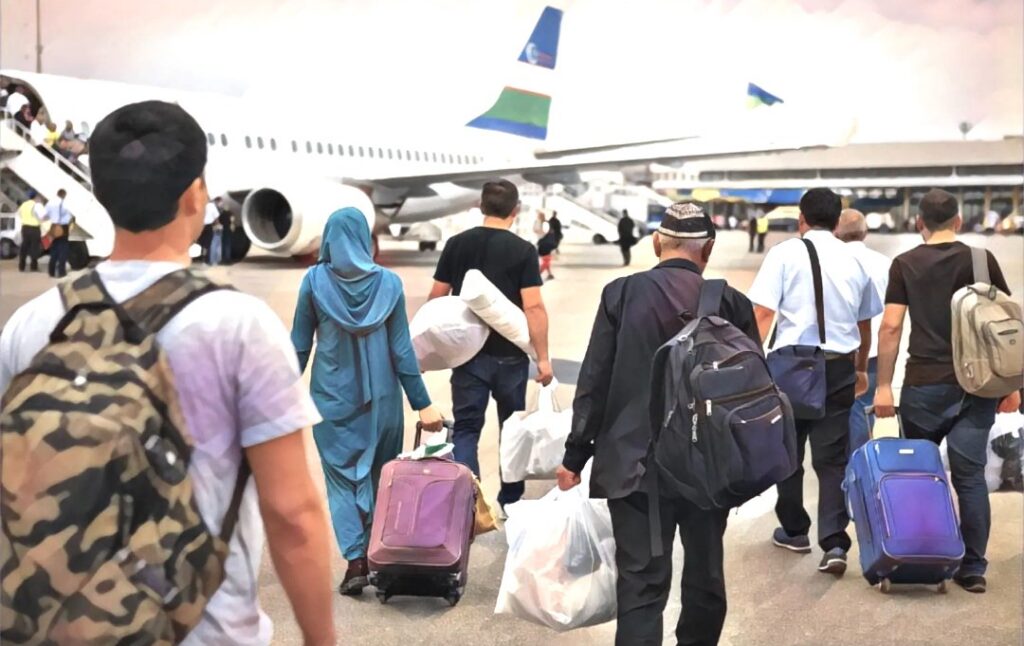
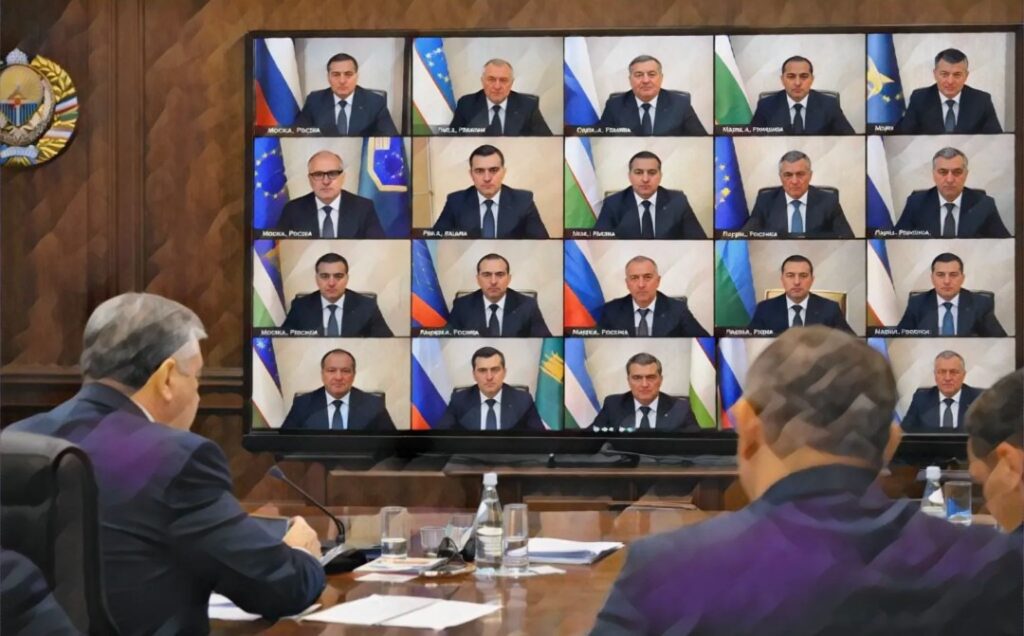
President Shavkat Mirziyoyev has directed Uzbekistan’s diplomats to take a more proactive role in protecting the rights of citizens living and working abroad, amid rising public concern over reported abuses during migration checks and raids in foreign countries. The issue was raised during a video conference chaired by Mirziyoyev on the performance of the Ministry of Foreign Affairs and the country's diplomatic missions overseas, according to the president’s press secretary. Mirziyoyev noted that the presence of Uzbek citizens residing abroad illegally remains a pressing issue for the state. In 2025, Uzbekistan secured a migration amnesty for more than 150,000 of its nationals in Russia. During the meeting, officials were instructed to intensify talks with other countries to facilitate legal employment pathways for Uzbek citizens, while also stressing that migrants must comply with the laws of their host countries. The president said that assisting labor migrants, particularly in countries experiencing rising inflows of Uzbek workers, must become a central responsibility of consular staff. Special attention was given to European states, where the number of Uzbek labor migrants has grown in recent years. He also called for the simplification of consular registration procedures and the elimination of excessive bureaucracy. Reports of rights violations during foreign law enforcement raids have triggered significant public backlash. Mirziyoyev criticized the Ministry of Foreign Affairs for often responding only with formal diplomatic notes, saying that ambassadors and consuls must provide qualified legal support and actively defend the interests of Uzbek citizens in such cases. The president also raised concerns about the risk of young people and students abroad being drawn into radical movements. He called on diplomats to abandon “cabinet diplomacy” and instead visit construction sites, dormitories, and classrooms to directly engage with citizens and address their needs. As part of the new measures, officials were instructed to establish a free call center for citizens abroad facing difficult situations, enabling rapid coordination with the relevant ministries. Separately, the Foreign Ministry has yet to confirm whether it has issued a diplomatic note in response to recent remarks by Russian propagandist Vladimir Solovyov, who suggested launching a “special military operation” in Central Asia. In an interview with Kun.uz, parliamentary deputy Bobur Bekmurodov said it may be premature to assess the ministry’s response but noted that Solovyov’s comments could warrant declaring him an undesirable person in Uzbekistan.

Uzbekistan’s Supreme Court Updates List of Banned “Extremist” Online Content

Uzbekistan has released an updated list of sources and materials banned for promoting extremism and terrorism, according to the press service of the Supreme Court. The revised register, current as of 10 January 2026, includes online content deemed to pose a threat to public safety and the country’s constitutional order. The Supreme Court reported that the updated list contains 1,593 profiles, channels, and other materials, most of which are linked to content distributed via social networks and messaging platforms. The listed materials were found to promote extremist ideologies, justify violence, or encourage terrorist activity. Telegram was the most frequently cited platform, with 790 channels, groups, and materials included. Facebook followed with 249 entries, while 265 profiles were identified on Instagram. The list also includes 167 YouTube channels and videos, 53 TikTok profiles, and 36 entries from the Odnoklassniki network. Beyond social media, the register includes 13 websites and standalone digital materials classified as prohibited sources. Additionally, 20 books, lectures, and religious chants were assessed as promoting religious extremism or violent ideology. At the same time, some legal experts and human rights advocates caution that broadly defined extremism regulations carry risks of misuse. They argue that vague or expansive interpretations of what constitutes extremist or unconstitutional content could potentially be applied to suppress political dissent, independent journalism, or peaceful criticism of state policies, particularly in online spaces where contextual nuance is often limited. Concerns have also been raised about the potential impact on religious freedom. Critics note that religious materials or sermons not aligned with officially approved interpretations could be vulnerable to restriction, even when they do not explicitly call for violence. Without transparent judicial oversight and clear public access to decisions, observers warn that such measures may unintentionally marginalize lawful religious expression or discourage open theological discussion. The court stated that all materials were evaluated using clear criteria, such as promoting extremist ideas, justifying violence or terrorism, or seeking to undermine the constitutional system. Materials meeting these thresholds were formally recognized as prohibited. Legal grounds for these designations are provided under Uzbekistan’s Criminal Code. Article 244-1 covers extremist content promoting terrorism and allows for criminal prosecution, including prison terms of up to eight years for the preparation, storage, or dissemination of such materials. Article 244-3 addresses the unlawful distribution of religious content that breaches legal standards without directly inciting terrorism. Initial violations under this article result in administrative penalties such as fines and equipment confiscation but repeat offenses may escalate to criminal charges. These actions are part of Uzbekistan’s National Strategy to Counter Extremism and Terrorism for 2021–2026. Under this strategy, state agencies are tasked with identifying and curbing the spread of extremist and terrorist materials online, while enhancing legal, technical, and informational capabilities to counter growing digital recruitment activities.

Uzbekistan Has “Only Just Begun” Reforms, Says Saida Mirziyoyeva

Saida Mirziyoyeva has said that the country’s reform agenda remains at an early stage, arguing that the scale of change should be measured in years rather than months. In her first major interview since becoming Head of the Presidential Administration, Mirziyoyeva said Uzbekistan had “only just begun” large-scale reforms. Expectations of rapid results, she warned, often overlook structural limits, including weak infrastructure, uneven regional development, and tight public finances. Mirziyoyeva spoke about decision-making inside the presidential system and outlined what she described as the administration’s main policy priorities, including water management, education, healthcare, the business climate, and reform of the judicial and legal system. “Our goal is to improve people’s lives,” she stated, emphasizing that improvements in courts and law enforcement were essential for other reforms to succeed. Without legal guarantees, she argued, investment and social policy changes would fail to deliver lasting results. She said the reforms now underway are intended to address long-standing systemic problems rather than produce quick political gains, and rejected the idea that reform momentum has slowed, arguing that many of the most complex changes require time and careful implementation to succeed. Water management featured prominently in her remarks. Mirziyoyeva described it as one of Uzbekistan’s most urgent challenges, pointing to climate pressures, ageing infrastructure, and rising demand. Education and healthcare were also presented as priorities, with reforms focused on improving quality and access rather than simply expanding state programs. The judicial system, however, emerged as the central theme. Mirziyoyeva said that without independent and predictable courts, reforms in other areas would not deliver lasting results. Legal uncertainty, she said, discourages investment and undermines public trust, making the rule of law essential for both economic reform and the protection of citizens’ rights. Mirziyoyeva also addressed the business environment, arguing that excessive regulation and administrative pressure continue to constrain private enterprise. The state, she said, should act as a partner to entrepreneurs rather than an obstacle, and reforms should create conditions in which businesses can operate transparently and competitively. Mirziyoyeva described her role as focused on coordination and execution rather than public visibility. The task of the Presidential Administration, she said, is to ensure that decisions taken at the top translate into practical change on the ground. Public service, she added, should be judged by outcomes, not rhetoric. The interview comes more than nine years after President Shavkat Mirziyoyev took office in December 2016 and launched a reform agenda that marked a break with the isolationist policies of his predecessor. Early measures included the liberalisation of the foreign exchange market in September 2017, easing trade restrictions, and reducing state control over prices. International financial institutions have described Uzbekistan’s economic transition as ambitious, while noting that progress has been uneven. Political reform has proceeded more cautiously. In its 2024 Nations in Transit assessment, Freedom House classified Uzbekistan as a consolidated authoritarian system, citing restrictions on opposition activity and independent media. Against that backdrop, Mirziyoyeva said reforms should be judged by tangible outcomes rather than timelines. Reliable access...

Alisher Sultanov Leaves Office After a Decade of Declining Gas Production in Uzbekistan

Alisher Sultanov was relieved of his post as presidential representative on energy security on December 16, ending some ten years of dubious performance as one of Uzbekistan’s top energy officials. Under Sultanov’s watch as head of the state oil and gas company and then as a top official in Uzbekistan’s Energy Ministry, the country’s oil and gas production decreased, and Uzbekistan went from being a gas exporter to an importer. A Career in the Gas and Oil Sector Sultanov started working in Uzbekistan’s energy sector in the mid-1990s and gradually made his way through the ranks at the state oil and gas company Uzbekneftegaz. In 2015, Sultanov became Uzbekneftegaz’s chairman, serving in that position until 2018. In 2017, Sultanov was appointed Deputy Prime Minister in charge of the fuel, energy, and industrial sector, and in February 2019, he was named Energy Minister. He stepped down as Energy Minister in April 2022, officially for health reasons, but by 2023 was back as presidential advisor on oil and gas, chemical, and energy matters, though that title was changed in July 2025 to the president’s representative on energy security. Stagnation and Decline Uzbekistan does not have large oil reserves. BP’s Statistical Review of World Energy has continually put Uzbekistan’s oil reserves at somewhere around 600-620 million barrels. Uzbekistan does have significant natural gas reserves of at least some 1.1 trillion cubic meters, however, according to the BP Statistical Review of World Energy. The country has been working with international partners to explore for new deposits, particularly in areas of the recently dried out Aral Sea. In 2011, Uzbekistan’s average oil production was some 80,000 barrels per day (bpd), and gas production for that year was some 56.6 billion cubic meters (bcm). Uzbekistan was still sourcing from many fields that had been producing since Uzbekistan was a Soviet republic, and it was not surprising that yields from these depleted fields started decreasing after 2011. Sultanov became head of Uzbekneftegaz in August 2015, and that year, oil production had already dropped to some 60,000 bpd and gas to some 53.6 bcm. Both fluctuated only a little over the next three years, ending 2018 at an average of 64,000 bpd and 58.3 bcm. The 2018 figure for gas was the peak production year of the 2011-2020 period, though it fell well short of the 66 bcm Uzbekneftegaz was predicting for 2018. After Sultanov was named Energy Minister in 2019, the figure for gas production fell significantly. In 2019, gas production was 57.5 bcm, but in 2020, only 47.1 bcm, though oil output held steady at 67,000 bpd and 61,000 bpd, respectively. Gas production increased slightly in 2021 to 50.9 bcm, but then dropped to 48.9 bcm in 2022. The decrease continued after Sultanov stepped down as Energy Minister in April 2022, plummeting to 44.2 bcm in 2023 and 42.2 bcm in 2024. With a rapidly growing population and expanding industrial sector, Uzbekistan’s domestic gas consumption was sharply increasing, rising from 43.6 bcm in 2020 to 54.6...

Uzbekistan, Paraguay Deepen Ties During First-Ever Presidential Visit

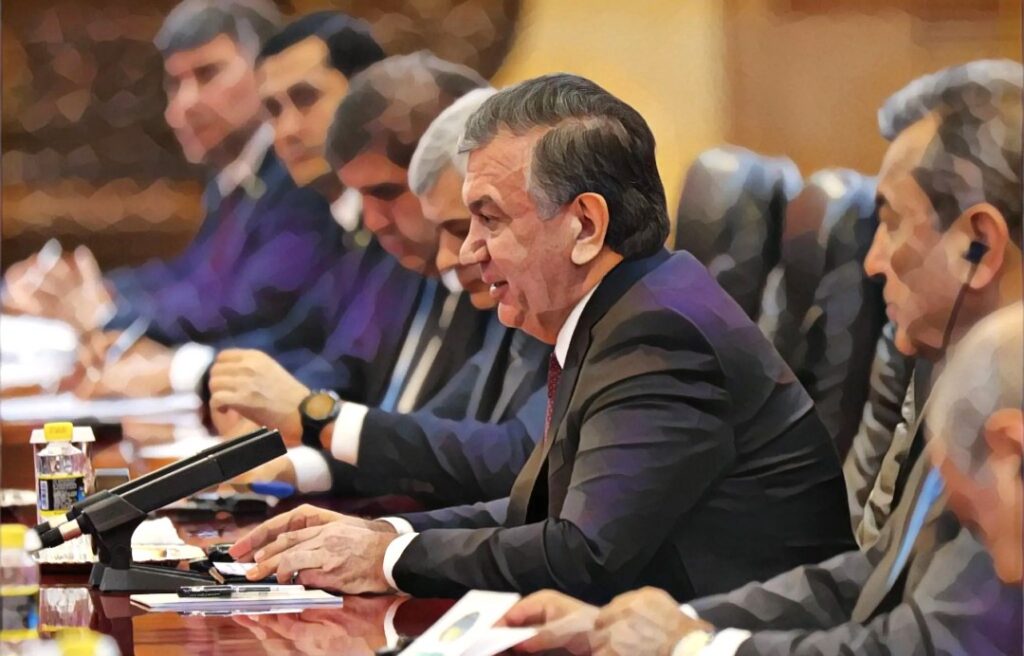
Uzbekistan and Paraguay have agreed to enhance political and economic cooperation following high-level talks in Tashkent, according to the presidential press service. The meeting between Uzbek President Shavkat Mirziyoyev and Paraguayan President Santiago Peña took place at the Kuksaroy residence, with participation from both countries’ official delegations. Mirziyoyev welcomed his counterpart and highlighted the historical significance of the visit, noting it as the first time a president from a Latin American country has traveled to Uzbekistan. The visit is expected to usher in a new era of bilateral relations. The two leaders discussed expanding cooperation across several sectors. Talks focused on increasing mutual trade, strengthening business contacts, and initiating joint projects in agriculture, food production, the chemical industry, digital technologies, tourism, and sports. Cultural, educational, and humanitarian collaboration were also emphasized as priority areas. The sides also exchanged views on international and regional developments. Following the talks, Mirziyoyev and Peña signed a joint statement reaffirming their commitment to strengthening political dialogue and expanding practical cooperation. Uzbek media reported that two additional documents were signed in the presence of the presidents: a protocol concluding bilateral market-access negotiations related to Uzbekistan’s accession to the World Trade Organization, and a memorandum between the foreign ministries to establish a mechanism for political consultations. The meeting concluded with a symbolic gesture. The two presidents planted a tree on the Alley of Honored Guests at the Kuksaroy residence, symbolizing their intention to open a new chapter in Uzbekistan-Paraguay relations.

Uzbekistan, Kyrgyzstan Strengthen Energy Ties as Kambarata-1 Project Advances

Uzbekistan and Kyrgyzstan are deepening their energy partnership as progress continues on the Kambarata-1 Hydropower Plant (HPP), one of Central Asia’s most ambitious infrastructure projects. Uzbek President Shavkat Mirziyoyev met with Kyrgyz Energy Minister Taalaibek Ibrayev in Tashkent to discuss regional energy cooperation, according to Kyrgyz news agency 24.kg, citing the Kyrgyz Ministry of Energy. The talks focused on strengthening strategic ties between the two countries, with particular emphasis on hydropower development. Both sides acknowledged the growing momentum in bilateral relations and reaffirmed their commitment to joint regional energy initiatives. Mirziyoyev underscored the importance of collaborative water and energy projects, identifying Kambarata-1 as a top priority for all three participating countries, Uzbekistan, Kyrgyzstan, and Kazakhstan. “For the effective use and joint management of the region’s hydropower potential, next year we will begin financing the construction of the Kambarata-1 Hydropower Plant together with Kyrgyzstan and Kazakhstan,” Mirziyoyev said, as quoted by the Kyrgyz Ministry of Energy. He also expressed gratitude to Ibrayev and representatives from major energy companies in the United Arab Emirates, Turkey, and Azerbaijan for supporting Uzbekistan’s efforts to attract investment and adopt advanced energy technologies. The Kambarata-1 project is a trilateral initiative involving Kyrgyzstan, Uzbekistan, and Kazakhstan. With a projected cost of $4.2 billion, the venture has already secured $5.6 billion in committed financing from international financial institutions, according to Uzbek Energy Minister Jorabek Mirzamahmudov. Mirzamahmudov noted that the most recent trilateral ministerial meeting took place in Brussels in late September, coordinated by the World Bank. The event brought together representatives from 10 major financial institutions, including the European Bank for Reconstruction and Development, the European Investment Bank, the OPEC Fund, the Asian Infrastructure Investment Bank, and the Asian Development Bank. Despite strong financial and political backing, the project faces unresolved technical concerns. At a recent parliamentary session in Bishkek, Kanatbek Abdrakhmatov, president of Kyrgyzstan’s National Academy of Sciences, warned that seismic microzonation, a critical safety assessment, has not yet been conducted at the planned construction site. Kambarata-1 is expected to have an installed capacity of 1,860 MW, a reservoir volume of 4.5 billion cubic meters, and a dam height of 256 meters. The facility will house four turbines capable of producing over 5.5 billion kWh of electricity annually. Under the current ownership structure, Kyrgyzstan will hold a 34% stake in the project, while Uzbekistan and Kazakhstan will each hold 33%.