• KZT/USD = 0.00223
  • TJS/USD = 0.10810
  • UZS/USD = 0.00009
  • TMT/USD = 0.29850
  • KZT/USD = 0.00223
  • TJS/USD = 0.10810
  • UZS/USD = 0.00009
  • TMT/USD = 0.29850
  • KZT/USD = 0.00223
  • TJS/USD = 0.10810
  • UZS/USD = 0.00009
  • TMT/USD = 0.29850
  • KZT/USD = 0.00223
  • TJS/USD = 0.10810
  • UZS/USD = 0.00009
  • TMT/USD = 0.29850
  • KZT/USD = 0.00223
  • TJS/USD = 0.10810
  • UZS/USD = 0.00009
  • TMT/USD = 0.29850
  • KZT/USD = 0.00223
  • TJS/USD = 0.10810
  • UZS/USD = 0.00009
  • TMT/USD = 0.29850
  • KZT/USD = 0.00223
  • TJS/USD = 0.10810
  • UZS/USD = 0.00009
  • TMT/USD = 0.29850
  • KZT/USD = 0.00223
  • TJS/USD = 0.10810
  • UZS/USD = 0.00009
  • TMT/USD = 0.29850
23 September 2026

Viewing results 31 - 36 of 247

Uzbek Parliament Ratifies Border Agreement with Kyrgyzstan and Tajikistan

On October 28, the Legislative Chamber of Uzbekistan’s parliament, the Oliy Majlis, ratified a law approving a trilateral agreement on the junction point of the state borders of Uzbekistan, Kyrgyzstan, and Tajikistan, according to the chamber’s press service. The agreement was initially signed on March 31 in the Tajik city of Khujand during a high-level meeting between Presidents Shavkat Mirziyoyev of Uzbekistan, Emomali Rahmon of Tajikistan, and Sadyr Japarov of Kyrgyzstan. The leaders also took part in a remote inauguration of the Dostlik (Friendship) stele, which now marks the exact location where the borders of the three countries meet. Lawmakers emphasized that Central Asia is increasingly becoming a region of constructive dialogue, mutual trust, and regional cooperation, moving past a legacy of closed borders and unresolved territorial disputes. Umid Yakubkhodjayev, a member of the parliamentary committee on international affairs, defense, and security, stated that the agreement formally establishes the precise location of the tri-border junction and the delineation of border lines in the area. He noted that the deal would bolster good-neighborly relations, reinforce trust and strategic partnerships, and contribute to the international stature of the Central Asian region. The agreement also lays a legal foundation for expanding cross-border cooperation, enhancing trade, and launching joint infrastructure initiatives in neighboring regions. These efforts are expected to create jobs and raise living standards. The draft law was passed in its first reading and, by exception, was adopted immediately in all three readings. It has now been forwarded to the Senate and will enter into force upon presidential signature.

Poverty in Central Asia: Who Is Living and Who Is Just Surviving

A new analysis by Ranking.kz reveals that Kazakhstan currently has the most favorable poverty indicators among Central Asian countries, while Tajikistan records the highest levels of deprivation. The findings also reflect significant shifts in global poverty estimates following a revision of the World Bank’s methodology. According to Our World in Data, by 2024, the global number of people living in extreme poverty had risen to 817 million, an increase of 125 million compared to previous figures. However, this jump does not signal worsening global conditions. Instead, it stems from a change in measurement criteria. In June 2024, the World Bank raised the international poverty line from $2.15 to $3 per day in purchasing power parity (PPP), based on 2021 prices. This methodological update expanded the scope of people counted as poor, even as real incomes among the poorest rose by approximately 16%. Sub-Saharan Africa continues to bear the brunt of global poverty. Of the 30 countries with the highest poverty rates, 24 are located on the continent. In Central Asia, Tajikistan ranks as the region’s poorest nation, with 61.3% of its population living on less than $3 per day. In contrast, the poverty rate stands at just 2.74% in Kyrgyzstan, 2.72% in Uzbekistan, and 1.93% in Armenia. Kazakhstan reports the region’s lowest rate of extreme poverty; just 0.04% of the population lives below the international threshold. Data for Turkmenistan is not available. According to Kazakhstan’s National Statistics Bureau, the share of citizens earning less than the cost of the basic food basket declined from 0.2% in 2023 to 0.1% in 2024. For the first time, the gap between urban and rural poverty disappeared; previously, rural areas had higher rates. In absolute terms, 16,500 people lived below the food minimum in the first quarter of 2025. The proportion of the population earning less than the national subsistence minimum also decreased, falling from 5.2% in 2023 to 5% in 2024. The breakdown shows 3.8% in cities and 6.9% in villages. The total number of people below the subsistence minimum dropped to 1 million. As of early 2025, the figure had improved further to 4.5%, with the minimum raised to 52,500 tenge (approximately $98) per capita. In terms of daily consumption, Kazakhstani citizens spent an average of $7 per day in 2024. Based on World Bank data, the international dollar was equivalent to 160.93 tenge, reflecting the amount needed in Kazakhstan to purchase a comparable basket of goods and services to that of $1 in the United States.

Central Asia and Regional Integration: Logistics, Water, Energy

Central Asia is undergoing a profound transformation, where questions of domestic development and the region’s ability to act in a coordinated way are coming to the forefront. For many years, Central Asian states were viewed as fragmented, each pursuing separate strategies that often put them in competition. Today, however, shared challenges and growing interdependence are making gradual convergence increasingly likely. The region now confronts common pressures such as water scarcity, energy imbalances, environmental degradation, and the fallout of instability in Afghanistan -- issues that no single country can effectively address in isolation. Increasingly, regional platforms such as the Interstate Commission for Water Coordination (ICWC) are being leveraged to mediate water-energy tradeoffs, while joint initiatives in transport, transit, and energy infrastructure foster new integration. Moreover, leading actors like Kazakhstan and Uzbekistan are pushing coordinated strategies -- modernizing rail and aviation links, coordinating transboundary water allocations, and exploring nuclear cooperation -- that point toward a more interconnected regional future. Shared Challenges and Points of Convergence The region faces problems that no country can solve alone. These include water shortages, energy imbalances, environmental risks, and instability in Afghanistan. Such challenges can be seen as both threats and opportunities, since they also represent areas of overlapping interest. Joint action in these fields can deliver more than fragmented national strategies. Water is particularly important, remaining one of the most sensitive issues in interstate relations. Yet it also offers opportunities for coordinated action through existing regional platforms, such as the Interstate Commission for Water Coordination of Central Asia. The “water for energy” model is increasingly seen as a practical tool, already under discussion and applied in bilateral and multilateral projects. Environmental issues are similarly shared. The disappearance of the Aral Sea, land degradation, air pollution, and glacier melt create threats that transcend national borders. Joint monitoring, data exchange, and coordinated adaptation measures, particularly within the United Nations Regional Centre for the Sustainable Development Goals for Central Asia and Afghanistan, opened in August 2025 in Almaty, could become a new direction for regional cooperation. Afghanistan remains another risk factor that affects the security of the entire region. At the same time, transportation and energy projects linking Central Asia with South Asia through Afghan territory can turn a challenge into an opportunity. Reducing instability and integrating Afghanistan into regional trade and transit networks serves the interests of all Central Asian states. Kazakhstan and Uzbekistan as leading forces To understand how closer integration might work in practice, it is useful to examine the strategies of the region’s two key players: Astana and Tashkent. The major agreements concluded by Kazakhstan and Uzbekistan with the United States in transport and aviation should be viewed not as isolated deals, but as evidence of the complementary strengths of the two largest economies in Central Asia. Kazakhstan signed its largest locomotive contract to date with U.S. company Wabtec, a $4.2 billion agreement for 300 TE33A freight locomotives to be assembled at the Wabtec Kazakhstan plant in Astana, along with servicing support. This will modernize...

Central Asia’s Cotton Harvest: Between Reform, Coercion, and Economic Strain

The 2025 cotton harvest is underway across Central Asia, revealing the region’s ongoing struggle to reconcile long-promised reforms with persistent coercion and deepening economic pressure. Once the crown jewel of Soviet central planning, cotton, long dubbed “white gold”, remains a politically sensitive and economically vital crop from Turkmenistan to Tajikistan. Turkmenistan: Forced Mobilization Persists In Turkmenistan, mass mobilization for the cotton harvest continues largely unchanged. Chronicles of Turkmenistan reported that during a September cabinet meeting, President Serdar Berdimuhamedov ordered all regions to begin picking on September 10. Just two days earlier, the Ministry of Health had instructed medical institutions to send doctors, nurses, orderlies, and even technical staff to the fields, each assigned a daily quota of 45 kilograms. In the town of Turkmenabat, hospital workers said doctors were expected to go to the fields immediately after overnight shifts. Those who refuse must hire substitutes at their own expense, paying about 50 manats ($14) per day. As a result, up to two-thirds of monthly salaries are spent covering these unofficial harvest duties. While younger staff are dispatched to the fields, older employees are left to maintain hospital operations with minimal support. Uzbekistan: Reform, but Lingering Coercion Uzbekistan, by contrast, has officially ended Soviet-style forced labor. The government abolished child and public-sector mobilization, scrapped state cotton quotas in 2020, and partnered with the International Labour Organization (ILO) to monitor the transition. In March 2022, the Cotton Campaign, a global coalition of rights groups, unions, and apparel brands, lifted its boycott of Uzbek cotton, citing the end of systemic forced labor. The campaign, which began in 2011, had gained the support of more than 330 global brands, including H&M and Zara. Yet coercion has not entirely disappeared. In a recent video published by Kun.uz, Dilfuza Tashmatova, deputy hokim (governor) for family and women’s affairs in the Surkhandarya region's Sariosiyo district, was seen berating mahalla (local governance body) employees for failing to recruit enough pickers. She demanded that each “women’s activist” find five to ten additional laborers, totaling 150 people, and threatened dismissal for non-compliance. “Are you even a woman? Shameless! Unscrupulous! If you don’t want to work, then leave!” she shouted from a cotton field. According to the U.S. Department of Agriculture, approximately 70% of Uzbekistan’s cotton is still harvested by hand, despite recent gains in mechanization. Labor shortages have plagued the past two harvests as fewer people are willing to take on the physically demanding work for low wages. Mahalla councils are often pressured to mobilize unemployed or low-income residents. Following public backlash, Uzbekistan’s Ministry of Poverty Reduction and Employment fined Tashmatova 20.6 million UZS (about $1,660) under Article 51 of the Administrative Code, which prohibits forced labor. From Soviet Monoculture to Market Reforms Uzbekistan’s long history of forced cotton labor dates back to its designation as the Soviet Union’s cotton monoculture. For decades, students, teachers, and medical staff were sent into the fields to meet state quotas. After independence, the system endured until international scrutiny spurred reforms. The ILO hailed...

Uzbekistan Says Border Troops Acted Lawfully in Shooting of Two Kyrgyz Citizens

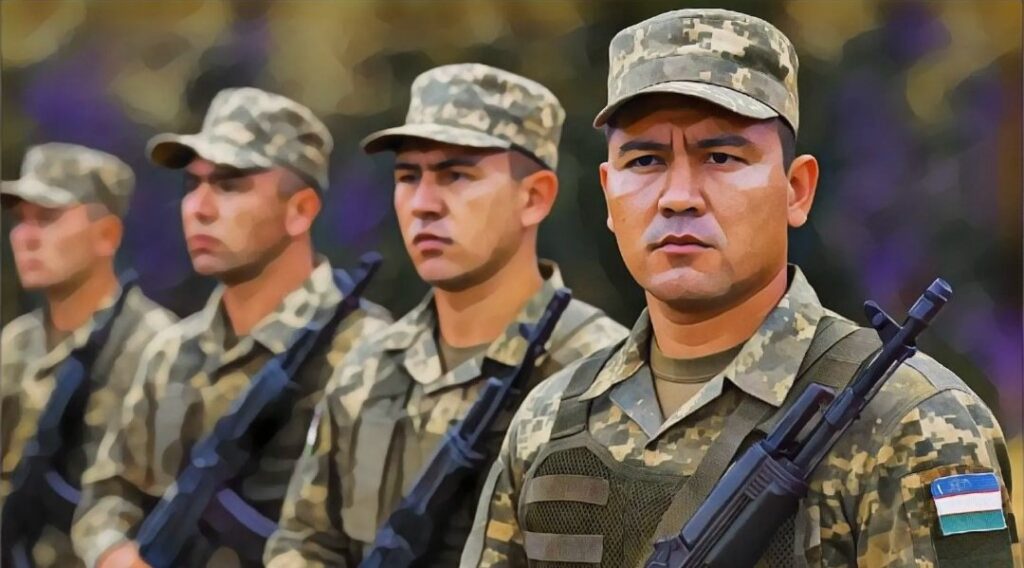
Uzbekistan’s Border Troops have confirmed that Uzbek servicemen acted lawfully during a fatal shooting near the Kyrgyz-Uzbek border on August 15, which resulted in the deaths of two Kyrgyz nationals. The official statement was released by the press service of the Border Troops under the State Security Service on September 4. According to the report, the incident occurred near the Ugam-Chatkal nature reserve in Tashkent region’s Bostanlyk district. Border patrol officers reportedly spotted two unidentified individuals in a restricted area near the state boundary. When ordered to stop, the individuals attempted to flee. Border guards fired several warning shots into the air, but the individuals continued moving toward the border. Weapons were then used “as a last resort,” according to the statement. Both individuals were wounded and died at the scene, despite first aid being administered by border personnel. A search of the area revealed a tent, three horses, food supplies, and tracks indicating the presence of a third individual who reportedly fled back into Kyrgyz territory. The border services of both Kyrgyzstan and Kazakhstan were immediately notified. On August 31, authorities confirmed the deceased were Kyrgyz citizens, and their bodies were returned to their families. A joint site inspection by Uzbek and Kyrgyz border officials was conducted on September 2-3. Following the inspection, a bilateral commission concluded that the Uzbek border patrol had acted in accordance with national law and that the individuals had illegally crossed the state border. Both sides agreed to continue investigating the identity of the third individual and to pursue further action as appropriate.

Uzbekistan Remembers Victims of Repression with Renewed Educational Focus

On August 29, a solemn ceremony was held at the Shahidlar Xotirasi alley in Tashkent to commemorate the Day of Remembrance for Victims of Repression, an annual event observed on the eve of Uzbekistan’s Independence Day. The event honored the memory of over 100,000 innocent citizens who suffered during waves of political repression. Thousands were executed on fabricated charges, while many others were exiled, leaving deep scars on families and communities. In recent years, Uzbekistan has taken steps to more fully acknowledge and document this painful history. More than 1,200 names of victims have recently been rehabilitated. The Museum of the Memory of Victims of Repression has been expanded with thousands of newly added archival documents, and regional museums dedicated to the memory of the repressed are being established across the country. A major development this year is the establishment of the State Museum of Jadid Heritage in Bukhara. The opening coincides with the 150th anniversary of Mahmudkhoja Behbudi, a key figure in the Jadid movement, an early 20th-century reformist movement that sought to modernize Muslim society through education, journalism, and national consciousness. Leaders of the Jadid movement, including Behbudi, Fitrat, Avloni, and Chulpon, were pioneers in opening secular schools, publishing newspapers, and founding institutions such as the Turkestan People’s University, now the National University of Uzbekistan. Nearly all of them fell victim to Stalin’s purges in the 1930s, and their works were banned for decades. Students from Turkestan who studied in Germany in the 1920s also became targets of repression. President Shavkat Mirziyoyev has commented: “If those young men had returned, they could have transformed society. It is important that our youth know and take pride in such examples.” Under Soviet rule, it was long taboo to acknowledge that a site near the Bozsu Canal in central Tashkent concealed a mass grave of intellectuals executed during Stalin’s purges. At the initiative of previous leader Islam Karimov, a memorial complex and museum were established on the site, and August 31 was officially designated as the Day of Remembrance. The Shahidlar Xotirasi Memorial, inaugurated on May 12, 2000, near the Tashkent TV tower, includes a park, a museum, and a rotunda featuring a symbolic jade tombstone inscribed in Arabic, English, and Uzbek: “The memory of those who died for their country will live forever.” Mirziyoyev has called for greater educational integration, through school curricula, media programming, and youth competitions. “Every year on the eve of Independence Day, we offer prayers in memory of our ancestors who gave their lives for freedom,” he said. “Their courage and sacrifice will always serve as an example for us.”